Items
Search full-text
“Activism leads to a Disability Royal Commission”
-
“Queensland Advocacy Incorporated spearhead campaigns to close institutions” In 1989, when the Bjelke-Petersen-Ahern Government was coming to an end, the newly established Queensland Advocacy Incorporated was spearheading campaigns around the state to close down institutions and provide financing for individual help for individuals with disabilities.
- Restless Dance Theatre
-
"Carriageworks (2015) NSW Arts and Disability Partnership Launched at Carriageworks Including $100,000 Support for Two Major New Works. Carriageworks, 30 January 2015" Reads, in part "Sydney, Australia: The NSW Minister for Disability Services, Minister John Ajaka MLC, today launched an extension of the NSW Arts & Disability Partnership, announcing funding of $475,000 for 2015 to support four programs that promote social inclusion through the arts and disability sector. The Partnership includes $100,000 support for Carriageworks to commission two major new works developed by artists with disability in collaboration with NSW arts companies and artists."
-
"International Year of the Disabled Person (IYDP)" In 1976, the General Assembly proclaimed 1981 would be the Year of the Disabled Person. The 1981 International Year of the Disabled Person inspired an increase in awareness and disability arts. While UN theme was “full participation and equality” the theme in Australia was “Break down the Barriers”, raising the prole and issues of people with disabilities. The international year of the disabled persons was a catalyst for connecting Australian disability activists to each other and the international disability rights movement (Royal Commission, 2021, p. 6). Australia saw an increase in disability-themed theatre from 1981 to 1984; however, these performances were largely staged with non-disabled casts. Records of these productions can be found on the AusStage database.
-
“Research project ‘Disability and the Performing Arts in Australia: The Last Avant Garde’ investigates the creative and aesthetic strategies of the Australian disability arts sector” A research project beginning in 2016, ‘Disability and the Performing Arts in Australia: The Last Avant Garde,’ investigated the creative and aesthetic strategies of the Australian disability arts sector. The project sought to map “disability arts practice across the nation” by examining “the role of artistic experimentation,” “co-design[ing] accessible strategies,” and raising “critical recognition, employment and funding opportunities for artists.” The project team describes themselves as a collective “of deaf and disabled and non-disabled researcher artists, performers, writers, arts managers and theatre makers.” The work was the result of a collaboration between Arts Access Victoria, University of Melbourne, and University of Sydney. The Australia Research Council provided funding for the research.
- Janice Rieger
-
“ABC appoints Stella Young as editor of Ramp Up” In 2010, ABC announced the appointment of Stella Young as editor of its first (and short-lived) dedicated disability platform, ABC Ramp Up. Shawn Burns’s 2014 article in The Conversation laments the closure of the initiative and the loss of a vital platform for better disability representation in Australian media. The URL link to the Ramp Up page now opens with the following statement: “This website is no longer being updated but remains online as an archive of three and a half years of discussions and conversations regarding disability in Australia.”
-
“Genni Batterham stages a protest at the opening of Bondi Junction railway station 1979, makes film in 1980” When Bondi Junction railway station opened in 1979, Genni Batterham staged a protest about the lack of accessible transportation options for individuals with disabilities. After receiving a multiple sclerosis diagnosis in 1978, Genni became severely disabled very quickly. She did everything in her power to stop the disease's progression and was furious at being "consigned to the world of the disabled." The 1979 Bondi Junction protest was an important moment in the history of the Disability Rights Movement in New South Wales. The Premier, Neville Wran, later said that the experience led him to developing the Disability Taxi Service, the first public transport system designed for people with disability to be launched in Australia. Batterham then made the film ‘Pins and Needles’ (1980) with her husband Kim. Under the direction of Barbara Chobocky and with funding from the Australian Film Commission's Women's Film Fund, the film was screened in five different countries, took home first place at the 1980 Canadian Film Festival, and took home second place at the 1980 New York Film Festival. Genni and Kim would then collaborate on three further films about the phases of her life: Where's the Give and Take? (1981), Artreach (1982), and Riding the Gale (1987).
-
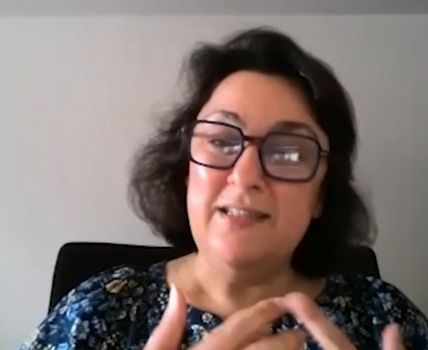 "Interview with Veronica Pardo" Veronica Pardo is a disability arts ally and has been a disability advocate with previous leadership positions in organisations such as Arts Access Victoria and Multicultural Arts Victoria, Interview Summary Veronica Pardo, former Executive Director of Arts Access Victoria, discussed the evolution and impact of Disability Arts in Australia, detailing the political dimensions of the field and the importance of genuine representation and intersectionality. Pardo highlighted the importance of leadership transitions in arts organizations informed by a spirit of solidarity and mutual support, particularly citing Caroline Bowditch's role as significant in the sector. She emphasized a need for systems-level change within the arts to reflect true diversity, beyond tokenism, advocating for dismantling exclusive structures and creating new ones informed by those marginalized. Finally, Pardo stressed the importance of acknowledging the work of predecessors in Disability Arts to honour their legacy and inform current artistic and cultural practices.
-
“Advocates fight for accessible public transport” In 1994, Maurice Corcoran (a wheelchair user) lodged a complaint about the South Australian government ordering 50 new buses that were not accessible. The Australian Human Rights Commission successfully negotiated for all new buses to be fitted with ramps. Then, in 1999, a protest about the lack of public transport options for people with disability saw Citizens for Accessible Public Transport block traffic in Sydney’s city centre.
-
“7-part series ‘Fair Go’ produced by Film Australia” In 1981, Film Australia produced a 7-part series, called Fair Go, on Australians with mental and physical disabilities and how it impacted their lives and the lives of their families. “Each program is presented from the viewpoint of the person with the disability and demonstrates the practical implications of coping with a disability in daily life at home, in the community, in the workplace or at school.” Film Australia was consolidated into Screen Australia in 2008.
- Screen Australia
- Film Finance Corporation Australia (FFC)
- Film Australia Limited
-
"Amanda Cachia (2022) Curating Access: Disability Art Activism and Creative Accommodation. London: Routledge" Reads, in part "This book is an interdisciplinary collection of twenty-four essays which critically examine contemporary exhibitions and artistic practices that focus on conceptual and creative aspects of access."
- QUT Art Museum
- Ruth Rentschler
-
“Screen Australia launches an access coordinator training program” Screen Australia launched an access coordinator training program in 2023. “The Access Coordinator role is intended for people from the Deaf/Disabled and/or Neurodivergent (DDN) communities who are committed to improving disability representation and removing barriers to inclusion.” Screen Australia partnered with the following organisations for the initiative: the New Zealand Film Commission, Screen Queensland, Screen Tasmania, Screen Territory, Screenwest, VicScreen, the South Australian Film Corporation, Screen ACT, Screen NSW, and the Australian Film Television Radio School.
- Dance Integrated Australia
-
“The National Disability Insurance Scheme (NDIS) is launched” Following the spike in interest in the mid to late 2000s, significant steps were made towards the development of the National Disability Insurance Scheme (NDIS). It came about as the result of discussions about alternatives of disability support arrangements from 2007 to 2011. This included National Disability Strategy 2010–2020. A trial phrase of the NDIS was launched in 2013, and the scheme was rolled out across the country from July 2016. The 2022 change of government, which saw the Labor party voted in for the first time in nine years, reflected voter concern for climate change and social policies. The new prime minister Anthony Albanese ordered an independent review of the NDIS. The NDIS Review report was published in 2023 and had a number of recommendations, including affording funding based on functional impairment rather than diagnosis, increasing support for children, a requirement that all providers be registered, and state governments providing supports through other services for people who do not meet NDIS criteria.
- Royal Blind Society of NSW
- Royal Blind Society Sydney
- Carriageworks
-
"Amanda Cachia (2022) Networks of Care: Collectivity as Dialogic Creative Access, in Amanda Cachia ed. Curating Access: Disability Art Activism and Creative Accommodation. London: Routledge, 219-230" Reads, in part "The collectives that have formed in recent years and that will be the subject of this chapter include the Feminist Health Care Research Group (FHCRG), the Sickness Affnity Group (SAG), and Power Makes Us Sick (PMS). Each of these groups attempts to be intersectional in their approach, focusing on feminist and crip revisions to health care. Feminist and crip unite in the groups as the participants all identify as both women and as disabled. In shared spaces, which can be found in physical spaces, such as an art gallery or an artist’s home, or online through Zoom, artists can offer mutual understanding of their experiences with chronic illness, disability, the medical industrial complex, and simply be a shoulder to lean on in times of anxiety, anger, and sadness. The collectives also offer an opportunity for the artists to lift each other up, creating an environment of respect, dignity, and self-worth, becoming a strong circle of empowerment, affrmation, and allyship. The proliferation of these support groups shows a general shift in social norms, where the medical feld no longer holds the only authoritative voice on health. This phenomenon also indicates how nonmedical health based groups are flling a need and making up for a lack in social support networks elsewhere, particularly within sanctioned medical arenas."
- Boram Lee