Items
Search full-text
“Activism leads to a Disability Royal Commission”
-
“National Arts and Disability Strategy is launched in 2009” In 2009, the National Arts and Disability Strategy was agreed on by Australian Cultural Minister’s Council. The strategy sought to improve access and participation in the arts and identified four priority areas: barriers to access and participation, supporting the creative practice of artists with disability, developing audiences for disability arts practice, and strengthening policy and planning within governments.
-
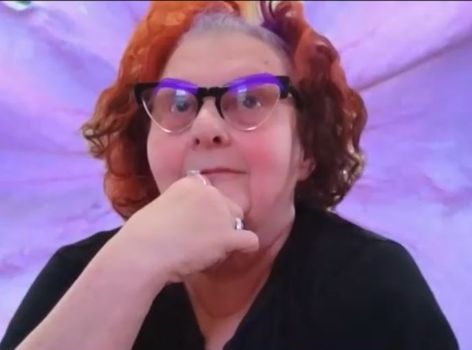 "Interview with Kath Duncan" Kath Duncan is a writer, a director, a provocateur, a visual artist, a comedian, a producer, a journalist, a radio broadcaster and disability advocate. Interview Summary Kath Duncan is an experienced and prominent figure in the disability arts community with a passion for experimental performance arts, having witnessed the beginnings of the disability arts movement in Australia and participated in its evolution. Her art is inherently political, shaped by her unique perspective as a congenital amputee. Kath firmly believes in the inherent creative revolutions and endless inspiration within all impairments. Kath highlights the ongoing struggles within the disability arts sector, including high unemployment rates for disabled individuals, systemic barriers, and the need for disabled leadership in arts organizations. While cherishing the milestones and transformative experiences she's had, Kath calls for significant systemic changes, emphasizing the importance of team playing and collective work to support and grow the disabled artist community.
-
“Arts Access Australia CEO encourages other non-disabled CEOs of disability organisations to step down” In 2012, Kate Larsen stepped down from role as CEO of Arts Access Australia. In a Ramp Up article, she explained “Now, I love my job. I'm good at it. I think that I've been useful here. But on the same day I accepted the position last February I also did something else. I gave notice of my resignation, and undertook to hand over the organisation by the end of 2012. The reason? Because I believe that Arts Access Australia should be led by a person with disability.” Upon her resignation, she encouraged other non-disabled CEOs of disability organisations to step aside to make space for disabled people to take up these leadership roles.
-
"Bree Hadley (2020) Allyship in disability arts: Roles, relationships, and practices. Research in Drama Education, 25(2), pp. 178-194.” "In this article, I propose that investigation of allies, ally skills, and allyship in disability arts is overdue. I articulate some of ways in which non-arts approaches to allyship need to be adapted to meet the needs of disabled artists, given the aesthetic as well as professional and social dimensions of allyship distinctive to disability arts. In doing so, I highlight the need for new theory, terminology, and frameworks to define the different approaches to allyship, developed by different artsworkers, operating in different roles, across the different domains of disability arts and/or arts and disability practice."
-
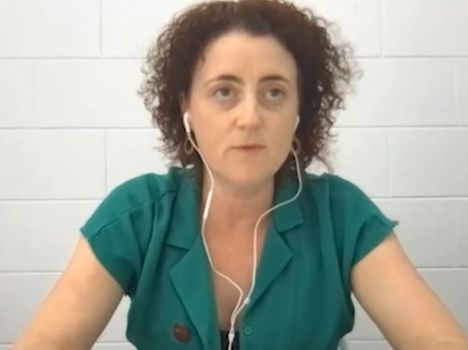 "Interview with Alison Richardson" Alison Richardson is an ally and advocate for people with disability with experience as an inclusive arts organisation artistic director and access and inclusion officer. Interview Summary Alison Richardson, artistic director and CEO of Crossroad Arts at the time of the interview, has had a 25-year journey through the fields of drama, theatre, and inclusive arts, starting in Sydney and leading to her role in Mackay, Queensland. Her work began by engaging with diverse young people and evolved into a focus on disability arts, recognising a gap in services and opportunities for people with disabilities in artistic expression. Throughout her career, she has witnessed and contributed to the gradual increase in visibility and opportunities for artists with disabilities, acknowledging the fluctuating support and funding in the sector. Despite challenges, Alison has observed progress in how disability arts are valued and the emergence of conversations around identity and representation within this community.
-
”Bree Hadley, Janice Rieger, Sarah Barron, Sarah Boulton, Catherine Parker (2023) Codesigning Access: A New Approach to Cultures of Inclusion in Museums and Galleries. In Cachia, Amanda (Ed.) Curating Access: Disability Art Activism and Creative Accommodation. Routledge, Abingdon, Oxon, pp. 183-195.” "In museums and galleries, access is often designed and implemented by staff and informed by regulations and guidelines. Codesign approaches have the potential to shift this understanding away from designing access “for” visitors and toward access as a creative process developed “with” visitors. This chapter focuses on the exhibition and practice-led research project Vis-ability: Artworks from the QUT Art Collection, which was presented at the Queensland University of Technology (QUT) Art Museum in Australia in 2019. Vis-ability represented the culmination of five years of international research into access in museums and galleries for visitors who are blind or have low vision."
-
"Fayden D'Evie (2022) From Dust to Dust: Hallucinating the Absent Exhibition, in Amanda Cachia ed. Curating Access: Disability Art Activism and Creative Accommodation. London: Routledge, 87-98" Reads, in part "Over several months in 2018, I developed a hybrid artist-curatorial project for the Old Castlemaine Gaol, with the working title From Dust to Dust , which sought to invert the site’s association with the sensorial policing of bodies."
-
"Boram Lee, Ruth Rentschler, and Shin-Eui Park (2022) Connect2Abilities: Staging Virtual Intercultural Collaboration during COVID-19 in Amanda Cachia ed. Curating Access: Disability Art Activism and Creative Accommodation. London: Routledge, 45-58" Reads, in part "As a pilot project, Restless Dance Theatre in Adelaide, Australia and SNU MUSIC in Seoul, Korea collaborated to create a digital performing arts piece entitled Dialogue for Six Strings."
- Anna Seymour
- Bryan Phillips
- Catherine Parker
- Jennifer Justice
- Julia McHale
- Katie West
- Lucretia Quintanilla
- Luccretia Quintanilla
- Rick Nelson
- Sarah Barron
- Sarah Boulton
- Shin-Eui Park
- Will Kollmorgen
-
 "From Dust to Dust - Prologue" Reads, in Part, "A hybrid artist-curatorial project, inviting experimentation and conversations amongst Benjamin Hancock, Bryan Phillips, Jen Bervin, Shelley Lasica, Katie West, Simon Charles, Pippa Samaya, Gabriel Curtin, Adam Leslie, Zeno d'Evie, Anna Seymour, Ravi Vasavan, and in absentia, Aaron McPeake, Andy Slater, Jennifer Justice, and Lucreccia Quintanilla. Welcome to Country by Uncle Rick Nelson and Aunty Paulette Nelson.Afternoon tea by Murnong Mammas."
- Fayen d'Evie
- Access2Arts
- Arts Access SA