
Items
Search full-text
“Activism leads to a Disability Royal Commission”
- Royal Rehab Choir
-
 "Australia Council - Annual Report 1982-83" Australia Council - Annual Report Australia Council Annual Report 1982-83 - discusses objectives, members of council, board members, organisation chart, staff list, council report, programs, board reports, financial statements, publications and grant lists including workshops, art production activities, production of magazine, award and performances.1982-83
-
"DADAA Inc and Arts Access Australia (2012) public Art Works: Employment in the Arts for People with Disability. http://www.dadaa.org.au/wp-content/uploads/2017/01/Art-Works-Full-Report-Web.pdf" Reads, in part "This document provides a short overview of the full Art Works report, which captures the results from national research into employment levels, barriers and strategies around employment in the arts for people with disability. The report was produced in response to one of the key focus areas of the National Arts and Disability Strategy, released in 2009."
-
“The Victorian Government commissions ‘Picture This: Increasing the Cultural Participation of People with a Disability in Victoria’” In 2008, ‘Picture This: Increasing the Cultural Participation of People with a Disability in Victoria’ was published. The report was commissioned by the Victorian Government, specifically the Victorian Office for Disability in partnership with Arts Victoria and Disability Services Division and written by Kim Dunphy and Petra Kuppers. It focussed on methods to increase participation by people with disability in the arts as artists and audience members.
-
"Queensland Government releases Arts & Disability Plan 2024-2026" Reads, in part "The Queensland Government acknowledges the rights of people with disability to participate equally in the state’s cultural life and to have the opportunity to develop and use their creative, artistic and intellectual potential, as recognised in the United Nations Convention on the Rights of Persons with Disability."
-
"Bree Hadley, Eddie Paterson, Madeleine Little, Kath Duncan (2024) How Disability Performance Travels in Australia: The Reality Under the Rhetoric. In Czymoch, Christiane, Maguire Rossier, Kate, & Schmidt, Yvonne (Eds.) How Does Disability Performance Travel?: Access, Art, and Internationalization. Routledge, Abingdon, Oxon, pp. 62-76.” "The last three decades has witnessed the development of a distinct narrative about how disability performance has become a much celebrated component of the Australian theatre landscape. A central aspect of this narrative is the critical importance of festivals, events, and other industry initiatives that allow disabled performers to travel - both conceptually and corporeally - to meet and be mentored by other artists, and to present their work to new and more mainstream audiences, in new spaces and places, around the country, and around the world. In this chapter, we draw on historical data, collected as part of an AusStage ARC LIEF project designed to database information about disability drama, theatre, performance, and dance over the past 100 years, as well as the Last Avant Garde ARC Linkage project on disability performance in Australia, to unpack areas where the reality seems to challenge some of the dominant rhetoric."
- Back to Back Theatre
- Disability and Arts Disadvantage and the Arts Australia (DADAA)
- National Disability Insurance Scheme (NDIS)
-
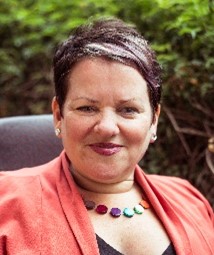 "Interview with Caroline Bowditch" Caroline Bowditch is an Australian artistic director, leader, performer, presenter, instructor, disability advocate and was the CEO of Arts Access Victoria. Interview Summary Caroline Bowditch, the CEO and Artistic Director of Arts Access Victoria, shared her journey as a performance artist and her experiences working within the Disability Arts community, highlighting her creative process and the challenges faced by disabled artists in Australia. Despite significant support and successful projects in the UK, she expressed concern over the limited progression and exposure of Disability Arts in Australia, noting a lack of ambition and opportunity deterring artists from aiming for larger, mainstream stages. Bowditch emphasized the importance of integrating access as a core component of artistic work and changing the aesthetic by including diverse bodies and perspectives. She also discussed tackling intersectionality within Disability Arts, reflecting on her own experiences as a visibly disabled and queer woman, and contemplating the future of Disability Arts, the desire for cultural equity, and the impact of potential shifts in societal barriers.
- Lesley Hall
-
“100 disabled people protest outside Parliament House against moves to tax their government allowances” On 29 September 1978, 100 people with disability protested outside Parliament House against moves to tax their government allowances. Following the protest, Treasurer John Howard was forced to rescind the decision.
-
“Protesters gather in Lismore (NSW) to oppose proposed cuts to services” In 2004, 300 disabled persons, along with their relatives and carers, gathered in Lismore to protest proposed cuts to adult, training, learning, and support programs, among other services. These were a part of a series of demonstrations against the state government that included hundreds of demonstrators in Newcastle and resulted in the state government reversing its position on modifications to the Post-Schools Options Disability Program.
-
"Arts Access Victoria established in 1973 and provides valuable resources and conferences throughout the decades" In 1973, Judy Morton successfully applied for funding to start a 6-month pilot program and Arts Access Victoria was established the following year. However, due to lack of government funding and despite public appeal, programs were suspended in 1977. Fortunately, operation resumed in 1979 and AAV was formally constituted with a small School Commission fund as Arts Access Society Inc. Arts Access Victoria had both organisational and financial growth in the mid to late 1980s. This led to a diversification of arts projects and the beginning of long-term artistic programs which remain as the core programs of AAV. Arts workshops also began in regional Victoria during this time. In 1988, Arts Access was approached to run a national conference focusing on the arts and disability. Two years later, they convened P-art-ICIPATE '90 and subsequently published ‘P-art-ICIPATE '90: a conference report’. They also published ‘Inner Words Outer Spaces’, edited by Bev Roberts (1995), ‘Arts Alive: An Information Leaflet about the Ways the Arts Can Work for Older People’ (1995), ‘Accessible Theatresports’ (1996), and Bev Roberts's ‘Work Guide: How to Establish an Artist in Community Project’ (1996). In 1998, Arts Access (Victoria) assumed responsibility for its own financial management and administration. In 1999, Arts Access Victoria presented Verve!, a national symposium on arts and disability.
- Royal Tasmanian Society of Blind and Deaf
- Royal Victorian Institute for the Blind
- RMIT (Royal Melbourne Insitute of Technology)
- Royal Melbourne Philharmonic Society
-
 "Australia Council - Annual Report 1987-88" Australia Council Annual Report 1987-88- discusses functions and objectives, structures, process and membership of Council, Council Committees and members, board members, assessment panels, staff lists, organisation chart, main activities of Council and its eight Boards, and how council endorsed a code of practice for arts organisations working with people with disabilities, equal employment opportunities and includes financial statements and lists of grants made including grants for programs, projects, performances and promotion and reading for Royal Blind Society and Brail and Talking Book Library
-
“‘Arts and Disability: A Research Report’ published in 1995” In 1995, ‘Arts and Disability: A Research Report’ was published. Des Walsh and Juliet London were commissioned by the Australia Council to prepare the report. However, they found little information that was relevant to the theme of the report. In addition to a review of existing literature, they met with people involved in arts organisations, disability organisations and organisations dedicated to both, as well as funding bodies. Walsh and London outlined the different ways that disabled people interact with the arts: as artists, consumers, and through art therapy. They also recognised the “negative or unduly limiting notions attached to arts in relation to disability” (12). Overall, they found “no conclusive evidence […of a] widely shared, articulated concept of a ‘disability arts’ movement in Australia” at that time. The report was intended to inform meaningful policy going forward. They made recommendations related to buildings and physical barriers, leadership, education and training and action plans.
-
"Bree Hadley (2017) Disability, Sustainability, Austerity: The Bolshy Divas Arts-Based Protests Against Policy Paradoxes. Centre for Sustainable Practice in the Arts Journal 18 Spring. http://www.sustainablepractice.org." "In this short article, I want consider some of the ways theatrical artists, activists and advocates in Australia are tackling the paradoxical relationship between sustainability and austerity discourses, and, as a result, some changes this may be starting to produce in disabled people’s aesthetic prerogatives. For the last 30 years, artists, activists and scholars in Australia and beyond have avoided casting disability in terms of trauma, crisis, catastrophe and disaster. Accounts of the way disability theatre challenges stereotypes , as well as analysis of disability signifiers in screen, stage, and social performance , have expressed concern about deploying disability as a metaphor for disaster, or defining disabled people as monstrous, tragic, stoic, or inspirational, the way the medical model of disability traditionally defines us. Instead, modern disabled artists and the scholars who analyse them have advocated for work that deploys live art, performance art, and performative intervention in public space to challenge stereotypes, oppressive institutional systems, and other factors the social model of disability sees as the cause of disability oppression .In the last few years, though, there has been an increase in work that does associate disability with trauma, tragedy and disaster, in what seems to be a response to austerity, accountability and economic sustainability agendas that call for cuts to disability services spending to make our societies more sustainable going forward."
-
"Jung Yoon (2021) Cultural strategy for people with disability in Australia. International Journal of Cultural Policy, 28(2), 187–203. https://doi.org/10.1080/10286632.2021.1916003" Reads, in part "This paper analyses the first cultural strategy introduced in Australia for people with disability and its evaluation reports. For an in-depth understanding of the cultural strategy, it reviews the literature on disability in historical and socio-political contexts, and on human rights for people with disability. It also discusses three key recommendations identified from the evaluations of the cultural strategy: first, to develop an information hub for the arts and disability sector; second, to facilitate collaboration between Australian governments, including arts agencies and national disability support agencies; and third, to revisit and renew the existing cultural strategy"
-
"Morwenna Collett, Gill Nicol (2024) Building Strong Foundations: Research on arts and disability needs and opportunities, Creative Australia, 2024." "This report is a summary of an arts and disability needs and audit conducted in 2023 for Creative Australia. Through desktop research and consultation with d/Deaf and disabled artists and creative workers, peak bodies and broader arts and cultural organisations, this research provides insights into needs and opportunities in the arts and disability ecology in Australia."
-
"Radha O'Meara, Laura Dunstan, Anna Debinski, Catherine Ryan (2023). Disability and Screen Work in Australia: Report for Industry 2023. In Disability and Screen Work in Australia: Report for Industry. Melbourne Disability Institute, University of Melbourne." Disability is a key vector of inequality in Australian society. The screen industry has the potential to create meaningful change, in our workplaces and working practices, for our colleagues and our audiences. We need to pay more attention to disability and take more action to include disabled people in our industry. Disability equity, inclusion and accessibility training tailored to the screen industry can make a significant impact. Consultation, innovation and funding can transform industrial structures to create a more inclusive and sustainable industry for all screen workers. We must normalise talking about and providing access requirements to support disabled workers. The findings of this research reflect the need to build greater understanding, transparency and accountability in order to fully include disabled workers in the Australian screen industry.
-
"Chris Brophy, Kim Dunphy, Nick Hill, Petra Kuppers, Indrani Parker, John Smithies, John Toumbourou (2008) Picture This: Increasing the cultural participation of people with a disability in Victoria, Office for Disability in partnership with Arts Victoria and Disability Services Division" Reads, in part "The Cultural Development Network undertook a research project examining ways that the participation of people with a disability in the arts, as artists and as audience members, can be increased. The project was commissioned by the Office for Disability and partners, Arts Victoria and Department of Human Services. The report and literature review have now been published."