Items
Search full-text
“Activism leads to a Disability Royal Commission”
- DADAA National Network
- Kath Duncan
-
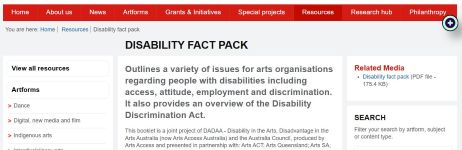 "Australia Council - Disability Fact Pack 1998" The website reads “Outlines a variety of issues for arts organisations regarding people with disabilities including access, attitude, employment and discrimination” - Noelene Gration
-
 "Arts and Disability: A research summary" Australia Council - Arts and Disability: A research summary, 2018 - reads, in part "The great art created by artists with disability, and participation of people with disability in the arts, are integral to the artistic and cultural life of Australia. This summary brings together findings from Australia Council research publications and a research overview compiled by the Meeting of Cultural Ministers to build the evidence base about disability and the arts."
-
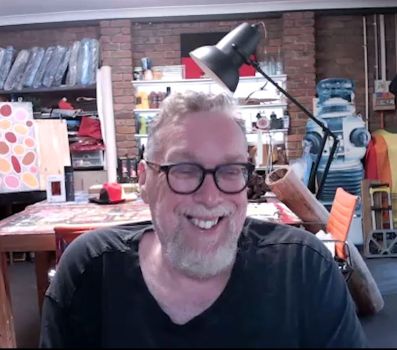 "Interview with Paul Constable Calcott" Uncle Paul Constable Calcott is a proud Wiradjuri man and artist living with a disability on Gubbi Gubbi country….. Uncle Paul uses his art to share stories of his journey as an aboriginal gay man living with a disability in urban Australia. Interview Summary Uncle Paul Calcott is a proud Wiradjuri elder and disability advocate who contracted polio as a child. During the interview, Uncle Paul discusses becoming an artist later in life through the encouragement of his husband and influenced by the storytelling of his culture. He embraces his identity as an Aboriginal, gay man living with disability. He talks about his artwork aiming to celebrate the achievements and contributions of people with disabilities, using traditional symbols to tell new stories, particularly about disability within Indigenous communities. Although there has been increased visibility and acknowledgment of disability arts in Australia, Paul notes that there's still a long way to go in terms of policy, funding, and public recognition. Uncle Paul says art can reflect political and social issues, and he proudly identifies as an artist with a disability and believes in the significance of diverse stories being told through the arts.
-
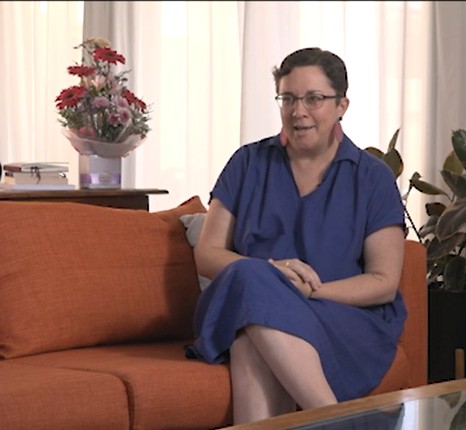 "Interview with Kate Larsen" Kate Larsen (she/her) is a writer, consultant, leader and advocate with Australian and international experience in the arts and disability sector. Interview Summary Kate Larsen (she/her) is a recognised arts and disability advocate who emphasises the importance and inherent politics of self-expression and access in the arts. A non-disabled ally, Kate was influenced to pursue a career in the sector by the profound impact of learning about the social model of disability, which sparked a commitment to creating opportunities for and by disabled individuals. Larsen's work has involved fostering leadership among disabled artists and arts workers, advocating for disability-led organisations, and driving systemic change within Australia’s arts and cultural sector. She hopes to see continued progress towards equity and representation in the arts, with the NDIS playing a crucial role, and an increased presence of disabled artists, arts workers and leaders in mainstream organisations.
-
“80 wheelchair users and allies halt Melbourne trams, demanding better access to public transportation” In a 2000 demonstration organised by the Catch a Tram group, 80 wheelchair users and their allies halted city trams in Melbourne during lunch hours, demanding better access to public transportation.
-
“In 2003, a demonstration outside Canberra’s Parliament House protests changes to Centrelink guidelines” In 2003, the Totally and Permanently Incapacitated Disabled Soldiers Association staged a protest outside Parliament House in Canberra, over changes to Centrelink guidelines that could have cost them up to $200 per week in income. “He said in Parliament that our payments are adequate, he's somebody who has never had the time to speak to us,” Association President John Ryan remarked of then Prime Minister John Howard.
-
“Arts Access Australia launches its ‘Don’t Play Us, Pay Us’ campaign in response to 'cripping up'” In 2012, Arts Access Australia launched its ‘Don’t Play Us, Pay Us’ campaign in response to 'cripping up,' where non-disabled performers play disabled characters on stage or screen.
-
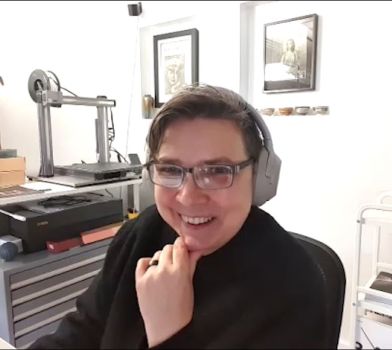 "Interview with Alison Bennett" Dr Alison Bennett is a senior lecturer in photography at RMIT School of Art specialising in expanded photography, webXR, queer and feminist creative practices. Interview Summary Alison Bennett, an artist and academic, spoke about her work in expanded photography, their experiences with autism, and the intersection of disability discourse with queer activism in their life and work. Their current project, vegetal/digital, arose from their experiences during the pandemic and connects audiences with plant sentience through interactive digital art. Alison also discussed the political nature of their work, aiming to shift ontological frameworks and exploring new modes of engagement through art. They reflected on the significant cultural changes regarding neurodiversity in the last few decades, highlighting the growing self-advocacy among autistic artists and their increasing impact in the arts.
-
"Arts Access Australia appoints Emma Bennison (2012) and Megan Shand (2017) as CEO" Prior CEO Kate Larsen statesin 'Disability Leadership: If You're Gonna Talk the Talk .... ABC: Ramp Up, 30 March 2012' - "Now, I love my job. I'm good at it. I think that I've been useful here. But on the same day I accepted the position last February I also did something else. I gave notice of my resignation, and undertook to hand over the organisation by the end of 2012. The reason? Because I believe that Arts Access Australia should be led by a person with disability."
-
“Arts Access Australia releases the report Making the Journey: Arts & Disability in Australia” In 2005, Arts Access Australia commissioned a survey of the disability arts sector nationally. This survey resulted in the report, Making the Journey: Arts & Disability in Australia. The report was written by Mary Hutchison. It details 12 case study disability arts organisations.
-
“Screen Australia commissions the reports ‘Seeing Ourselves’ (2016) and ‘Seeing Ourselves 2’ (2023)” In 2016, Screen Australia commissioned a report "Seeing ourselves: Reflections on diversity in Australian TV drama". The report highlighted the lack of characters on TV with a disability. When characters with a disability were part of the story they were played by actors without a disability and were portrayed as either unemployed or retired. Screen Australia commissioned a follow-up report in 2023 called "Seeing Ourselves 2 - Diversity, equity and inclusion in Australian TV drama". This report shows that, while diversity is a global conversation and there is an increase of disability representation, it remained significantly lower than the actual disabled population.
-
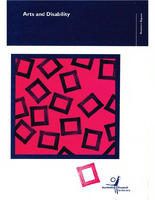 "Juliet London and Des Walsh (1995) Arts & Disability: Report Australia Council: Surry Hills." Juliet London and Des Walsh - Arts & Disability, Australia Council 1995 - Reads, in part "The Australian Bureau of Statistics estimates that 18 per cent of the Australian population has a disability. There is a basic lack of data on participation in the arts by artists with a disability. No figures were available on the number of people with disabilities applying for grants from the Australia Council or from State or Territory arts agencies. The current dearth of statistical information needs to be overcome by systematic and sustained research."
-
"Jung Hyoung Yoon, Caroline Ellison, Peggy Essl (2020). Shifting the perspective from ‘incapable’ to ‘capable’ for artists with cognitive disability; case studies in Australia and South Korea. Disability & Society, 36(3), 443–467. https://doi.org/10.1080/09687599.2020.1751079" Reads, in part "This study examined four inclusive arts organisations in Australia and South Korea, providing creative services for artists living with cognitive disability, including autism, intellectual and mental disability. This research study focused on exploring what support inclusive arts organisations and society have provided for artists living with cognitive disability to pursue professional careers."
-
"Commonwealth of Australia (2014) National Arts Disability Strategy Evaluation 2009–2012. Canberra: Meeting of Cultural Ministers: National Arts and Disability Implementation Working Group." Reads, in part "The first evaluation was completed in October 2013 and explores the Strategy's outcomes from October 2009 to December 2012. The Evaluation Report includes input from the Australian, state and territory governments, following targeted consultation with arts and disability stakeholders. The Evaluation Report was endorsed by cultural ministers in October 2014."
-
"Margaret Cooper (1999) The Australian Disability Rights Movement Lives. Disability & Society, 14(2), 217–226. https://doi.org/10.1080/09687599926280" Reads, in part "The Australian Disability Rights Movement is surviving despite funding threats to advocacy programmes. The integral relationship of advocacy funding to the Australian Disability Rights Movement is outlined. A brief history of the Australian Disability Rights' Movement is given, and whether this is a new social movement, or not, is discussed. The role of Women With Disabilities Australia is outlined."
- No Strings Attached Theatre of Disability
- No Strings Attached
- DADAA Network
- Eddie Paterson
-
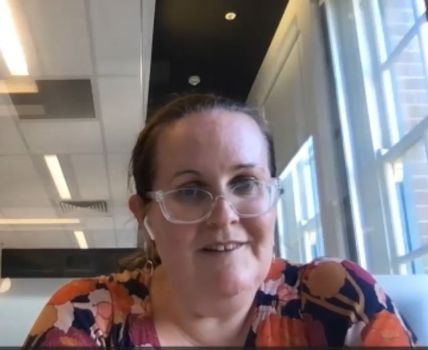 "Interview with Morwenna Collett" Morwenna is a leader, consultant and facilitator in the arts, government, not-for-profit and university sectors and is passionate about helping arts and cultural organisations to include everyone in their work. Interview Summary Morwenna Collett is a consultant in diversity, access and inclusion and during the interview discusses her vast experience in the disability arts sector including time in the Australia Council where she played a key role in creating the first targeted funding program for artists with disabilities. Morwenna notes that while disability arts is gaining some awareness with mainstream audiences, there are still issues regarding how people think about the quality of art created by artists with disabilities. Morwenna highlights the NDIS as a significant milestone for disability arts in Australia, though she believes that there is much more potential for arts organizations to engage with it. Morwenna also emphasizes that the decision for artists to identify with their disability is a personal choice and it is becoming increasingly safe to disclose this identity, demonstrating progress toward inclusion in the arts.
-
 "Interview with Simone Flavelle" Simone Flavelle is a producer and consultant to artists with disability and the arts and film sectors. Interview Summary During an in-depth discussion about disability arts, Simone Flavelle outlined their career trajectory, emphasizing early work at Rocky Bay, involvement with Disability in the Arts Disadvantage in the Arts Australia (DADAA), and noted milestones in the field, including the impact of the NDIS on choice and control for artists. She discussed the evolution of public perception towards disability arts and the ongoing challenges with inclusivity and accessibility in various spaces. Simone also touched on the politicization of art by disabled artists, the complexity of identity among these artists, and the spectrum of how disability pride is embraced.
-
“Disabled People’s International (Australia) (DPIA) formed in 1983” The organisation Disabled People’s International (Australia) (DPIA) was formed in 1983. Thirteen disabled Australians who attended Disabled People’s International (DPI) first world assembly in Singapore in 1981, the International Year of the Disabled Person, returned home to set up the Australian branch two years later. The Women with Disabilities Australia online history reports that DPIA “from the outset, was dominated by disabled men. Only 3 of the 11 members of its governance structure were women, and there was no mention of women or gender in DPIA goals and objectives.” This led to the establishment of a women’s network within DPIA, known as the National Women’s Network (DPIA).
-
“Women With Disabilities Australia (WWDA) recognised as an independent organisation in 1995” Women With Disabilities Australia (WWDA) gained seed funding from the government in 1994 and was recognised as an independent organisation in 1995. The organisation shares a history with Disabled People’s International (Australia) (established 1983) and its National Women’s Network (established 1985).