
Items
Search full-text
“Activism leads to a Disability Royal Commission”
-
“Disability in the Arts, Disadvantage in the Arts, Australia (DADAA), based in Western Australia, is established in 1994” The National Participate Conference, hosted by Arts Access Victoria in 1990, set the scene for the emergence of the DADAA network. This came after several years of conversations among Western Australian artists about starting an organisation; the organisation was officially established in 1994. “In 1986, a small group of artists with disability met to discuss starting their own WA-based arts organisation. It is from this meeting that DADAA slowly grew, from a pilot project it became an organisation in its own right in 1994: taking the name Disability in the Arts, Disadvantage in the Arts, Australia – DADAA.”
-
"The first ACT DisAbility Arts Festival is held" In 2004, the first ever ACT DisAbility Arts Festival was held as part of International Day of DisAbility celebration.
-
"A number of theatre companies are established in the 2000s" A number of theatre companies were established in the 2000s, particularly towards the end of the decade. Some key companies in disability theatre or inclusive arts practice to emerge in the 2000s are: Second Echo Ensemble (2005, integrated, often producing work in partnership with the Tasmanian Theatre Company), Ever After Theatre Company (2006, performers with disability), Rollercoaster Theatre Company (2007, performers with disability), DirtyFeet (2008, inclusive), and Blue Roo Theatre (2009, performers with disability).
-
“Creative Australia’s National Arts and Disability Awards are awarded to their inaugural recipients in 2019” Creative Australia’s National Arts and Disability Awards were first awarded to their inaugural recipients in 2019. The three awards go to an emerging or early career artist, and established artist, and someone who’s proven themselves as a leader in disability arts. From 2019 to 2023, the recipients span across artforms and the country.
-
"Creative Australia (2024) releases 'Equity: Arts and Disability Associated Plan" Reads, in part "The Australia Council for the Arts have released their critical new report Towards Equity: A research overview of diversity in Australia’s arts and cultural sector. This overview gathers published and unpublished data and research on representation within the arts and cultural sector in Australia."
-
"Bree Hadley (2018) Disability, disabled dance audiences and the dilemma of neuroaesthetic approaches to perception and interpretation. In Wood, K, Brown, A, Waelde, C, Harmon, S, Blades, H, & Whatley, S (Eds.) Dance, disability and law: Invisible difference. Intellect Ltd, United Kingdom, pp. 293-315.” "In this chapter, I want to consider one emerging approach to spectatorship – the neuroaesthetic approach – through the lens of disability spectatorship. In the twenty-first century, neuroaesthetics is gaining traction amongst scholars looking to provide accounts of spectatorship in less story-based performing arts such as classical and contemporary dance, as well as in more story-based practices in drama, theatre and performance. ‘It would be fair to say that neuroaesthetics has become a hot field’, as Alva Noë puts it (2011). To date, though, the assumptions that underpin neuroaesthetic approaches to spectatorship have not been brought together with the assumptions that underpin the equally emergent field of disability spectatorship studies. As Carrie Sandahl (2002: 18) has noted, different cognitive, sensory and corporeal abilities result in a range of different phenomenologies, perceptual processes and perceptual preferences that can in turn produce different styles of engagement with experiences, events and objects. These differences impact on how people with disabilities produce and perceive aesthetic performances – somatically, syntactically, symbolically and socially, as disabled people hear with their eyes, see with their fingers, or perceive phenomena vicariously via the intervention of technologies or translators. Accordingly, disability spectatorship, and more detailed attention to the presence of distinctive cognitive, sensory and corporeal processes amongst disabled spectators, has the potential to complicate, extend and challenge assumptions embedded in emerging neuroaesthetic approaches to spectating."
-
"Bree Hadley (2016) Cheats, charity cases and inspirations: disrupting the circulation of disability-based memes online. Disability and Society, 31(5), pp. 676-692." "With the increasing part online self-performance plays in day-to-day life in the twenty-first century, it is not surprising that critiques of the way the daily social drama of disability plays out in online spaces and places have begun to gain prominence. In this article, I consider memes as a highly specific style or strategy for representing disability via social media sites. I identify three commonly circulating categories of meme – the charity case, inspiration and cheat memes – all of which offer representations that people with disabilities find highly problematic. I then investigate the ways in which disabled people have begun to resist the representation and circulation of these commonly circulating categories of memes, via the production of counter or parodic memes. I focus, in particular, on the subversive potential of these counter memes, within disability communities online and within broader communities online."
-
"Commonwealth of Australia, 2018. Research Overview: Arts and Disability in Australia. Barton: Department of Communication and the Arts, Cultural Ministers Council. Available from: https://www.arts.gov.au/sites/g/files/net1761/f/research_overview_of_arts_and_disability.pdf." Reads, in part "The Research Overview brings together published and unpublished data and research about arts and disability in Australia, and case studies highlighting arts and disability practice around the country. The Research Overview is part of the evidence base for a renewed National Arts and Disability Strategy. The evidence gathered here will be complemented by submissions and survey during a national consultation in 2018."
- Katie Ellis
- Madeleine Little
- Noelene Gration
-
 "Australia Council - Making the Journey: Arts and Disability in Australia" Reads, in part "A collection of inspiring examples of how to include people with disabilities in the arts, as participants, creators and organisers"
-
 "Australia Council - Arts and disability a priority as Australia Council commits significant new funding" Australia Council - Arts and disability a priority as Australia Council commits significant new funding - reads, in part "The Australia Council has committed $750k over three years to support sustainable careers and to recognise the artistic excellence of artists with disability."
-
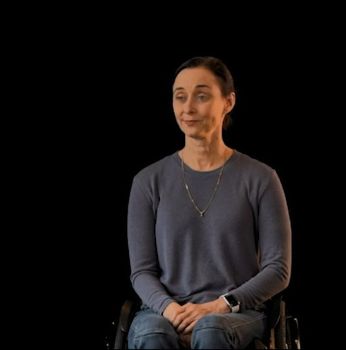 "Interview with Michelle Ryan" Michelle Ryan is the artistic director of Restless Dance Theatre and has extensive experience as a dancer and performer. Interview Summary Michelle Ryan, the artistic director of Restless Dance Theatre, shares her journey from being a successful dancer diagnosed with multiple sclerosis at 30 to becoming an advocate for artists with disabilities. Despite her initial hesitations to perform with her disability, a positive experience dancing with a European company reignited her passion and led her to Restless Dance Theatre, where she aims to change perceptions of who can create art. Michelle emphasizes the importance of providing professional opportunities and proper compensation for disabled artists, challenging the notion that disability work is charity or hobbyist. She advocates for representation that is genuine and not tokenistic, ensuring the inclusion of people with disabilities is meaningful and respectful.
-
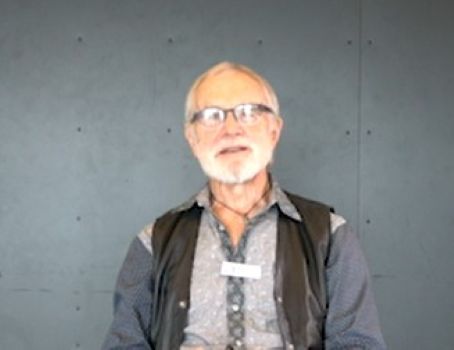 "Interview with Peter Vance" Peter Vance is a singer, songwriter, musician, performer, facilitator and disability arts advocate. Interview Summary: Peter Vance is a songwriter, performer, musician and singer. Peter suggested disability arts in the last 20 years has become more visible and popular reflecting a positive shift in how society views disability as part of the rich tapestry of human experience. This is reflected in how the arts now tell the stories of individuals with disabilities, not simply as artists with a disability, but as whole people whose varied experiences - visible and invisible - inform and enrich their creative expression. However, there are still challenges with funding and accessibility and ongoing struggles for recognition and support of disability art. Changes in how organisations operate to suit new funding such as the NDIS have potentially limited the spontaneity and personal touch that smaller, community-driven organizations once offered. Peter said it is essential to continue to push for better understanding, support, and visibility for people with all kinds of disabilities in every aspect of life, including the arts, to truly embrace inclusivity.
-
"Juliet London and Des Walsh (1995) Arts & Disability: Report Australia Council: Surry Hills." Juliet London and Des Walsh - Arts & Disability, Australia Council 1995 - Reads, in part "The Australian Bureau of Statistics estimates that 18 per cent of the Australian population has a disability. There is a basic lack of data on participation in the arts by artists with a disability. No figures were available on the number of people with disabilities applying for grants from the Australia Council or from State or Territory arts agencies. The current dearth of statistical information needs to be overcome by systematic and sustained research."
-
 "The Arts and Disability 2016-2017" Except as permitted by copyright law, you may not reproduce or communicate any of the content on this website, including files downloadable from this website, without the permission of the copyright owner. The Australian Copyright Act allows certain uses of content from the internet without the copyright owner’s permission. This includes uses by educational institutions and by Commonwealth and State governments, provided fair compensation is paid to the copyright owner. For more information, see www.copyright.com.au and www.copyright.org.au.
-
 "The Arts and Disability No Date #1" Except as permitted by copyright law, you may not reproduce or communicate any of the content on this website, including files downloadable from this website, without the permission of the copyright owner. The Australian Copyright Act allows certain uses of content from the internet without the copyright owner’s permission. This includes uses by educational institutions and by Commonwealth and State governments, provided fair compensation is paid to the copyright owner. For more information, see www.copyright.com.au and www.copyright.org.au.
- Benjamin Hancock
-
 "VisAbility Exhibition" Reads, in part "Bringing together a selection of recent acquisitions from the QUT Art Collection, Vis-ability: Artworks from the QUT Art Collection has been conceived as a project to broaden understanding of the lived experiences of people who are blind or with low vision."
-
 "Arts Project Australia - Publications, captured 2022" Arts Project Australia - Publications - Includes information about SINCERELY YOURS ZINE 2022, ART ET AL. BROADSHEET ISSUE 1 2021 (inclusive, curated international art platform that commissions and presents collaborations between artists from supported studios, artist peers and arts professionals), ANTIDOTE 2021, REACHING POTENTIAL (REPORT 2021 (including exhibition essay by Dr Marion Piper Words Make Worlds), A SENSE OF PLACE 2003 (including The Significance of Space, The Meaning of Place by Dr Cheryl Daye and Kitty Ginter), VALERIO CICCONE: PERIPHERAL OBSERVER 2012 (including Peripheral Observer catalogue essay ‘This is me – some thoughts on the art of Valerio Ciccone’ by curator Glenn Barkley pp. 8-10), VIDEO DOCTOR 2013 (including essay by Geoff Newton), SO FAR… eight artists / eight stories 2014, IT TAKES MORE THAN 140 CHARACTERS TO WRITE A NOVEL (2015 (Including exhibition essay by curator Dr Vincent Alessi), AUTO BODY WORKS 2018, FEM-aFFINITY 2019 (including FEM-aFFINITY catalogue essay If Collaboration is the Method, Activism is the Intention by curator Dr Catherine Bell pp. 19-24), POP UP STALL: The Festival of the Photocopier Zine Fair
-
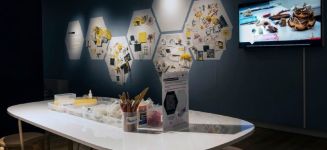 "Janice Rieger, Jasmien Herssens, Megan Strickfaden, Marianella Chamorro-Koc, Bree Hadley (2019) Vis-ability Exhibition." "The United Nations Convention on the Rights of Persons with Disabilities (UNCRPD, 2016) foregrounds the importance of cultural participation to realise human rights for people with disabilities. The creative industries play a critical role in supporting and shaping these social attitudes towards inclusion. Through the theoretical foundation of Design for All (EIDD Stockholm Declaration, 2004) new engagement processes involving a transdisciplinary team from Australia and around the world converged at QUT to co-design more equitable and collaborative forms of knowledge and practice around inclusion. International universities, the EU Commission and the European Institute for Design & Disability collaborated and presented Design for All for the first time in Australia, positioning QUT leadership in this field and as the first non-European member of EIDD-DfA. Co-design methods were employed through, Vis-ability workshops, Making Visible workshops, tactile artefacts and audio description work in the VisAbility Exhibition. Innovative practice was through the Inclusive Film Screening and Wondrous Googles technologies. An innovative model of engagement was created through the DfA Week program and events across sectors. Knowledge was disseminated through academic articles."
- Baz Luhrman
- Baz Luhrmann
- Hugo Weaving