Items
Search full-text
“Australia Council releases its first Disability Action Plan”
- Bruce Gladwin
-
“Arts Access Australia established” Arts Access Australia was established in 1992 as a national body for arts and disability with funding support from the Australian Council for the Arts.
-
“NuunaRon (QLD) is established in 2018” NuunaRon (QLD), "a group for Aboriginal and Torres Strait artists and emerging artists living with disability," was established in 2018. The name NuunaRon is a portmanteau in honour of two disabled artists, Elders Aunty Nuuna (a saltwater Noonuccal woman) and Uncle Ron (a Kamilaroi man). The organisation is supported by Elders Living With Disability Australia (ELDA). NuunaRon “provides a safe space for people to share stories of resilience and keeping strong via yarning, painting and creating art.”
-
“The 1985 New Directions Report is released” People with disabilities and their families participated in the review for the first time as part of a comprehensive consultation process. The resulting report ‘New directions: report of the Handicapped Programs Review’ was released in 1985. It indicated the need for change in disability policy culture of how people with a disability rights and capacities to realise their individual capacities for development.
- Gerard Goggin
-
“Australian Caption Centre opened in 1982” The Australian Caption Centre was opened 13 September, 1982. A tour took place at the Australian Caption Centre in Sydney in the 1990s; the video (now available on YouTube) explains how the Centre worked. In 2005, the Centre sold its commercial operations including the captioning services to Red Bee Media and formed Media Access Australia.
-
 "Arts in Action Annual Report 2004" Arts in Action Annual Report 2004, describing the organisation’s work, including the 2004 High Beam Festival, an artistic program including visual arts workshops, music club and choir.
-
“Alan Marshall writes ‘I Can Jump Puddles’ in 1955” Alan Marshall wrote 'I Can Jump Puddles' in 1955., the first in a series of works about growing up with a disability. The subsquent books were 'This Is the Grass' (1962), 'In Mine Own Heart' (1963), and 'Hammers Over the Anvil' (1975). Marshall contracted polio at age six and became physically disabled.
-
"The report Shut Out: The Experience of People with Disabilities and their Families in Australia is published in 2009" In 2009, Shut Out: The Experience of People with Disabilities and their Families in Australia was published. This report was commissioned by the Australian Government as part of the National Disability Strategy. It was prepared by the National People with Disabilities and Carer Council.
-
“The Australian Government announced a National Autism Strategy in 2022” In 2022, a National Autism Strategy was announced by the Australian Government. The Department of Social Services note that the strategy developed out of a “comprehensive co-design process.” Its objectives relate to social inclusion; economic inclusion; diagnosis, services and supports; and health and mental health. The strategy puts forth a “vision for a safe and inclusive society for all Autistic people. One where we support and empower Autistic people to thrive, in all aspects of life.”
-
"A number of theatre companies are established in the 2000s" A number of theatre companies were established in the 2000s, particularly towards the end of the decade. Some key companies in disability theatre or inclusive arts practice to emerge in the 2000s are: Second Echo Ensemble (2005, integrated, often producing work in partnership with the Tasmanian Theatre Company), Ever After Theatre Company (2006, performers with disability), Rollercoaster Theatre Company (2007, performers with disability), DirtyFeet (2008, inclusive), and Blue Roo Theatre (2009, performers with disability).
-
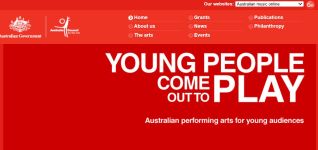 “Australia Council for the Arts website captured 2008” The website reads “The Australia Council for the Arts is the Australian Government's arts funding and advisory body.” – links to the arts, Grants, News, Events, Publications, Philanthropy.
- Kath Duncan
-
“Fusion Theatre established in 1997” Fusion Theatre (Victoria) was established in 1997. "Since its beginnings as a drama group, Fusion has expanded into two main performance ensembles that make up the company. The ensemble members collaborate with professional theatre makers, guest performing artists and designers, to devise theatre performances based on the stories, imagination and ideas of all participants." Fusion Theatre’s ongoing association with Deakin University's Faculty of Arts and Education means that each year, Deakin’s theatre and drama students work with Fusion as artists, performers, assistants, and theatre technicians. Some alumni continue to be involved with the company.
-
 "Australia Council - Annual Report 1974-75" Australia Council Annual Report 1974-75 lists funding to Spectrum Films for a screenplay on social pressures of deaf mute, grant to Lloyd Nickson to attend theatre for deaf children (USA & UK), funding to Wheelchair and Disabled Association (as it was known 19for jewellery making tools and equipment, and Arts Council of Australia/Victoria (as it was known 1966-1998, before name changed to Regional Arts Australia) for salary of assistant and utilities for Arts Access Program
-
 "Interview with Patricia Wozniak" Patricia Wozniak is a neurodivergent visual arts coordinator at Tutti Arts and is a disability arts advocate and ally. Interview Summary Patricia Wozniak, a visual arts coordinator at Tutti Arts with 14-15 years of experience, initially volunteered while studying for her master's and found joy and liberation in making art with the organisation. Tutti Arts has grown from offering two days to five days of visual arts each week and supports artists to enjoy creating, access quality materials, and earn income. While faced with challenges like NDIS funding intricacies and the need for easy-to-understand contracts, Patricia emphasizes the importance of artist-driven practice and equal opportunities. She observes a shift toward digital art and commercial endeavours among artists and asserts the vitality of educating artists about their rights and the political aspect of disability art in cultivating change and expression of identity.
-
"Bree Hadley, Gerard Goggin, Petra Kuppers, Colette Conroy, Meagan Shand, Donna McDonald, Martin Paten, Norm Horton, Sarah Moynigan, Veronica Pardo, Caroline Bowditch, Morwenna Collett, Kerry Comerford, David Doyle, Pat Swell, Clark Crystal, Peter Stuart (2019) The NDIS and disability arts in Australia: Opportunities and challenges. Australasian Drama Studies, 74, pp. 9-38." "In Australia, disabled people’s participation in the arts has historically been afforded by means of direct-to-organisation grants that arts, community services or disability services arms of government award to arts organisations, charities or disability service organisations, who then deliver programmes. The introduction of the National Disability Insurance Scheme (NDIS) is creating wide-reaching changes for disability arts practice in Australia. We undertake a first step in addressing the need for research into how the NDIS will alter the landscape of disability arts practice in Australia. We highlight a set of questions that all performing and creative arts industry stakeholders will need to respond to, in order to ensure that the excellent work done in disability arts in Australia to date can continue in the new climate that the NDIS brings."
-
“Australia Council (1989) The Arts and People with Disabilities: A code of practice for arts organisations. https://webarchive.nla.gov.au/awa/20000324231832/http://www.ozco.gov.au/publicat/Inprint.htm” Australia Council- 'The Arts and Disability: A code of practice for arts organisations' in print publications https://webarchive.nla.gov.au/awa/20000324231832/http://www.ozco.gov.au/publicat/Inprint.htm
-
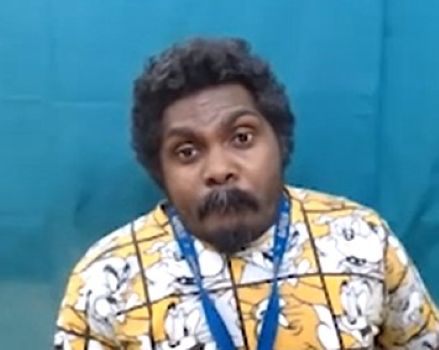 "Interview with Graham Wilfred Junior" Graham Wilfred Junior is a Yolngu man and artist with Incite Arts where he works with different mediums including filmmaking, writing, performing and music. Interview Summary Graham, an emerging artist with spina bifida whose father inspired his passion for art, has pursued various art forms including painting, music, and digital art, now calls Mparntwe/Alice Springs home, and is venturing into theatre and filmmaking. His digital artwork, through the creation of the indigemoji app, helps teach the Arrernte, the language of the First Nations people of Mparntwe/Alice Springs. He now seeks to expand his impact through acting and creating films. Graham's motivation is to both celebrate and inspire people with disability, aiming for recognition as an artist rather than focusing solely on his disability. Graham shares his journey with Incite Arts, highlighting his involvement in music workshops, acting classes and script development, emphasizing the importance of representation and empowerment for individuals with disability. Ultimately, he aims to document his experiences and create impactful performances that leave a legacy to encourage others to pick up where he leaves off, ensuring the continuity of artistic expression within his community.
-
 "Accessible Arts - ACE Arts Creativity Expression - Pru Jobling - Press Release: Appointments to Disability Services Advisory Committee (DSAC) in all states, and to the Advisory Council of Australia (DACA) - Iss4, Pg18-19" Accessible Arts - ACE Arts Creativity Expression - Pru Jobling - Press Release: Appointments to Disability Services Advisory Committee (DSAC) in all states, and to the Advisory Council of Australia (DACA) - Iss4, Pg18-19 - reads, in part "You may or may not be aware that the Minister for Health, Housing and Community Services (formerly DCS&H) Mr Brian Howe, has recently appointed new members of the disability community to the Disability Services Advisory Committee (DSAC) in all states, and to the Advisory Council of Australia (DACA) which is the national body."
-
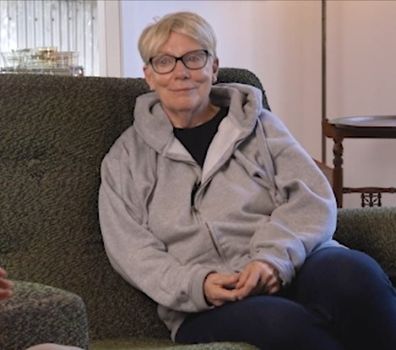 "Interview with Pat Rix" Pat Rix is a Disability Ally and Social Change advocate, and the recently retired Founder and CEO of TUTTI ARTS Incorporated. Interview Summary Pat Rix is an Artistic Director who has made extraordinary and sustained contributions to Australia’s cultural life through her artistic practice and leadership. A significant arts contributor since 1985, Pat made her early mark through plays and music-theatre productions which drew attention to social injustice and championed social inclusion. Her journey in disability arts began in 1997 with the formation of an inclusive choir at Minda Inc. which in 2001 incorporated to become the independent multi arts organisation known as ‘Tutti’ - embodying the inclusive Italian term meaning ‘everyone’. At a time when there were no vocational pathways for learning disabled and neuro divergent people, Tutti became a national trailblazer in creating a work environment where learning disabled and neuro diverse artists could create visual art, theatre, music, film and experimental art in a way that authentically nurtured their professional growth and recognition. Pat stresses the importance of disabled artists having control over their work. She believes that art is inherently political, and that it is finding your voice, being heard and being taken seriously that contributes to any artist's success. Pat looks forward to the future evolution of disability arts and the role of technology in enabling disabled artists to develop local and global partnerships which continue to provide exciting opportunities for artistic development.
-
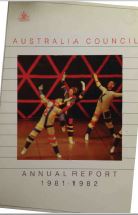 "Australia Council - Annual Report 1981-82" Australia Council Annual Report 1981-82 - discusses objectives, members of council, board members, organisation chart, staff list, council report, programs, board reports, financial statements, publications and grant lists incuding Arts Access Society (Vic) theatre performance of “Theorem” as well as funding for workshops in Artreach, Southern Media Co-operative, disabled playwright in residence, travel costs and artists fees as well as salaries of deaf artists and mime directors and research publication.
-
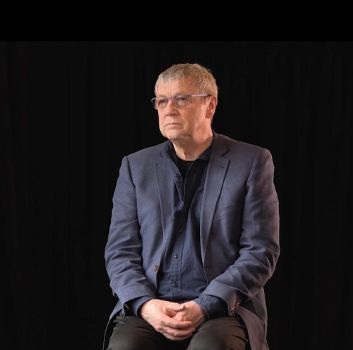 "Interview with Nick Hughes" Nick has worked as an actor, director, writer, artistic director, dramaturg and was the Company Manager for Restless Dance Theatre Interview Summary Nick Hughes is a retired arts administrator who has worked in various capacities within the arts industry, including as an actor, writer, stage manager, and notably as the company manager for Restless Dance Theatre. Nick gained degrees in drama, and sociology, and moved from the UK to Australia in 1973. During the interview, Nick reflects on his significant contributions to the arts and disability sectors. Despite being unfamiliar with disability arts in the beginning, Nick says he became deeply involved and committed to the field, valuing disability arts for the social and political aspects. Nick discusses witnessing first-hand the growth and development of individuals through creative expression. Throughout his career, Nick says he has seen the evolution and increasing recognition of disability arts as a legitimate and powerful art form capable of altering people’s perceptions and advocating for inclusivity and equality in society.
-
“Australia signs the UN Convention on the Rights of People with Disability” In 2007, Australia signed the UN Convention on the Rights of People with Disability. The CRPD seeks to “promote, protect and ensure the full and equal enjoyment of all human rights and fundamental freedoms by all persons with disabilities”. The Convention came into effect in Australia on 16 August 2008.
-
"The Other Film Festival launched in 2004" In 2004, Australia’s first international disability film festival, The Other Film Festival, was launched at the Melbourne Museum. In 2022, Screen Australia began providing funding for festival.