Items
Search full-text
“Australia Council releases its first Disability Action Plan”
-
"Making the arts work for everyone: a resource and information kit about arts and disabilities produced in 1995" Arts Access Victoria and Australia Council published 'Making the Arts Work for Everyone: A Resource and Information Kit about Arts and Disabilities' in 1995.
-
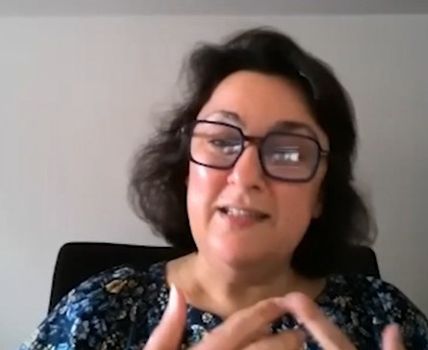 "Interview with Veronica Pardo" Veronica Pardo is a disability arts ally and has been a disability advocate with previous leadership positions in organisations such as Arts Access Victoria and Multicultural Arts Victoria, Interview Summary Veronica Pardo, former Executive Director of Arts Access Victoria, discussed the evolution and impact of Disability Arts in Australia, detailing the political dimensions of the field and the importance of genuine representation and intersectionality. Pardo highlighted the importance of leadership transitions in arts organizations informed by a spirit of solidarity and mutual support, particularly citing Caroline Bowditch's role as significant in the sector. She emphasized a need for systems-level change within the arts to reflect true diversity, beyond tokenism, advocating for dismantling exclusive structures and creating new ones informed by those marginalized. Finally, Pardo stressed the importance of acknowledging the work of predecessors in Disability Arts to honour their legacy and inform current artistic and cultural practices.
 -
 "Australia Council - Annual Report 2003-04" Australia Council Annual Report 2003-2004 - discusses letter from chair of council, letter from CEO, corporate overview, year in review, financial statements, analysis of funding analysis and grants list, including funding for conduct national research to identify ways of addressing barriers to access for audiences with disabilities and their carers, funding for the publication, “Don’t Give Up Your Day Job”, included survey questions specifically related to artists with disabilities, arts marketing and audience development and triennial grants to disability arts organisations in NSW, South Australia and Victoria as well as funding to conduct national research to identify ways of addressing barriers to access for audiences with disabilities and their carers and three year funding for Accessible Arts to continue Audience Development.
 -
"The Other Film Festival launched in 2004" In 2004, Australia’s first international disability film festival, The Other Film Festival, was launched at the Melbourne Museum. In 2022, Screen Australia began providing funding for festival.
-
“The 1985 New Directions Report is released” People with disabilities and their families participated in the review for the first time as part of a comprehensive consultation process. The resulting report ‘New directions: report of the Handicapped Programs Review’ was released in 1985. It indicated the need for change in disability policy culture of how people with a disability rights and capacities to realise their individual capacities for development.
-
 "Australia Council - Annual Report 1982-83" Australia Council - Annual Report Australia Council Annual Report 1982-83 - discusses objectives, members of council, board members, organisation chart, staff list, council report, programs, board reports, financial statements, publications and grant lists including workshops, art production activities, production of magazine, award and performances.1982-83
 -
 “Australia Council – The Arts, captured 2010” Website includes: The arts, Aboriginal and Torres Strait Islander Arts, Artists and organisations, Community partnerships, Dance, Inter-arts, Literature, Market development, Music, Theatre, Visual arts
 -
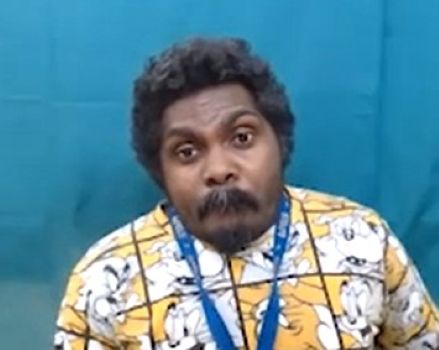 "Interview with Graham Wilfred Junior" Graham Wilfred Junior is a Yolngu man and artist with Incite Arts where he works with different mediums including filmmaking, writing, performing and music. Interview Summary Graham, an emerging artist with spina bifida whose father inspired his passion for art, has pursued various art forms including painting, music, and digital art, now calls Mparntwe/Alice Springs home, and is venturing into theatre and filmmaking. His digital artwork, through the creation of the indigemoji app, helps teach the Arrernte, the language of the First Nations people of Mparntwe/Alice Springs. He now seeks to expand his impact through acting and creating films. Graham's motivation is to both celebrate and inspire people with disability, aiming for recognition as an artist rather than focusing solely on his disability. Graham shares his journey with Incite Arts, highlighting his involvement in music workshops, acting classes and script development, emphasizing the importance of representation and empowerment for individuals with disability. Ultimately, he aims to document his experiences and create impactful performances that leave a legacy to encourage others to pick up where he leaves off, ensuring the continuity of artistic expression within his community.
 -
“Screen Australia commissions the reports ‘Seeing Ourselves’ (2016) and ‘Seeing Ourselves 2’ (2023)” In 2016, Screen Australia commissioned a report "Seeing ourselves: Reflections on diversity in Australian TV drama". The report highlighted the lack of characters on TV with a disability. When characters with a disability were part of the story they were played by actors without a disability and were portrayed as either unemployed or retired. Screen Australia commissioned a follow-up report in 2023 called "Seeing Ourselves 2 - Diversity, equity and inclusion in Australian TV drama". This report shows that, while diversity is a global conversation and there is an increase of disability representation, it remained significantly lower than the actual disabled population.
-
"Commonwealth of Australia, 2018. Research Overview: Arts and Disability in Australia. Barton: Department of Communication and the Arts, Cultural Ministers Council. Available from: https://www.arts.gov.au/sites/g/files/net1761/f/research_overview_of_arts_and_disability.pdf." Reads, in part "The Research Overview brings together published and unpublished data and research about arts and disability in Australia, and case studies highlighting arts and disability practice around the country. The Research Overview is part of the evidence base for a renewed National Arts and Disability Strategy. The evidence gathered here will be complemented by submissions and survey during a national consultation in 2018."
- Leo Cussen
-
 "Australia Council - Creating Pathways: Insights on support for artists with disability - 2018" Reads, in part "This report brings together findings and insights from a range of research undertaken in 2017–18 to inform the Council’s approach to future support for artists with disability."
 -
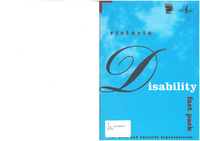 "Victoria : disability fact pack for arts and cultural organisations - DADAA National Network and Australia Council (1998)" Disability fact pack for arts and cultural cultural organisations in Victoria
 -
“The Cunningham Dax Collection of artworks opens” In 1952, an English psychiatrist Dr Eric Cunningham Dax was appointed as the Chairman of the Mental Hygiene Authority in Melbourne. In the UK, Dr Dax had introduced art therapy in programs for patients in psychiatric care and introduced art programs to Victorian Hospitals. In 1959, Dr Dax organised the first art exhibition of psychiatric patients held at Gallery A, Flinders Lane. The Cunningham Dax Collection of artworks grew, and an official opening occurred in Faraday Street Gallery in the 1980s. “Two distinct eras are represented in the Cunningham Dax Collection; artworks produced within psychiatric hospitals from 1940s into 1970s and artworks donated to the Collection by artists and community groups from 1980s until the present.” Dr Dax had introduced art therapy in programs for patients in psychiatric care and introduced art programs to Victorian Hospitals. In 1981, the National Gallery of Australia received 68 paintings from the Dax Collection - these were returned in 1994.
-
“Access Arts Achievement Award inaugurated in 2014” Access Arts announced a $10,000 Achievement Award in 2013 and first awarded the grant in 2014 to actor Doug Robins. Other recipients since then have included writers, musicians, visual artists, theatre makers, and multi-disciplinary artists. The funding goes to a Queensland artist with disability to “create, develop, present, produce, exhibit and/or tour their work.” Access Arts describe it as “a game-changing opportunity for Queensland artists, arts workers and producers to extend the life of an existing work or create a new one!”
-
“Perth International Arts Festival partners with DADAA to promote the inclusion of Deaf and disabled artists” As the Artistic Director of the Perth International Arts Festival (PIAF), Wendy Martin enabled first significant inclusion of Deaf and disabled artists. This inclusion was driven by a partnership (2016-19) between PIAF and DADAA (Disability in the Arts, Disadvantage in the Arts, WA).
-
“Alan Marshall writes ‘I Can Jump Puddles’ in 1955” Alan Marshall wrote 'I Can Jump Puddles' in 1955., the first in a series of works about growing up with a disability. The subsquent books were 'This Is the Grass' (1962), 'In Mine Own Heart' (1963), and 'Hammers Over the Anvil' (1975). Marshall contracted polio at age six and became physically disabled.
-
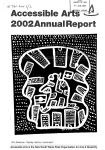 "Accessible Arts - Annual Report 2002" Accessible Arts - Annual Report 2002 - Vision Statement, Objectives, Chairperson's Report, Treasurer's Report, Executive Officer's Report, Review Of Operations 2002-2003, Operational Plan 2003-2004, Independent Auditor's Report, Management Committee, Attendance 2002-2003
 -
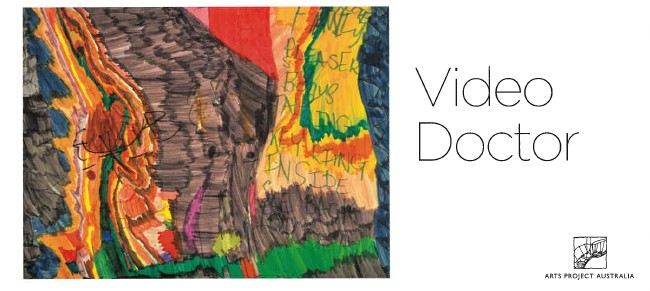 "Arts Project Australia - Video Doctor Exhibition 2013 - Promotional Card" Arts Project Australia - Video Doctor Exhibition 2013 - Promotional Card - reads, in part "Working in collaboration with Arts Project Australia and Electronic Arts Intermix New York, Video Doctor brings together works by international and Australian artists. The title of the exhibition takes its cue from early VHS or Beta Max head cleaning tapes. Just as the 'doctor' would revive the clarity of the picture, the idea of revival is a key theme shared by the artists invited to be part of the project."
 -
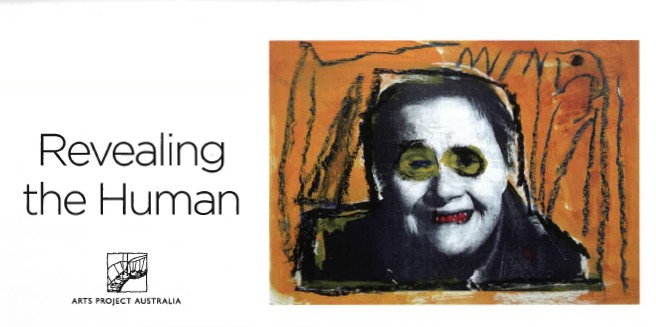 "Arts Project Australia - Revealing The Human Exhibition 2009 - Promotional Flyer" Arts Project Australia - Revealing The Human Exhibition 2009 - Promotional Flyer - reads, in part "Arts Project Australia presents an 'inspiring collection' of work by its studio and international studio artists working with the human figure."
 -
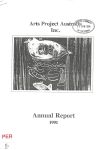 "Arts Project Australia - Annual Report 1991" Arts Project Australia - Annual Report 1991 - includes Aims and Objectives, President's Report, Program Director's Report, 1991 Exhibition Report, Scenes from the Studio Workshop, Financial Reports, Acknowledgements and Thanks - reads, in part "Arts Project Australia began in 1974 as an arts based advocacy group for people with intellectual disabilities. A major reason for the formation of "the Art Project" (as it was then known) was the insight on the part of its members that many people who have an intellectual disability displayed aptitude and talent in the visual arts, and that the flexible conventions of these arts forms could provide access to a variety of means of expression and communication, even when more common forms, particularly linguistic, were difficult for them to utilise."
 -
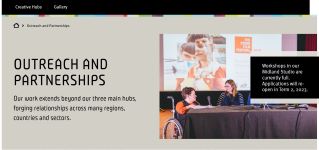 "DADAA Outreach and Partnerships Webpage, captured 2023" DADAA Outreach and Partnerships Webpage, captured 2023 – reads, in part "In addition to its three main hubs, DADAA works with other organisations to take our services and programs to communities, or to develop new services and programs that enhance access to arts and cultural activities for artists and audiences. Arts programs can be customised to respond directly to the needs of your community or clients, to ensure inclusive practice or to bring new audiences to your organisation."
 - Tony Doyle
-
"New South Wales disability fact pack for arts and cultural organisations - DADAA National Network and Australia Council (1998)" Disability fact pack for arts and cultural organisations in New South Wales
-
"Northern Territory : disability fact pack for arts and cultural organisations - DADAA National Network and Australia Council (1998)" Disability fact pack for arts and cultural organisations in the Northern Territory