Items
Search full-text
“Australia Council releases its first Disability Action Plan”
- Lynn Buchanan
-
 "Australia Council - Annual Report 1980-81" Australia Council Annual Report 1980-81 - discusses members of council, standing committees and board reports as well as financial statements, grants lists, publications and programs particularly focused on the 1981 International Year of the Disabled Person (IYDP) including accessibility, integration and raising awareness of barriers of disability in arts, with funding for research, art exhibitions, theatre, film (“Stepping Out”), dance (“Life, Images and Reflections”), craft, and literature; conference, seminar celebrating IYDP.
-
 "Tutti Ensemble - Holdfast Bay Community Choir Newsletter - Newsletter One - 1999" Tutti Ensemble, Holdfast Bay Communitty Choir, first newsletter distributed by Tutti Ensemble and Minda Inc disability service organisation in 1999 - reads, in part "Welcome to our first newsletter. We hope this is the first of many to come. We intend to put out a newsletter every two months to keep people informed on what is happening in the choir. Articles or information from choir members are welcome."
-
"Australia Council (1999) Access All Areas: Guidelines for Marketing the Arts to People with Disabilities. https://webarchive.nla.gov.au/awa/20080720180431/http://www.australiacouncil.gov.au/publications/disability_and_the_arts/access_all_areas_guidelines_for_marketing_the_arts_to_people_with_disabilities" Australia Council 'Access all areas: guidelines for marketing the arts to people with disabilities' 1999 - reads, in part "Access all areas: guidelines for marketing the arts to people with disabilities For most people, the decision to be exposed to the experience of an arts event is a simple one. You go, because you choose to go. Providing that choice to people with disabilities is the issue of Access all areas. This guide is intended to be practical, covering actions which are within reach of arts organisations, especially marketing officers and their departments. How to identify this audience, how to reach them and how to provide what they want is the key advice contained in Access all areas."
-
 "Australia Council - Annual Report 2011-12" Australia Council Annual Report 2011-2012 – discusses year in review, letter from chairman, vision, list of council staff, message from the CEO, Strategic priorities, funding overview, statement of outcome, about the Australia Council including governance, boards, organisation, accountability, workplace; financial review and discussion of Arts Organisations having two sections: Major Performing Arts and Key Organisations with a view to making the performing arts broadly accessible.
- Royal Blind Society of NSW
- Royal Blind Society Sydney
-
 "Accessible Arts - Annual Report 1997"
-
"Founder of the Victorian Association of Braille Writers and the Association for the Advancement of the Blind publishes her memoirs" In 1947, “Memoirs of Tilly Aston: Australia's Blind Poet Author and Philanthropist” was published. “Memoirs of Tilly Aston” is an autobiography by Mathilda Ann Aston who was the first blind person in Australia to go to university. Aston founded the Victorian Association of Braille Writers and the Association for the Advancement of the Blind.
-
"Mary Hutchison (2005) Making the Journey: Arts & Disability in Australia. Sydney: Arts Access Australia." Reads, in part "A collection of inspiring examples of how to include people with disabilities in the arts, as participants, creators and organisers"
-
"Bree Hadley (2022) Disability and the Arts, Creative, and Cultural Industries in Australia. Australian Academy of Humanities" Reads, in part "There are five interrelated factors that support arts workers, arts organisations, and the arts sector at large to develop improved policy, protocol, and training practices."
- NuunaRon formerly with First Peoples Disability Network
-
“The Cunningham Dax Collection of artworks opens” In 1952, an English psychiatrist Dr Eric Cunningham Dax was appointed as the Chairman of the Mental Hygiene Authority in Melbourne. In the UK, Dr Dax had introduced art therapy in programs for patients in psychiatric care and introduced art programs to Victorian Hospitals. In 1959, Dr Dax organised the first art exhibition of psychiatric patients held at Gallery A, Flinders Lane. The Cunningham Dax Collection of artworks grew, and an official opening occurred in Faraday Street Gallery in the 1980s. “Two distinct eras are represented in the Cunningham Dax Collection; artworks produced within psychiatric hospitals from 1940s into 1970s and artworks donated to the Collection by artists and community groups from 1980s until the present.” Dr Dax had introduced art therapy in programs for patients in psychiatric care and introduced art programs to Victorian Hospitals. In 1981, the National Gallery of Australia received 68 paintings from the Dax Collection - these were returned in 1994.
-
“The inaugural National Braille Music Camp takes place” In 1986, Ian Cooper was one of the creators of the first National Braille Music Camp, which continues annually.
-
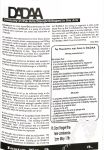 "Accessible Arts - ACE Arts Creativity Expression - Dave King - Article: DADAA - Disability in the Arts/Disadvantage in the Arts- Iss5, Pg3" Accessible Arts - ACE Arts Creativity Expression - Dave King - Article: DADAA - Disability in the Arts/Disadvantage in the Arts- Iss5, Pg3reads, in part "DISABILITY IN THE ARTS/DISADVANTAGED IN THE ARTS AUSTRALIA (DADAA) is a group of artists/art workers who represent the states and territories of Australia. Its members are representatives from those groups who work towards artistic empowerment and filling the creative needs of people with disabilities - that is to name a few, ACCESSIBLE ARTS and ARTS ACCESS. All the current members attended a meeting in July. They all work with people with disabilities and three have disabilities. The inaugural meeting was held in late 1990. This group was formed to facilitate and maintain a responsive external overview of the trends in the arts for those experiencing disadvantage or a disability."
-
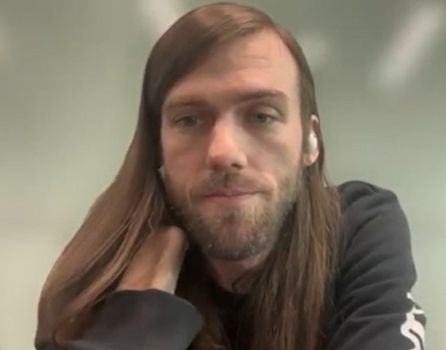 "Interview with Daniel Savage" Daniel Savage is an artist and disability advocate working in mediums of photography, video and performance. Interview Summary: Daniel discussed his background as a disabled contemporary artist primarily focused on photography, with additional interests in video and performance. Daniel detailed the journey through his artistic career, highlighting significant experiences such as art school education, early influences, and the impact of acquiring a disability. He also explored the evolution of his style and interests, particularly his shift towards digital technology and his involvement in advocacy for accessibility in the arts. Daniel also shared his perspectives on the challenges and achievements within the disability arts scene in Australia, including public awareness and integration with contemporary art.
-
 "Tutti Ensemble - Partnerships in Healthy Communities Program - 2006 Program Review" Tutti Ensemble 'Partnerships in Healthy Communities Program'-2006 Program Review - reads, in part "2006 was an exceptionally productive and exciting year for the Tutti Ensemble. The Funds from the Arts SA Partnerships in Healthy Communities Program alowed us to appoint a Development Manager enabling the organisation to extend its range of programs and contribute to its ongoing financial viability by attracting corporate sponsorship, managing several very successful fund raising events and identifying performance opportunities for the ensemble."
-
 “Australia Council – The Arts, captured 2010” Website includes: The arts, Aboriginal and Torres Strait Islander Arts, Artists and organisations, Community partnerships, Dance, Inter-arts, Literature, Market development, Music, Theatre, Visual arts
-
"Access2Arts (SA) established in 2009" Access2Arts (SA) was established in 2009. In their own words, “following on from many years of work by the Community Arts Network SA (CANSA), a project was created within Arts SA called the Disability Arts Transition Team. This led to our establishment as an independent body to represent, advocate and respond to the needs of the arts and disability sectors.” The organisation became incorporated in 2013. They are the body for arts and disability in South Australia.
-
“An ABC video series explores the experiences of deaf and disabled musicians” A 2021 video series by ABC Classic featured interviews with four deaf and disabled musicians. The series, made in honour of International Day of People with Disability, explored the musicians’ experiences of the music industry.
-
"Commonwealth of Australia (2019) Key Results of the 2018 Public Consultation: National Arts and Disability Strategy. Canberra: An initiative of the Meeting of Cultural Ministers" Reads, in part "Between 24 September and 3 December 2018, people shared their stories and ideas about arts and disability in Australia. The Meeting of Cultural Ministers asked to hear these ideas and stories. The Meeting of Cultural Ministers is made up of the Cultural Ministers from the Australian Government and state and territory governments. The statistics in the report all come from the online survey. These ideas and stories will help Ministers to make a new National Arts and Disability Strategy.
-
"Bree Hadley (2018) Disability, disabled dance audiences and the dilemma of neuroaesthetic approaches to perception and interpretation. In Wood, K, Brown, A, Waelde, C, Harmon, S, Blades, H, & Whatley, S (Eds.) Dance, disability and law: Invisible difference. Intellect Ltd, United Kingdom, pp. 293-315.” "In this chapter, I want to consider one emerging approach to spectatorship – the neuroaesthetic approach – through the lens of disability spectatorship. In the twenty-first century, neuroaesthetics is gaining traction amongst scholars looking to provide accounts of spectatorship in less story-based performing arts such as classical and contemporary dance, as well as in more story-based practices in drama, theatre and performance. ‘It would be fair to say that neuroaesthetics has become a hot field’, as Alva Noë puts it (2011). To date, though, the assumptions that underpin neuroaesthetic approaches to spectatorship have not been brought together with the assumptions that underpin the equally emergent field of disability spectatorship studies. As Carrie Sandahl (2002: 18) has noted, different cognitive, sensory and corporeal abilities result in a range of different phenomenologies, perceptual processes and perceptual preferences that can in turn produce different styles of engagement with experiences, events and objects. These differences impact on how people with disabilities produce and perceive aesthetic performances – somatically, syntactically, symbolically and socially, as disabled people hear with their eyes, see with their fingers, or perceive phenomena vicariously via the intervention of technologies or translators. Accordingly, disability spectatorship, and more detailed attention to the presence of distinctive cognitive, sensory and corporeal processes amongst disabled spectators, has the potential to complicate, extend and challenge assumptions embedded in emerging neuroaesthetic approaches to spectating."
-
"Bree Hadley (2016) Cheats, charity cases and inspirations: disrupting the circulation of disability-based memes online. Disability and Society, 31(5), pp. 676-692." "With the increasing part online self-performance plays in day-to-day life in the twenty-first century, it is not surprising that critiques of the way the daily social drama of disability plays out in online spaces and places have begun to gain prominence. In this article, I consider memes as a highly specific style or strategy for representing disability via social media sites. I identify three commonly circulating categories of meme – the charity case, inspiration and cheat memes – all of which offer representations that people with disabilities find highly problematic. I then investigate the ways in which disabled people have begun to resist the representation and circulation of these commonly circulating categories of memes, via the production of counter or parodic memes. I focus, in particular, on the subversive potential of these counter memes, within disability communities online and within broader communities online."
-
 "High Beam Festival Program 2004" High Beam Festival Program 2004 reads "Welcome to evolve High Beam 2004 – A stimulating and inspiring seven-day cultural experience for people with a disability, families, friends and support workers, artists with a disability, professionals working in the disability sector, art workers and others."
- Rawcus