
Items
Search full-text
“Australia Council releases its first Disability Action Plan”
-
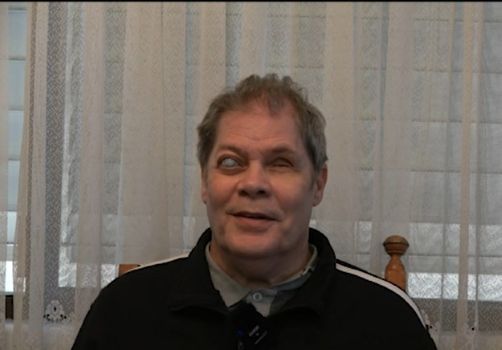 "Interview with Jeff Usher" Jeff Usher is a jazz and blues composer, arranger, pianist, vocalist, teacher, lecturer, and music consultant. Interview Summary Jeff Usher is a visually impaired Australian jazz musician with a rich history of playing music since childhood, influenced by a significant early encounter with the Jazz Action Society and key individuals like his high school music teacher Kathleen Kerr and his supportive family. Throughout his career, he has worked with a diverse range of musicians across many genres, including country, rock, and church music, and has expanded his repertoire to include political and spiritual themes, often infused with his synaesthetic experience of colour. Despite a broad professional experience, his engagement with the disability arts space developed over time, particularly through collaboration with other disabled artists, and he values working with good artists regardless of their backgrounds or disabilities. He is deeply committed to his craft, finding a balance between the aesthetic quality of his work and the joy it brings, both to himself and his audiences.
- Australian Elizabethan Theatre Trust
-
"Jung Hyoung Yoon, Caroline Ellison, Peggy Essl (2020). Shifting the perspective from ‘incapable’ to ‘capable’ for artists with cognitive disability; case studies in Australia and South Korea. Disability & Society, 36(3), 443–467. https://doi.org/10.1080/09687599.2020.1751079" Reads, in part "This study examined four inclusive arts organisations in Australia and South Korea, providing creative services for artists living with cognitive disability, including autism, intellectual and mental disability. This research study focused on exploring what support inclusive arts organisations and society have provided for artists living with cognitive disability to pursue professional careers."
-
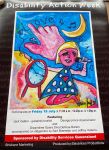 "Salubrious Productions - Disability Action Week" Music event for Disability Action Week
-
"Bree Hadley, Janice Rieger (2021) Co-designing choice: objectivity, aesthetics and agency in audio-description. Museum Management and Curatorship, 36(2), pp. 189-203.” "The ‘Vis-ability’ exhibition, presented at the QUT Art Museum in 2019 was an exhibition curated with clear social inclusion goals from the outset. Through it, the museum sought to develop innovative, cost effective, and readily replicable techniques to allow blind and low vision visitors and artists to engage with the institution and its collections. The results affirm the benefits of offering blind and low vision visitors a spectrum of engagement choices, and also affirm that blind and low vision artists and visitors have capacity to make a critical contribution in co-designing that spectrum of choices. This exhibition and its use of multisensorial elements offers a useful prompt to museums to engage this community more fully in co-designing inclusion in the future."
- Eddie Paterson
-
“Accessible Arts (NSW) established” Accessible Arts (NSW) was established in 1986. "the peak arts and disability organisation in New South Wales. We advance the rights of, and opportunities for, people with disability or who are d/Deaf to develop and sustain professional careers in the arts and have equitable access to arts and culture across NSW".
-
“Queensland Advocacy Incorporated spearhead campaigns to close institutions” In 1989, when the Bjelke-Petersen-Ahern Government was coming to an end, the newly established Queensland Advocacy Incorporated was spearheading campaigns around the state to close down institutions and provide financing for individual help for individuals with disabilities.
-
“Advocates fight for accessible public transport” In 1994, Maurice Corcoran (a wheelchair user) lodged a complaint about the South Australian government ordering 50 new buses that were not accessible. The Australian Human Rights Commission successfully negotiated for all new buses to be fitted with ramps. Then, in 1999, a protest about the lack of public transport options for people with disability saw Citizens for Accessible Public Transport block traffic in Sydney’s city centre.
-
“Studio A established in 2000” Studio A (NSW) was established in 2000 to create access and opportunities for visual artists with intellectual disabilities; their in-house artists’ “practices range from painting and drawing to sculpture, textiles and digital media”. In their own words, “At Studio A, we are dedicated to professionally empower artists with disability and have their voices heard within contemporary Australian culture.”
-
“Sit Down Shutup and Watch, a screen festival for people with learning disabilities, is launched in 2014” In 2014, Tutti Arts launched Sit Down Shutup and Watch (SDSW). SDSW is a collective led by people with learning disabilities; They present a biennial international screen festival which features the work of disabled creators. The committee also hosts workshops and online resources.
-
“The arts sector is forced to adapt in the face of COVID-19 lockdowns” Government-enforced lockdowns in response to the COVID-19 pandemic saw arts events cancelled and disability arts organisations temporarily close physical premises as social distancing rules came into play. While Coronavirus 19 restricted social contact, there were some benefits that arose such as increased digital access for social connection, online ordering accessible via screen readers and home delivery, virtual tours of art galleries, online choirs, and telehealth appointments.
-
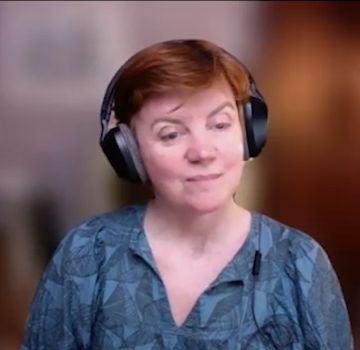 "Interview with Sofya Gollan" Sofya Gollan is a distinguished artist, screenwriter, filmmaker and cultural leader in advocating for the Deaf and disabled communities. Interview Summary Sofya Gollan is a versatile and experienced artist with a background in acting, writing, directing, and producing, known for her work in theatre, film, and television, and for navigating the industry as a deaf individual. Her journey into the arts began with her involvement in the Australian Theatre of the Deaf and further developed as she trained at prestigious institutions like NIDA and AFTRS, where she expanded her skills in filmmaking. Despite facing challenges and ableism within the industry, Gollan has made significant contributions to disability representation on screen, and highlights the need for ongoing support and funding for disabled artists to promote equity and access to opportunities. Returning as creative practitioner to the industry after an executive role, Gollan continues to advocate for inclusivity and representation, while aiming to create and share content that authentically reflects the deaf experience.
-
”Hadley, Bree, Batch, Morgan, & Whelan, Michael (2021) The entitled ally: Authorship, consultation, and the 'right' to stage autistic people's stories. Disability and Society, 36(9), pp. 1489-1509.” "Theatre has a long tradition of presenting disabled characters as plot devices to tell someone else’s story. A recent production, All in a Row, resulted in heated debate around this issue. This article examines not the play itself, but the conflict between those who objected to the play’s representation of autism, and its creators, who defended their choices by citing their disability-adjacent identities and processes of consultation. For critics, the fact that the creators did not take the community’s concerns seriously was a source of trauma. This article uses this conflict to draw out lessons about how we might better negotiate the right to tell disability stories and strengthen frameworks to support that negotiation. We propose a decision tree diagram to assist artists in understanding the meaning, role, and most importantly the potential consequences of consultation – up to and including a community saying ‘no’ to an artist’s planned representation."
-
"Margaret Cooper (1999) The Australian Disability Rights Movement Lives. Disability & Society, 14(2), 217–226. https://doi.org/10.1080/09687599926280" Reads, in part "The Australian Disability Rights Movement is surviving despite funding threats to advocacy programmes. The integral relationship of advocacy funding to the Australian Disability Rights Movement is outlined. A brief history of the Australian Disability Rights' Movement is given, and whether this is a new social movement, or not, is discussed. The role of Women With Disabilities Australia is outlined."
-
“100 disabled people protest outside Parliament House against moves to tax their government allowances” On 29 September 1978, 100 people with disability protested outside Parliament House against moves to tax their government allowances. Following the protest, Treasurer John Howard was forced to rescind the decision.
-
"Kevin Byrne AM leads protest outside Parliament House" The activist Kevin Byrne AM led a protest outside Parliament House. This coupled with the release of the Richmond Report led to the Hawke Government’s Handicapped Programs Review, which in turn led ‘New Directions: Report of the Handicapped Programs Review’.
-
“House Gang debuts on SBS” In 1996, a comedy television series debuted on SBS called ‘House Gang’ featuring three actors with intellectual disabilities.
-
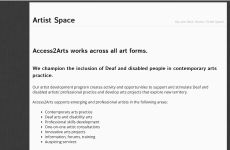 "Access2Arts Artist Space artist development program as first added to website 2016" Access2Arts Artist Space, 4 March 2016.Includes information about Access2Arts "Artist development program creates activity and opportunities to support and stimulate Deaf and disabled artists’ professional practice and develop arts projects that explore new territory. Access2Arts supports emerging and professional artists in the following areas: Contemporary arts practice; Deaf arts and disability arts; Professional skills development; One-on-one artist consultations; Innovative arts projects; Information, forums, training; Auspicing services"
-
 "Australia Council - Annual Report 2015-16" Australia Council - Annual Report 2015-16 - discusses year in review, strategy, funding, and key facts, including "18% identified as Aboriginal or Torres Strait Islander 6% identified as experiencing disability", and running Sync Leadership Program for artists with disability
-
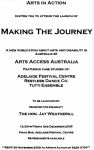 "Tutti Arts - Making the Journey: New Publication About Arts and Disability in Australia By Arts Access Australia - Launch Event - Promotional Flyer" Tutti Arts 'Making the Journey: New Publication About Arts and Disability in Australia By Arts Access Australia - Launch Event' 2005 - Promotional Flyer
-
 "Opening Doors To Creativity" Opening Doors To Creativity: Arts for People with Disabilities in South Australia, by Laurie Strathdee, Field Officer, Arts in Action, 1 September 1989. This study finds that "greater physical access, more affordable arts, more relevant information about the arts and greater social acceptance need to be developed to enable people with disabilities to develop their artistic potential," and makes the case for funding Arts in Action to employ a Community Arts Officer to support people with disabilities to achieve their full artistic potential.
- Arts Council of Australia
-
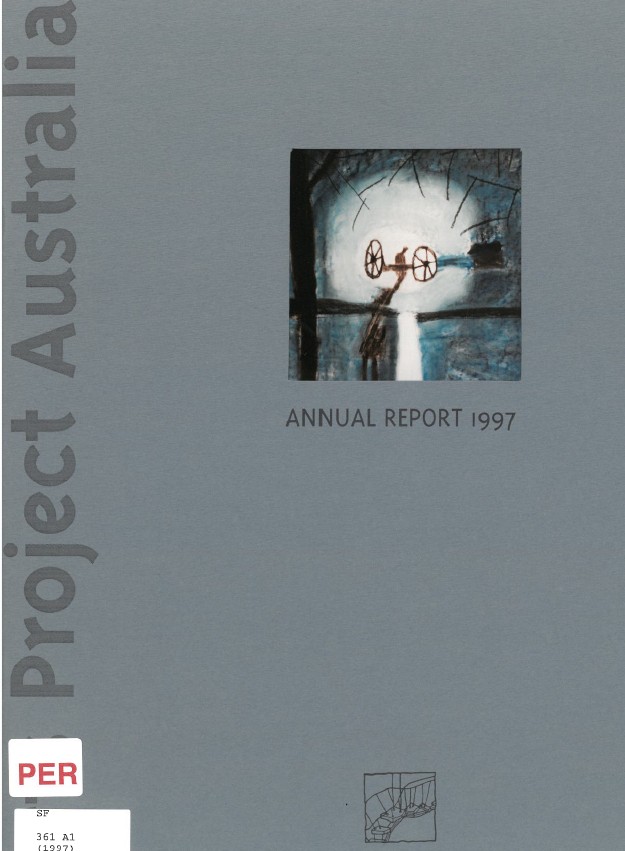 "Arts Project Australia - Annual Report 1997" Arts Project Australia - Annual Report 1997 - Management Committee, Aims and Objectives, President's Report, Director's Report, Studio Workshop Program, Exhibitions, Financial Statements Balance Sheet, Profit and Loss Statement, Income and Expenditure Summary, Statement of Cash Flows, Notes to Statement of Cash Flows, Notes to and Forming Part of the Financial Accounts, Statement to Members, Audit Statement to Members - reads, in part "Arts Project Australia, had its beginnings in 1974. But it was not until 1984 that our first studio workshop was establish.ed, with the aid of a grant from the Commonwealth Schools Commission. Since 1984 the studio workshop programme has physically developed in fairly well-defined cycles of five to six years. Up until 1986 the programme operated in hard to find halls tucked in behind houses or a convent building."
- Indelability Arts