
Items
Search full-text
“Australia Council releases its first Disability Action Plan”
- Helen Connor
- Phil Noack
- Sandy Craig
- Sandra Craig
-
“Screen Australia launches an access coordinator training program” Screen Australia launched an access coordinator training program in 2023. “The Access Coordinator role is intended for people from the Deaf/Disabled and/or Neurodivergent (DDN) communities who are committed to improving disability representation and removing barriers to inclusion.” Screen Australia partnered with the following organisations for the initiative: the New Zealand Film Commission, Screen Queensland, Screen Tasmania, Screen Territory, Screenwest, VicScreen, the South Australian Film Corporation, Screen ACT, Screen NSW, and the Australian Film Television Radio School.
- Lisa Havilah
- Intellectual Disability Services Council
-
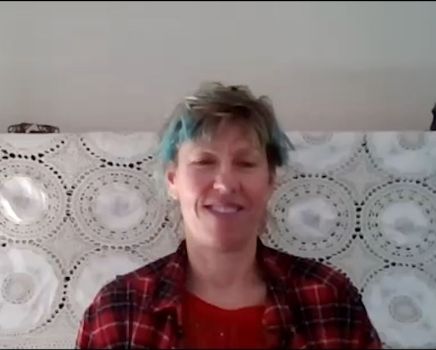 "Interview with Emiko Artemis" Dr Emiko Artemis is a visual artist with a PhD and a history of both solo and group exhibitions. Interview Summary Emiko Artemis identifies as a non-binary queer disabled visual artist. Emiko acknowledges their work essentially reflects their personal experiences with disability and comments on society. Despite interpersonal challenges due to disabilities, Emiko cherishes occasional collaborations, facilitated by clear structures or supportive relationships. Their artwork, often seen as "weird" to the public, aims to be thought-provoking rather than being particularly political. Emiko values the growing visibility of disability in the arts and the increase in acceptance of diversity in society. They proudly embrace their own identity as an integral aspect of their creative practice
- Igneous
-
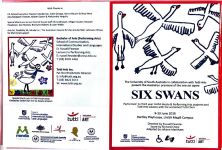 "Tutti Arts - Six Swans - Program" Tutti Arts ‘Six Swans’ 2015 Program – reads, in part “Six Swans is the first collaboration of its kind and we are thrilled to be working together on this production. Tutti is one of Australia's leading disability arts organisations- working to promote the work of disabled artists to the world, and UniSA is at the forefront of providing flexible, compelling industry-relevant learning experiences for students. Productions of this nature are immensely valuable because they break down barriers, enrich the lives of all participants, and create opportunities for graduating and emerging artists involved.”
- Pat Rix
-
“The Mouth and Foot Painting Artists starts in Australia in 1971” The Mouth and Foot Painting Artists (MFPA) started in Australia in 1971. The roots of the international organisation of mouth and food painting artists go back to the 1950s in Europe.
-
“Captioned films launched in Australia” In 2001, captioned films were launched in Australia with a speech by then Disability Discrimination Commissioner Dr Sev Ozdowski OAM. The process with a series of submissions from both the film industry and the Deaf and hard of hearing community. These submissions led to the establishment of a Forum comprised of representatives from the film distribution and exhibition sector, the Deaf and hearing impaired communities and the Australian Caption Centre. After a trial run in Sydney and Melbourne, three major cinema exhibiters (Greater Union, Hoyts, and Village) agreed to show open captioned films at selected venues throughout the country.
-
 "CreativeAustralia/AustraliaCouncil - Website - NameChange 2023" The website reads “On Thursday 24 August 2023 the Australia Council became Creative Australia; a bigger, bolder champion and investor in arts and creativity”
-
"Commonwealth of Australia (2017) “National Arts Disability Strategy Evaluation Report 2013–2015.” Canberra: Meeting of Cultural Ministers." Reads, in part "The second Evaluation Report was endorsed by cultural ministers in September 2017. It concludes that progress continues to be made against the Strategy. It also identifies that there have been significant changes to the arts and disability sector since the release of the Strategy in 2009 such as the introduction of the National Disability Insurance Scheme."
-
"Christopher Newall (1996). The Disability Rights Movement in Australia: A note from the trenches. Disability & Society, 11(3), 429–432. https://doi.org/10.1080/09687599627705" Reads, in part “A recent visitor to Australia from the UK commented to me on their return ‘I looked in vain for the disability rights movement. Can you tell me where they are?’ In essence, the Australia disability rights movement is currently fragmented, predominantly organised around disease labels and seems to have lost ground, compared with the self-help initiatives fostered around the time of the International Year of the Disabled Persons in 1981.”
- Caroline Bowditch
-
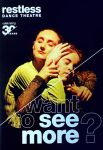 "Restless Dance - Celebrating 30 Years - Promotional Flyer" Restless Dance - Celebrating 30 Years - Promotional Flyer - reads, in part "Now in its 30th year, Restless collal)orates with some of the industry's most renowned choreographers, companies and artists. We create performance work that is presented at prestigious festivals and venues around Australia and internationally. Our workshop program continues to be an incubator for dancers, It creates a pathway for artists to pursue a career in dance. It is the past successes of Restless that have caused the arts sector to be devastated by the news that The Australia Council for the Arts will no longer fund the company through the multi-year funding program (2022 - 2024). It is important that Australia understands the impact this decision will have on the company. Whilst we have funding to continue to produce work, our operational funding ceases at the end of 2021."
- Aldo Gennaro
- Aldo Gennarro
-
"Declaration on the Rights of Disabled Persons adopted in 1975" The 1960s and 1970s saw major changes in people’s attitudes towards disability. Stemming from the growth of the human rights movement and the introduction of normalisation theory internationally, Australia signed key human rights declarations of people with disabilities, the Declaration on the Rights of Disabled Persons (adopted in 1975). The Declaration argued that disabled people deserve to live lives “as normal and full as possible”.
-
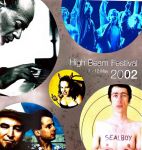 "High Beam Festival Program 2002" High Beam Festival Program 2002 reads "Welcome to High Beam 2002 Australia's international arts and disability festival, celebrating disability culture from around the globe. In our third biennial festival we explore the significance of the circle. In High Beam Festival 2002, that significance is represented through our international program, 'circular' Wheelie BIG Event, the online community of Tech Arts Express and over 40 companies, performers and community members who span the arts and the globe. High Beam is about showing that living with a disability does not exclude you from creating real, exciting, cutting edge art. High Beam is also about showing what it is like to live with a disability through the medium of art. Get out there and enjoy! We are thrilled to present Australia's own legendary pianist David Helfgott, UK comedian Mat Fraser, the amazing wheelchair dancers from Nepal as well as Belinda Mason - Lovering's Intimate Encounters - a landmark photo-graphic exhibition from Australia."
-
"Bree Hadley (2014) Disability, Public Space Performance, and Spectatorship: Unconscious Performers. London: Palgrave Macmillan." "Why would disabled people want to re-engage, re-enact and re-envisage the everyday encounters in public spaces and places that cast them as ugly, strange, stare-worthy? In Disability, Public Space Performance and Spectatorship: Unconscious Performers, Bree Hadley examines the performance practices of disabled artists in the US, UK, Europe and Australasia who do exactly this. Operating in a live or performance art paradigm, artists like James Cunningham (Australia), Noemi Lakmaier (UK/Austria), Alison Jones (UK), Aaron Williamson (UK), Katherine Araniello (UK), Bill Shannon (US), Back to Back Theatre (Australia), Rita Marcalo (UK), Liz Crow (UK) and Mat Fraser (UK) all use installation and public space performance practices to re-stage their disabled identities in risky, guerilla-style works that remind passersby of their own complicity in the daily social drama of disability. In doing so, they draw spectators' attention to their own role in constructing Western concepts of disability. This book investigates the way each of us can become unconscious performers in a daily social drama that positions disability people as figures of tragedy, stigma or pity, and the aesthetics, politics and ethics of performance practices that intervene very directly in this drama. It constructs a framework for understanding the way spectators are positioned in these practices, and how they contribute to public sphere debates about disability today."
-
 "Off the List Records" Off The List Records website, captured 2022 - reads, in part "We are an independent record label, working mostly within the DIY, experimental and indie music space. We care about access to music and endeavour to make our shows and releases inclusive and accessible to everyone."
-
"1963 and 1967 sees the introduction of the Disabled Persons Accommodation Act and Sheltered Employment (Assistance) Act, respectively." With increasing pressure to provide more services to people with disabilities, the 1960s was a decade of Commonwealth Government initiatives to support organisations providing work and accommodation to people with a disability, including the Disabled Persons Accommodation Act and Sheltered Employment (Assistance) Act.