Items
Search full-text
“Australia Council releases its first Disability Action Plan”
-
 "Incite Arts - Unbroken Land 2020 Episode Two - Fire Audio Described" Incite Arts - Unbroken Land 2020 Episode Two 'Fire' Audio Described - Reads, in part "As part of the Unbroken Land 2020 program, these Connect2Culture films show the importance of water and fire in the desert. First Nations Disabled Artists Tiffany Malthouse and Lizzie Trew want the audience to experience how vital both fire and water are to them, their ancestors and their culture. Portraying this through the mediums of dance, film and music enables their thoughts, ideas and visions to be understood and heard."
 -
 "Incite Arts - Unbroken Land 2020 Episode One - Water" Incite Arts - Unbroken Land 2020 Episode One 'Water' Audio Described - Reads, in part "As part of the Unbroken Land 2020 program, these Connect2Culture films show the importance of water and fire in the desert. First Nations Disabled Artists Tiffany Malthouse and Lizzie Trew want the audience to experience how vital both fire and water are to them, their ancestors and their culture. Portraying this through the mediums of dance, film and music enables their thoughts, ideas and visions be understood and heard."
 -
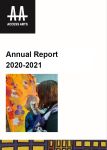 "Access Arts Annual Report 2020-2021" Access Arts Annual Report 2020-2021 - Performing Arts Workshops, Visual Arts Workshops, Exhibitions, First Nations Projects, Undercover Artist Online program and grants, Access Arts grants and Awards
 -
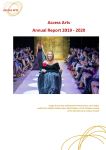 "Access Arts Annual Report 2019-2020" Access Arts Annual Report 2019-2020 - Performing Arts Workshops, Visual Arts Workshops, Exhibitions, First Nations Projects, Access Arts grants and Awards
 -
“7-part series ‘Fair Go’ produced by Film Australia” In 1981, Film Australia produced a 7-part series, called Fair Go, on Australians with mental and physical disabilities and how it impacted their lives and the lives of their families. “Each program is presented from the viewpoint of the person with the disability and demonstrates the practical implications of coping with a disability in daily life at home, in the community, in the workplace or at school.” Film Australia was consolidated into Screen Australia in 2008.
-
“2023 Screen industry report ‘Disability and Screen Work in Australia’ finds disabled people fulfil a range of roles in the screen industry, despite facing prejudice and exclusion, and should be treated as experts of their access requirements” ‘Disability and Screen Work in Australia: Report for Industry’ (2023) was compiled by researchers Radha O’Meara, Laura Dunstan, Anna Debinski and Catherine Ryan. The study was supported by Melbourne Disability Institute and A2K Media. The authors summarise that disabled people fulfil a range of roles in the screen industry, despite facing prejudice and exclusion, and should be treated as experts of their access requirements. They find that “Disabled people experience a more precarious, lower paid, and less powerful position in the screen industry than their non-disabled counterparts.” O’Meara and her colleagues call for widespread change in the industry to expand access.
-
“The Victorian Government commissions ‘Picture This: Increasing the Cultural Participation of People with a Disability in Victoria’” In 2008, ‘Picture This: Increasing the Cultural Participation of People with a Disability in Victoria’ was published. The report was commissioned by the Victorian Government, specifically the Victorian Office for Disability in partnership with Arts Victoria and Disability Services Division and written by Kim Dunphy and Petra Kuppers. It focussed on methods to increase participation by people with disability in the arts as artists and audience members.
- Timothy Cook
-
 "Australia Council - Annual Report 1980-81" Australia Council Annual Report 1980-81 - discusses members of council, standing committees and board reports as well as financial statements, grants lists, publications and programs particularly focused on the 1981 International Year of the Disabled Person (IYDP) including accessibility, integration and raising awareness of barriers of disability in arts, with funding for research, art exhibitions, theatre, film (“Stepping Out”), dance (“Life, Images and Reflections”), craft, and literature; conference, seminar celebrating IYDP.
 - Fiona Taylor
-
“Australia signs the UN Convention on the Rights of People with Disability” In 2007, Australia signed the UN Convention on the Rights of People with Disability. The CRPD seeks to “promote, protect and ensure the full and equal enjoyment of all human rights and fundamental freedoms by all persons with disabilities”. The Convention came into effect in Australia on 16 August 2008.
-
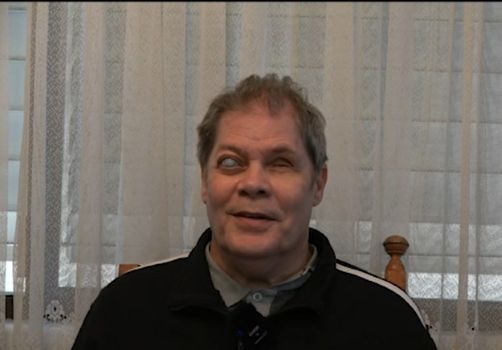 "Interview with Jeff Usher" Jeff Usher is a jazz and blues composer, arranger, pianist, vocalist, teacher, lecturer, and music consultant. Interview Summary Jeff Usher is a visually impaired Australian jazz musician with a rich history of playing music since childhood, influenced by a significant early encounter with the Jazz Action Society and key individuals like his high school music teacher Kathleen Kerr and his supportive family. Throughout his career, he has worked with a diverse range of musicians across many genres, including country, rock, and church music, and has expanded his repertoire to include political and spiritual themes, often infused with his synaesthetic experience of colour. Despite a broad professional experience, his engagement with the disability arts space developed over time, particularly through collaboration with other disabled artists, and he values working with good artists regardless of their backgrounds or disabilities. He is deeply committed to his craft, finding a balance between the aesthetic quality of his work and the joy it brings, both to himself and his audiences.
 -
"Bree Hadley, Gerard Goggin, Petra Kuppers, Colette Conroy, Meagan Shand, Donna McDonald, Martin Paten, Norm Horton, Sarah Moynigan, Veronica Pardo, Caroline Bowditch, Morwenna Collett, Kerry Comerford, David Doyle, Pat Swell, Clark Crystal, Peter Stuart (2019) The NDIS and disability arts in Australia: Opportunities and challenges. Australasian Drama Studies, 74, pp. 9-38." "In Australia, disabled people’s participation in the arts has historically been afforded by means of direct-to-organisation grants that arts, community services or disability services arms of government award to arts organisations, charities or disability service organisations, who then deliver programmes. The introduction of the National Disability Insurance Scheme (NDIS) is creating wide-reaching changes for disability arts practice in Australia. We undertake a first step in addressing the need for research into how the NDIS will alter the landscape of disability arts practice in Australia. We highlight a set of questions that all performing and creative arts industry stakeholders will need to respond to, in order to ensure that the excellent work done in disability arts in Australia to date can continue in the new climate that the NDIS brings."
- Michael Camakaris
- Boris Cipusev
- Aldo Gennarro
- Aldo Gennaro
-
“Screen Australia launches an access coordinator training program” Screen Australia launched an access coordinator training program in 2023. “The Access Coordinator role is intended for people from the Deaf/Disabled and/or Neurodivergent (DDN) communities who are committed to improving disability representation and removing barriers to inclusion.” Screen Australia partnered with the following organisations for the initiative: the New Zealand Film Commission, Screen Queensland, Screen Tasmania, Screen Territory, Screenwest, VicScreen, the South Australian Film Corporation, Screen ACT, Screen NSW, and the Australian Film Television Radio School.
-
"International Year of the Disabled Person (IYDP)" In 1976, the General Assembly proclaimed 1981 would be the Year of the Disabled Person. The 1981 International Year of the Disabled Person inspired an increase in awareness and disability arts. While UN theme was “full participation and equality” the theme in Australia was “Break down the Barriers”, raising the prole and issues of people with disabilities. The international year of the disabled persons was a catalyst for connecting Australian disability activists to each other and the international disability rights movement (Royal Commission, 2021, p. 6). Australia saw an increase in disability-themed theatre from 1981 to 1984; however, these performances were largely staged with non-disabled casts. Records of these productions can be found on the AusStage database.
-
"Mary Hutchison (2005) Making the Journey: Arts & Disability in Australia. Sydney: Arts Access Australia." Reads, in part "A collection of inspiring examples of how to include people with disabilities in the arts, as participants, creators and organisers"
-
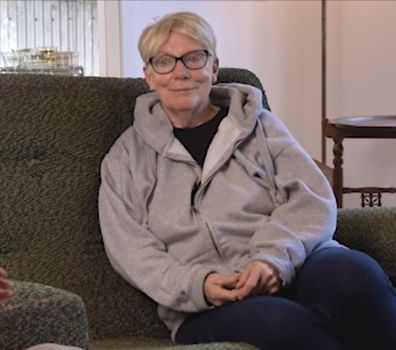 "Interview with Pat Rix" Pat Rix is a Disability Ally and Social Change advocate, and the recently retired Founder and CEO of TUTTI ARTS Incorporated. Interview Summary Pat Rix is an Artistic Director who has made extraordinary and sustained contributions to Australia’s cultural life through her artistic practice and leadership. A significant arts contributor since 1985, Pat made her early mark through plays and music-theatre productions which drew attention to social injustice and championed social inclusion. Her journey in disability arts began in 1997 with the formation of an inclusive choir at Minda Inc. which in 2001 incorporated to become the independent multi arts organisation known as ‘Tutti’ - embodying the inclusive Italian term meaning ‘everyone’. At a time when there were no vocational pathways for learning disabled and neuro divergent people, Tutti became a national trailblazer in creating a work environment where learning disabled and neuro diverse artists could create visual art, theatre, music, film and experimental art in a way that authentically nurtured their professional growth and recognition. Pat stresses the importance of disabled artists having control over their work. She believes that art is inherently political, and that it is finding your voice, being heard and being taken seriously that contributes to any artist's success. Pat looks forward to the future evolution of disability arts and the role of technology in enabling disabled artists to develop local and global partnerships which continue to provide exciting opportunities for artistic development.
 -
”Bree Hadley, Donna McDonnald (Eds.) (2019) The Routledge Handbook of Disability Arts, Culture, and Media. Routledge International Handbooks. Routledge, London; New York.” “In the last 30 years, a distinctive intersection between disability studies – including disability rights advocacy, disability rights activism, and disability law – and disability arts, culture, and media studies has developed. The two fields have worked in tandem to offer critique of representations of disability in dominant cultural systems, institutions, discourses, and architecture, and develop provocative new representations of what it means to be disabled. Divided into 5 sections:- Disability, Identity, and Representation; Inclusion, Wellbeing, and Whole-of-life Experience; Access, Artistry, and Audiences; Practices, Politics and the Public Sphere; Activism, Adaptation, and Alternative Futures - this handbook brings disability arts, disability culture, and disability media studies – traditionally treated separately in publications in the field to date – together for the first time.”
- Arts Council of Australia
- Artreach
- Warren O’Brien