Items
Search full-text
“Australia Council releases its first Disability Action Plan”
- Kat Worth
-
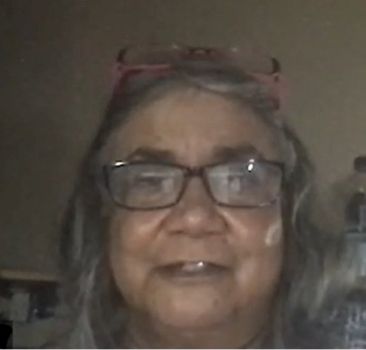 "Interview with Gayle Kennedy"
 -
 "Salubrious Productions - Disability Action Week" Music event for Disability Action Week
 -
“Senator Margaret Guilfoyle creates a committee of people with disabilities representing their own interests” In 1979, Senator Margaret Guilfoyle, the Federal Minister for Social Security created a committee of people with disabilities representing their own interests. This followed a complaint by Richard Llewellyn that he was the only token disability representative. This committee led to the formation of formal advocacy groups such as People with Disability Australia (PWDA) and Disability Resource Centre (DRC). The PWDA celebrated their 30th year anniversary in 2011.
- Kate Knight
-
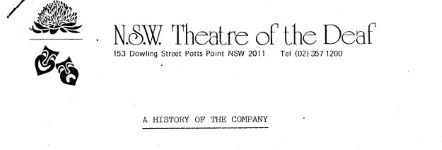 "Australian Theatre of the Deaf - NSW Theatre of the Deaf - A History of Company" History of Australian Theatre of the Deaf, to 1980, from formation of a Deaf drama group within the NSW Adult Deaf Society in 1973, to support from the Australian Elizabethan Theatre Trust to bring out US practitioners to develop skills and practices in 1974, to first performances for mainstage and school audiences – ‘King Lear’, ‘Rogues and Clowns’, ‘Five Flights to Freedom’, ‘Actions Speak Louder Than Words’, ‘Alex .. Or The Automatic Trial’ – to further Australian Elizabethan Theatre Trust and Australia Council funding support in the late 1970s
 - Lynn Buchanan
-
"Australian Film Commission created" In 1975, the Australian Film Commission was created, providing grants for film and television projects.
-
“Flow Festival, Australia’s Deaf Arts festival, is founded” Flow Festival, Australia’s Deaf Arts festival, was founded in 2018 by Ramas McRae, Irene Holub, and Medina Sumovic. The Deaf-led biennial festival provides a groundbreaking and dedicated platform for established and emerging Deaf/Hard of Hearing artists. Flow is held in Victoria but is described as “Australia’s national celebration of Deaf arts and culture”.
-
“Choose Art, the Australian accessible arts directory, is launched” The Australian accessible arts directory Choose Art was launched in 2019. It is an initiative of Arts Access Victoria, designed for and by Deaf and disabled people. Choose Art is a Commonwealth project supported by the Cultural Ministers of each State and Territory through Arts ACT; Arts Tasmania; Create NSW; Creative Victoria; Culture and Arts WA; Arts South Australia; Arts Queensland; Department of Tourism and Culture, NT and the Federal Minister through the Department of Communications and the Arts. Arts Access Victoria has created Choose Art in partnership with Arts Access Australia, Access2Arts, Access Arts, Accessible Arts, Arts Access Darwin, Belconnen Arts Centre, DADAA and Incite Arts.
-
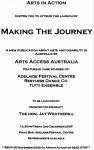 "Tutti Arts - Making the Journey: New Publication About Arts and Disability in Australia By Arts Access Australia - Launch Event - Promotional Flyer" Tutti Arts 'Making the Journey: New Publication About Arts and Disability in Australia By Arts Access Australia - Launch Event' 2005 - Promotional Flyer
 - Andrew McNicol
-
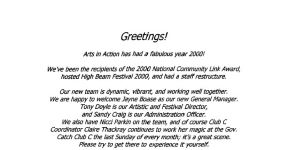 "Greetings!" "Greetings!" One page review of highlights for Arts in Action in the year 2000.
 -
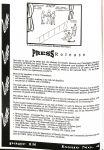 "Accessible Arts - ACE Arts Creativity Expression - Pru Jobling - Press Release: Appointments to Disability Services Advisory Committee (DSAC) in all states, and to the Advisory Council of Australia (DACA) - Iss4, Pg18-19" Accessible Arts - ACE Arts Creativity Expression - Pru Jobling - Press Release: Appointments to Disability Services Advisory Committee (DSAC) in all states, and to the Advisory Council of Australia (DACA) - Iss4, Pg18-19 - reads, in part "You may or may not be aware that the Minister for Health, Housing and Community Services (formerly DCS&H) Mr Brian Howe, has recently appointed new members of the disability community to the Disability Services Advisory Committee (DSAC) in all states, and to the Advisory Council of Australia (DACA) which is the national body."
 -
“Captioned films launched in Australia” In 2001, captioned films were launched in Australia with a speech by then Disability Discrimination Commissioner Dr Sev Ozdowski OAM. The process with a series of submissions from both the film industry and the Deaf and hard of hearing community. These submissions led to the establishment of a Forum comprised of representatives from the film distribution and exhibition sector, the Deaf and hearing impaired communities and the Australian Caption Centre. After a trial run in Sydney and Melbourne, three major cinema exhibiters (Greater Union, Hoyts, and Village) agreed to show open captioned films at selected venues throughout the country.
-
“The Mouth and Foot Painting Artists starts in Australia in 1971” The Mouth and Foot Painting Artists (MFPA) started in Australia in 1971. The roots of the international organisation of mouth and food painting artists go back to the 1950s in Europe.
-
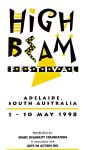 "High Beam Festival 1998 Poster" High Beam Festival Poster 1998 reads "High Beam Festival PRESENTED BY: SPARC DISABILITY FOUNDATION in association with ARTS IN ACTION INC"
 - Quentin Kenihan
-
 "Australia Council - Annual Report 2015-16" Australia Council - Annual Report 2015-16 - discusses year in review, strategy, funding, and key facts, including "18% identified as Aboriginal or Torres Strait Islander 6% identified as experiencing disability", and running Sync Leadership Program for artists with disability
 -
"Access2Arts (SA) established in 2009" Access2Arts (SA) was established in 2009. In their own words, “following on from many years of work by the Community Arts Network SA (CANSA), a project was created within Arts SA called the Disability Arts Transition Team. This led to our establishment as an independent body to represent, advocate and respond to the needs of the arts and disability sectors.” The organisation became incorporated in 2013. They are the body for arts and disability in South Australia.
-
“An ABC video series explores the experiences of deaf and disabled musicians” A 2021 video series by ABC Classic featured interviews with four deaf and disabled musicians. The series, made in honour of International Day of People with Disability, explored the musicians’ experiences of the music industry.
-
“Arts Access Victoria launches the disability arts festival Alter State” In 2021, Arts Access Victoria launched Alter State, a major disability arts festival celebrating contemporary art and live performance with artists from Australia and Aotearoa (New Zealand). “In October 2022, the inaugural Alter State presented 28 performances, including 5 world premiere events, schools’ shows and 14 different types of art forms, as well as 32 films, in-conversation sessions, and workshops.”
- Film Finance Corporation Australia (FFC)
- Screen Australia
-
“Demonstrators protest inadequate funding for disability support in Adelaide, 1992” On the 13th March, 1992, 100 demonstrators gathered in Adelaide to protest inadequate funding for disability support. Deputy Prime Minister and Minister for Health, Housing and Community Services Brian Howe was “heckled” by the group outside an event at Jubilee Hall during a health care expo. Howe agreed later that year to “honour a federal government promise to expand the National Attendant Care Scheme,” that is, after another demonstration by 70 advocates outside Parliament House.