
Items
Search full-text
“Australia Council releases its first Disability Action Plan”
- Kaye McDonald
- Adult and Community Further Education (ACFE)
- Adult Community and Further Education Board
- Morwena Collett
-
"Juliette Peers (2022) The ArtLink Archive Project: Inside the 'Outsider' Issue, 42(2)" "In 1992–93 ArtLink published Naïve & Outsider Art centring on themes linked by their shared invisibility in mainstream discussions. While the title obviously references art historian Roger Cardinal’s 1972 book Outsider Art, (after Jean Dubuffet’s ‘Art Brut’ or ‘raw art’), this outlying status was described by ArtLink’s founding editor Stephanie Britton in 2022 as ‘…the context changes, but at the time the concept [of various practices lying beyond the mainstream] functioned as a catch up on things that had been under the radar for decades already... [we were] collating a wide range of ideas'[1], a group of practices that existed but were hardly recognised in published texts. Looking back across ArtLink’s history, Naïve & Outsider Art offers much to think through about the magazine’s own platform, intentions and the trajectories of those practices foregrounded thirty years ago under what are now troubling rubrics."
-
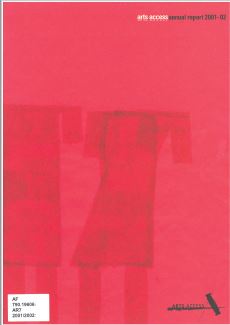 “Arts Access Victoria – Annual Report 2001-02”
 - Daniel Savage
- Melinda Smith
- Michelle Ryan
- Sofya Gollan
- Jeremy Hawkes
- Venuzza laconis
- Martin Forster
- Megan McEvoy
- Michael Paul
- Michael Trasancos
- Myra Hilgendorf
-
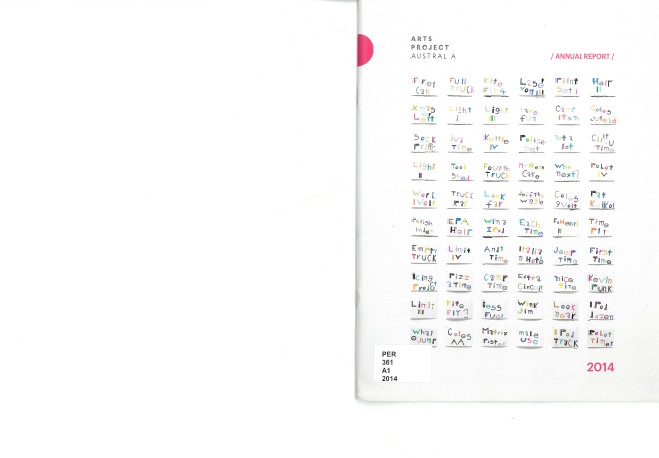 "Arts Project Australia - Annual Report 2014" Arts Project Australia - Annual Report 2014 - President's Report, Executive Director's Report, Board & Staff, Personal Perspectives, 40 Years of Highlights, Our Artists, Exhibition Report, Studio Philosophy, Financial Statements - reads, in part "OUR MANIFESTO We march to the beat of our own drum and map our own future. Fuelled by an unwavering belief in our artists, we're buoyed by the creativity and authenticity that exists in our space, and heartened by those who delight in sharing in it."
 -
"Bree Hadley, Eddie Paterson, Madeleine Little, Kath Duncan (2024) How Disability Performance Travels in Australia: The Reality Under the Rhetoric. In Czymoch, Christiane, Maguire Rossier, Kate, & Schmidt, Yvonne (Eds.) How Does Disability Performance Travel?: Access, Art, and Internationalization. Routledge, Abingdon, Oxon, pp. 62-76.” "The last three decades has witnessed the development of a distinct narrative about how disability performance has become a much celebrated component of the Australian theatre landscape. A central aspect of this narrative is the critical importance of festivals, events, and other industry initiatives that allow disabled performers to travel - both conceptually and corporeally - to meet and be mentored by other artists, and to present their work to new and more mainstream audiences, in new spaces and places, around the country, and around the world. In this chapter, we draw on historical data, collected as part of an AusStage ARC LIEF project designed to database information about disability drama, theatre, performance, and dance over the past 100 years, as well as the Last Avant Garde ARC Linkage project on disability performance in Australia, to unpack areas where the reality seems to challenge some of the dominant rhetoric."
- Awakenings Festival
-
"Catherine Grant (2013). Participating in arts- and cultural-sector governance in Australia: Experiences and views of people with disability. Arts & Health, 6(1), 75–89. https://doi.org/10.1080/17533015.2013.826259" Reads, in part "This study sought the perceptions and experiences of people with disability relating to their potential or current involvement in the governance of arts and cultural organisations in Australia. Methods: A total of 32 people participated in an online survey, and results were analysed qualitatively and quantitatively. Results: The findings revealed that those participants who had been involved in governance benefited from it in terms of self-esteem, participation in society and well-being." Contains tables with survey data.
-
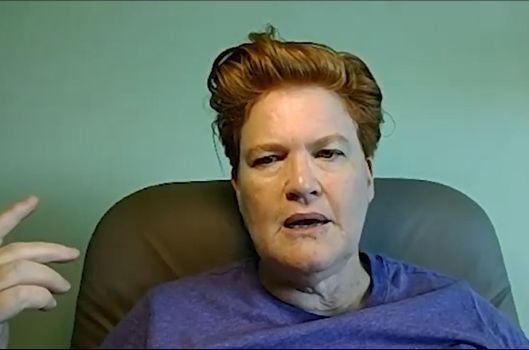 "Interview with Michèle Saint-Yves" Michèle Saint-Yves is a playwright, filmmaker, poet, and director. Interview Summary Michèle Saint-Yves’ background includes a colonial upbringing in Pacific territories, a Scottish boarding school education, and a complex personal journey of confronting her own inherent racism and colonial legacy, particularly through her writing. Her work as an artist with disability is deeply informed by her sense of otherness and focuses on creating inclusive performance-based work that challenges mainstream audiences and systems, aiming for transformative experiences that impact disability justice and community. Michèle actively embraced the social model of disability, which shifted her understanding of herself and her art, and has received recognition for her pioneering work with the prize-winning show "Clock for No Time." However, recognising the social model’s limitations, her current creative endeavours are concerned with 'access intimacy' and evaluating the lasting impact of her performances, in collaboration with other artists and through research grants.
 -
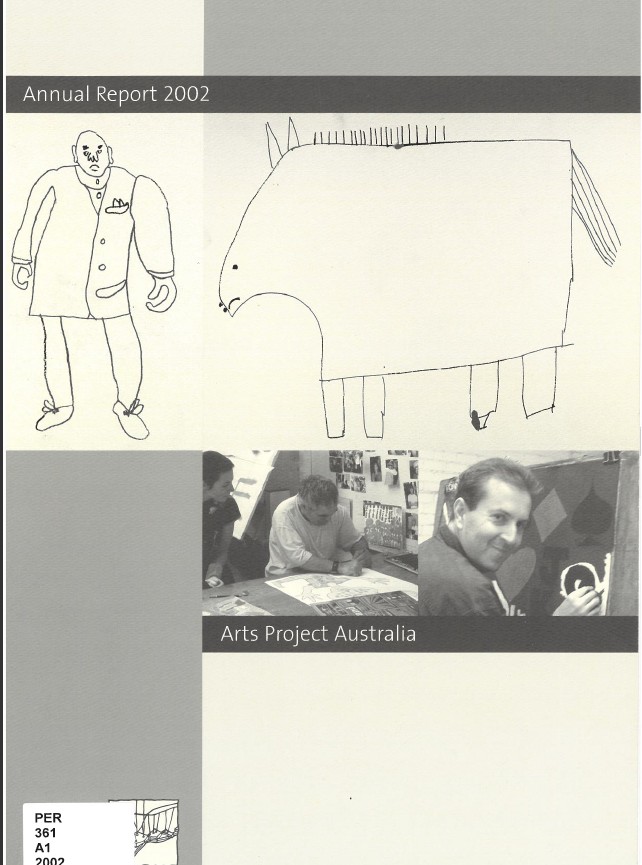 "Arts Project Australia - Annual Report 2002" Arts Project Australia - Annual Report 2002 - Management Committee, Aims and Objectives, President's Report, Director's Report, Studio Manager's Report, Exhibitions Report, Lifedrawing at RMIT, Financials - reads, in part “Since 1984 the organisation has run a visual arts studio program where people with an intellectual disability have the opportunity to work in a community-based setting, using high quality art materials, and to receive advice and assistance from practising contemporary artists.”
 -
"Sarah Austin, Kath Duncan, Gerard Goggin, Lachlan MacDowall, Veronica Pardo, Eddie Paterson, Jax Jacki Brown, Morwenna Collett, Fiona Cook, Bree Hadley, Jess Kapuscinski-Evans, Donna McDonald, Julie McNamara, Gayle Mellis, Kate Sulan (2019). The last avant garde? In B. Hadley, D. McDonald ed. The Routledge Handbook of Disability Art, Culture, and Media. London & New York: Routledge, 251-262." "“The Australian Research Council project Disability and the Performing Arts in Australia: Beyond the Social Model – known to collaborators as the last avant garde – is mapping disability performing arts in Australia. We open up this chapter, and our ongoing research project, with the words of the late Tobin Siebers. In researching disability and performance here in Australia, we also acknowledge that since Siebers’ 2010 text, we have seen new experiments and emerging companies pushing the bounds of how bodies feel – in a sector which embraces differences in bodies, but also in thinking, in neurodiversities, in being, in articulating, in appearing, in sensing, in intersectionalities, and in the experiences for audiences. As such, this chapter aims to explore ‘disability aesthetics’ not as a set of specific techniques, themes, or politics, but in order to position disability at the centre of ‘future conceptions of what art is’ and what it can be.”
-
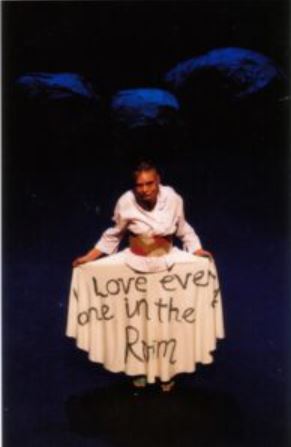 “Arts Access Victoria – Leading Change (2005-2009)" Arts Access Victoria - Leading Change (2005-2009) - During the mid to late 2000s, Arts Access Victoria (AAV) was recognised by Australia Council for the Arts as a key producer, supported the Deaf Arts Network (DAN), ran The Other Film Festival (TOFF),