Items
Search full-text
“Australia Council releases its first Disability Action Plan”
-
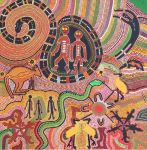 "NuunaRon - Wiradjuri Country by Eve Kitchener" First Peoples Disability Network NuunaRon Art Group - 'Wiradjuri Country' by Eve Kitchener
 -
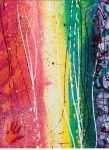 "NuunaRon - Pleasant Dreams by Josh Lennox" First Peoples Disability Network NuunaRon Art Group - 'Pleasant Dreams' by Josh Lennox
 -
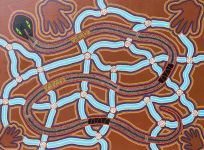 "NuunaRon - Untitled by Aunty Robyn Lennox" First Peoples Disability Network NuunaRon Art Group - Untitled by Aunty Robyn Lennox
 -
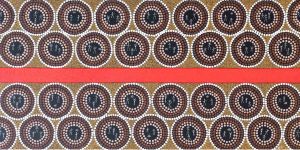 "NuunaRon - Family Lines by Aunty Robyn Lennox" First Peoples Disability Network NuunaRon Art Group - 'Family Lines' by Aunty Robyn Lennox
 -
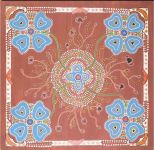 "NuunaRon - Dreaming by Aunty Alice Bonny" First Peoples Disability Network NuunaRon Art Group - 'Dreaming' by Aunty Alice Bonny
 -
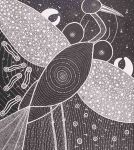 "NuunaRon - Dragonfly by Bec Jones" First Peoples Disability Network NuunaRon Art Group - 'Dragonfly' by Bec Jones
 -
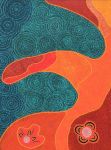 "NuunaRon - Elders Gathering by Paul Constable Calcott" First Peoples Disability Network NuunaRon Art Group - 'Elders Gathering' by Paul Constable Calcott
 -
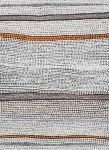 "NuunaRon - Songlines by Paul Constable Calcott" First Peoples Disability Network NuunaRon Art Group - 'Songlines' by Paul Constable Calcott
 -
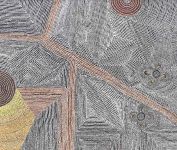 "NuunaRon - Mamalanha by Paul Constable Calcott" First Peoples Disability Network NuunaRon Art Group - 'Mamalanha' by Paul Constable Calcott
 -
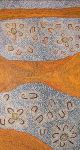 "NuunaRon - Yindyamarra by Paul Constable Calcott" First Peoples Disability Network NuunaRon Art Group - 'Yindyamarra' by Paul Constable Calcott
 -
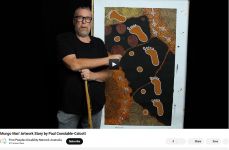 "NuunaRon Art Group - ‘Mungo Man’ Artwork Story by Paul Constable-Calcott" ‘Mungo Man’ Artwork Story by Paul Constable-Calcott - reads, in part "The 'Culture is Inclusion' art exhibition showcases art work by the NuunaRon First Nations art group, with a lived experience of disability, telling their stories of resilience and strength through connecting to their culture"
 -
 "Australia Council - Access and audience development in Australia" Australia Council - 'Access and audience development in Australia' reports - reads, in part "These reports were commissioned in 2004 to assess what is currently being done, and what needs to be done, to increase access to the performing arts and museums & galleries in Australia for people with a disability."
 -
 "Australia Council - Annual Report 2020-21" Australia Council - Annual Report 2020-21 - reads, in part "• We awarded two new prestigious National Arts and Disability Awards on the International Day of People with Disability in December 2020, to Emily Crockford and Gaelle Mellis. The Council partnered with Arts Access Australia (AAA) on our 2020 Arts and Disability Awards supporting the Arts Access Australia’s National Leadership Award to recipient Abbie Madden.", and "Research underway includes analysis of data from the Australian Consortium for Social and Political Research Incorporated (ACSPRI) national study on social inequality, analysis of access and equity in the online sphere and an Australian Research Council (ARC) Linkage Partnership exploring the evolution of Disability Arts in Australia."
 -
"Bree Hadley, Janice Rieger (2021) Co-designing choice: objectivity, aesthetics and agency in audio-description. Museum Management and Curatorship, 36(2), pp. 189-203.” "The ‘Vis-ability’ exhibition, presented at the QUT Art Museum in 2019 was an exhibition curated with clear social inclusion goals from the outset. Through it, the museum sought to develop innovative, cost effective, and readily replicable techniques to allow blind and low vision visitors and artists to engage with the institution and its collections. The results affirm the benefits of offering blind and low vision visitors a spectrum of engagement choices, and also affirm that blind and low vision artists and visitors have capacity to make a critical contribution in co-designing that spectrum of choices. This exhibition and its use of multisensorial elements offers a useful prompt to museums to engage this community more fully in co-designing inclusion in the future."
-
“National Arts and Disability Strategy is launched in 2009” In 2009, the National Arts and Disability Strategy was agreed on by Australian Cultural Minister’s Council. The strategy sought to improve access and participation in the arts and identified four priority areas: barriers to access and participation, supporting the creative practice of artists with disability, developing audiences for disability arts practice, and strengthening policy and planning within governments.
-
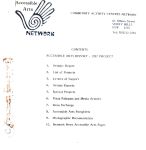 "Accessible Arts - Annual Report 1987" Accessible Arts - Annual Report 1987 - includes List of Projects, Artists Reports, Press Releases and Media Articles, Ideas Exchange, Accessible Arts Pamphlets, Photographic Documentation, Letters of Support
 -
“Activism leads to a Disability Royal Commission” Decades of activism led to a 2019 Senate motion calling for a Disability Royal Commission. The first public hearing of the Royal Commission took place on 16th September, 2019 at Brisbane’s Convention and Exhibition Centre. The Commission resulted in a report in 12 volumes. Several volumes include Volume 3: Nature and extent of violence, abuse, neglect and exploitation, Volume 6: Enabling autonomy and access, Volume 7: Inclusive education, employment and housing, Volume 9: First Nations people with disability, and Volume 10: Disability services. Overall, the Commission presented “222 recommendations on how to improve laws, policies, structures and practices to ensure a more inclusive and just society that supports the independence of people with disability and their right to live free from violence, abuse, neglect and exploitation.” In 2023, the final report of the Royal Commission into Violence, Abuse, Neglect and Exploitation of People with Disability was published with 220 recommendations for a more inclusive nation to reduce exploitation, violence, abuse and neglect of people with disabilities.
- "Bree Hadley (2017) Disability theatre in Australia: a survey and a sector ecology. Research in Drama Education, 22(3), pp. 305-324.”
-
 "Australia Council - Annual Report 2001-02" Australia Council Annual Report 2001-2002 - discusses letter from chair of council, corporate overview, year in review, financial statements, analysis of funding and grants for projects, initiatives, new work, programs, presentation and promotions including funding for implementing the Commonwealth Disability Strategy by evaluating current and changing needs of people with disabilities in the arts sector and reflecting this in funding and policies, arts marketing and audience development and triennial grants to disability arts organisations in NSW, South Australia and Victoria as well as an image from Crossroad Arts for the exhibition “Shades of White” and the publication “Making the Journey”
 - Noelene Gration
-
“A national Disability Advisory Council is established in 1983” The national Disability Advisory Council (DACA) was established in 1983. Parliamentary information from 26 July that year reports: “Disabled people will form a significant majority on the new body. Announcing this today, the Minister for Social Security, Senator Don Grimes, said the new Disability Advisory Council of Australia represented an important breakthrough for disabled people. For the first time, an Australian Government will be looking to disabled people themselves for advice on government policy and programs affecting them.”
-
 "Australia Council - Annual Report 1983-84" Australia Council Annual Report 1983-84 - discusses main activities of Council and its eight Boards, and includes financial statements and lists of grants made including artist fees, performances for handicapped, production of radio material for blind, and activities for Theatre of the Deaf.
 - Carriageworks
-
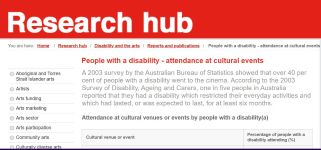 “Australia Council - People with a disability - attendance at cultural events 2008" Australia Council - People with a disability - attendance at cultural events 2008 - reads, in part "A 2003 survey by the Australian Bureau of Statistics showed that over 40 per cent of people with a disability went to the cinema. According to the 2003 Survey of Disability, Ageing and Carers, one in five people in Australia reported that they had a disability which restricted their everyday activities and which had lasted, or was expected to last, for at least six months."
 -
“Women With Disabilities Australia (WWDA) recognised as an independent organisation in 1995” Women With Disabilities Australia (WWDA) gained seed funding from the government in 1994 and was recognised as an independent organisation in 1995. The organisation shares a history with Disabled People’s International (Australia) (established 1983) and its National Women’s Network (established 1985).