
Items
Search full-text
“Australia Council start development of Code of Conduct for Access in The Arts”
- Alicia Jones
- Alexander Procopis
- Alex Hunter
- Alaster Thomas
- Al Smith
- Ahmarnya Price
- Aemonn Scott
- Adam Knapper
- Greg Muir
- Uncle Greg Muir
-
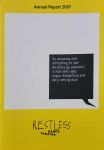 “Restless Dance – Annual Report 2007" Restless Dance Theatre Annual Report 2007 - Chair's, Artistic Director’s, Dancers’, and Company Manager Reports, Members and Board, Financials, information about production ‘Rebel Rebel,’ Reviews, Supporters
 -
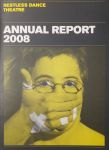 “Restless Dance – Annual Report 2008" Restless Dance Theatre Annual Report 2008 - Chair's, Artistic Director’s, Dancers’, and Company Manager Reports, Members and Board, Financials, information about productions ‘The Heart of Another is A Dark Forrest,’ ‘Safe From Harm,’ ‘Necessany Games,’ Reviews, Supporters
 -
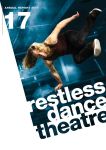 “Restless Dance – Annual Report 2017" Restless Dance Theatre Annual Report 2017- Company history, Chair's, Artistic Director’s, Dancer’s and Company Manager’s Reports, Productions including ‘Intimate Space,’ ‘Shared Visions,’ Community workshop programs, Financials, Staff and Board, Supporters
 -
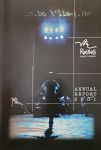 “Restless Dance – Annual Report 2001" Restless Dance Theatre Annual Report 2001 - Chair's, Artistic Director’s, Dancers’ and Committee Reports, Members and Board, Financials, information about productions ‘Headlong,’ ‘Proximal,’ Reviews, Supporters
 -
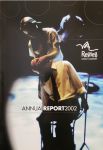 “Restless Dance – Annual Report 2002" Restless Dance Theatre Annual Report 2002 - Chair's, Artistic Director’s, Dancers’ and Committee Reports, Members and Board, Financials, information about productions ‘Headlong,’ ‘ln the Blood’ Reviews, Supporters
 -
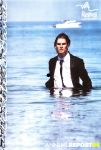 “Restless Dance – Annual Report 2004" Restless Dance Theatre Annual Report 2004 - Chair's, Artistic Director’s, Dancers’, and Company Manager Reports, Members and Board, Financials, information about productions ‘The Laminex Man,’ ‘Landmark,’ ‘Starry Eyed’, Reviews, Supporters
 -
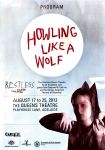 “Restless Dance – Howling Like A Wolf Program" Restless Dance Theatre 'Howling Like a Wolf' Program - reads, in part "In Howling Like A Wolf humans are both the observer and the observed. The work explores facial expressions, our body language and the way our brains process complex and subtle information. The performers have shared their experiences of connection and isolation, the joy and confusion of human interactions, and how we all prepare ourselves for "this terribly significant business of 'other people'."
 - Simone Flavelle
- Jeremy Smith
-
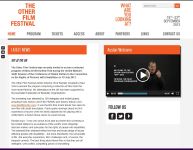 "The Other Film Festival - Website, captured 2013" The Other Film Festival website, captured 2013 - with an Auslan welcome, About, Program, Tickets, and News links, including news of a recent screening in New York which included BEAUTIFUL (Australia, Dir: Genevieve Clay-Smith) and JUST BE FRANK (Australia, Dir: Elise Bialylew)
 -
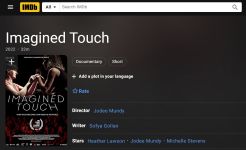 "Jodee Mundy Collaborations - Imagined Touch - IMBD" Reads, in part, "When two Deafblind women asked a theatre director to help them make a show about being deaf and blind, never in their wildest dreams did they imagine it would become an award-winning show."
 -
"Bree Hadley (2015) Participation, politics and provocations: People with disabilities as non-conciliatory audiences. Participations: journal of audience and reception studies, 12(1), pp. 154-174.” "Disability has always had a prominent place on the theatrical stage. Throughout the C19th, C20th and C21st to date, disabled characters have been used to signify corruption, innocence or suffering, and, of course, as salutary examples of how to overcome such suffering. In the past three decades, the work of disability scholars, activists and artists has also provided opportunities for people with disabilities to produce their own plays, performances or installations challenging these stereotypes. Interestingly, though both the body of literature on theatre makers with disabilities and the body of literature on theatre audiences has grown apace over the past decade, there is still surprisingly little written on people with disabilities as theatre audiences. In this article, I draw on observations made during five years of practical, empirical and theoretical research into disability theatre to discuss how people with disabilities work as a distinctive sub-group of spectators, with distinctive spectatorial processes, modalities and preferences, within contemporary theatre audiences. I begin with the factors that make attending theatre difficult for people with disabilities. I note that people with disabilities respond to the challenges they face in attempting to become active audiences of contemporary theatre in three common ways. I then unpack what these spectatorial modalities teach us about people with disabilities as audiences, other marginalised groups as audiences, as well as about audiences, audiencing and the part audiences play in theatre practice more generally."
- Malthouse Theatre
-
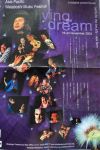 "AccessArts - Asia Pacific Wataboshi Music Festival" Poster for Asia Pacific Wataboshi Music Festival 2003
 - Tina Riveros