
Items
Search full-text
“Australia Council start development of Code of Conduct for Access in The Arts”
- Glenn Parry
- Richard Fotheringham
-
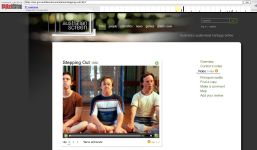 "Stepping Out - 1980" Australian Screen entry/clip for 'Stepping Out' 1980 - reads, in part "Romayne, a Sunshine Home drama group member, introduces us to the idiosyncrasies of some of the other members." - Press kit from Ronin Films available at http://web.archive.org/web/20231102095120/https://www.roninfilms.com.au/get/files/18222/stepping-out-original-1981-press-kit.pdf
-
 "Incite Arts - NT Arts Access Awards Media Release 2013" Media release reads, in part, "Through honoring the valuable partnerships that exist between the disability and arts sectors, award winners were selected based on their initiative, leadership, and involvement in projects that embody the spirit of genuine partnership and the benefits for people with disability and the communities we live in."
- National Museum of Australia
-
“Arts Access Australia established” Arts Access Australia was established in 1992 as a national body for arts and disability with funding support from the Australian Council for the Arts.
- Melinda Smith
- Yousef Alreemawi
- Dorothy Berry
- Fulli Andrinopoulos
-
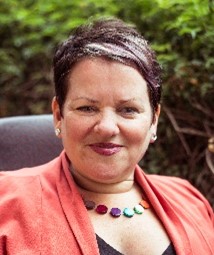 "Interview with Caroline Bowditch" Caroline Bowditch is an Australian artistic director, leader, performer, presenter, instructor, disability advocate and was the CEO of Arts Access Victoria. Interview Summary Caroline Bowditch, the CEO and Artistic Director of Arts Access Victoria, shared her journey as a performance artist and her experiences working within the Disability Arts community, highlighting her creative process and the challenges faced by disabled artists in Australia. Despite significant support and successful projects in the UK, she expressed concern over the limited progression and exposure of Disability Arts in Australia, noting a lack of ambition and opportunity deterring artists from aiming for larger, mainstream stages. Bowditch emphasized the importance of integrating access as a core component of artistic work and changing the aesthetic by including diverse bodies and perspectives. She also discussed tackling intersectionality within Disability Arts, reflecting on her own experiences as a visibly disabled and queer woman, and contemplating the future of Disability Arts, the desire for cultural equity, and the impact of potential shifts in societal barriers.
- John Trigg
- Sofya Gollan
-
“Research project ‘Disability and the Performing Arts in Australia: The Last Avant Garde’ investigates the creative and aesthetic strategies of the Australian disability arts sector” A research project beginning in 2016, ‘Disability and the Performing Arts in Australia: The Last Avant Garde,’ investigated the creative and aesthetic strategies of the Australian disability arts sector. The project sought to map “disability arts practice across the nation” by examining “the role of artistic experimentation,” “co-design[ing] accessible strategies,” and raising “critical recognition, employment and funding opportunities for artists.” The project team describes themselves as a collective “of deaf and disabled and non-disabled researcher artists, performers, writers, arts managers and theatre makers.” The work was the result of a collaboration between Arts Access Victoria, University of Melbourne, and University of Sydney. The Australia Research Council provided funding for the research.
- Matthew Fargher
- Bree Hadley
-
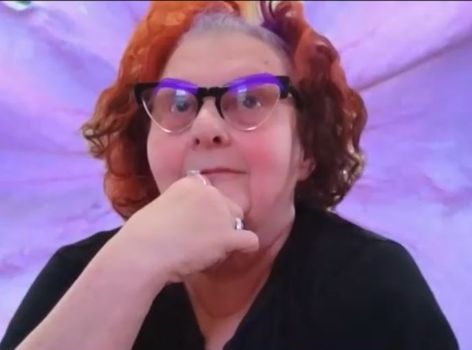 "Interview with Kath Duncan" Kath Duncan is a writer, a director, a provocateur, a visual artist, a comedian, a producer, a journalist, a radio broadcaster and disability advocate. Interview Summary Kath Duncan is an experienced and prominent figure in the disability arts community with a passion for experimental performance arts, having witnessed the beginnings of the disability arts movement in Australia and participated in its evolution. Her art is inherently political, shaped by her unique perspective as a congenital amputee. Kath firmly believes in the inherent creative revolutions and endless inspiration within all impairments. Kath highlights the ongoing struggles within the disability arts sector, including high unemployment rates for disabled individuals, systemic barriers, and the need for disabled leadership in arts organizations. While cherishing the milestones and transformative experiences she's had, Kath calls for significant systemic changes, emphasizing the importance of team playing and collective work to support and grow the disabled artist community.
-
“Arts Access Australia launches its ‘Don’t Play Us, Pay Us’ campaign in response to 'cripping up'” In 2012, Arts Access Australia launched its ‘Don’t Play Us, Pay Us’ campaign in response to 'cripping up,' where non-disabled performers play disabled characters on stage or screen.
- Emily Crockford
-
 “Arts Access Victoria - Access Newsletter Winter 1999”
- Criena Gehrke
- Australian National Museum
- Simon Dickie
- Trina Parker
- Vanessa Beck