
Items
Search full-text
“Commonwealth Disability Strategy launched in December 1994”
- Marianne Bragge
- Miriam Bass
- Julie Raffaele
- Geoff Prince
- Elisabeth Murdoch
- Dame Elisabeth Murdoch AC
- Dame Elisabeth Murdoch
- Doug Parker
- Doug Lyon
- Doug Ewen
- Creighton Burns AO
- Creighton Burns
- Cathy Smith
- Barbara Ball
- Antonella Calvano
- Annie Beeston
- Bree Hadley
-
 "Accessible Arts - International Day of People With Disability, captured 2022" Accessible Arts - International Day of People With Disability - reads, in part "The International Day of People with Disability (IDPwD) on December 3 provides a valuable opportunity every year to acknowledge, honour and celebrate people with disability and the vital contributions they make to arts and culture here in Australia and throughout the world."
 -
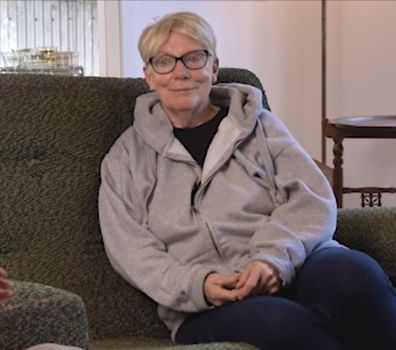 "Interview with Pat Rix" Pat Rix is a Disability Ally and Social Change advocate, and the recently retired Founder and CEO of TUTTI ARTS Incorporated. Interview Summary Pat Rix is an Artistic Director who has made extraordinary and sustained contributions to Australia’s cultural life through her artistic practice and leadership. A significant arts contributor since 1985, Pat made her early mark through plays and music-theatre productions which drew attention to social injustice and championed social inclusion. Her journey in disability arts began in 1997 with the formation of an inclusive choir at Minda Inc. which in 2001 incorporated to become the independent multi arts organisation known as ‘Tutti’ - embodying the inclusive Italian term meaning ‘everyone’. At a time when there were no vocational pathways for learning disabled and neuro divergent people, Tutti became a national trailblazer in creating a work environment where learning disabled and neuro diverse artists could create visual art, theatre, music, film and experimental art in a way that authentically nurtured their professional growth and recognition. Pat stresses the importance of disabled artists having control over their work. She believes that art is inherently political, and that it is finding your voice, being heard and being taken seriously that contributes to any artist's success. Pat looks forward to the future evolution of disability arts and the role of technology in enabling disabled artists to develop local and global partnerships which continue to provide exciting opportunities for artistic development.
 - Weave Movement Theatre
-
 "Australia Council - Annual Report 2020-21" Australia Council - Annual Report 2020-21 - reads, in part "• We awarded two new prestigious National Arts and Disability Awards on the International Day of People with Disability in December 2020, to Emily Crockford and Gaelle Mellis. The Council partnered with Arts Access Australia (AAA) on our 2020 Arts and Disability Awards supporting the Arts Access Australia’s National Leadership Award to recipient Abbie Madden.", and "Research underway includes analysis of data from the Australian Consortium for Social and Political Research Incorporated (ACSPRI) national study on social inequality, analysis of access and equity in the online sphere and an Australian Research Council (ARC) Linkage Partnership exploring the evolution of Disability Arts in Australia."
 -
"Kath Duncan, Gerard Goggin, Christopher Newell (2005) ‘Don’t Talk about Me... Like I’m Not Here': Disability in Australian National Cinema. Metro Magazine: Media & Education Magazine.146/147, pp. 152-159. https://search.informit.org/doi/10.3316/informit.043842788583710" Reads, in part "Disability is a central cultural identity and category in Australia, but this is not often realized. We seek to make a contribution to conversations and critical analyses of disability in Australian culture through an exploration of a privileged national cultural form, namely film. The trope of disability looms large in late twentieth century Australian cinema, and yet cultural comment on these ‘disabled’ scripts and performances has not yet considered a disabilities studies perspective. Accordingly, in this article we combine our different perspectives on disability and film into an account of how specific films use disability. In particular, we analyse key films from the 1990s as examples of powerful displays of bodies and personhood." References a range of films, including Proof (Jocelyn Moorhouse, 1991), Romper Stomper (Geoffrey Wright, 1992), Bad Boy Bubby (Rolf de Heer, 1993), Muriel's Wedding (PJ Hogan, 1994), Shine (Scott Hicks, 1996), Moulin Rouge! (Baz Luhrmann, 2001), My One Legged Dream Lover (writer Kath Duncan with dir. Penny Fowler-Smith, Christine Oslen 1998), Pins and Needles (writer Genni Batterham with dir. Barbara Chobocky, 1979), Riding the Gale (Genni Batterham with dir, Hugh Piper, 1987), Dance Me to My Song (writer Heather Rose with dir. Rolf De Heer, 1998), Heather Rose Goes to Cannes (Chris Corin, 1999), Myself When Fourteen, (Ivor, Arthur and Corinne Cantrill 1989),Film of Circles, Squares, Triangles, Lines and Dots (Arthur and Corinne Cantrill 1981), Rainbow Diary (Arthur and Corinne Cantrill 1984), House Gang (Mandy smith, 1997), Quentin Crashes Big Brother (Quentin Kenihan, 2002), Quentin, World at My Wheels (Quentin Kenihan, 2000), Ability Trek (Jacob Baldwin 1998)
-
“Research project ‘Disability and the Performing Arts in Australia: The Last Avant Garde’ investigates the creative and aesthetic strategies of the Australian disability arts sector” A research project beginning in 2016, ‘Disability and the Performing Arts in Australia: The Last Avant Garde,’ investigated the creative and aesthetic strategies of the Australian disability arts sector. The project sought to map “disability arts practice across the nation” by examining “the role of artistic experimentation,” “co-design[ing] accessible strategies,” and raising “critical recognition, employment and funding opportunities for artists.” The project team describes themselves as a collective “of deaf and disabled and non-disabled researcher artists, performers, writers, arts managers and theatre makers.” The work was the result of a collaboration between Arts Access Victoria, University of Melbourne, and University of Sydney. The Australia Research Council provided funding for the research.
-
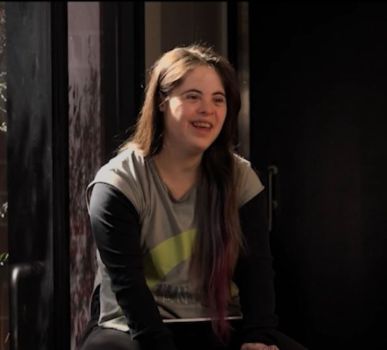 "Interview with Jianna Georgiou" Jianna Georgiou is a professional dancer, director and choreographer and has been with Restless Dance since 2006. Interview Summary Jianna Georgiou, who has Italian and Cypriot heritage, shared her journey as a dancer. She expressed her aspirations to collaborate with friends from other dance companies and emphasized her desire to continue her path with Restless Dance Theatre. Jianna’s determination remains strong, fuelled by her goal to perform and the emotional connection she feels through dance. She hopes to explore various dance styles, including hip-hop, which currently resonates with her, and she is motivated by the creative and energetic environment at Restless Dance Theatre.
 -
"The Australian Council for the Arts established in 1968" The Australian Council for the Arts was established in 1968. This came after a push during the late 1960s for better support of the arts in Australia. The Council replaced the Elizabethan Trust as Australia’s main arts body, although the Trust continued to receive funding from State governments. The Council was later given statutory authority in 1975 and called Australia Council. Prime Minister Gough Whitlam is recognised as a key political supporter of the arts. The election of Whitlam (serving from December 1972 to November 1975) gave unprecedented and considerable attention and funding to an arts policy which would establish an Australian cultural identity raising international awareness. The Australian Council for the Arts received an unprecedented $14 million in funding in the 1973/74 budget. This was “more than double the allocation the bodies out of which it evolved had received the year before. The Council’s allocation was increased by a further 50 per cent in the 1974/75 Budget."