
Items
Search full-text
“Commonwealth Disability Strategy launched in December 1994”
- Janice Florence
- Juliet London
-
"Australia Council for the Arts (2022) Australia Council releases Towards Equity: a research overview of diversity in Australian arts." Reads, in part "The Australia Council for the Arts have released their critical new report Towards Equity: A research overview of diversity in Australia’s arts and cultural sector. This overview gathers published and unpublished data and research on representation within the arts and cultural sector in Australia."
-
"Australia Council for the Arts (2018) Arts and Disability a Priority as Australia Council Commits
Significant New Funding. 24 September 2018." Reads, in part "The Australia Council has committed $750k over three years to support sustainable careers and to recognise the artistic excellence of artists with disability."
-
"Australia Council for the Arts (2018) Creating Pathways: Insights on support for artists with disability. 19 September 2018" Reads, in part "This report brings together findings and insights from a range of research undertaken in 2017–18 to inform the Council’s approach to future support for artists with disability."
- "Bree Hadley (2017) Disability theatre in Australia: a survey and a sector ecology. Research in Drama Education, 22(3), pp. 305-324.”
-
"Ruth Rentschler, Boram Lee, Ayse Collins, Jung Yoon (2023) ‘I am a professional dancer’: A case study of performing artists with disability. In Wyszomirski, M. J. & Chang, W. (Eds.), Building professionalism in the creative sector. Oxon: Routledge, 227-246" "The demand for professional recognition for artists with disability is growing. There is little research, however, on the ways in which disability arts are associated with professionalism. This study examines professionalization in disability arts by comparing it with the concept of professionalization in the arts generally. It identifies three components of professionalization in disability arts by means of a case study of an inclusive arts organization. This qualitative study entails 17 semi-structured interviews with artists, staff members, and other stakeholders both with and without disabilities."
-
"Maree Roche, Ben Whitburn (2019) Mate, You’re Crippin’ Us Out: Biopolitics of the Arts Curriculum in Australia and the Swinging Identities of Dis/abilities. Journal of Literary & Cultural Disability Studies.13(3). https://doi.org/10.3828/jlcds.2019.25" Reads, in part "The article explores arts curriculum in Australia as developed in the contexts of schooling, community organizations, and higher education for people with disabilities and mental health concerns. Motivated to explore whether or not students provided access to modified arts curriculum are engaging in education or receiving therapy, the aim is to address a dichotomy that is seemingly present in educational institutions, but extends well beyond the school gate and informs organizational responses to arts in the lives of people with disabilities. Resourced with the theoretical contributions of dis/ability studies for its concern for the biopolitics of disability, the authors weave personal experiences through the discussion of participation in arts throughout their lives. The article concludes with a theoretical discussion of how arts provision in the Australian context might develop the social and political value of art in the lives of people with dis/abilities and for all, on the basis that its educative value is emphasized over its therapeutic one."
-
"Kath Duncan, Gerard Goggin (2002). 'Something in Your Belly': Fantasy, Disability and Desire in My One Legged Dream Lover. Disability Studies Quarterly 22 (4), pp: 127-144." In this article we explore fantasy, disability and desire in the groundbreaking 1998 Australian TV documentary My One-Legged Dream Lover. Based upon self-reflexive documentary conventions, the video uncovers journalist-cum-freak raconteur Kath Duncan's explorations into the world of amputee fetish. Duncan is a double congenital amputee. She says," I've tried most things men, women, sex toys, unusual locations, dominance and submission games but I wanted to know what it was like to be desired because of my impairments." Gerard Goggin is a temporarily able-bodied (or TAB) academic with his own history of queer desire and a personal investment in exploring issues of difference. Duncan's and Goggin's collaboration includes accessing each other's edgier fantasies, aiming to give voice to some of the negotiations, anxieties, pleasures, and risks we have taken, speaking across the chasm of our personal histories, different genders and respective bodies.
-
"Australia Council: Australian Arts Snapshots - Disability & the Arts (2002)" Reads, in part "Australians who have a disability are recognised as being creators of innovative, thought provoking, high quality, and often very irreverent artistic product. They are active across all artforms in mainstream and community arts contexts"
-
 "The Arts and Disability"
-
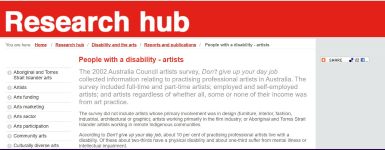 “Australia Council - People with a disability - artists 2003” Sourced from 'Australia Council- Don’t give up your day job: An Economic Study of Professional Artists in Australia' (Throsby and Hollister 2003) based on 2002 Survey - The website reads “The 2002 Australia Council artists survey, Don't give up your day job collected information relating to practising professional artists in Australia…..According to Don't give up your day job, about 10 per cent of practising professional artists live with a disability.”
-
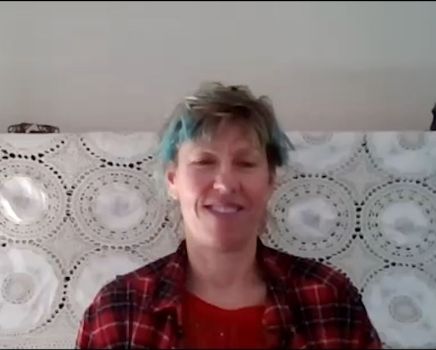 "Interview with Emiko Artemis" Dr Emiko Artemis is a visual artist with a PhD and a history of both solo and group exhibitions. Interview Summary Emiko Artemis identifies as a non-binary queer disabled visual artist. Emiko acknowledges their work essentially reflects their personal experiences with disability and comments on society. Despite interpersonal challenges due to disabilities, Emiko cherishes occasional collaborations, facilitated by clear structures or supportive relationships. Their artwork, often seen as "weird" to the public, aims to be thought-provoking rather than being particularly political. Emiko values the growing visibility of disability in the arts and the increase in acceptance of diversity in society. They proudly embrace their own identity as an integral aspect of their creative practice
-
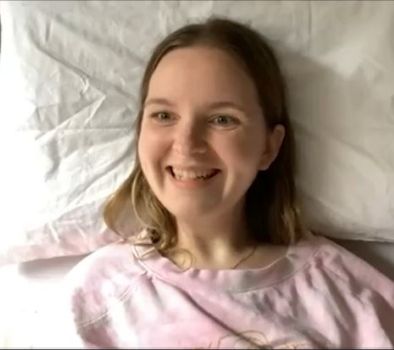 "Interview with Jess Cochran" Jess Cochran (they/them) is an actor, model, writer and disability advocate. Interview Summary: Jess Cochran is a queer, non-binary, neurodivergent, performing artist, advocate, writer, and consumer consultant with a background in both physical and psychosocial disabilities. Their journey into the performing arts began accidentally with a role in the Awards winning Melbourne Fringe Festival production, Qualia, which opened doors to more local and international Awards-winning work in film and stage. Jess identifies proudly with their disabilities and considers their art both a personal expression and a political act aimed at highlighting the issues faced by the disability community. Jess’s work spans across writing, modelling, and various performance arts, and they wish to see an increase of disability arts representation in mainstream media with authentic casting, opportunities and improved accessibility for disabled performers. Jess is also passionate about highlighting intersectionality in disability arts.
-
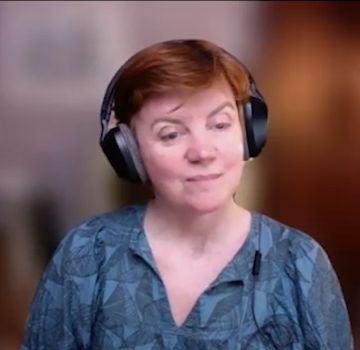 "Interview with Sofya Gollan" Sofya Gollan is a distinguished artist, screenwriter, filmmaker and cultural leader in advocating for the Deaf and disabled communities. Interview Summary Sofya Gollan is a versatile and experienced artist with a background in acting, writing, directing, and producing, known for her work in theatre, film, and television, and for navigating the industry as a deaf individual. Her journey into the arts began with her involvement in the Australian Theatre of the Deaf and further developed as she trained at prestigious institutions like NIDA and AFTRS, where she expanded her skills in filmmaking. Despite facing challenges and ableism within the industry, Gollan has made significant contributions to disability representation on screen, and highlights the need for ongoing support and funding for disabled artists to promote equity and access to opportunities. Returning as creative practitioner to the industry after an executive role, Gollan continues to advocate for inclusivity and representation, while aiming to create and share content that authentically reflects the deaf experience.
-
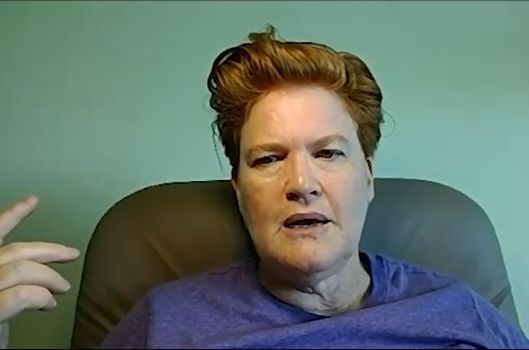 "Interview with Michèle Saint-Yves" Michèle Saint-Yves is a playwright, filmmaker, poet, and director. Interview Summary Michèle Saint-Yves’ background includes a colonial upbringing in Pacific territories, a Scottish boarding school education, and a complex personal journey of confronting her own inherent racism and colonial legacy, particularly through her writing. Her work as an artist with disability is deeply informed by her sense of otherness and focuses on creating inclusive performance-based work that challenges mainstream audiences and systems, aiming for transformative experiences that impact disability justice and community. Michèle actively embraced the social model of disability, which shifted her understanding of herself and her art, and has received recognition for her pioneering work with the prize-winning show "Clock for No Time." However, recognising the social model’s limitations, her current creative endeavours are concerned with 'access intimacy' and evaluating the lasting impact of her performances, in collaboration with other artists and through research grants.
-
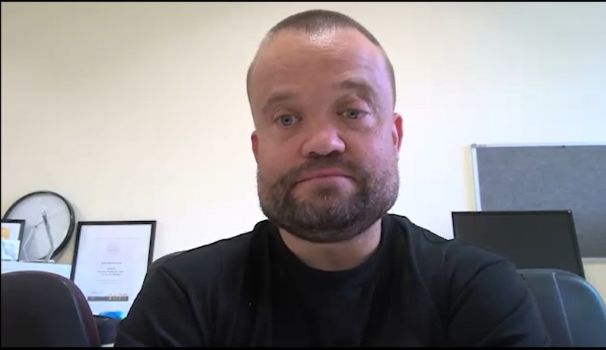 "Interview with Jeremy Smith" Jeremy Smith is a Senior Producer in Western Australia at Performing Lines, has a long career across community, experimental and performing arts, is a disability advocate and previously worked in Australia Council for the Arts (now Creative Australia) as Director – Community Arts and Experimental Arts. Interview Summary Jeremy Smith has vast experience in the arts including working as a director with Australia Council (Creative Australia). Jeremy is currently an arts worker in the performing arts sector. While Jeremy lives with Achondroplasia, he has not always identified as disabled however a transformative project for the 2016 Perth Festival led him to embrace his identity as a disabled person with pride recognising the complexities surrounding personal identification with disability. Jeremy talks about artists and organisations he finds inspirational who are leading change in the disability arts sector and his motivation to also advocate for inclusion and the evolution of public perception of disability arts work.
-
 "Interview with Patricia Wozniak" Patricia Wozniak is a neurodivergent visual arts coordinator at Tutti Arts and is a disability arts advocate and ally. Interview Summary Patricia Wozniak, a visual arts coordinator at Tutti Arts with 14-15 years of experience, initially volunteered while studying for her master's and found joy and liberation in making art with the organisation. Tutti Arts has grown from offering two days to five days of visual arts each week and supports artists to enjoy creating, access quality materials, and earn income. While faced with challenges like NDIS funding intricacies and the need for easy-to-understand contracts, Patricia emphasizes the importance of artist-driven practice and equal opportunities. She observes a shift toward digital art and commercial endeavours among artists and asserts the vitality of educating artists about their rights and the political aspect of disability art in cultivating change and expression of identity.
-
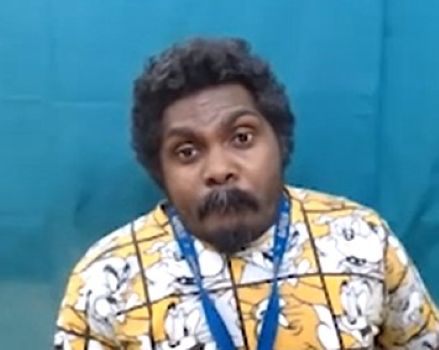 "Interview with Graham Wilfred Junior" Graham Wilfred Junior is a Yolngu man and artist with Incite Arts where he works with different mediums including filmmaking, writing, performing and music. Interview Summary Graham, an emerging artist with spina bifida whose father inspired his passion for art, has pursued various art forms including painting, music, and digital art, now calls Mparntwe/Alice Springs home, and is venturing into theatre and filmmaking. His digital artwork, through the creation of the indigemoji app, helps teach the Arrernte, the language of the First Nations people of Mparntwe/Alice Springs. He now seeks to expand his impact through acting and creating films. Graham's motivation is to both celebrate and inspire people with disability, aiming for recognition as an artist rather than focusing solely on his disability. Graham shares his journey with Incite Arts, highlighting his involvement in music workshops, acting classes and script development, emphasizing the importance of representation and empowerment for individuals with disability. Ultimately, he aims to document his experiences and create impactful performances that leave a legacy to encourage others to pick up where he leaves off, ensuring the continuity of artistic expression within his community.
-
 "Accessible Arts - ACE Arts Creativity Expression - Dave King - Article: DADAA - Disability in the Arts/Disadvantage in the Arts- Iss5, Pg3" Accessible Arts - ACE Arts Creativity Expression - Dave King - Article: DADAA - Disability in the Arts/Disadvantage in the Arts- Iss5, Pg3reads, in part "DISABILITY IN THE ARTS/DISADVANTAGED IN THE ARTS AUSTRALIA (DADAA) is a group of artists/art workers who represent the states and territories of Australia. Its members are representatives from those groups who work towards artistic empowerment and filling the creative needs of people with disabilities - that is to name a few, ACCESSIBLE ARTS and ARTS ACCESS. All the current members attended a meeting in July. They all work with people with disabilities and three have disabilities. The inaugural meeting was held in late 1990. This group was formed to facilitate and maintain a responsive external overview of the trends in the arts for those experiencing disadvantage or a disability."
- Bernice McPherson
- Chris Milton
- Claire Humphries-Hunt
- Claire Humphrys-Hunt
- David Bridie