
Items
Search full-text
“Commonwealth Disability Strategy launched in December 1994”
- South Australian Film Corporation
- Jim Catts
- Carriageworks
- Arts In Action
-
"Bree Hadley (2020) Allyship in disability arts: Roles, relationships, and practices. Research in Drama Education, 25(2), pp. 178-194.” "In this article, I propose that investigation of allies, ally skills, and allyship in disability arts is overdue. I articulate some of ways in which non-arts approaches to allyship need to be adapted to meet the needs of disabled artists, given the aesthetic as well as professional and social dimensions of allyship distinctive to disability arts. In doing so, I highlight the need for new theory, terminology, and frameworks to define the different approaches to allyship, developed by different artsworkers, operating in different roles, across the different domains of disability arts and/or arts and disability practice."
-
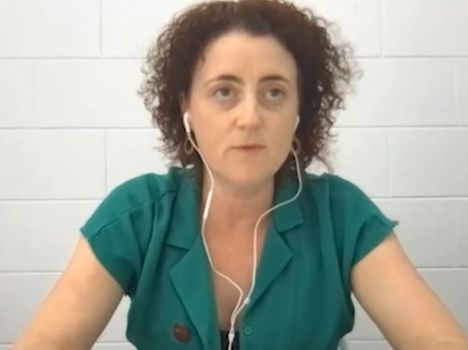 "Interview with Alison Richardson" Alison Richardson is an ally and advocate for people with disability with experience as an inclusive arts organisation artistic director and access and inclusion officer. Interview Summary Alison Richardson, artistic director and CEO of Crossroad Arts at the time of the interview, has had a 25-year journey through the fields of drama, theatre, and inclusive arts, starting in Sydney and leading to her role in Mackay, Queensland. Her work began by engaging with diverse young people and evolved into a focus on disability arts, recognising a gap in services and opportunities for people with disabilities in artistic expression. Throughout her career, she has witnessed and contributed to the gradual increase in visibility and opportunities for artists with disabilities, acknowledging the fluctuating support and funding in the sector. Despite challenges, Alison has observed progress in how disability arts are valued and the emergence of conversations around identity and representation within this community.
-
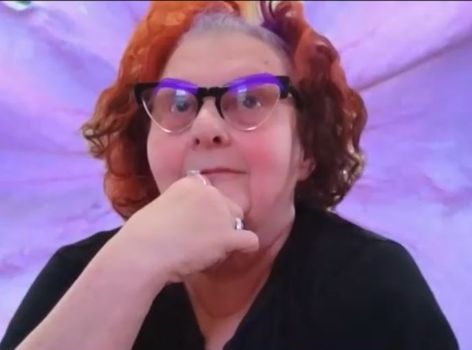 "Interview with Kath Duncan" Kath Duncan is a writer, a director, a provocateur, a visual artist, a comedian, a producer, a journalist, a radio broadcaster and disability advocate. Interview Summary Kath Duncan is an experienced and prominent figure in the disability arts community with a passion for experimental performance arts, having witnessed the beginnings of the disability arts movement in Australia and participated in its evolution. Her art is inherently political, shaped by her unique perspective as a congenital amputee. Kath firmly believes in the inherent creative revolutions and endless inspiration within all impairments. Kath highlights the ongoing struggles within the disability arts sector, including high unemployment rates for disabled individuals, systemic barriers, and the need for disabled leadership in arts organizations. While cherishing the milestones and transformative experiences she's had, Kath calls for significant systemic changes, emphasizing the importance of team playing and collective work to support and grow the disabled artist community.
-
 "Juliet London and Des Walsh (1995) Arts & Disability: Report Australia Council: Surry Hills." Juliet London and Des Walsh - Arts & Disability, Australia Council 1995 - Reads, in part "The Australian Bureau of Statistics estimates that 18 per cent of the Australian population has a disability. There is a basic lack of data on participation in the arts by artists with a disability. No figures were available on the number of people with disabilities applying for grants from the Australia Council or from State or Territory arts agencies. The current dearth of statistical information needs to be overcome by systematic and sustained research."
-
 "Arts Project Australia - Direct Line Exhibition 1994 - Programme/Catalogue" Arts Project Australia - Direct Line Exhibition 1994 - Prrogram/Catalogue - list of artists and works
-
 "Arts Project Australia - Working Art Exhibition 1994 - Promotional Flyer" Arts Project Australia - Working Art Exhibition 1994 - Promotional Flyer - reads, in part "Arts Project Australa is pleased to inivte you to working art the official launch - of the supported employment program"
-
"Bree Hadley (2016) Cheats, charity cases and inspirations: disrupting the circulation of disability-based memes online. Disability and Society, 31(5), pp. 676-692." "With the increasing part online self-performance plays in day-to-day life in the twenty-first century, it is not surprising that critiques of the way the daily social drama of disability plays out in online spaces and places have begun to gain prominence. In this article, I consider memes as a highly specific style or strategy for representing disability via social media sites. I identify three commonly circulating categories of meme – the charity case, inspiration and cheat memes – all of which offer representations that people with disabilities find highly problematic. I then investigate the ways in which disabled people have begun to resist the representation and circulation of these commonly circulating categories of memes, via the production of counter or parodic memes. I focus, in particular, on the subversive potential of these counter memes, within disability communities online and within broader communities online."
- Playbox Theatre Company
-
 "Australia Council - Annual Report 2001-02" Australia Council Annual Report 2001-2002 - discusses letter from chair of council, corporate overview, year in review, financial statements, analysis of funding and grants for projects, initiatives, new work, programs, presentation and promotions including funding for implementing the Commonwealth Disability Strategy by evaluating current and changing needs of people with disabilities in the arts sector and reflecting this in funding and policies, arts marketing and audience development and triennial grants to disability arts organisations in NSW, South Australia and Victoria as well as an image from Crossroad Arts for the exhibition “Shades of White” and the publication “Making the Journey”
- Jan Doran
- Viva Gibb
-
”Bree Hadley, Donna McDonnald (Eds.) (2019) The Routledge Handbook of Disability Arts, Culture, and Media. Routledge International Handbooks. Routledge, London; New York.” “In the last 30 years, a distinctive intersection between disability studies – including disability rights advocacy, disability rights activism, and disability law – and disability arts, culture, and media studies has developed. The two fields have worked in tandem to offer critique of representations of disability in dominant cultural systems, institutions, discourses, and architecture, and develop provocative new representations of what it means to be disabled. Divided into 5 sections:- Disability, Identity, and Representation; Inclusion, Wellbeing, and Whole-of-life Experience; Access, Artistry, and Audiences; Practices, Politics and the Public Sphere; Activism, Adaptation, and Alternative Futures - this handbook brings disability arts, disability culture, and disability media studies – traditionally treated separately in publications in the field to date – together for the first time.”
- Karen Brooks
-
“Creative Australia releases reports on arts participation, including d/Deaf, Disabled and Neurodivergent artists and audiences” A series of reports about arts and disability in Australia published in the mid-to-late-2010s are summarised on the Creative Australia website. Sources for the summary include Connecting Australians: Results of the National Arts Participation Survey (June 2017), Making Art Work: An Economic Study of Professional Artists in Australia (2017), Creating Pathways: Insights on support for artists with disability (2018), and Arts and Disability in Australia: Meeting of Cultural Ministers (2018). The overview of this research series demonstrates that disabled Australians’ participation in the arts had increased as access had grown, though equity for disabled artists, especially those with intersecting marginalised identities, continued to face barriers. It reports that work by disabled artists is innovative and transformative.
-
“In 2014, the Australia Council introduces its first grant specifically for artists with disabilities” In 2014, the Australia Council introduces its first grant specifically for artists with disabilities. Then Australia Council CEO Tony Grybowski announced “the Artists with Disability Pilot Program; the Council’s Disability Action Plan for 2014-2016; and additional funding for Arts Access Australia to increase career development and employment opportunities for artists with disability.” The pilot program granted $300,000 to disabled artists to develop and present their work. Following this, the program was extended for another three years. The “million dollar investment” would “provide development grants of up to $25,000 and project grants of up to $50,000 for individuals and groups.” That same year, the Australia Council received its first ever grant application in Australian Sign Language (Auslan). However, in 2019, Australia Council ended its dedicated funding program for disabled artists and replaced it with the National Arts and Disability Awards.
-
“Office of the Arts releases 'Creative Australia – National Cultural Policy' (2013) , is critiqued for its reference to 'tolerance' of disabled people” The national cultural policy ‘Creative Australia’ was published in 2013. It was critiqued for its lack of disability arts funding and its reference to 'tolerating' disabled people. As Arts Hub reported, “By now you will have heard that the National Cultural Policy offers little for Australians with a disability. Not only is there no funding for the National Arts and Disability Strategy, but instead, the policy calls for a culture of tolerance towards people with a disability.”
-
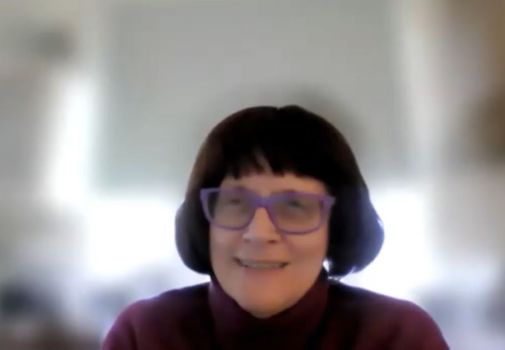 "Interview with Janice Florence" Janice Florence is a performing artist and disability advocate. She originally trained as a Teacher and Librarian. Janice has worked in Education and Libraries for many years and in disability advocacy for 20 years She has worked in Training and Consultation at Arts Access Vic for 12 years. Janice has been involved in theatre, dance and human movement for over 35 years. For 25 years she has been the Artistic Director of Weave Movement Theatre, comprising disabled and non-disabled performers. Weave has produced many devised original works often with respected performing artists as collaborators. She was the inaugural recipient of the Australia Council Awards for Disability Arts-Established Artist in 2019. Interview Summary Janice Florence is a veteran performer and Artistic Director of Weave Movement Theatre, which includes disabled performers. During the interview, Janice reflected on her extensive history with dance, both prior to and after acquiring her disability, highlighting the significance of political and personal themes, as well as the use of humour in her work. She discussed the ongoing challenges in securing accessible rehearsal and performance spaces, along with the complexities of funding and recognition within the Disability Arts scene in Australia. Janice also acknowledged the importance of Disability Arts historically and its potential for challenging societal expectations regarding disability.
-
"Catherine Grant (2013). Participating in arts- and cultural-sector governance in Australia: Experiences and views of people with disability. Arts & Health, 6(1), 75–89. https://doi.org/10.1080/17533015.2013.826259" Reads, in part "This study sought the perceptions and experiences of people with disability relating to their potential or current involvement in the governance of arts and cultural organisations in Australia. Methods: A total of 32 people participated in an online survey, and results were analysed qualitatively and quantitatively. Results: The findings revealed that those participants who had been involved in governance benefited from it in terms of self-esteem, participation in society and well-being." Contains tables with survey data.
- ACE Magazine
-
 "Accessible Arts - ACE Arts Creativity Expression - Helen Meekosha - Article: Challenging Disabling Images - 1994 - Iss9, Pg21pdf" Accessible Arts - ACE Arts Creativity Expression - Helen Meekosha - Article: Challenging Disabling Images - 1994 - Iss9, Pg21 - reads, in part "A new national research project has been set up to explore ways in which images of disability are created and used in the mass media"
-
 "Australia Council - Annual Report 1994-95" Australia Council Annual Report 1994-95- discusses functions, organisation chart, year in review, work to overcome inequities experienced by artists with disabilities with a review of arts and disabilities developing into an action plan by 1997, artform development, main activities of Council and its Boards, and includes financial statements and lists of grants made including grants for programs, projects, creative development of organisations and an international cultural exchange program.