Items
Search full-text
“Handicapped Persons Assistance Act 1974”
- DADA Act
- DADAA Act
- ACT DisAbility Arts Festival
-
“Commonwealth Disability Strategy launched in December 1994” The Commonwealth Disability Strategy was launched in December 1994. The strategy was meant to ensure compliance by Commonwealth Departments with the Disability Discrimination Act (DDA) (passed in 1992). The Museum of Australian Democracy at Old Parliament House reports that “Results have been uneven, especially in employment, but the Act has made some breakthroughs on education and disability access in new buildings.”
-
 "Australia Council - Making the Journey: Arts and Disability in Australia" Reads, in part "A collection of inspiring examples of how to include people with disabilities in the arts, as participants, creators and organisers"
 -
“Choose Art, the Australian accessible arts directory, is launched” The Australian accessible arts directory Choose Art was launched in 2019. It is an initiative of Arts Access Victoria, designed for and by Deaf and disabled people. Choose Art is a Commonwealth project supported by the Cultural Ministers of each State and Territory through Arts ACT; Arts Tasmania; Create NSW; Creative Victoria; Culture and Arts WA; Arts South Australia; Arts Queensland; Department of Tourism and Culture, NT and the Federal Minister through the Department of Communications and the Arts. Arts Access Victoria has created Choose Art in partnership with Arts Access Australia, Access2Arts, Access Arts, Accessible Arts, Arts Access Darwin, Belconnen Arts Centre, DADAA and Incite Arts.
-
“Screen Australia launches an access coordinator training program” Screen Australia launched an access coordinator training program in 2023. “The Access Coordinator role is intended for people from the Deaf/Disabled and/or Neurodivergent (DDN) communities who are committed to improving disability representation and removing barriers to inclusion.” Screen Australia partnered with the following organisations for the initiative: the New Zealand Film Commission, Screen Queensland, Screen Tasmania, Screen Territory, Screenwest, VicScreen, the South Australian Film Corporation, Screen ACT, Screen NSW, and the Australian Film Television Radio School.
-
"Bree Hadley, Eddie Paterson, Madeleine Little, Kath Duncan (2024) How Disability Performance Travels in Australia: The Reality Under the Rhetoric. In Czymoch, Christiane, Maguire Rossier, Kate, & Schmidt, Yvonne (Eds.) How Does Disability Performance Travel?: Access, Art, and Internationalization. Routledge, Abingdon, Oxon, pp. 62-76.” "The last three decades has witnessed the development of a distinct narrative about how disability performance has become a much celebrated component of the Australian theatre landscape. A central aspect of this narrative is the critical importance of festivals, events, and other industry initiatives that allow disabled performers to travel - both conceptually and corporeally - to meet and be mentored by other artists, and to present their work to new and more mainstream audiences, in new spaces and places, around the country, and around the world. In this chapter, we draw on historical data, collected as part of an AusStage ARC LIEF project designed to database information about disability drama, theatre, performance, and dance over the past 100 years, as well as the Last Avant Garde ARC Linkage project on disability performance in Australia, to unpack areas where the reality seems to challenge some of the dominant rhetoric."
-
"Mary Hutchison (2005) Making the Journey: Arts & Disability in Australia. Sydney: Arts Access Australia." Reads, in part "A collection of inspiring examples of how to include people with disabilities in the arts, as participants, creators and organisers"
-
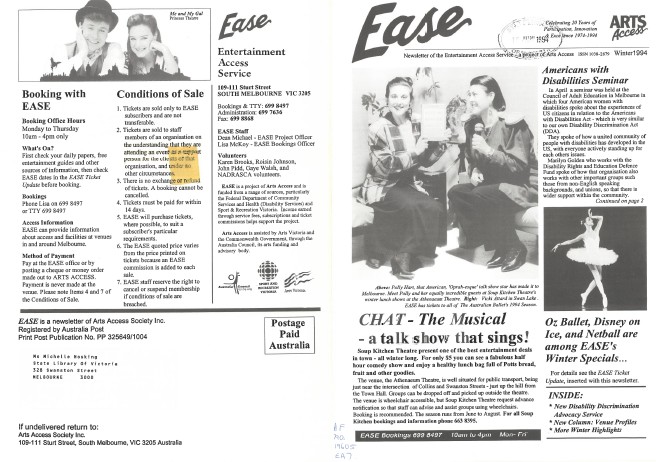 “Arts Access Victoria EASE Entertainment Access Service Newsletter Winter 1994" Arts Access Victoria EASE Entertainment Access Service Newsletter Winter 1994 - Disability Discrimination Act advocacy service, Seminar on Americans with Disabilities Act, EASE Consumers Group advise on BASS ticketing system
 - Open Art ACT
-
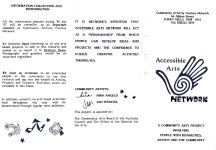 "Accessible Arts - PromotionalFlyer - 1986-87" Accessible Arts Network - Promotional Flyer - 1986-87 - reads, in part "It is network's intention that Accessible Arts Network will act as a "springboard" from which people can develop ideas and projects and the confidence to pursue themselves."
 -
 "Accessible Arts - ACE - Exhibitions and Events" Accessible Arts - ACE - Exhibitions and Events 2002
 -
 "Accessible Arts - ACE Arts Creativity Expression -2001 Nov - Iss6" Accessible Arts - ACE Arts Creativity Expression News Publication Issue 6 May 2001 - information/reviews of Creative Writing, Music, Dance, Theatre and Performance programs,opportunities, resources
 -
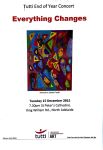 "Tutti Arts - End of Year Concert: Everything Changes - Program" Tutti Arts 'End of Year Concert- Everything Changes' 2015 Program - reads, in part "’Everythlng changes, seasons will come and go Life rearranges all that we think we know’ from The Six Swans, by Jehane Markham and Richard Chew Welcome to the 2015 Tutti Christmas Concert! The above words taken from the finale of The Six Swans, a one act opera Tutti performed with UniSA students in June this year means a great deal to Tutti as we work for social change. They also remind us of the deep meaning in the story of the birth of Jesus and the themes of redemption, hope, salvation and love associated with Christmas. Let's make Christmas 2015 a time of caring, a celebration of true emancipation of the earth from racial and ethnic hatred. Regardless of our religious ties or other belief systems, this Christmas let's all take time to envision what kind of world we want to live in, and do what we can in our own lives to restore peace, love and goodwill to Australia and the world.”
 -
 "Australia Council - Annual Report 1995-96" Australia Council Annual Report 1995-96- discusses functions, organisation chart, arts funding, audience development and advocacy with collaboration with various government departments to focus on advocacy for minority groups including people with disabilities, strategy and policy with Arts and Disability report, describing the barriers to intellectual and physical access to the arts experienced by people with a disability and the implications for arts organisations of the Disability Discrimination Act 1992, main activities of Council and its Boards, and includes financial statements and lists of grants made including grants for programs, projects, information and advocacy.
 -
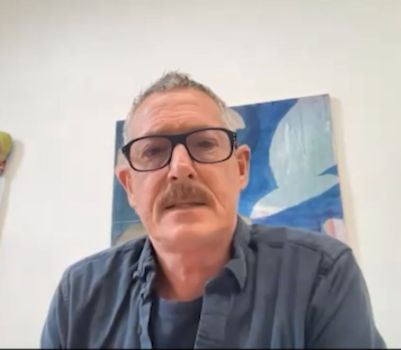 "Interview with David Doyle" David Doyle is the Executive Director of DADAA and has spent over 30 years leading large-scale Community Arts and Cultural Development (CACD) and arts projects globally and in Western Australia, significantly contributing to the arts and disability sectors through his work with DADAA and his dedication to community wellbeing and access to arts and culture. Interview Summary David Doyle, who originally trained in printmaking and ceramics with a background in community arts, has worked extensively in community arts and cultural development with a focus on addressing social issues through the arts. His experience with a disability from a young age and a deep understanding of power dynamics and privilege have influenced his motivation and commitment to disability arts in Australia. David highlights the significance of the Disability Discrimination Act and NDIS in empowering artists with disabilities and notes the uneven distribution of resources for disability arts across Australia. As the leader of an arts organization, he values the transition of power to individual artists with disabilities, stressing the importance of equipping them with the skills and contacts needed to lead and redefine the sector.
 -
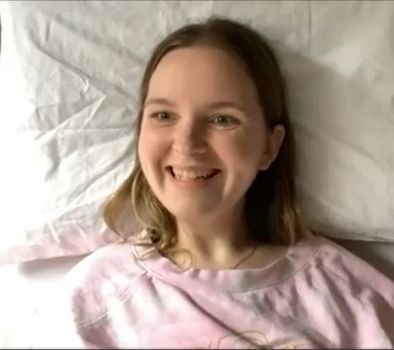 "Interview with Jess Cochran" Jess Cochran (they/them) is an actor, model, writer and disability advocate. Interview Summary: Jess Cochran is a queer, non-binary, neurodivergent, performing artist, advocate, writer, and consumer consultant with a background in both physical and psychosocial disabilities. Their journey into the performing arts began accidentally with a role in the Awards winning Melbourne Fringe Festival production, Qualia, which opened doors to more local and international Awards-winning work in film and stage. Jess identifies proudly with their disabilities and considers their art both a personal expression and a political act aimed at highlighting the issues faced by the disability community. Jess’s work spans across writing, modelling, and various performance arts, and they wish to see an increase of disability arts representation in mainstream media with authentic casting, opportunities and improved accessibility for disabled performers. Jess is also passionate about highlighting intersectionality in disability arts.
 - ACE Magazine
-
"South Australian Film Corporation (2018) Disability Screen Strategy" Reads, in part "Launched in 2018 under the SAFC’s Delivering Diversity umbrella, FULL TILT is the SAFC’s initiative for an inclusive approach to skills development for screen content makers with disability, and a starting point for driving change across the industry to achieve greater inclusion for practitioners with disability to develop their craft."
-
"SENSORIA: Access & Agency. ArtLink Magazine Issue 42.2, Spring 2022." Reads, in part "This issue platforms a range of contemporary art practices and debates written by and with artists who identify as part of the disabled, d/Deaf, vision impaired or neurodiverse communities. The commissioned essays, profiles and conversations offer diverse perspectives of lived experience and (in)visibility in the art worlds of Australia, Aotearoa/New Zealand and the UK."
-
"Sally Northfield (2014) Canvassing the Emotions: Women, Creativity and Mental Health in Context" PhD Thesis Victoria University, Melbourne, https://vuir.vu.edu.au/29985/, Australia, https://vuir.vu.edu.au/29985/1/NORTHFIELD%20Sally-thesis_nosignature.pdf " Reads, in part, "A multimedia movement-theatre show, incorporating dance, video- and slide- projections, a life-sized puppet and an original soundtrack. A diary come to life, portraying the true story of an Australian dancer who – after paralysing one of his arms in a motorcycle accident – journeys through the worlds of medicine, rehabilitation and disability, in recovery of self-expression. He finds new angles on perceiving the body, and new ways to move. "Body image" and concepts of "normality" are questioned."
-
"DADAA Art Works Key Findings: Employment in the Arts for People with Disability – Current Status, Barriers and Opportunities (2012)" Reads, in part, "This document provides a short overview of the full Art Works report, which captures the results from national research into employment levels, barriers and strategies around employment in the arts for people with disability. The report was produced in response to one of the key focus areas of the National Arts and Disability Strategy, released in 2009."
-
"Kath Duncan, Gerard Goggin (2002). 'Something in Your Belly': Fantasy, Disability and Desire in My One Legged Dream Lover. Disability Studies Quarterly 22 (4), pp: 127-144." In this article we explore fantasy, disability and desire in the groundbreaking 1998 Australian TV documentary My One-Legged Dream Lover. Based upon self-reflexive documentary conventions, the video uncovers journalist-cum-freak raconteur Kath Duncan's explorations into the world of amputee fetish. Duncan is a double congenital amputee. She says," I've tried most things men, women, sex toys, unusual locations, dominance and submission games but I wanted to know what it was like to be desired because of my impairments." Gerard Goggin is a temporarily able-bodied (or TAB) academic with his own history of queer desire and a personal investment in exploring issues of difference. Duncan's and Goggin's collaboration includes accessing each other's edgier fantasies, aiming to give voice to some of the negotiations, anxieties, pleasures, and risks we have taken, speaking across the chasm of our personal histories, different genders and respective bodies.
-
"Liz Ferrier (2000) Vulnerable Bodies: Creative Disabilities in Contemporary Australian Film. In Ian Craven ed. Australian Cinema in the 1990s. Routledge. https://doi.org/10.4324/9780203045022" Reads, in part "The internationally-acclaimed film Shine is one of a number of contemporary Australian movies which portray embattled artists or performers. Reminiscent of earlier works such as Starstruck (1982), Man of Flowers (1983), Malcolm (1986) and Sweetie (1989), and several more recent productions – Proof (1991), Strictly Ballroom (1992), Bad Boy Bubby (1994), The Adventures of Priscilia, Queen of The Desert (1994), Muriel's Wedding (1994), Cosi (1996), Lilian's Story (1996), and Jane Campion's New Zealand/Australian films, An Angel at My Table (1990) and The Piano (1993) – it depicts a disadvantaged individual overcoming setbacks through the passionate and eccentric expression of his creativity. The film and the cycle to which it belongs offers a peculiar vantage point from which to examine the problems and possibilities of Australian cinema in the 1990s."