Items
Search full-text
“The Australian Government’s Creative Nation policy released in 1994”
-
"Declaration on the Rights of Disabled Persons adopted in 1975" The 1960s and 1970s saw major changes in people’s attitudes towards disability. Stemming from the growth of the human rights movement and the introduction of normalisation theory internationally, Australia signed key human rights declarations of people with disabilities, the Declaration on the Rights of Disabled Persons (adopted in 1975). The Declaration argued that disabled people deserve to live lives “as normal and full as possible”.
-
“Arts Access Australia releases the report Making the Journey: Arts & Disability in Australia” In 2005, Arts Access Australia commissioned a survey of the disability arts sector nationally. This survey resulted in the report, Making the Journey: Arts & Disability in Australia. The report was written by Mary Hutchison. It details 12 case study disability arts organisations.
-
“Australia signs the UN Convention on the Rights of People with Disability” In 2007, Australia signed the UN Convention on the Rights of People with Disability. The CRPD seeks to “promote, protect and ensure the full and equal enjoyment of all human rights and fundamental freedoms by all persons with disabilities”. The Convention came into effect in Australia on 16 August 2008.
-
“2023 Screen industry report ‘Disability and Screen Work in Australia’ finds disabled people fulfil a range of roles in the screen industry, despite facing prejudice and exclusion, and should be treated as experts of their access requirements” ‘Disability and Screen Work in Australia: Report for Industry’ (2023) was compiled by researchers Radha O’Meara, Laura Dunstan, Anna Debinski and Catherine Ryan. The study was supported by Melbourne Disability Institute and A2K Media. The authors summarise that disabled people fulfil a range of roles in the screen industry, despite facing prejudice and exclusion, and should be treated as experts of their access requirements. They find that “Disabled people experience a more precarious, lower paid, and less powerful position in the screen industry than their non-disabled counterparts.” O’Meara and her colleagues call for widespread change in the industry to expand access.
-
"Amanda Cachia (2022) Networks of Care: Collectivity as Dialogic Creative Access, in Amanda Cachia ed. Curating Access: Disability Art Activism and Creative Accommodation. London: Routledge, 219-230" Reads, in part "The collectives that have formed in recent years and that will be the subject of this chapter include the Feminist Health Care Research Group (FHCRG), the Sickness Affnity Group (SAG), and Power Makes Us Sick (PMS). Each of these groups attempts to be intersectional in their approach, focusing on feminist and crip revisions to health care. Feminist and crip unite in the groups as the participants all identify as both women and as disabled. In shared spaces, which can be found in physical spaces, such as an art gallery or an artist’s home, or online through Zoom, artists can offer mutual understanding of their experiences with chronic illness, disability, the medical industrial complex, and simply be a shoulder to lean on in times of anxiety, anger, and sadness. The collectives also offer an opportunity for the artists to lift each other up, creating an environment of respect, dignity, and self-worth, becoming a strong circle of empowerment, affrmation, and allyship. The proliferation of these support groups shows a general shift in social norms, where the medical feld no longer holds the only authoritative voice on health. This phenomenon also indicates how nonmedical health based groups are flling a need and making up for a lack in social support networks elsewhere, particularly within sanctioned medical arenas."
-
"Bree Hadley (2014) Practice as method: The ex/centric fixations project. In Bolt, B & Barrett, E (Eds.) Material inventions: applying creative arts research. I.B. Tauris Publisher, United Kingdom, pp. 145-165.” "In this chapter, I consider the efficacy of creative practice as a research method, concentrating specifically on its applications in the performing arts, using one of my own recent projects, The Ex/centric Fixations Project (2009), as an example."
-
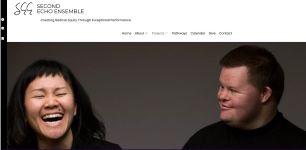 "Second Echo Ensemble - Performance, captured 2024" Second Echo website 'Performances' page, with information about past projects including 'The Stare', '[in]security', 'The Beauty Project, 'The Bridge', 'Outside Boy', 'Let Me Dry Your Eyes', 'The Chain', 'Right of Spring,' 'Contested Land', 'By My Hand'
 -
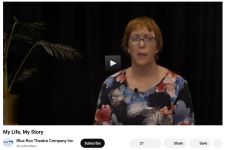 "Blue Roo Theatre Company - You Tube - My Life, My Story Creative Development (2020)" Blue Roo Theatre Company - You Tube - creative development of first digital production My Life, My Story (2020) - reads, in part "My Life, My Story is a timely, poignant and uplifting narrative highlighting the personal journeys of four inclusive artists, from community isolation to public recognition for their creative abilities, determination and joyfulness."
 -
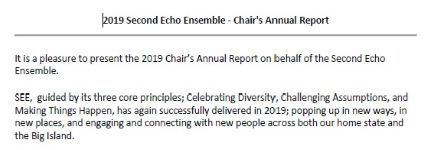 "Second Echo Ensemble - Chair's, Creative Producer's and Financial Reports 2019" Second Echo Ensemble Chair’s, Creative Producer’s and Financial Reports for 2019, including reports on work during the year (Performances of ‘COntexted Land’, ‘Let Me Dry Your Eyes’, ‘By My Hand’, creative development ‘The Beauty Project,’ collaborations with Kickstart, Dancenorth, Philip Channells)
 -
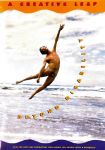 "A Creative Leap: Beyond Disability" A Creative Leap: Beyond Disability provides “ … six examples of how others are creating access for people with a disability to participate in artistic activity and develop their creative potential,” including Club Contagious Music Club, Malee Music Program, Karrarendi Visual Art Workshops, Southern Youth Theatre Ensemble, Restless Dance Theatre
 -
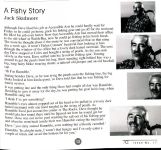 "Accessible Arts - ACE Arts Creativity Expression - Jack Skidmore - Creative Writing: A Fishy Story - Iss17, Pg13" Accessible Arts - ACE Arts Creativity Expression - Jack Skidmore - Creative Writing: A Fishy Story - Iss17, Pg13
 -
 “Arts Access Victoria - Creative Arts Program Glenroy 1993 - Promotional Flyer" Arts Access Victoria - Creative Arts Program Glenroy 1993 - Promotional Flyer - Artists, Guest Artists, Participants, and Volunteers in Glenroy Creative Arts Program 1993
 -
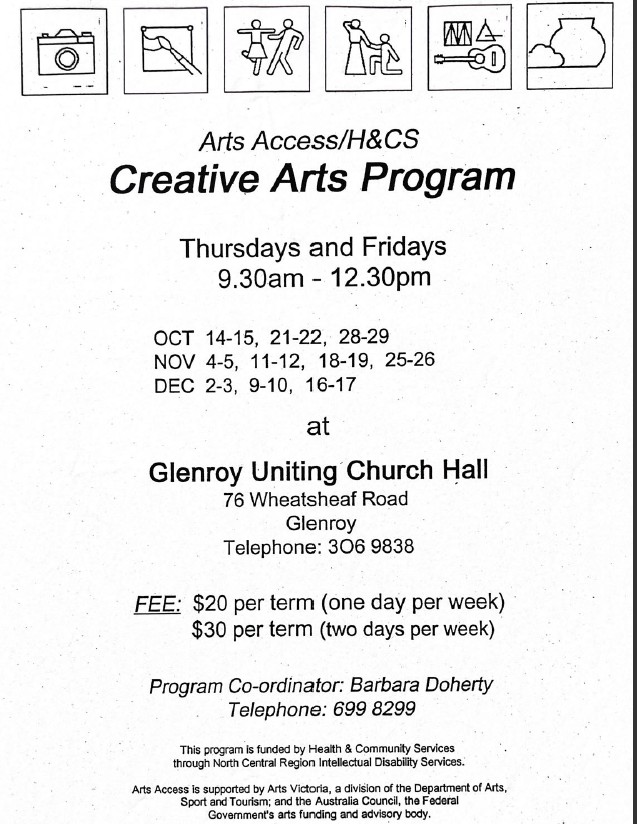 “Arts Access Victoria - Creative Arts Program Glenroy - Promotional Flyer" Arts Access Victoria - Creative Arts Program Glenroy - Promotional Flyer - information about Creative Arts Program coordinated by Barbara Doherty at Glenroy Uniting Church Hall
 -
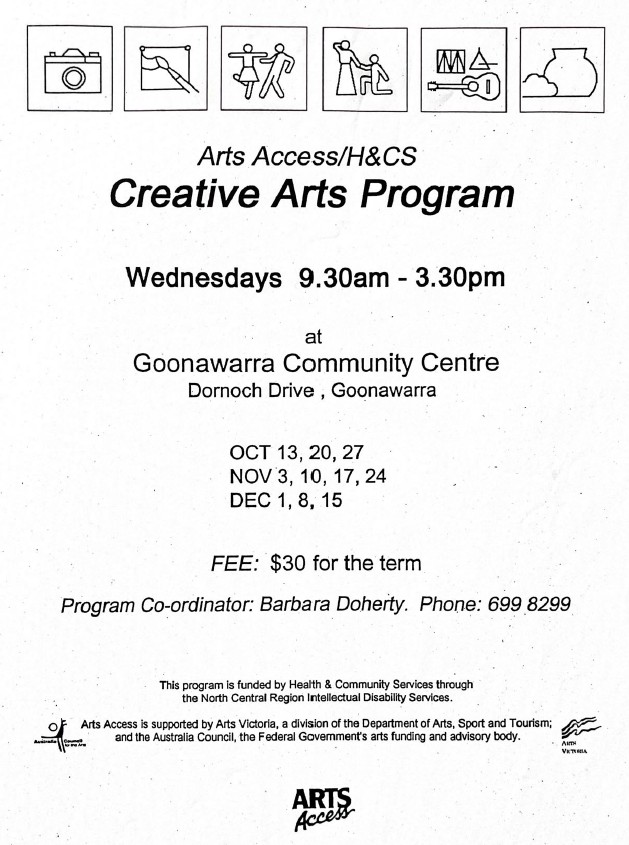 “Arts Access Victoria - Creative Arts Program Goonawarra - Promotional Flyer" Arts Access Victoria - Creative Arts Program Goonawarra - Promotional Flyer - Information about Creative Arts Program coordinated by Barbara Doherty at at Goonawarra Community Centre.
 -
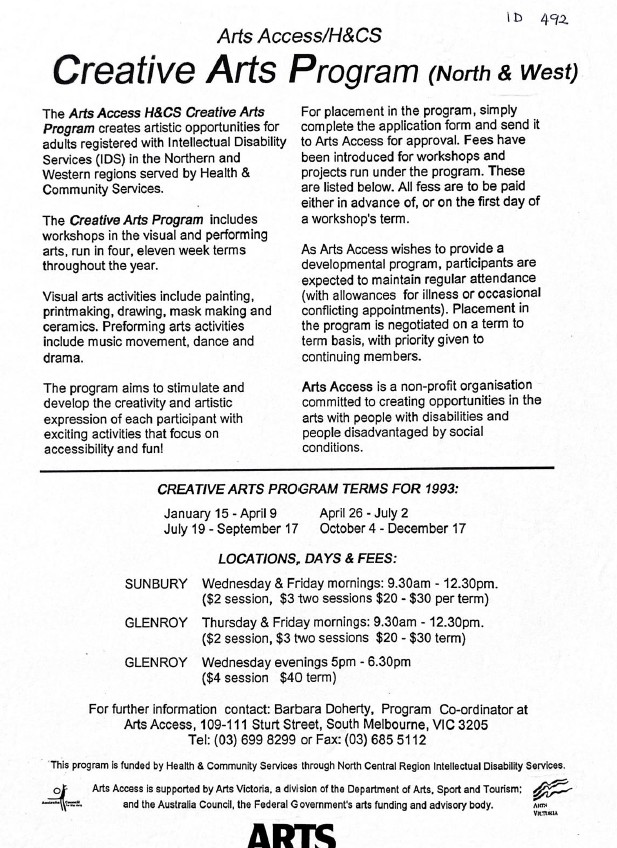 “Arts Access Victoria - Creative Arts Program North and West 1993 - Promotional Flyer" Arts Access Victoria - Creative Arts Program North and West 1993 - Promotional Flyer - Information about Creative Arts Program (North & West) providing arts opportunities, via workshops in visual and performing arts, including painting, printmaking, drawing, mask making, ceramics, music, movement, dance, and drama, for adults with Intellectual Disability
 -
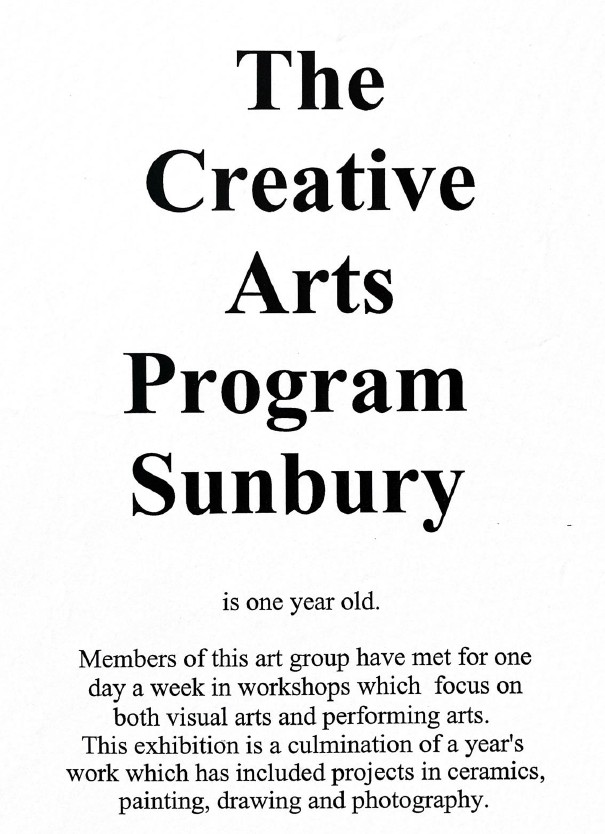 “Arts Access Victoria - Creative Arts Program Sunbury - Promotional Flyer" Arts Access Victoria - Creative Arts Program Sunbury - Promotional Flyer - Exhibition after year one of the Creative Arts Program Sunbury, providing projects in ceramics, painting, drawing, and photography.
 - Luke Campbell
- Luke John Campbell
- Second Echo Ensemble
-
 "Australian Theatre of The Deaf - Sing & Sign Workshop/Performance Information Form 1" Australian Theatre of the Deaf Sing 'N' Sign workshop performance information/registration form 1994 - "SING 'N' SIGN is a combination workshop/perfonnance in which the children work with the actors to learn the skills of Sign-Singing"
 -
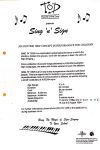 "Australian Theatre of The Deaf - Sing & Sign Workshop/Performance Information Form" Australian Theatre of the Deaf Sing 'N' Sign workshop performance information/registration form 1994 - "SING 'N' SIGN is a combination workshop/perfonnance in which the children, divided into groups, work with the actors to learn the skills of Sign-Singing"
 -
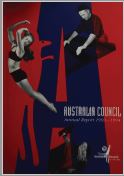 "Australia Council - Annual Report 1993-94" Australia Council Annual Report 1993-94 - discusses objectives, organisation chart, year in review, support for people with disabilities in Art and Working Life, artform development, main activities of Council and its Boards, and includes financial statements and lists of grants made including grants for programs, development of performance, visual art/crafts, media and multi arts, writers in community residence and local documentation projects as well as “Arts and Disability” research and collaboration in performance of “Love Dances (and other stories)”
 - Melbourne Festival
-
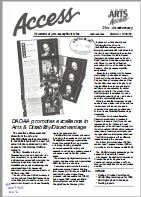 “Arts Access Victoria - Access Newsletter Summer 1994-95”
 -
“Arts Project Australia is founded in 1974” In 1974, Myra Hilgendorf OAM founded Arts Project Australia, an organisation whose aim is for artists with an intellectual disability to have their work presented in a professional manner. In 1984, Arts Project moved to Hawthorn, Melbourne and started a studio workshop program. The organisation became an Incorporated Association in 1986. In 1994, Arts Project Australia artists exhibited their work internationally. Exhibitions occurred at MADMuseé and Centre d’Art Differencié in Belgium. Artist Julian Martin was selected for the Moët & Chandon Touring Exhibition. Arts Project published an education/slide kit in 1994 called ‘Between the Lines: Visual Arts and Intellectual Disability’. The organisation first published ‘Outline: News from Arts Project Australia’ in 1996. Arts Project Australia was recognised by the National Gallery of Australia in 2013 for having international significance.