Items
Search full-text
“The Australian Government’s Creative Nation policy released in 1994”
- Petra Kuppers
-
"Australia Council: Australian Arts Snapshots - Disability & the Arts (2002)" Reads, in part "Australians who have a disability are recognised as being creators of innovative, thought provoking, high quality, and often very irreverent artistic product. They are active across all artforms in mainstream and community arts contexts"
- Tony Strachan
-
Theatre performance ‘Take Up Thy Bed & Walk’ integrates ‘aesthetic access’” The 2012 performance ‘Take Up Thy Bed & Walk’ designed by Gaelle Mellis and produced by Vitalstatistix proved that accessibility measures could be aesthetic. As Creative Australia describes it “is credited as Australia’s first performance work incorporating ‘aesthetic access’. It embedded the performer’s physicality and communication styles – and those of potential audiences – at the centre of the creative process. The work integrated audio description, captioning, sign language and interactivity uniquely into the core of the work.” Gaelle Mellis has said of the performance that “aesthetic access can be used in ways that add layer, texture, meaning and richness to a work. Art, at its simplest, is primarily about communication. Aesthetic access, at its simplest, is a form of communication that communicates to everyone.”
- Boram Lee
- Charlie Smith
- David Throsby
- Ruth Rentschler
-
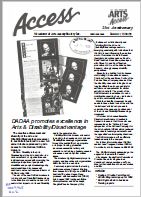 “Arts Access Victoria - Access Newsletter Summer 1994-95”
-
"International Year of the Disabled Person (IYDP)" In 1976, the General Assembly proclaimed 1981 would be the Year of the Disabled Person. The 1981 International Year of the Disabled Person inspired an increase in awareness and disability arts. While UN theme was “full participation and equality” the theme in Australia was “Break down the Barriers”, raising the prole and issues of people with disabilities. The international year of the disabled persons was a catalyst for connecting Australian disability activists to each other and the international disability rights movement (Royal Commission, 2021, p. 6). Australia saw an increase in disability-themed theatre from 1981 to 1984; however, these performances were largely staged with non-disabled casts. Records of these productions can be found on the AusStage database.
-
"First ABS Survey of Disability, Ageing and Carers (SDAC)" An ABS Survey of Disability, Ageing and Carers (SDAC) starting in 1981 and made people with disability more 'visible' for services and highlighted differences of experiences.
-
“Angharad Butler-Rees, Bree Hadley(2023) Exploring the Role of the Disabled Body as a Vehicle and Art Form within Anti-Austerity Protest. In Zebracki, Martin & McNeill, Z. Zane (Eds.) Politics as Public Art: The Aesthetics of Political Organizing and Social Movements. Routledge, Abingdon, Oxon, pp. 116-132.” "The impact of neoliberal austerity policy is being felt by people with disabilities across the globe. This chapter attends to disability protest in response to austerity across two contexts—the United Kingdom and Australia. It examines how people with disabilities are choreographing their protest, the strategies they are using, and the outcomes they are seeking."
-
"Bree Hadley (2022) A ‘Universal Design’ for audiences with disabilities? In Reason, Matthew, Connor, Lynne, Johanson, Katia, & Walmsley, Ben (Eds.) Routledge Companion to Audiences and the Performing Arts. Routledge, Abingdon, Oxon, pp. 177-189.” “Understanding of how to create inclusive performance experiences for spectators with disabilities remains nascent in research, policy, and practice. In this chapter, I survey the state of knowledge in this field – or, as it turns out, fields, given that specialist knowledge of sign language interpretation for d/Deaf spectators, audio description for blind spectators, and relaxed performance for neurodiverse spectators, has developed separately, without intersection. I then investigate recent efforts to create inclusive aesthetics that incorporate accessibility features into performance work, as an integral part of the aesthetic, rather than as interpretations, captions, or descriptions alongside the work. I examine why this ‘Universal Design’ approach has been embraced with enthusiasm, both by disabled producers and spectators, and by non-disabled producers and spectators.”
-
"Anthea Skinner (2017) ‘I love my body’: Depictions of sex and romance in disability music culture. Sexualities. Volume 21, Issue 3. https://doi.org/10.1177/1363460716688" Reads, in part "The international disability music scene is a thriving musical subculture consisting of performers self-identifying as disabled who use their performances to explore experiences of living with disability. As a genre predominantly written by, about and for people with disabilities, it provides a space for discourse about life with disability which is largely unmediated by governmental policy, political correctness or able-bodied facilitators. As such, it is a medium through which people with disability are free to express opinions about sex and romance rarely seen in mainstream media. This article examines the ways in which the topics of sexuality and romance are explored within disability music culture."
- Bolshy Divas
-
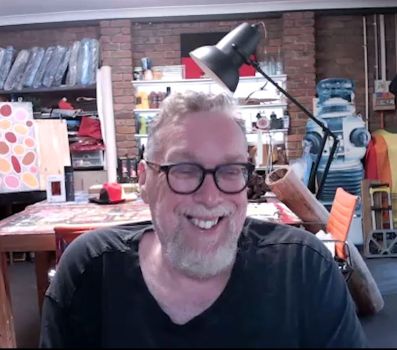 "Interview with Paul Constable Calcott" Uncle Paul Constable Calcott is a proud Wiradjuri man and artist living with a disability on Gubbi Gubbi country….. Uncle Paul uses his art to share stories of his journey as an aboriginal gay man living with a disability in urban Australia. Interview Summary Uncle Paul Calcott is a proud Wiradjuri elder and disability advocate who contracted polio as a child. During the interview, Uncle Paul discusses becoming an artist later in life through the encouragement of his husband and influenced by the storytelling of his culture. He embraces his identity as an Aboriginal, gay man living with disability. He talks about his artwork aiming to celebrate the achievements and contributions of people with disabilities, using traditional symbols to tell new stories, particularly about disability within Indigenous communities. Although there has been increased visibility and acknowledgment of disability arts in Australia, Paul notes that there's still a long way to go in terms of policy, funding, and public recognition. Uncle Paul says art can reflect political and social issues, and he proudly identifies as an artist with a disability and believes in the significance of diverse stories being told through the arts.
-
 "Access Arts - Artsworkers Guidelines" Identifies staff, artist, support worker, and exhibition curator roles, along with policy in relation to advocacy, media, purchase of artwork, privacy, behaviour, sexual harassment, and grievances.
-
“Choose Art, the Australian accessible arts directory, is launched” The Australian accessible arts directory Choose Art was launched in 2019. It is an initiative of Arts Access Victoria, designed for and by Deaf and disabled people. Choose Art is a Commonwealth project supported by the Cultural Ministers of each State and Territory through Arts ACT; Arts Tasmania; Create NSW; Creative Victoria; Culture and Arts WA; Arts South Australia; Arts Queensland; Department of Tourism and Culture, NT and the Federal Minister through the Department of Communications and the Arts. Arts Access Victoria has created Choose Art in partnership with Arts Access Australia, Access2Arts, Access Arts, Accessible Arts, Arts Access Darwin, Belconnen Arts Centre, DADAA and Incite Arts.
- Gerard Goggin
-
 "Australia Council - Annual Report 2020-21" Australia Council - Annual Report 2020-21 - reads, in part "• We awarded two new prestigious National Arts and Disability Awards on the International Day of People with Disability in December 2020, to Emily Crockford and Gaelle Mellis. The Council partnered with Arts Access Australia (AAA) on our 2020 Arts and Disability Awards supporting the Arts Access Australia’s National Leadership Award to recipient Abbie Madden.", and "Research underway includes analysis of data from the Australian Consortium for Social and Political Research Incorporated (ACSPRI) national study on social inequality, analysis of access and equity in the online sphere and an Australian Research Council (ARC) Linkage Partnership exploring the evolution of Disability Arts in Australia."
-
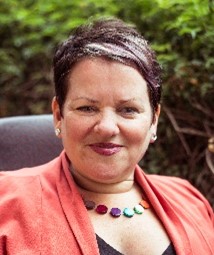 "Interview with Caroline Bowditch" Caroline Bowditch is an Australian artistic director, leader, performer, presenter, instructor, disability advocate and was the CEO of Arts Access Victoria. Interview Summary Caroline Bowditch, the CEO and Artistic Director of Arts Access Victoria, shared her journey as a performance artist and her experiences working within the Disability Arts community, highlighting her creative process and the challenges faced by disabled artists in Australia. Despite significant support and successful projects in the UK, she expressed concern over the limited progression and exposure of Disability Arts in Australia, noting a lack of ambition and opportunity deterring artists from aiming for larger, mainstream stages. Bowditch emphasized the importance of integrating access as a core component of artistic work and changing the aesthetic by including diverse bodies and perspectives. She also discussed tackling intersectionality within Disability Arts, reflecting on her own experiences as a visibly disabled and queer woman, and contemplating the future of Disability Arts, the desire for cultural equity, and the impact of potential shifts in societal barriers.
-
 "Australia Council - Annual Report 1989-90" Australia Council Annual Report 1989-90 - discusses objectives, highlights, support for artform development, main activities of Council and its Boards, and includes financial statements and lists of grants made including grants for conferences, access and touring, programs training and resource development as well as publications such as “The Arts and People with Disabilities”
-
"Kath Duncan, Gerard Goggin, Christopher Newell (2005) ‘Don’t Talk about Me... Like I’m Not Here': Disability in Australian National Cinema. Metro Magazine: Media & Education Magazine.146/147, pp. 152-159. https://search.informit.org/doi/10.3316/informit.043842788583710" Reads, in part "Disability is a central cultural identity and category in Australia, but this is not often realized. We seek to make a contribution to conversations and critical analyses of disability in Australian culture through an exploration of a privileged national cultural form, namely film. The trope of disability looms large in late twentieth century Australian cinema, and yet cultural comment on these ‘disabled’ scripts and performances has not yet considered a disabilities studies perspective. Accordingly, in this article we combine our different perspectives on disability and film into an account of how specific films use disability. In particular, we analyse key films from the 1990s as examples of powerful displays of bodies and personhood." References a range of films, including Proof (Jocelyn Moorhouse, 1991), Romper Stomper (Geoffrey Wright, 1992), Bad Boy Bubby (Rolf de Heer, 1993), Muriel's Wedding (PJ Hogan, 1994), Shine (Scott Hicks, 1996), Moulin Rouge! (Baz Luhrmann, 2001), My One Legged Dream Lover (writer Kath Duncan with dir. Penny Fowler-Smith, Christine Oslen 1998), Pins and Needles (writer Genni Batterham with dir. Barbara Chobocky, 1979), Riding the Gale (Genni Batterham with dir, Hugh Piper, 1987), Dance Me to My Song (writer Heather Rose with dir. Rolf De Heer, 1998), Heather Rose Goes to Cannes (Chris Corin, 1999), Myself When Fourteen, (Ivor, Arthur and Corinne Cantrill 1989),Film of Circles, Squares, Triangles, Lines and Dots (Arthur and Corinne Cantrill 1981), Rainbow Diary (Arthur and Corinne Cantrill 1984), House Gang (Mandy smith, 1997), Quentin Crashes Big Brother (Quentin Kenihan, 2002), Quentin, World at My Wheels (Quentin Kenihan, 2000), Ability Trek (Jacob Baldwin 1998)
- Sydney Gay and Lesbian Mardi Gras
- Sydney Gay and Lesbian Mardi Gras Festival