Items
Search full-text
“The Australian Government’s Creative Nation policy released in 1994”
-
 "Accessible Arts - Newsletter 2015-2016" Accessible Arts - Newsletter 2015-2016
 -
 "Accessible Arts - Newsletter 2010-2012" Accessible Arts - Newsletter 2010-2012
 -
 "Accessible Arts - Newsletter 2007-2008" Accessible Arts - Newsletter 2007-2008
 -
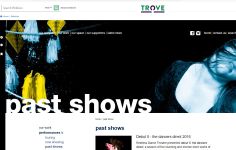 "Restless Dance - Past Shows 2012 - 2016" Restless Dance Website, information about past shows 2012-2016, captured 2020 – information about Debut 5: the dancers direct (five short works from Youth/Senior ensembles), In The Balance (at Adelaide Cabaret Festival) Touched (directed by Michelle Ryan with Youth ensemble), What’s a Nice Girl Like You Doing in a Place Like This? (directed by Emma Stokes with the Senior ensemble), Naturally (directed by Michelle Ryan with Youth ensemble), Salt (touring work developed by Rob Tannion), Debut 4 – the dancers direct 2013 (short works by five company members), high voltage 2012 (short work directed by Lorcan Hopper, as part of Debut 3 – the dancers direct and toured to Port Moresby) and Howling Like A Wolf (creative via collaborations between Restless and Melbourne based Rawcus Theatre led by Kate Sulan).
 -
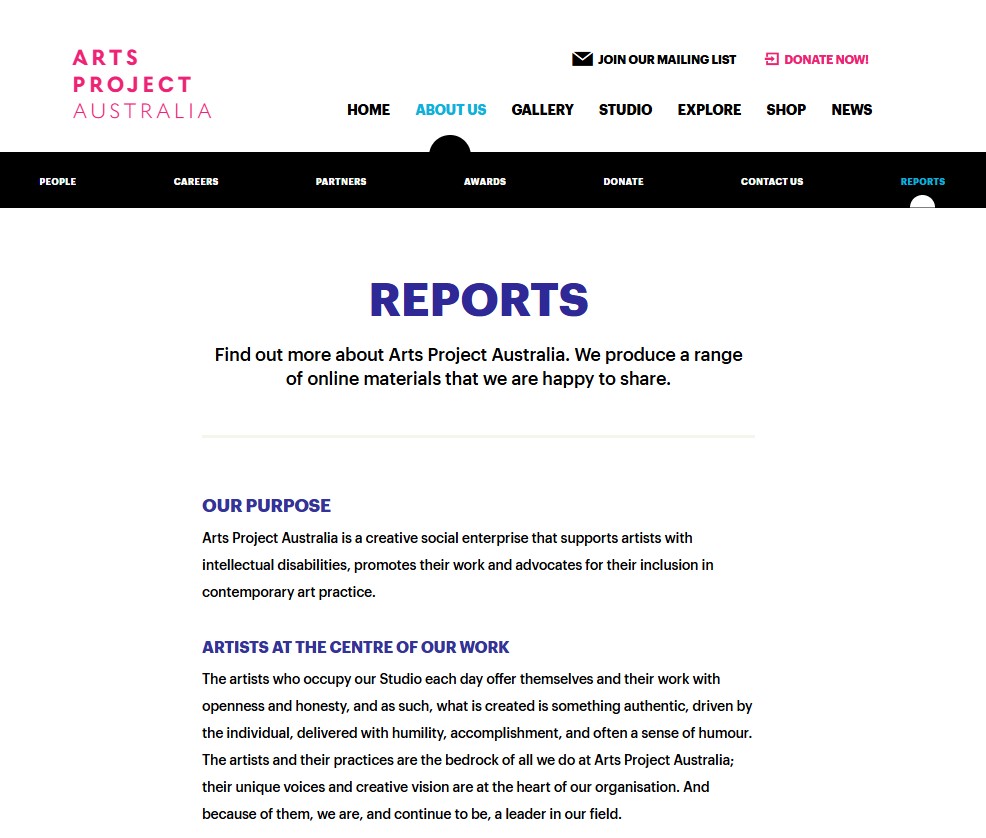 "Arts Project Australia - Annual Reports 2016-2021, captured 2022" Arts Project Australia - Annual Reports 2016-2021 - reads, in part "Arts Project Australia is a creative social enterprise that supports artists with intellectual disabilities, promotes their work and advocates for their inclusion in contemporary art practice."
 -
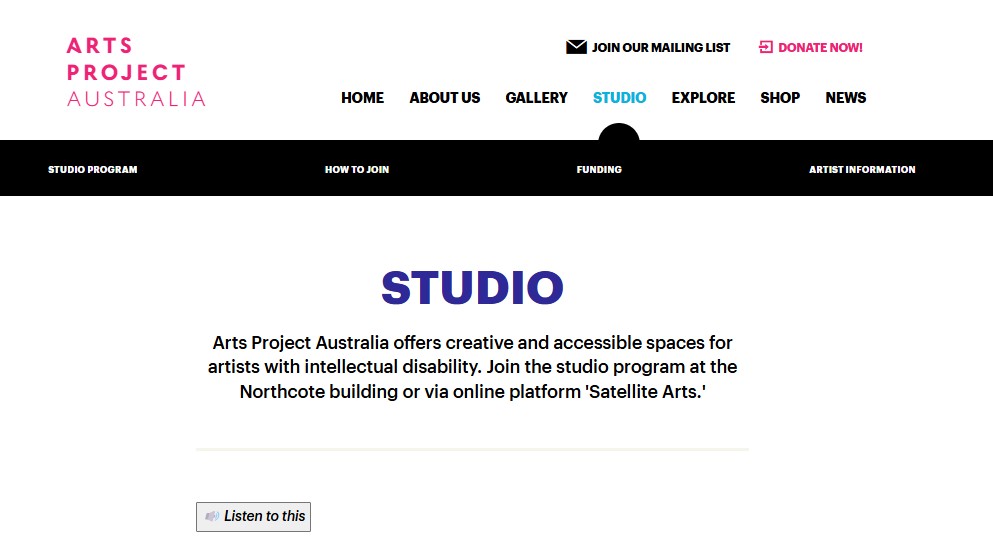 "Arts Project Australia - Studio, captured 2022" Arts Project Australia - Studio - reads, in part "Arts Project Australia offers creative and accessible spaces for artists with intellectual disability. Join the studio program at the Northcote building or via online platform 'Satellite Arts.'"
 -
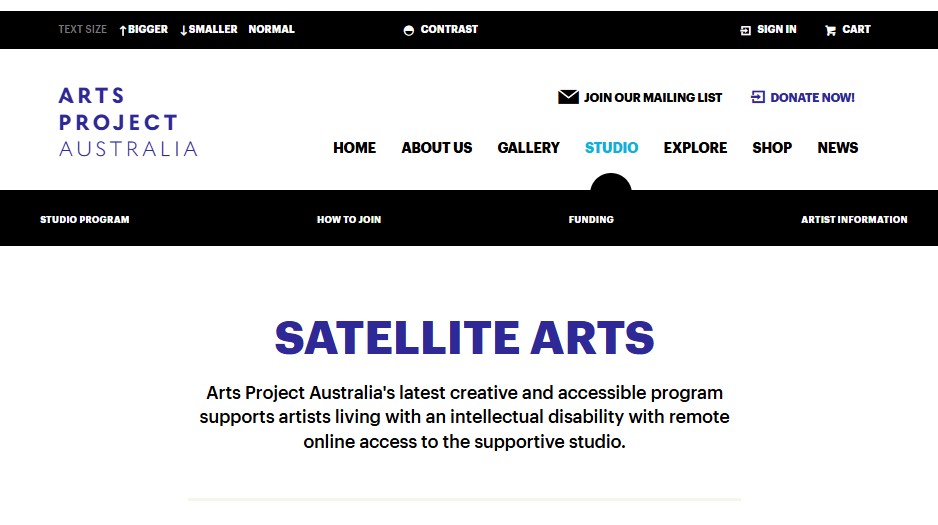 "Arts Project Australia - Satellite Arts, captured 2022" Arts Project Australia - Satellite Arts - reads, in part "Arts Project Australia's latest creative and accessible program supports artists living with an intellectual disability with remote online access to the supportive studio."
 -
 "Access2Arts - You Tube - Access2Arts Video UNCRPD Article #19 Living independently and being included in the community " Access2Arts Article #19 Living independently and being included in the community - https://www.youtube.com/watch?v=uoqeaDFEjlE
 -
 "Access2Arts - You Tube - Access2Arts Video UNCRPD Article #27 Work and employment" Access2Arts - You Tube - Access2Arts video on United Nations Convention on the Rights of People with Disabilities Article #27 Work and employment - reads, in part "Article #27 of the United Nations Convention of the Rights of People with Disabilities that deals withWork and employment, told by Deaf and disabled people. An Access2Arts Production made possible with support from the City of Adelaide."
 -
 "Access2Arts - You Tube - Access2Arts Video UNCRPD Article #30 Participation in cultural life, recreation, leisure and sport" Access2Arts - You Tube - Access2Arts video on United Nations Convention on the Rights of People with Disabilities Article #30 Participation in cultural life, recreation, leisure and sport - reads, in part "Article #30 of the United Nations Convention of the Rights of People with Disabilities that deals with Participation in cultural life, recreation, leisure and sport, told by Deaf and disabled people. An Access2Arts Production made possible with support from the City of Adelaide."
 -
 "Access2Arts - You Tube - Access2Arts Video UNCRPD Article #5 Equality and non discrimination" Access2Arts - You Tube - Access2Arts video on United Nations Convention on the Rights of People with Disabilities Article #5 Equality and non discrimination - reads, in part "Article #5 of the United Nations Convention of the Rights of People with Disabilities that deals with Equity and non-discrimination, told by Deaf and disabled people. An Access2Arts Production made possible with support from the City of Adelaide.
 -
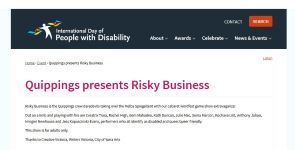 "Quippings presents Risky Business" Reads, in part "Risky Business is the Quippings crew daredevils taking over the Melba Spiegeltent with our cabaret wordfest game show extravaganza!"
 -
“Essay collection ‘Growing Up Disabled in Australia’ is published in 2021” In 2021, Carly Findlay edited a book ‘Growing Up Disabled in Australia,’ a collection of more than 40 Australian writers with disabilities sharing their lived experiences.
-
”Bree Hadley, Janice Rieger, Katie Ellis, Eddie Paterson (2024) Cultural safety as a foundation for allyship in disability arts. Disability & Society, 39(1), pp. 213-233.” "In this article, we argue that cultural safety, respect, and trust is a precursor to good allyship in the creative industries. We outline factors that influence feelings of safety or non-safety for disabled arts and media makers, and the way the legacy of the medical model makes it difficult for many arts and media workers to appreciate and enact enablers of safety as part of an allyship relationship."
-
”Hadley, Bree, Paterson, Eddie, & Little, Madeleine (2022) Quick Trust and Slow Time: Relational Innovations in Disability Performing Arts Practice. International Journal of Disability and Social Justice, 2(1), pp. 74-94.” "Despite a range of policies, plans, protocols and funding programmes to support disabled artists and collaborations between mainstream producers and disabled artists, the statistics – at least in our context in Australia – suggest most disability art still occurs outside and alongside an industry that struggles to include these artists. In this article, we draw upon findings from a series of workshops with disabled artists around Australia, conducted as part of the ARC funded Disability in the Performing Arts in Australia: Beyond The Social Model project – known colloquially to its collaborators and participants as ‘The Last Avant Garde’ project (https://lastavantgarde.com.au) – to propose a new approach. We find that while provision of logistical access (ramps, hearing loops, interpreters) and ideological access (stories, characters, discourse and language) is critical, so is methodological access, which embodies disability culture in training, rehearsal and production processes. Disabled artists use crip culture, along with relational space and time to negotiate what happens in disability arts and culture production practices and work through desire, fear, vulnerability and reciprocity to rapidly establish trusting collaborations."
-
"Australia Council for the Arts (2018) Arts and Disability a Priority as Australia Council Commits
Significant New Funding. 24 September 2018." Reads, in part "The Australia Council has committed $750k over three years to support sustainable careers and to recognise the artistic excellence of artists with disability."
-
”Bree Hadley, Donna McDonnald (Eds.) (2019) The Routledge Handbook of Disability Arts, Culture, and Media. Routledge International Handbooks. Routledge, London; New York.” “In the last 30 years, a distinctive intersection between disability studies – including disability rights advocacy, disability rights activism, and disability law – and disability arts, culture, and media studies has developed. The two fields have worked in tandem to offer critique of representations of disability in dominant cultural systems, institutions, discourses, and architecture, and develop provocative new representations of what it means to be disabled. Divided into 5 sections:- Disability, Identity, and Representation; Inclusion, Wellbeing, and Whole-of-life Experience; Access, Artistry, and Audiences; Practices, Politics and the Public Sphere; Activism, Adaptation, and Alternative Futures - this handbook brings disability arts, disability culture, and disability media studies – traditionally treated separately in publications in the field to date – together for the first time.”
-
"Bree Hadley, Donna McDonnald (2019) Introduction: disability arts, culture, and media studies - mapping a maturing field. In Hadley, B & McDonald, D (Eds.) The Routledge handbook of disability arts, culture, and media. Routledge, United Kingdom, pp. 1-18.” Reads, in part "In this book, an internationally recognised collection of established and emerging scholars, artists, and activists from across the US, UK, Europe, Asia, and Australasia come together to trace the development of disability arts, culture, and media studies in recent decades, flag current interests, and forecast future concerns."
-
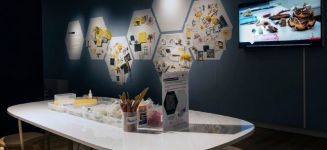 "Janice Rieger, Jasmien Herssens, Megan Strickfaden, Marianella Chamorro-Koc, Bree Hadley (2019) Vis-ability Exhibition." "The United Nations Convention on the Rights of Persons with Disabilities (UNCRPD, 2016) foregrounds the importance of cultural participation to realise human rights for people with disabilities. The creative industries play a critical role in supporting and shaping these social attitudes towards inclusion. Through the theoretical foundation of Design for All (EIDD Stockholm Declaration, 2004) new engagement processes involving a transdisciplinary team from Australia and around the world converged at QUT to co-design more equitable and collaborative forms of knowledge and practice around inclusion. International universities, the EU Commission and the European Institute for Design & Disability collaborated and presented Design for All for the first time in Australia, positioning QUT leadership in this field and as the first non-European member of EIDD-DfA. Co-design methods were employed through, Vis-ability workshops, Making Visible workshops, tactile artefacts and audio description work in the VisAbility Exhibition. Innovative practice was through the Inclusive Film Screening and Wondrous Googles technologies. An innovative model of engagement was created through the DfA Week program and events across sectors. Knowledge was disseminated through academic articles."
 -
"Jung Hyoung Yoon, Caroline Ellison, Peggy Essl (2020). Shifting the perspective from ‘incapable’ to ‘capable’ for artists with cognitive disability; case studies in Australia and South Korea. Disability & Society, 36(3), 443–467. https://doi.org/10.1080/09687599.2020.1751079" Reads, in part "This study examined four inclusive arts organisations in Australia and South Korea, providing creative services for artists living with cognitive disability, including autism, intellectual and mental disability. This research study focused on exploring what support inclusive arts organisations and society have provided for artists living with cognitive disability to pursue professional careers."
-
"Una Rey (2022) Art and sensoria: Whose disability? ArtLink, 42(2), pp.8–11." "SENSORIA: Access & Agency is ArtLink’s effort to affect this swell by providing a platform for divergent perspectives and nuanced articulations of being an artist. Whatever the prevailing conditions. It also invites a discussion within contemporary art discourse that is not driven by fear (of getting it wrong, of ‘the other’, of adding injury to trauma). Art is our place of intersectionality: if you’re reading ArtLink, you’re already on the margins, and quite possibly on the spectrum."
-
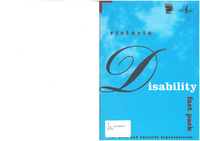 "Victoria : disability fact pack for arts and cultural organisations - DADAA National Network and Australia Council (1998)" Disability fact pack for arts and cultural cultural organisations in Victoria
 -
"New South Wales disability fact pack for arts and cultural organisations - DADAA National Network and Australia Council (1998)" Disability fact pack for arts and cultural organisations in New South Wales
-
"Queensland disability fact book for arts and cultural organisations - DADAA National Network and Australia Council (1998)" https://disabilityartshistoryaustralia.net/s/DAHA/item/9586
-
"South Australia : disability fact pack for arts and cultural organisations - DADAA National Network and Australia Council (1998)" Disability fact pack for arts and cultural organisations in South Australia