Items
Search full-text
“The Australian Government’s Creative Nation policy released in 1994”
-
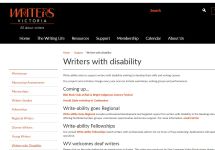 "Writeability website, captured 2016" Webpage reads, in part “Before the advent of Write-ability, writing programs for people with disability in Victoria were few and far between. Examples of successful Australia writers with disability are rare (and deaf writers even more so). Consequently, the number of authentic voices recording the stories of the lived experience of disability has been limited.” Webpage contains information about Write-ability Mentor-in-Residence; Write-ability Fellowships; Write-ability recent projects such as a series 2014 postcards/memes profiling writers, and support, professional development, and writers groups.
-
 "Accessible Arts - Newsletter 2015-2016" Accessible Arts - Newsletter 2015-2016
-
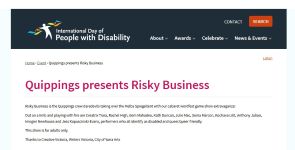 "Quippings presents Risky Business" Reads, in part "Risky Business is the Quippings crew daredevils taking over the Melba Spiegeltent with our cabaret wordfest game show extravaganza!"
-
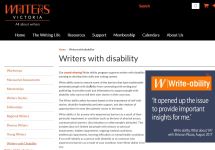 "Writeability website, captured 2018" Webpage reads, in part "Write-ability aims to remove some of the barriers that have traditionally prevented people with disability from connecting with writing and publishing. It provides tools and information to support people with disability who want to tell their own stories in their own way. The Write-ability ethos has been based on the importance of self-told stories, disability-leadership and peer support, and the creation of opportunities for even the quietest voices to be heard."
-
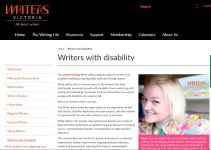 "Writeability website, captured 2019" Webpage reads, in part "Write-ability aims to remove some of the barriers that have traditionally prevented people with disability from connecting with writing and publishing. It provides tools and information to support people with disability who want to tell their own stories in their own way. The Write-ability ethos has been based on the importance of self-told stories, disability-leadership and peer support, and the creation of opportunities for even the quietest voices to be heard."
-
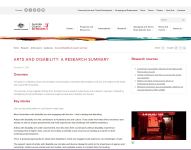 "Arts and Disability: A research summary" Australia Council - Arts and Disability: A research summary, 2018 - reads, in part "The great art created by artists with disability, and participation of people with disability in the arts, are integral to the artistic and cultural life of Australia. This summary brings together findings from Australia Council research publications and a research overview compiled by the Meeting of Cultural Ministers to build the evidence base about disability and the arts."
-
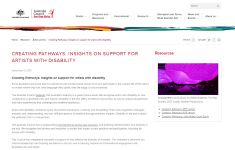 "Australia Council - Creating Pathways: Insights on support for artists with disability - 2018" Reads, in part "This report brings together findings and insights from a range of research undertaken in 2017–18 to inform the Council’s approach to future support for artists with disability."
-
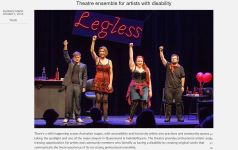 "Indelability Arts - Theatre Ensemble for Artists With Disability" News article by Kymberly Martin in Freedom2Live reads, in part, "The company, founded in 2015 by Rebecca Alexander and Catarina Hebbard, was inspired by local and international trailblazers and identified a gap within the creative sector for students with disabilities interested in pursuing a career in the arts after leaving school."
-
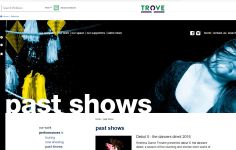 "Restless Dance - Past Shows 2012 - 2016" Restless Dance Website, information about past shows 2012-2016, captured 2020 – information about Debut 5: the dancers direct (five short works from Youth/Senior ensembles), In The Balance (at Adelaide Cabaret Festival) Touched (directed by Michelle Ryan with Youth ensemble), What’s a Nice Girl Like You Doing in a Place Like This? (directed by Emma Stokes with the Senior ensemble), Naturally (directed by Michelle Ryan with Youth ensemble), Salt (touring work developed by Rob Tannion), Debut 4 – the dancers direct 2013 (short works by five company members), high voltage 2012 (short work directed by Lorcan Hopper, as part of Debut 3 – the dancers direct and toured to Port Moresby) and Howling Like A Wolf (creative via collaborations between Restless and Melbourne based Rawcus Theatre led by Kate Sulan).
-
 "Access Arts - Visual Arts Workshops" Website reads "Our Visual Arts workshops provide participants with a supportive, inclusive and creative environment to engage with various artforms, encouraging positive social interaction, a strong sense of community, and artistic expression of each individual."
-
 "Arts Project Australia - Annual Reports 2016-2021, captured 2022" Arts Project Australia - Annual Reports 2016-2021 - reads, in part "Arts Project Australia is a creative social enterprise that supports artists with intellectual disabilities, promotes their work and advocates for their inclusion in contemporary art practice."
-
 "Arts Project Australia - Studio, captured 2022" Arts Project Australia - Studio - reads, in part "Arts Project Australia offers creative and accessible spaces for artists with intellectual disability. Join the studio program at the Northcote building or via online platform 'Satellite Arts.'"
-
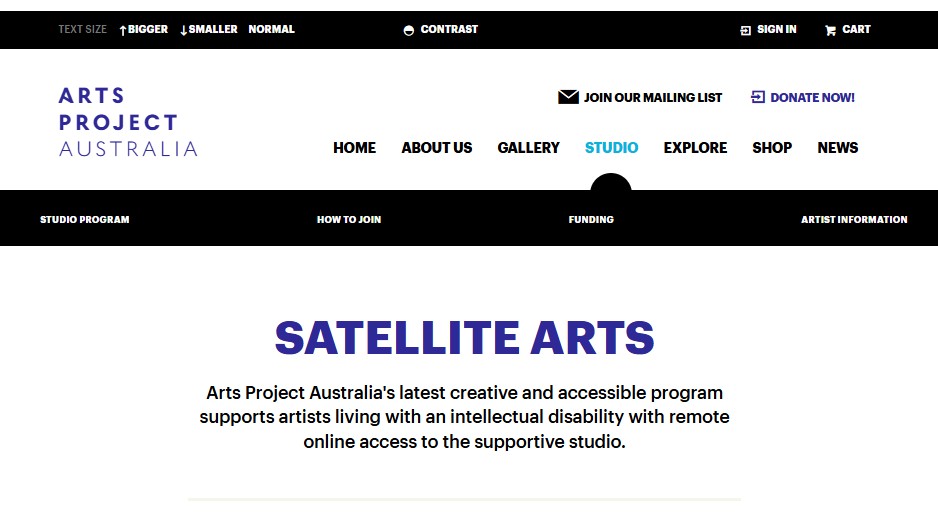 "Arts Project Australia - Satellite Arts, captured 2022" Arts Project Australia - Satellite Arts - reads, in part "Arts Project Australia's latest creative and accessible program supports artists living with an intellectual disability with remote online access to the supportive studio."
-
 "Accessible Arts - Activated Arts Podcasts" Accessible Arts - Activated Arts Podcasts - reads, in part "Get turned on to a different kind of creativity! The Activated Arts podcasts, produced in association with Accessible Arts and 2RPH Radio, explore and showcase the unconventional talent and distinctive work of professional arts practitioners with disability."
-
 “Australia Council - Disability Action Plan 2017–19” The website reads “Our current Disability Action Plan 2017–19 sets out actions in detail, building on the achievements of our previous DAP and stretching us further across our three goals of accessibility, leadership and arts practice.”
-
 "Australia Council Arts and Disability Initiative 2022-24" Australia Council Arts and Disability Initiative 2022-24 - reads, in part "This program is for d/Deaf artists or arts workers, or artists or arts workers with disability, seeking to undertake a project or activity to advance their practice, skills or career."
-
 "Australia Council - Annual Report 2015-16" Australia Council - Annual Report 2015-16 - discusses year in review, strategy, funding, and key facts, including "18% identified as Aboriginal or Torres Strait Islander 6% identified as experiencing disability", and running Sync Leadership Program for artists with disability
-
 "Australia Council - Annual Reports 2010-2022" Australia Council - Annual Reports 2010-2023
-
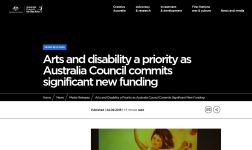 "Australia Council - Arts and disability a priority as Australia Council commits significant new funding" Australia Council - Arts and disability a priority as Australia Council commits significant new funding - reads, in part "The Australia Council has committed $750k over three years to support sustainable careers and to recognise the artistic excellence of artists with disability."
-
 "Australia Council - Annual Report 2019-20" Australia Council - Annual Report 2019-20
- Debra Keenahan
-
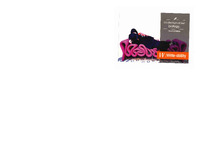 "Writers Victoria profile postcards of Write-ability Fellows - Sarah Widdup"
-
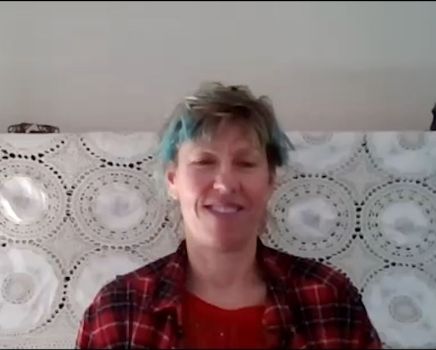 "Interview with Emiko Artemis" Dr Emiko Artemis is a visual artist with a PhD and a history of both solo and group exhibitions. Interview Summary Emiko Artemis identifies as a non-binary queer disabled visual artist. Emiko acknowledges their work essentially reflects their personal experiences with disability and comments on society. Despite interpersonal challenges due to disabilities, Emiko cherishes occasional collaborations, facilitated by clear structures or supportive relationships. Their artwork, often seen as "weird" to the public, aims to be thought-provoking rather than being particularly political. Emiko values the growing visibility of disability in the arts and the increase in acceptance of diversity in society. They proudly embrace their own identity as an integral aspect of their creative practice
-
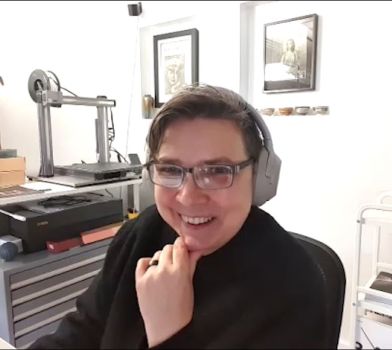 "Interview with Alison Bennett" Dr Alison Bennett is a senior lecturer in photography at RMIT School of Art specialising in expanded photography, webXR, queer and feminist creative practices. Interview Summary Alison Bennett, an artist and academic, spoke about her work in expanded photography, their experiences with autism, and the intersection of disability discourse with queer activism in their life and work. Their current project, vegetal/digital, arose from their experiences during the pandemic and connects audiences with plant sentience through interactive digital art. Alison also discussed the political nature of their work, aiming to shift ontological frameworks and exploring new modes of engagement through art. They reflected on the significant cultural changes regarding neurodiversity in the last few decades, highlighting the growing self-advocacy among autistic artists and their increasing impact in the arts.
-
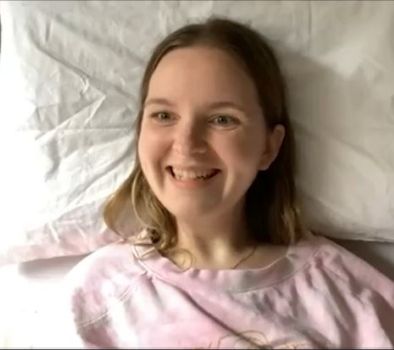 "Interview with Jess Cochran" Jess Cochran (they/them) is an actor, model, writer and disability advocate. Interview Summary: Jess Cochran is a queer, non-binary, neurodivergent, performing artist, advocate, writer, and consumer consultant with a background in both physical and psychosocial disabilities. Their journey into the performing arts began accidentally with a role in the Awards winning Melbourne Fringe Festival production, Qualia, which opened doors to more local and international Awards-winning work in film and stage. Jess identifies proudly with their disabilities and considers their art both a personal expression and a political act aimed at highlighting the issues faced by the disability community. Jess’s work spans across writing, modelling, and various performance arts, and they wish to see an increase of disability arts representation in mainstream media with authentic casting, opportunities and improved accessibility for disabled performers. Jess is also passionate about highlighting intersectionality in disability arts.