Items
Search full-text
“The Australian Government’s Creative Nation policy released in 1994”
-
 "High Beam Awards For Literature And Music" Held concurrent with the High Beam Festival 2004, "The Awards are open to any person who has been resident in South Australia for a period of not less than one year prior to the closing date, who has a permanent disability and is eligible to be a client of Options Co-ordination."
 -
 "Australia Council - Annual Report 1977-78" Australia Council Annual Report 1977-78 discusses membership, members of boards, senior staff list, report of Ten Years in the Arts, financial statements, grant lists and programs including funding for arts of deaf children, travel of mime artist to work with deaf artists, salaries of staff, production and presentation costs of Theatre of the deaf staff and production costs for Braille and Talking Book for 1978
 -
 "Australia Council - Annual Report 2014-15" Australia Council Annual Report 2014-2015 – discusses purpose, reports from chair and CEO, year in review, report from the CEO, Strategic priorities, funding overview, statement of outcome, about the Australia Council including The Governing Council and the Board, Structure of the Australia Council with new grants model; performance outcomes, manageability and accountability, financial statements and discussion of capacity building programs in partnerships with artists with disabilities, increasing audiences of people with disabilities, programs of dance including a research project between QUT and UQ about Queensland Ballet collaborating with Parkinson’s Queensland, and the New York based Mark Morris Dance Group to deliver weekly dance classes for 500 people around Brisbane affected by Parkinson’s disease and a program run by Crossroad Arts for two major dance and photography projects in 2015
 -
 "Australia Council - Annual Report 2012-13" Australia Council Annual Report 2012-2013 – discusses year in review, report from the CEO, Strategic priorities, funding overview, statement of outcome, about the Australia Council including The Governing Council and the Board, Structure of the Australia Council; financial review and discussion of Access Champions group focused on key actions from the 2011–13 Disability Action Plan, including programs for increased participation by artists with disabilities and to develop technical capacity and digital literacy for both operational and artistic activities, funding for exhibition of artists with disability work, premises and Australia Council website accessibility, and participation at national and international arts and disability forums.
 -
 "Australia Council - Annual Report 2011-12" Australia Council Annual Report 2011-2012 – discusses year in review, letter from chairman, vision, list of council staff, message from the CEO, Strategic priorities, funding overview, statement of outcome, about the Australia Council including governance, boards, organisation, accountability, workplace; financial review and discussion of Arts Organisations having two sections: Major Performing Arts and Key Organisations with a view to making the performing arts broadly accessible.
 -
 "Australia Council - Annual Report 2008-09" Australia Council Annual Report 2008-09 - discusses letter from chairman, year in review, from the CEO, How we achieved our outcomes, About the Australia Council, Governance, Organisation, Accountability, Workplace and Financial statements but no longer listing grants of organisations or individuals however discusses the DADAA WA radio play “The Proper Shoes” - a series of stories written by young women with a disability, was first broadcast nationally on ABC Radio and then invited to tour the play as part of the TRASNA Festival of Inclusive Theatre.
 -
 "Australia Council - Annual Report 2007-08" Australia Council Annual Report 2007-08 - discusses letter from chairman, year in review, from the CEO, Excellent and Distinctive Art from various artforms, Access for all Australians from various artforms, A strong and vibrant arts sector including artist’s earnings, philanthropic support and arts sector development, About the Australia Council, Governance, Organisation, Accountability, Workplace and Financial statements but no longer listing grants of organisations or individuals however discusses the DADAA WA radio play “The Proper Shoes” - a series of stories written by young women with a disability, was first broadcast nationally on ABC Radio and then invited to tour the play as part of the TRASNA Festival of Inclusive Theatre.
 -
 "Australia Council - Annual Report 2006-07" Australia Council Annual Report 2006-07 - discusses letter from chairman, year in review, from the CEO, Excellent and Distinctive Art from various artforms, Access for all Australians from various artforms, A strong and vibrant arts sector including artist’s earnings, philanthropic support and arts sector development, About the Australia Council, Governance, Organisation, Accountability, Workplace and Financial statements but no longer listing grants of organisations or individuals however discusses the DADAA WA – Lost Generation Project where a five year project intends to have more than 360 people with intellectual disabilities create self-portraits on film – one of the outcomes of DADAA WA receiving $104,775 in 2006-07 as a key organisation of the community partnerships section.
 -
 "Australia Council - Annual Report 1980-81" Australia Council Annual Report 1980-81 - discusses members of council, standing committees and board reports as well as financial statements, grants lists, publications and programs particularly focused on the 1981 International Year of the Disabled Person (IYDP) including accessibility, integration and raising awareness of barriers of disability in arts, with funding for research, art exhibitions, theatre, film (“Stepping Out”), dance (“Life, Images and Reflections”), craft, and literature; conference, seminar celebrating IYDP.
 -
 "Australia Council - Annual Report 1974-75" Australia Council Annual Report 1974-75 lists funding to Spectrum Films for a screenplay on social pressures of deaf mute, grant to Lloyd Nickson to attend theatre for deaf children (USA & UK), funding to Wheelchair and Disabled Association (as it was known 19for jewellery making tools and equipment, and Arts Council of Australia/Victoria (as it was known 1966-1998, before name changed to Regional Arts Australia) for salary of assistant and utilities for Arts Access Program
 -
 "Australia Council - Annual Report 1975-76" Australia Council Annual Report 1975-76 discusses membership, the year in review, National theatre of the Deaf from New York show and directors development program assisting Theatre of the Deaf, programs including salary and costs for Arts Access (Vic), Salaries, equipment and materials for program of multi-arts activities to Adult Deaf Society, Braille Book of the Year Award and funding program of entertainment for the old, sick and handicapped in homes.
 -
 "Australia Council - Annual Report 1978-79" Australia Council Annual Report 1978-79 discusses membership, members of boards, senior staff list, principals and precautions of grants, grant lists, programs including funding for multi arts camps for handicapped children, salaries and travel for NSW and QLD Theatre of the Deaf, and presentation and production costs for Braille and Talking Book Award for 1979.
 -
 "Australia Council - Annual Report 1979-80" Australia Council Annual Report 1979-80 discusses members of council, standing committees and board reports as well as financial statements, grants lists, planning for the nternational Year of Disabled Persons (IYDP) 1981 including publications of a study to identify options of disabled gaining greater access to the arts and programs and grants for Braille and Talking Book Library for its Braille Book of the Year, salaries of staff and funding for production of “The Threepenny Opera”, workshops and travel costs of NSW Theatre of the Deaf, funding for residents of the Lorna Hodgkinson Sunshine Home for the intellectually handicapped who gave a performance at the Sydney Opera House
 -
 "Australia Council - Annual Report 2016-17" Australia Council Annual Report 2016-2017 – discusses purpose, reports from chair and CEO, year in review, report from the CEO, Strategic priorities, funding overview, statement of outcome, about the Australia Council including The Governing Council and the Board, Structure of the Australia Council with new grants model; performance outcomes, manageability and accountability, financial statements and discussion of the final year of delivering $1.3 million over four years to support artists with disability with their careers and funding more organisations to support producing and touring disability-led and mixed-ability arts practice as well as mentoring arts leaders with disabilities and publication of the Council’s 2014–16 Disability Action Plan review.
 - Rawcus
- Alter State
- Kate Sulan
-
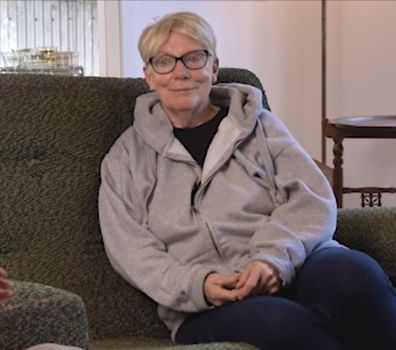 "Interview with Pat Rix" Pat Rix is a Disability Ally and Social Change advocate, and the recently retired Founder and CEO of TUTTI ARTS Incorporated. Interview Summary Pat Rix is an Artistic Director who has made extraordinary and sustained contributions to Australia’s cultural life through her artistic practice and leadership. A significant arts contributor since 1985, Pat made her early mark through plays and music-theatre productions which drew attention to social injustice and championed social inclusion. Her journey in disability arts began in 1997 with the formation of an inclusive choir at Minda Inc. which in 2001 incorporated to become the independent multi arts organisation known as ‘Tutti’ - embodying the inclusive Italian term meaning ‘everyone’. At a time when there were no vocational pathways for learning disabled and neuro divergent people, Tutti became a national trailblazer in creating a work environment where learning disabled and neuro diverse artists could create visual art, theatre, music, film and experimental art in a way that authentically nurtured their professional growth and recognition. Pat stresses the importance of disabled artists having control over their work. She believes that art is inherently political, and that it is finding your voice, being heard and being taken seriously that contributes to any artist's success. Pat looks forward to the future evolution of disability arts and the role of technology in enabling disabled artists to develop local and global partnerships which continue to provide exciting opportunities for artistic development.
 -
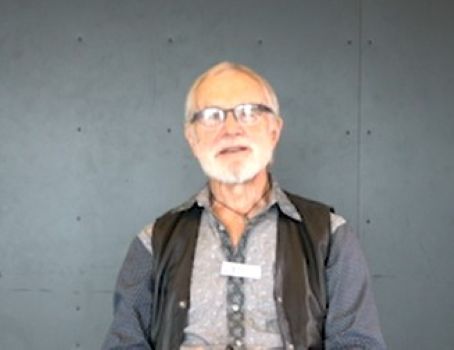 "Interview with Peter Vance" Peter Vance is a singer, songwriter, musician, performer, facilitator and disability arts advocate. Interview Summary: Peter Vance is a songwriter, performer, musician and singer. Peter suggested disability arts in the last 20 years has become more visible and popular reflecting a positive shift in how society views disability as part of the rich tapestry of human experience. This is reflected in how the arts now tell the stories of individuals with disabilities, not simply as artists with a disability, but as whole people whose varied experiences - visible and invisible - inform and enrich their creative expression. However, there are still challenges with funding and accessibility and ongoing struggles for recognition and support of disability art. Changes in how organisations operate to suit new funding such as the NDIS have potentially limited the spontaneity and personal touch that smaller, community-driven organizations once offered. Peter said it is essential to continue to push for better understanding, support, and visibility for people with all kinds of disabilities in every aspect of life, including the arts, to truly embrace inclusivity.
 -
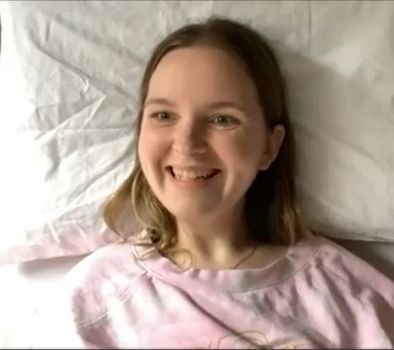 "Interview with Jess Cochran" Jess Cochran (they/them) is an actor, model, writer and disability advocate. Interview Summary: Jess Cochran is a queer, non-binary, neurodivergent, performing artist, advocate, writer, and consumer consultant with a background in both physical and psychosocial disabilities. Their journey into the performing arts began accidentally with a role in the Awards winning Melbourne Fringe Festival production, Qualia, which opened doors to more local and international Awards-winning work in film and stage. Jess identifies proudly with their disabilities and considers their art both a personal expression and a political act aimed at highlighting the issues faced by the disability community. Jess’s work spans across writing, modelling, and various performance arts, and they wish to see an increase of disability arts representation in mainstream media with authentic casting, opportunities and improved accessibility for disabled performers. Jess is also passionate about highlighting intersectionality in disability arts.
 -
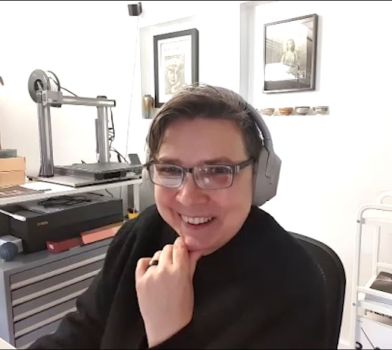 "Interview with Alison Bennett" Dr Alison Bennett is a senior lecturer in photography at RMIT School of Art specialising in expanded photography, webXR, queer and feminist creative practices. Interview Summary Alison Bennett, an artist and academic, spoke about her work in expanded photography, their experiences with autism, and the intersection of disability discourse with queer activism in their life and work. Their current project, vegetal/digital, arose from their experiences during the pandemic and connects audiences with plant sentience through interactive digital art. Alison also discussed the political nature of their work, aiming to shift ontological frameworks and exploring new modes of engagement through art. They reflected on the significant cultural changes regarding neurodiversity in the last few decades, highlighting the growing self-advocacy among autistic artists and their increasing impact in the arts.
 -
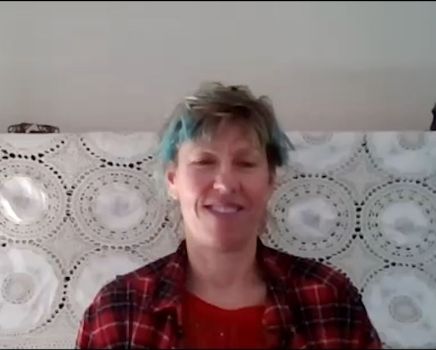 "Interview with Emiko Artemis" Dr Emiko Artemis is a visual artist with a PhD and a history of both solo and group exhibitions. Interview Summary Emiko Artemis identifies as a non-binary queer disabled visual artist. Emiko acknowledges their work essentially reflects their personal experiences with disability and comments on society. Despite interpersonal challenges due to disabilities, Emiko cherishes occasional collaborations, facilitated by clear structures or supportive relationships. Their artwork, often seen as "weird" to the public, aims to be thought-provoking rather than being particularly political. Emiko values the growing visibility of disability in the arts and the increase in acceptance of diversity in society. They proudly embrace their own identity as an integral aspect of their creative practice
 - Jess Kapuscinski-Evans
- Fiona Cook
- Debra Keenahan