Items
Search full-text
“The Australian Government’s Creative Nation policy released in 1994”
- Marianne Henderson
- Mario Andreacchio
- Lynn Redgrave
-
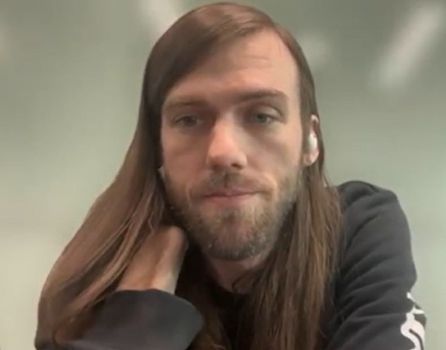 "Interview with Daniel Savage" Daniel Savage is an artist and disability advocate working in mediums of photography, video and performance. Interview Summary: Daniel discussed his background as a disabled contemporary artist primarily focused on photography, with additional interests in video and performance. Daniel detailed the journey through his artistic career, highlighting significant experiences such as art school education, early influences, and the impact of acquiring a disability. He also explored the evolution of his style and interests, particularly his shift towards digital technology and his involvement in advocacy for accessibility in the arts. Daniel also shared his perspectives on the challenges and achievements within the disability arts scene in Australia, including public awareness and integration with contemporary art.
 -
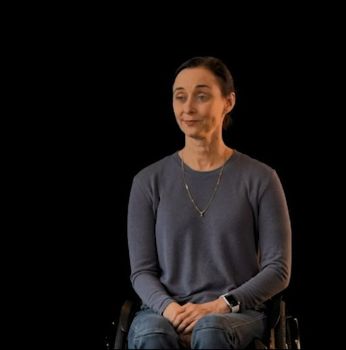 "Interview with Michelle Ryan" Michelle Ryan is the artistic director of Restless Dance Theatre and has extensive experience as a dancer and performer. Interview Summary Michelle Ryan, the artistic director of Restless Dance Theatre, shares her journey from being a successful dancer diagnosed with multiple sclerosis at 30 to becoming an advocate for artists with disabilities. Despite her initial hesitations to perform with her disability, a positive experience dancing with a European company reignited her passion and led her to Restless Dance Theatre, where she aims to change perceptions of who can create art. Michelle emphasizes the importance of providing professional opportunities and proper compensation for disabled artists, challenging the notion that disability work is charity or hobbyist. She advocates for representation that is genuine and not tokenistic, ensuring the inclusion of people with disabilities is meaningful and respectful.
 -
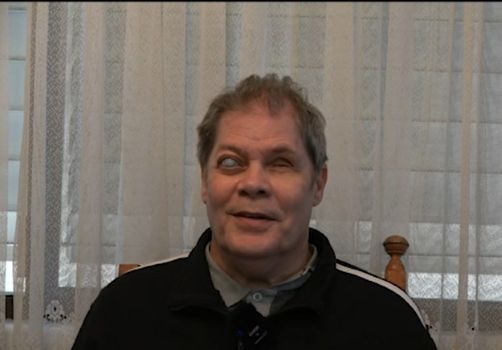 "Interview with Jeff Usher" Jeff Usher is a jazz and blues composer, arranger, pianist, vocalist, teacher, lecturer, and music consultant. Interview Summary Jeff Usher is a visually impaired Australian jazz musician with a rich history of playing music since childhood, influenced by a significant early encounter with the Jazz Action Society and key individuals like his high school music teacher Kathleen Kerr and his supportive family. Throughout his career, he has worked with a diverse range of musicians across many genres, including country, rock, and church music, and has expanded his repertoire to include political and spiritual themes, often infused with his synaesthetic experience of colour. Despite a broad professional experience, his engagement with the disability arts space developed over time, particularly through collaboration with other disabled artists, and he values working with good artists regardless of their backgrounds or disabilities. He is deeply committed to his craft, finding a balance between the aesthetic quality of his work and the joy it brings, both to himself and his audiences.
 -
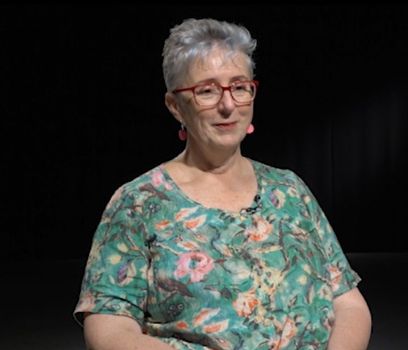 "Interview with Jenny Simpson" Jenny is CEO and Artistic Director of AWESOME Arts Australia while also a Musical Director of the Mighty Camelot Community Choir and a Sessional Academic at the Western Australian Academy of Performing Arts at Edith Cowan University. Interview Summary Jenny Simpson is the CEO and Artistic Director of AWESOME Arts Australia. She grew up in a musical family and always had an interest in the arts. After working in the corporate world, she decided to pursue a role in the arts to make a difference in the community. She has since focused on engaging young people with disabilities in the arts, and has worked on projects and festivals that promote inclusivity and accessibility. She believes that the perception of disability arts is changing and hopes to see more individuals with disabilities involved in arts management.
 -
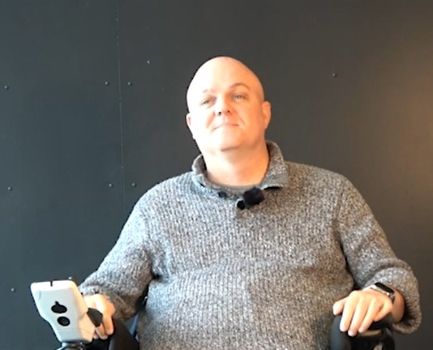 "Interview with Tim McCallum" Tim McCallum is a singer, performer and speaker and disability advocate. Interview Summary Tim McCallum is a performer who specializes in singing and acting, with singing being his foremost talent. Having sustained a spinal cord injury resulting in quadriplegia before beginning his studies at the Western Australian Academy of Performing Arts, Tim's childhood passion for the performing arts has continued to motivate his career. Through his experiences, both positive and negative, regarding inclusion and discrimination in the arts, Tim has become determined to challenge preconceived notions and make disability a visible and celebrated aspect of performance. He is a strong advocate for the representation of artists with disabilities in leadership roles within arts governance, stressing the importance of lived expertise over tokenism for lasting change in the industry.
 -
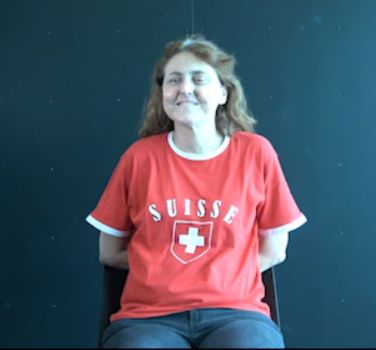 "Interview with Janelle Colquhoun" Janelle Colquhoun is an opera-jazz singer; corporate and community speaker; MC; producer; and writer. Interview Summary Janelle Colquhoun is a passionate and dedicated former opera singer, who in the interview speaks about, starting an entertainment agency to provide professional opportunities for artists with disabilities after losing her sight. She has produced over 1400 events, performed in a variety of concerts, and worked tirelessly to promote inclusivity in the arts, often by showcasing talented disabled artists to mainstream audiences. Janelle talks about how her work challenges the way people think about disability arts and inclusion, and strives to give equal performing opportunities by advocating for the recognition of artists with disabilities as professionals with the same quality of performance as any other artist.
 -
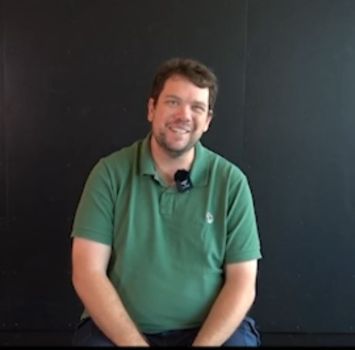 "Interview with Martin Edge" Martin Edge is a visual artist whose colourful paintings depict everyday life Interview Summary Martin Edge, an artist and ambassador for Autism Queensland, has experienced a significant journey in disability arts, culminating in representation by prominent galleries and inclusion in major collections. Since starting his painting career accidentally in a TAFE course, Martin's technique has evolved from using primary colours to creating a unique palette with mixed hues, resulting in more detailed and refined works. People have responded positively to his vibrant and hopeful art, which he enjoys sharing to bring joy to others. Martin looks up to artist Ken Done, admiring Done's vivid use of colour and his contributions to Australian art even into his 80s.
 - Jo Kennedy
- Joey Kennedy
- Hugo Weaving
- Geoffrey Rush
- Geoff Cobham
- Elisa Lydiard
- David Pidd
- David Helfgott
- Chris Abrahams
- Catherine Fargher
-
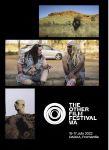 "The Other Film Festival WA Program 2022" The Other Film Festival WA Program 2022 – Australian work screened includes Shadow (52:00) Bruce Gladwin; Different Lens: Julia Hales (2:20) Frank Carroll; Different Lens: Nang Nguyen (2:20) Frank Carroll; Evacuate (2:00) Gaele Sobott; First Responders. Breanna: Relationships (2:09) Back to Back Theatre - Ahmarnya Price; Gemma (5:17) Rafael Star; I Was Born (Misfit) (5:10) Gaele Sobott; Price Versus Penny Arcade (9:28) Back to Back Theatre - Tamara Searle; Resource Daddies (7:40) Nemeses - Vidya Rajan and Alistair Baldwin; Silent Dance (4:00) Rohin John; Sparkles (12:49) Jacqueline Pelczar and Tina Fielding ; Yulubidyi (12:48) Curtis Taylor and Nathan Mewett
 - Stephanie Lindner
-
“Deaf activist and artist Asphyxia creates a music course and accessible music app for D/deaf people” Asphyxia, a profoundly Deaf Australian activist, artist, author and composer created a music course (2020) for people who are D/deaf and Hard of Hearing to write their own music. In 2023, Asphyxia also created an app called Amplio to make music more accessible to D/deaf people.
-
“Captioned films launched in Australia” In 2001, captioned films were launched in Australia with a speech by then Disability Discrimination Commissioner Dr Sev Ozdowski OAM. The process with a series of submissions from both the film industry and the Deaf and hard of hearing community. These submissions led to the establishment of a Forum comprised of representatives from the film distribution and exhibition sector, the Deaf and hearing impaired communities and the Australian Caption Centre. After a trial run in Sydney and Melbourne, three major cinema exhibiters (Greater Union, Hoyts, and Village) agreed to show open captioned films at selected venues throughout the country.
-
“Disabled People’s International (Australia) (DPIA) formed in 1983” The organisation Disabled People’s International (Australia) (DPIA) was formed in 1983. Thirteen disabled Australians who attended Disabled People’s International (DPI) first world assembly in Singapore in 1981, the International Year of the Disabled Person, returned home to set up the Australian branch two years later. The Women with Disabilities Australia online history reports that DPIA “from the outset, was dominated by disabled men. Only 3 of the 11 members of its governance structure were women, and there was no mention of women or gender in DPIA goals and objectives.” This led to the establishment of a women’s network within DPIA, known as the National Women’s Network (DPIA).