Items
Search full-text
“The Australian Government’s Creative Nation policy released in 1994”
-
“Genni Batterham stages a protest at the opening of Bondi Junction railway station 1979, makes film in 1980” When Bondi Junction railway station opened in 1979, Genni Batterham staged a protest about the lack of accessible transportation options for individuals with disabilities. After receiving a multiple sclerosis diagnosis in 1978, Genni became severely disabled very quickly. She did everything in her power to stop the disease's progression and was furious at being "consigned to the world of the disabled." The 1979 Bondi Junction protest was an important moment in the history of the Disability Rights Movement in New South Wales. The Premier, Neville Wran, later said that the experience led him to developing the Disability Taxi Service, the first public transport system designed for people with disability to be launched in Australia. Batterham then made the film ‘Pins and Needles’ (1980) with her husband Kim. Under the direction of Barbara Chobocky and with funding from the Australian Film Commission's Women's Film Fund, the film was screened in five different countries, took home first place at the 1980 Canadian Film Festival, and took home second place at the 1980 New York Film Festival. Genni and Kim would then collaborate on three further films about the phases of her life: Where's the Give and Take? (1981), Artreach (1982), and Riding the Gale (1987).
-
"Victoria's Disability Resources Centre (DRC) created" 1981 saw a number of Disability Activists create the first Australian Disability Resources Centre (DRC) for Victorians with disabilities.
-
"Back to Back Theatre established" The theatre company Back to Back was established in 1987. They are a drama group comprising artists with intellectual disabilities who have since toured both nationally and internationally in mainstream Australian theatre.
-
"SENSORIA: Access & Agency. ArtLink Magazine Issue 42.2, Spring 2022." Reads, in part "This issue platforms a range of contemporary art practices and debates written by and with artists who identify as part of the disabled, d/Deaf, vision impaired or neurodiverse communities. The commissioned essays, profiles and conversations offer diverse perspectives of lived experience and (in)visibility in the art worlds of Australia, Aotearoa/New Zealand and the UK."
- "Simon Darcy, S., Hazel Maxwell, Simone Grabowski, Jenny Onyx (2019). Artistic Impact: From Casual and Serious Leisure to Professional Career Development in Disability Arts. Leisure Sciences, 44(4), 514–533. https://doi.org/10.1080/01490400.2019.1613461"
- "DADAA Inc. (2014). An evaluation of a year-long mentoring program for artists with disability in western Australia. Perth, Western Australia: Department of Family and Community Services."
-
"Catherine Grant (2013). Participating in arts- and cultural-sector governance in Australia: Experiences and views of people with disability. Arts & Health, 6(1), 75–89. https://doi.org/10.1080/17533015.2013.826259" Reads, in part "This study sought the perceptions and experiences of people with disability relating to their potential or current involvement in the governance of arts and cultural organisations in Australia. Methods: A total of 32 people participated in an online survey, and results were analysed qualitatively and quantitatively. Results: The findings revealed that those participants who had been involved in governance benefited from it in terms of self-esteem, participation in society and well-being." Contains tables with survey data.
- "Kevin Cho (1980) 1981 International Year of Disabled Persons. Melbourne, Australia: Royal Melbourne Institute of Technology."
-
"Amanda Cachia (2013) ‘Disabling’ the museum: Curator as infrastructural activist. J. 12.3. pp. 257–289" Reads, in part "This article will explore how I attempt to ‘disable’ the museum through my infrastructural curatorial practice, which is the basis for my scholarly research and writing. By infusing my curatorial projects with critical reflection and theoretical development, I hope to begin this process of building a new vocabulary and methodology around curating disability and access."
-
"Katie Ellis (2019) Disability and Digital Television Cultures Representation, Access, and Reception. London & New York: Routledge." Reads, in part "Disability and Digital Television Cultures offers an important addition to scholarly studies at the intersection of disability and media, examining disability in the context of digital television access, representation and reception."
-
"Katie Ellis (2016) Disability Media Work: Opportunities and Obstacles. London: Palgrave." Reads, in part "Elevates disability media discussions beyond representation and access by considering employment and discriminatory attitudes in the media industry"
-
"Bree Hadley (2008) Mobilising the monster: Modern disabled performers' manipulation of the freakshow. M/C Journal, 11(3), pp. 1-7.” "This paper examines the risk in remobilising representations of the monstrous in performance, in that these re-representations of freak persona may still be read by spectators as part of the phenomenon they are trying to challenge, the critical counterpositions failing to register, or failing the fully disrupt the familiar scopic and discursive framework."
-
"Bree Hadley (2016) Cheats, charity cases and inspirations: disrupting the circulation of disability-based memes online. Disability and Society, 31(5), pp. 676-692." "With the increasing part online self-performance plays in day-to-day life in the twenty-first century, it is not surprising that critiques of the way the daily social drama of disability plays out in online spaces and places have begun to gain prominence. In this article, I consider memes as a highly specific style or strategy for representing disability via social media sites. I identify three commonly circulating categories of meme – the charity case, inspiration and cheat memes – all of which offer representations that people with disabilities find highly problematic. I then investigate the ways in which disabled people have begun to resist the representation and circulation of these commonly circulating categories of memes, via the production of counter or parodic memes. I focus, in particular, on the subversive potential of these counter memes, within disability communities online and within broader communities online."
-
"Cultural Ministers Council (2009) National Arts & Disability Strategy." Reads, in part "On 9 October 2009, the Cultural Ministers Council agreed to the National Arts and Disability Strategy, which sets out a vision for improving access and participation in the artistic and cultural activities for people with disabilities. The Strategy provides a framework within which jurisdictions can assess and improve existing activities. It also identifies new priority projects that could be progressed as national initiatives or by individual jurisdictions."
-
"Bree Hadley (2018) Disability, disabled dance audiences and the dilemma of neuroaesthetic approaches to perception and interpretation. In Wood, K, Brown, A, Waelde, C, Harmon, S, Blades, H, & Whatley, S (Eds.) Dance, disability and law: Invisible difference. Intellect Ltd, United Kingdom, pp. 293-315.” "In this chapter, I want to consider one emerging approach to spectatorship – the neuroaesthetic approach – through the lens of disability spectatorship. In the twenty-first century, neuroaesthetics is gaining traction amongst scholars looking to provide accounts of spectatorship in less story-based performing arts such as classical and contemporary dance, as well as in more story-based practices in drama, theatre and performance. ‘It would be fair to say that neuroaesthetics has become a hot field’, as Alva Noë puts it (2011). To date, though, the assumptions that underpin neuroaesthetic approaches to spectatorship have not been brought together with the assumptions that underpin the equally emergent field of disability spectatorship studies. As Carrie Sandahl (2002: 18) has noted, different cognitive, sensory and corporeal abilities result in a range of different phenomenologies, perceptual processes and perceptual preferences that can in turn produce different styles of engagement with experiences, events and objects. These differences impact on how people with disabilities produce and perceive aesthetic performances – somatically, syntactically, symbolically and socially, as disabled people hear with their eyes, see with their fingers, or perceive phenomena vicariously via the intervention of technologies or translators. Accordingly, disability spectatorship, and more detailed attention to the presence of distinctive cognitive, sensory and corporeal processes amongst disabled spectators, has the potential to complicate, extend and challenge assumptions embedded in emerging neuroaesthetic approaches to spectating."
-
"Bree Hadley (2019) Disability arts in an age of austerity. In Hadley, B & McDonald, D (Eds.) The Routledge handbook of disability arts, culture, and media. Routledge, United Kingdom, pp. 347-361." "Is the current “age of austerity” (Summers 2009) impacting on art, culture, and media practices by and about people with disabilities, and, in particular, on art-based protest practices by people with disabilities? In recent years, much has been written about austerity as neo-liberal economic, political, social, and ideological agenda (Harvey 2005; Barnett 2010; Seymour 2014). Much has been written about the way groups effected by local and global governmental shifts towards austerity are protesting, presenting themselves, and being represented by others (Fritsch 2013; Goodley, Lawthom, & Runswick-Cole 2014; Runswick- Cole & Goodley 2015; della Porta 2015; Kokoli & Winter 2015; Beresford 2016; Dodd 2016; Giugni & Grasso 2016; Berry 2017). The question of whether disabled artists are adapting their practices to address these changing cultural circumstances has received less attention (Hadley 2017) and is thus the topic I focus on in this chapter."
-
"Bree Hadley (2019) Advocacy, allies, and 'allies of convenience' in performance and performative protest. In Grehan, H (Ed.) The Routledge companion to theatre and politics (Routledge Theatre and Performance Companions). Routledge, United Kingdom, pp. 85-88.” "Though allies have always played a role in the production of political performance, analysis of the work of disabled artists, women artists, queer artists, and artists of colour has yet to be combined with analysis of the work of allies addressing the same issues. In this chapter, I consider the practice of allies in a specific context, social media performance, as a newly emerging platform for political activism. After tracing the way allies are typically involved in political performance about, with, and by marginalised people and communities, I point to complexities arising when activists, campaigners, entertainers, and pranksters use new online platforms in performance that purport to support the same cause.
-
"Australia Council for the Arts (2018) Creating Pathways: Insights on support for artists with disability. 19 September 2018" Reads, in part "This report brings together findings and insights from a range of research undertaken in 2017–18 to inform the Council’s approach to future support for artists with disability."
- "Bree Hadley (2021) What's in a name? The politics of labeling in disability performance. In Rai, Shirin, Gluhovic, Milija, Jestrovic, Silvija, & Saward, Michael (Eds.) The Oxford Handbook of Politics and Performance. Oxford University Press, New York, NY, pp. 531-543.”
-
 "ARTAbility Conference" The national Disability and Arts Disadvantage and the Arts Australia (DADAA) committee was established in Melbourne, Victoria, in 1991, and – as described in the Access Arts Annual Report 1992 – at the inaugural meeting of this group in 1991, Access Arts offered to organise a conference for the group in 1992, with funding from the Queensland Performing Arts Trust, at the Queensland Cultural Centre - the Access Arts Annual Report 1992 says “Drawing on the experience of the Queensland ARTability conference of 1990 enabled Access Arts staff and members to be fully involved in the planning of the conference. It was a big success. Access Arts has also set up the Queensland DADAA network.”
 -
 "Access Arts CPL Ltd Constitution" Access Arts CPL Ltd Constitution 2022
 -
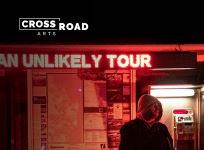 "Crossroad Arts StrategicPlan 2022-2025" Crossroad Arts Strategic Plan 2021-2025 - includes Vision, Mission, and Goals, Artistic Program and Artists, Community, Markets, Board and Staff, Partners, Impact
 -
 "Indelability Arts - Website, captured 2018" Website includes Work, Workshops/Training, Contact
 -
 "Hannah Gadsby: Nanette| Official Trailer | Netflix" Hannah Gadsby: Nanette | Official Trailer [HD] | Netflix - reads, in part "Behind every joke, there is a story. Hannah Gadsby’s award winning “Nanette” comes to Netflix June 19."
 -
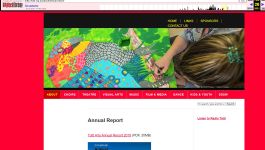 "Tutti Arts - Website - Annual Reports 2010-2019, captured 2021" Tutti Arts Annual Reports 2010-2019, captured 2021