Items
Search full-text
“The Australian Government’s Creative Nation policy released in 1994”
- Amanda Cachia
-
"Screen Australia (2023) Seeing Ourselves 2: Diversity, equity and inclusion in Australian TV drama. Screen Australia" Reads, in part "Screen Australia has released new research into diversity on Australian screens, titled Seeing Ourselves 2: Diversity, Equity and Inclusion in Australian TV Drama. A follow up to the landmark 2016 study, Seeing Ourselves 2 examines the diversity of main characters in 361 scripted Australian TV and online dramas broadcast between 2016 and 2021, how this compares to the Australian population, and what has changed since the previous Seeing Ourselves report."
- Disability and Arts Disadvantage and the Arts Australia (DADAA)
- DADAA Network
- DADAA National Network
- Australian Elizabethan Theatre Trust
-
"Janice Rieger and Megan Strickfaden(2019) “Dis/ordered assemblages of disability in museums.” In The Routledge Handbook of Disability Art, Culture, and Media, edited by Bree Hadley and Donna McDonald, 48–61. London & New York: Routledge." "Museums are spaces of power and care. They are institutions that present assemblages (Deleuze & Guattari 2002), which are reconstructions and representations of history and societal values, and thus are partial realities that curate human existence. These assemblages cannot ever represent the totality of human existence because it is never possible to do so, and yet these assemblages are embedded with power because choices are made about what ought or ought not be represented within museums (Ott 2013; Bennet 2017). The nature of partial realities is that, at their centre, these are still representations that tell stories of what one would imagine to be the most significant events related to a place (nation, city), with a particular focus on a societal event or issue (war, art, sports, nature, human rights, etc.) and peoples (e.g. immigrants, migrants, First Nations or Indigenous peoples, etc.). Persons attending museums rely on the expertise of historians, curators, archivists, conservators, and exhibition designers to present materials within the museum that focus upon and represent societal values. Most museum visitors are not aware of the power that museums hold, although more and more museum visitors push against narratives which they do not feel to be adequate representations of the places, events, issues, and peoples of society (Hooper-Greenhill 1992, 2000; Anderson 2004; Janes 2009, 2010). Where there is power, there is also care. Historians, curators, archivists, conservators, and exhibition designers take great care in how they assemble materials within museums."
-
"1963 and 1967 sees the introduction of the Disabled Persons Accommodation Act and Sheltered Employment (Assistance) Act, respectively." With increasing pressure to provide more services to people with disabilities, the 1960s was a decade of Commonwealth Government initiatives to support organisations providing work and accommodation to people with a disability, including the Disabled Persons Accommodation Act and Sheltered Employment (Assistance) Act.
-
“The Commonwealth Disability Services Act of 1986 replace the Handicapped Persons Assistance Act of 1974” In 1983, The Hawke Labour Government evaluated the initiatives created under the Handicapped Persons Assistance Act of 1974. The HPAA was replaced in 1986 by the Commonwealth Disability Services Act of 1986. Among other changes, this Act represents the shift in nomenclature from 'handicap' to ‘disability’.
-
“Queensland Advocacy Incorporated spearhead campaigns to close institutions” In 1989, when the Bjelke-Petersen-Ahern Government was coming to an end, the newly established Queensland Advocacy Incorporated was spearheading campaigns around the state to close down institutions and provide financing for individual help for individuals with disabilities.
-
“Disability in the Arts, Disadvantage in the Arts, Australia (DADAA), based in Western Australia, is established in 1994” The National Participate Conference, hosted by Arts Access Victoria in 1990, set the scene for the emergence of the DADAA network. This came after several years of conversations among Western Australian artists about starting an organisation; the organisation was officially established in 1994. “In 1986, a small group of artists with disability met to discuss starting their own WA-based arts organisation. It is from this meeting that DADAA slowly grew, from a pilot project it became an organisation in its own right in 1994: taking the name Disability in the Arts, Disadvantage in the Arts, Australia – DADAA.”
-
 "Accessible Arts - ACE Arts Creativity Expression - Helen Meekosha - Article: Challenging Disabling Images - 1994 - Iss9, Pg21pdf" Accessible Arts - ACE Arts Creativity Expression - Helen Meekosha - Article: Challenging Disabling Images - 1994 - Iss9, Pg21 - reads, in part "A new national research project has been set up to explore ways in which images of disability are created and used in the mass media"
-
 "Arts Project Australia - Miscellaneous 1994 - Program/Catalogue" Arts Project Australia - Miscellaneous 1994 - Program/Catalogue
-
 "Arts Project Australia - Beyond Words Exhibition 1994- Promotional Card" Arts Project Australia - Beyond Words Exhibition 1994- Promotional Card - reads, in part “The Council of Trustees of the National Gallery of Victoria and Arts Project Australia have great pleasure in inviting you to the official opening of Beyond Words”
-
 "Arts Project Australia - DirectLine Exhibition 1994 - Program/Catalogue" Arts Project Australia - DirectLine Exhibition 1994 - Program/Catalogue
-
 "Arts Project Australia - Studio Annexe Supported Employment Launch - Promotional Flyer - 1994" Arts Project Australia - Studio Annexe Supported Employment Launch - Promotional Flyer - 1994 - reads, in part "The Hon. Brian Howe, M.P will launch the Arts Project Australia Annexe Supported Employment Program on May 25th at Arts Project Australia. This program has provided six very talented individuals with greater opportunities to further develop-artistic skills, supported their involvement in integrated activities arid has 'assisted Arts Project Australia in the promotion and marketing of their art.”
-
"Australia Council for the Arts (2022) Australia Council releases Towards Equity: a research overview of diversity in Australian arts." Reads, in part "The Australia Council for the Arts have released their critical new report Towards Equity: A research overview of diversity in Australia’s arts and cultural sector. This overview gathers published and unpublished data and research on representation within the arts and cultural sector in Australia."
- Katya Petetskaya
- Carol-lee Aquiline
- Carol Lee Acquiline
- Chris Brophy
-
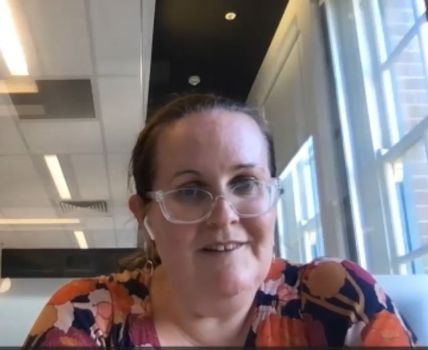 "Interview with Morwenna Collett" Morwenna is a leader, consultant and facilitator in the arts, government, not-for-profit and university sectors and is passionate about helping arts and cultural organisations to include everyone in their work. Interview Summary Morwenna Collett is a consultant in diversity, access and inclusion and during the interview discusses her vast experience in the disability arts sector including time in the Australia Council where she played a key role in creating the first targeted funding program for artists with disabilities. Morwenna notes that while disability arts is gaining some awareness with mainstream audiences, there are still issues regarding how people think about the quality of art created by artists with disabilities. Morwenna highlights the NDIS as a significant milestone for disability arts in Australia, though she believes that there is much more potential for arts organizations to engage with it. Morwenna also emphasizes that the decision for artists to identify with their disability is a personal choice and it is becoming increasingly safe to disclose this identity, demonstrating progress toward inclusion in the arts.
- Access2Arts
- Arts Access SA
- Arts In Action