
Items
Search full-text
“The Australian Government’s Creative Nation policy released in 1994”
-
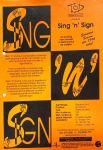 "Australian Theatre of The Deaf - Sing & Sign Workshop/Performance Information Form 1" Australian Theatre of the Deaf Sing 'N' Sign workshop performance information/registration form 1994 - "SING 'N' SIGN is a combination workshop/perfonnance in which the children work with the actors to learn the skills of Sign-Singing"
-
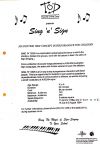 "Australian Theatre of The Deaf - Sing & Sign Workshop/Performance Information Form" Australian Theatre of the Deaf Sing 'N' Sign workshop performance information/registration form 1994 - "SING 'N' SIGN is a combination workshop/perfonnance in which the children, divided into groups, work with the actors to learn the skills of Sign-Singing"
-
"Bree Hadley (2017) Disability, Sustainability, Austerity: The Bolshy Divas Arts-Based Protests Against Policy Paradoxes. Centre for Sustainable Practice in the Arts Journal 18 Spring. http://www.sustainablepractice.org." "In this short article, I want consider some of the ways theatrical artists, activists and advocates in Australia are tackling the paradoxical relationship between sustainability and austerity discourses, and, as a result, some changes this may be starting to produce in disabled people’s aesthetic prerogatives. For the last 30 years, artists, activists and scholars in Australia and beyond have avoided casting disability in terms of trauma, crisis, catastrophe and disaster. Accounts of the way disability theatre challenges stereotypes , as well as analysis of disability signifiers in screen, stage, and social performance , have expressed concern about deploying disability as a metaphor for disaster, or defining disabled people as monstrous, tragic, stoic, or inspirational, the way the medical model of disability traditionally defines us. Instead, modern disabled artists and the scholars who analyse them have advocated for work that deploys live art, performance art, and performative intervention in public space to challenge stereotypes, oppressive institutional systems, and other factors the social model of disability sees as the cause of disability oppression .In the last few years, though, there has been an increase in work that does associate disability with trauma, tragedy and disaster, in what seems to be a response to austerity, accountability and economic sustainability agendas that call for cuts to disability services spending to make our societies more sustainable going forward."
- Victorian Arts Centre
- Alan Constable
- Helen Bowman
- Irene Dunsmuir
- Jan Doran
- John Northe
- John McKay Northe
- Julian Martin
- Mary Brogan
- Nerida Weller
- Rhona Bester
- Rhona Better
- Viva Gibb
-
 “Arts Access Victoria EASE Entertainment Access Service Newsletter Summer 1993-1994" Arts Access Victoria EASE Entertainment Access Service Newsletter Summer 1993-1994 - EASE Managers and Promoters forum, Melbourne Theatre Company 1994 Season
-
 “Arts Access Victoria EASE Entertainment Access Service Newsletter Spring 1994" Arts Access Victoria EASE Entertainment Access Service Newsletter Spring 1994 - Disability Discrimination Act, Melbourne International Festival of the Arts, Melbourne Fringe Festival, training on BASS ticketing system, venue profile The Last Laugh Theatre Restaurant
-
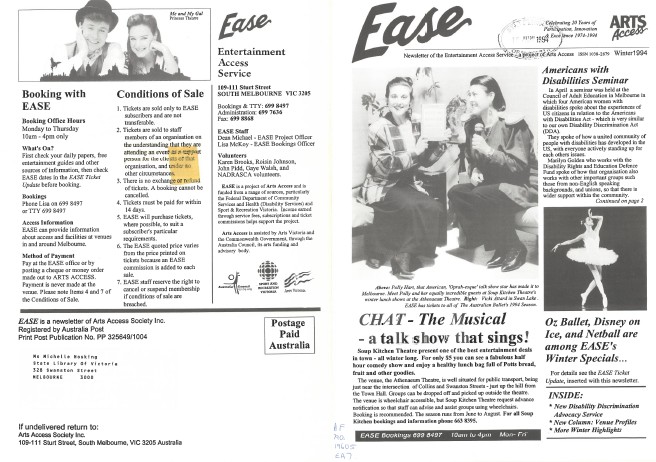 “Arts Access Victoria EASE Entertainment Access Service Newsletter Winter 1994" Arts Access Victoria EASE Entertainment Access Service Newsletter Winter 1994 - Disability Discrimination Act advocacy service, Seminar on Americans with Disabilities Act, EASE Consumers Group advise on BASS ticketing system
-
“Advocates fight for accessible public transport” In 1994, Maurice Corcoran (a wheelchair user) lodged a complaint about the South Australian government ordering 50 new buses that were not accessible. The Australian Human Rights Commission successfully negotiated for all new buses to be fitted with ramps. Then, in 1999, a protest about the lack of public transport options for people with disability saw Citizens for Accessible Public Transport block traffic in Sydney’s city centre.
-
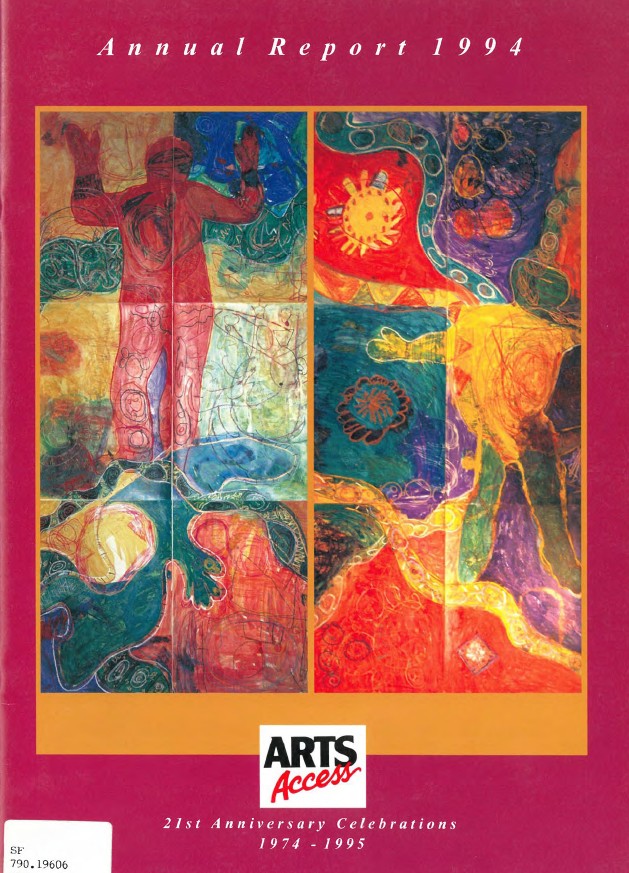 “Arts Access Victoria – Annual Report 1994”
-
“In 2014, the Australia Council introduces its first grant specifically for artists with disabilities” In 2014, the Australia Council introduces its first grant specifically for artists with disabilities. Then Australia Council CEO Tony Grybowski announced “the Artists with Disability Pilot Program; the Council’s Disability Action Plan for 2014-2016; and additional funding for Arts Access Australia to increase career development and employment opportunities for artists with disability.” The pilot program granted $300,000 to disabled artists to develop and present their work. Following this, the program was extended for another three years. The “million dollar investment” would “provide development grants of up to $25,000 and project grants of up to $50,000 for individuals and groups.” That same year, the Australia Council received its first ever grant application in Australian Sign Language (Auslan). However, in 2019, Australia Council ended its dedicated funding program for disabled artists and replaced it with the National Arts and Disability Awards.
-
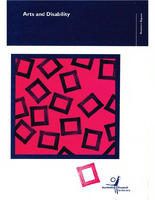 "Juliet London and Des Walsh (1995) Arts & Disability: Report Australia Council: Surry Hills." Juliet London and Des Walsh - Arts & Disability, Australia Council 1995 - Reads, in part "The Australian Bureau of Statistics estimates that 18 per cent of the Australian population has a disability. There is a basic lack of data on participation in the arts by artists with a disability. No figures were available on the number of people with disabilities applying for grants from the Australia Council or from State or Territory arts agencies. The current dearth of statistical information needs to be overcome by systematic and sustained research."
- Lyndsay Mason
- Undercover Artist Festival