
Items
Search full-text
“The Australian Government announced a National Autism Strategy in 2022”
- National Library of Australia
- Caroline Bowditch
-
 "Australia Council - Annual Report 2018-19" Australia Council - Annual Report 2018-19 - reads, in part "This year the Council made a new commitment of $750,000 over three years to support structured mentorships and two new national awards for artists with disability. Empowering and celebrating artists with disability is imperative in ensuring that Australia’s rich diversity is truly reflected across the breadth of our arts."
-
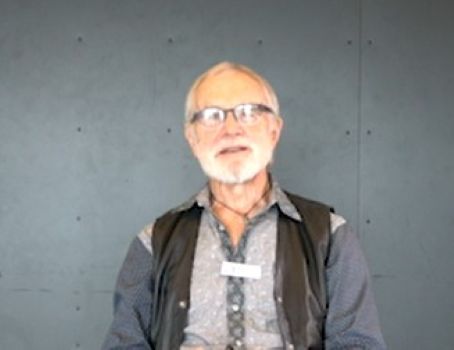 "Interview with Peter Vance" Peter Vance is a singer, songwriter, musician, performer, facilitator and disability arts advocate. Interview Summary: Peter Vance is a songwriter, performer, musician and singer. Peter suggested disability arts in the last 20 years has become more visible and popular reflecting a positive shift in how society views disability as part of the rich tapestry of human experience. This is reflected in how the arts now tell the stories of individuals with disabilities, not simply as artists with a disability, but as whole people whose varied experiences - visible and invisible - inform and enrich their creative expression. However, there are still challenges with funding and accessibility and ongoing struggles for recognition and support of disability art. Changes in how organisations operate to suit new funding such as the NDIS have potentially limited the spontaneity and personal touch that smaller, community-driven organizations once offered. Peter said it is essential to continue to push for better understanding, support, and visibility for people with all kinds of disabilities in every aspect of life, including the arts, to truly embrace inclusivity.
-
 “Arts Access Victoria – Annual Report 2001-02”
-
 “Arts Access Victoria - Arts Access Society Inc. - EASE Entertainment Access Service Newsletter October 1989" Arts Access Victoria EASE Entertainment Access Service Newsletter October 1989 - Venue notes for National Gallery of Victoria, information about live and pre-recorded television audience participation
-
 "Artspeak: Newsletter for the Arts and Regional Cultural Issue Network of the Central West - Spring 1995 Iss2" Artspeak: Newsletter for the Arts and Regional Cultural Issue Network of the Central West - Issue 2 Spring 1995
-
 "Arts Project Australia - Beyond Words Exhibition 1994- Promotional Card" Arts Project Australia - Beyond Words Exhibition 1994- Promotional Card - reads, in part “The Council of Trustees of the National Gallery of Victoria and Arts Project Australia have great pleasure in inviting you to the official opening of Beyond Words”
-
 "Australia Council - Annual Report 1975-76" Australia Council Annual Report 1975-76 discusses membership, the year in review, National theatre of the Deaf from New York show and directors development program assisting Theatre of the Deaf, programs including salary and costs for Arts Access (Vic), Salaries, equipment and materials for program of multi-arts activities to Adult Deaf Society, Braille Book of the Year Award and funding program of entertainment for the old, sick and handicapped in homes.
-
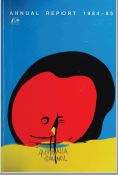 "Australia Council - Annual Report 1984-85" Australia Council Annual Report 1984-85 - discusses functions and objectives, structures, process and membership of Council, Council Committees and members, Board Members, Assessment panels, staff lists, organisation chart, main activities of Council and its Boards, and includes financial statements and lists of grants made including increased artist fees working with minority groups including disabled, fees and costs for artists in Arts Access Society, costs of program for Access Arts (National) cost of playwrights for disabled theatre, and theatre of the Deaf with additional grant support and tours of NSW regional areas for Theatre of the Deaf (NSW).
-
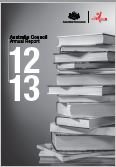 "Australia Council - Annual Report 2012-13" Australia Council Annual Report 2012-2013 – discusses year in review, report from the CEO, Strategic priorities, funding overview, statement of outcome, about the Australia Council including The Governing Council and the Board, Structure of the Australia Council; financial review and discussion of Access Champions group focused on key actions from the 2011–13 Disability Action Plan, including programs for increased participation by artists with disabilities and to develop technical capacity and digital literacy for both operational and artistic activities, funding for exhibition of artists with disability work, premises and Australia Council website accessibility, and participation at national and international arts and disability forums.
-
“Screen Australia commissions the reports ‘Seeing Ourselves’ (2016) and ‘Seeing Ourselves 2’ (2023)” In 2016, Screen Australia commissioned a report "Seeing ourselves: Reflections on diversity in Australian TV drama". The report highlighted the lack of characters on TV with a disability. When characters with a disability were part of the story they were played by actors without a disability and were portrayed as either unemployed or retired. Screen Australia commissioned a follow-up report in 2023 called "Seeing Ourselves 2 - Diversity, equity and inclusion in Australian TV drama". This report shows that, while diversity is a global conversation and there is an increase of disability representation, it remained significantly lower than the actual disabled population.
-
“Auslan features intermittently on Australian television throughout the 1990s, 2000s, and 2010s” Auslan appeared intermittently on Australian television throughout the 1990s, 2000s, and 2010s. Ana Maria Belo has curated a video compilation of scenes featuring Auslan. Belo calls it “a very brief history lesson on Deaf Actors on Australian Television before Social Media.” As she explains, “this is not a complete list of performances, but a nod to the actors who blazed a mighty trail for those of us who attempt to follow.”
-
“Screen Australia launches an access coordinator training program” Screen Australia launched an access coordinator training program in 2023. “The Access Coordinator role is intended for people from the Deaf/Disabled and/or Neurodivergent (DDN) communities who are committed to improving disability representation and removing barriers to inclusion.” Screen Australia partnered with the following organisations for the initiative: the New Zealand Film Commission, Screen Queensland, Screen Tasmania, Screen Territory, Screenwest, VicScreen, the South Australian Film Corporation, Screen ACT, Screen NSW, and the Australian Film Television Radio School.
-
"Australia Council: Australian Arts Snapshots - Disability & the Arts (2002)" Reads, in part "Australians who have a disability are recognised as being creators of innovative, thought provoking, high quality, and often very irreverent artistic product. They are active across all artforms in mainstream and community arts contexts"
- "Bree Hadley (2017) Disability theatre in Australia: a survey and a sector ecology. Research in Drama Education, 22(3), pp. 305-324.”
- Kath Duncan
- Katie Ellis
- Sydney Mardi Gras Festival
- Melissa Reeves
-
”Hadley, Bree, Paterson, Eddie, & Little, Madeleine (2022) Quick Trust and Slow Time: Relational Innovations in Disability Performing Arts Practice. International Journal of Disability and Social Justice, 2(1), pp. 74-94.” "Despite a range of policies, plans, protocols and funding programmes to support disabled artists and collaborations between mainstream producers and disabled artists, the statistics – at least in our context in Australia – suggest most disability art still occurs outside and alongside an industry that struggles to include these artists. In this article, we draw upon findings from a series of workshops with disabled artists around Australia, conducted as part of the ARC funded Disability in the Performing Arts in Australia: Beyond The Social Model project – known colloquially to its collaborators and participants as ‘The Last Avant Garde’ project (https://lastavantgarde.com.au) – to propose a new approach. We find that while provision of logistical access (ramps, hearing loops, interpreters) and ideological access (stories, characters, discourse and language) is critical, so is methodological access, which embodies disability culture in training, rehearsal and production processes. Disabled artists use crip culture, along with relational space and time to negotiate what happens in disability arts and culture production practices and work through desire, fear, vulnerability and reciprocity to rapidly establish trusting collaborations."
-
"Amanda Cachia (2022) Networks of Care: Collectivity as Dialogic Creative Access, in Amanda Cachia ed. Curating Access: Disability Art Activism and Creative Accommodation. London: Routledge, 219-230" Reads, in part "The collectives that have formed in recent years and that will be the subject of this chapter include the Feminist Health Care Research Group (FHCRG), the Sickness Affnity Group (SAG), and Power Makes Us Sick (PMS). Each of these groups attempts to be intersectional in their approach, focusing on feminist and crip revisions to health care. Feminist and crip unite in the groups as the participants all identify as both women and as disabled. In shared spaces, which can be found in physical spaces, such as an art gallery or an artist’s home, or online through Zoom, artists can offer mutual understanding of their experiences with chronic illness, disability, the medical industrial complex, and simply be a shoulder to lean on in times of anxiety, anger, and sadness. The collectives also offer an opportunity for the artists to lift each other up, creating an environment of respect, dignity, and self-worth, becoming a strong circle of empowerment, affrmation, and allyship. The proliferation of these support groups shows a general shift in social norms, where the medical feld no longer holds the only authoritative voice on health. This phenomenon also indicates how nonmedical health based groups are flling a need and making up for a lack in social support networks elsewhere, particularly within sanctioned medical arenas."
-
"Fayden D'Evie (2022) From Dust to Dust: Hallucinating the Absent Exhibition, in Amanda Cachia ed. Curating Access: Disability Art Activism and Creative Accommodation. London: Routledge, 87-98" Reads, in part "Over several months in 2018, I developed a hybrid artist-curatorial project for the Old Castlemaine Gaol, with the working title From Dust to Dust , which sought to invert the site’s association with the sensorial policing of bodies."
-
"Boram Lee, Ruth Rentschler, and Shin-Eui Park (2022) Connect2Abilities: Staging Virtual Intercultural Collaboration during COVID-19 in Amanda Cachia ed. Curating Access: Disability Art Activism and Creative Accommodation. London: Routledge, 45-58" Reads, in part "As a pilot project, Restless Dance Theatre in Adelaide, Australia and SNU MUSIC in Seoul, Korea collaborated to create a digital performing arts piece entitled Dialogue for Six Strings."
-
"SENSORIA: Access & Agency. ArtLink Magazine Issue 42.2, Spring 2022." Reads, in part "This issue platforms a range of contemporary art practices and debates written by and with artists who identify as part of the disabled, d/Deaf, vision impaired or neurodiverse communities. The commissioned essays, profiles and conversations offer diverse perspectives of lived experience and (in)visibility in the art worlds of Australia, Aotearoa/New Zealand and the UK."