
Items
Search full-text
“The Australian Government announced a National Autism Strategy in 2022”
-
“The Commonwealth Disability Services Act of 1986 replace the Handicapped Persons Assistance Act of 1974” In 1983, The Hawke Labour Government evaluated the initiatives created under the Handicapped Persons Assistance Act of 1974. The HPAA was replaced in 1986 by the Commonwealth Disability Services Act of 1986. Among other changes, this Act represents the shift in nomenclature from 'handicap' to ‘disability’.
-
“The arts sector is forced to adapt in the face of COVID-19 lockdowns” Government-enforced lockdowns in response to the COVID-19 pandemic saw arts events cancelled and disability arts organisations temporarily close physical premises as social distancing rules came into play. While Coronavirus 19 restricted social contact, there were some benefits that arose such as increased digital access for social connection, online ordering accessible via screen readers and home delivery, virtual tours of art galleries, online choirs, and telehealth appointments.
-
"Screen Australia (2023) Seeing Ourselves 2: Diversity, equity and inclusion in Australian TV drama. Screen Australia" Reads, in part "Screen Australia has released new research into diversity on Australian screens, titled Seeing Ourselves 2: Diversity, Equity and Inclusion in Australian TV Drama. A follow up to the landmark 2016 study, Seeing Ourselves 2 examines the diversity of main characters in 361 scripted Australian TV and online dramas broadcast between 2016 and 2021, how this compares to the Australian population, and what has changed since the previous Seeing Ourselves report."
-
"Kath Duncan, Gerard Goggin, Christopher Newell (2005) ‘Don’t Talk about Me... Like I’m Not Here': Disability in Australian National Cinema. Metro Magazine: Media & Education Magazine.146/147, pp. 152-159. https://search.informit.org/doi/10.3316/informit.043842788583710" Reads, in part "Disability is a central cultural identity and category in Australia, but this is not often realized. We seek to make a contribution to conversations and critical analyses of disability in Australian culture through an exploration of a privileged national cultural form, namely film. The trope of disability looms large in late twentieth century Australian cinema, and yet cultural comment on these ‘disabled’ scripts and performances has not yet considered a disabilities studies perspective. Accordingly, in this article we combine our different perspectives on disability and film into an account of how specific films use disability. In particular, we analyse key films from the 1990s as examples of powerful displays of bodies and personhood." References a range of films, including Proof (Jocelyn Moorhouse, 1991), Romper Stomper (Geoffrey Wright, 1992), Bad Boy Bubby (Rolf de Heer, 1993), Muriel's Wedding (PJ Hogan, 1994), Shine (Scott Hicks, 1996), Moulin Rouge! (Baz Luhrmann, 2001), My One Legged Dream Lover (writer Kath Duncan with dir. Penny Fowler-Smith, Christine Oslen 1998), Pins and Needles (writer Genni Batterham with dir. Barbara Chobocky, 1979), Riding the Gale (Genni Batterham with dir, Hugh Piper, 1987), Dance Me to My Song (writer Heather Rose with dir. Rolf De Heer, 1998), Heather Rose Goes to Cannes (Chris Corin, 1999), Myself When Fourteen, (Ivor, Arthur and Corinne Cantrill 1989),Film of Circles, Squares, Triangles, Lines and Dots (Arthur and Corinne Cantrill 1981), Rainbow Diary (Arthur and Corinne Cantrill 1984), House Gang (Mandy smith, 1997), Quentin Crashes Big Brother (Quentin Kenihan, 2002), Quentin, World at My Wheels (Quentin Kenihan, 2000), Ability Trek (Jacob Baldwin 1998)
- Australian National Museum
-
“Carriageworks ‘New Normal’ program plan to commission ten new works presents three performances - Lady Eats Apple (Back to Back Theatre, 2017), Off the Record (Force Majeure, Dance Integrated Australia, 2016), Simple Infinity (Urban Theatre Projects, 2016)" New Normal is Carriageworks “national strategy for the development of disability arts practice.” Carriageworks state an aim to “commission ten new major works across contemporary performance, music, dance and visual arts.” As part of the program, Back to Back Theatres’ Lady Eats Apple (2017), Force Majeure and Dance Integrated Australia’s Off the Record (2016), and Urban Theatre Projects’ Simple Infinity (2016) each presented at Carriageworks. Since then, there has been no update on Carriageworks’ goal, suggesting the program may have fallen short of its initial objectives.
-
“Advocates fight for accessible public transport” In 1994, Maurice Corcoran (a wheelchair user) lodged a complaint about the South Australian government ordering 50 new buses that were not accessible. The Australian Human Rights Commission successfully negotiated for all new buses to be fitted with ramps. Then, in 1999, a protest about the lack of public transport options for people with disability saw Citizens for Accessible Public Transport block traffic in Sydney’s city centre.
-
”Hadley, Bree, Batch, Morgan, & Whelan, Michael (2021) The entitled ally: Authorship, consultation, and the 'right' to stage autistic people's stories. Disability and Society, 36(9), pp. 1489-1509.” "Theatre has a long tradition of presenting disabled characters as plot devices to tell someone else’s story. A recent production, All in a Row, resulted in heated debate around this issue. This article examines not the play itself, but the conflict between those who objected to the play’s representation of autism, and its creators, who defended their choices by citing their disability-adjacent identities and processes of consultation. For critics, the fact that the creators did not take the community’s concerns seriously was a source of trauma. This article uses this conflict to draw out lessons about how we might better negotiate the right to tell disability stories and strengthen frameworks to support that negotiation. We propose a decision tree diagram to assist artists in understanding the meaning, role, and most importantly the potential consequences of consultation – up to and including a community saying ‘no’ to an artist’s planned representation."
-
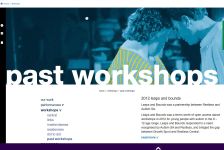 "Restless Dance - Past Workshops" Restless Dance Theatre website, 'Past Workshops', captured 2020 - reads, in part, "Leaps and Bounds was a terms worth of open access dance workshops in 2012 for young people with autism in the 8 – 12 age range."
- Tony Strachan
- Colin Allen
-
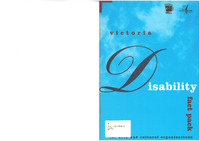 "Victoria : disability fact pack for arts and cultural organisations - DADAA National Network and Australia Council (1998)" Disability fact pack for arts and cultural cultural organisations in Victoria
-
"New South Wales disability fact pack for arts and cultural organisations - DADAA National Network and Australia Council (1998)" Disability fact pack for arts and cultural organisations in New South Wales
-
"South Australia : disability fact pack for arts and cultural organisations - DADAA National Network and Australia Council (1998)" Disability fact pack for arts and cultural organisations in South Australia
-
"Northern Territory : disability fact pack for arts and cultural organisations - DADAA National Network and Australia Council (1998)" Disability fact pack for arts and cultural organisations in the Northern Territory
-
"Western Australia : disability fact pack for arts and cultural organisations - DADAA National Network and Australia Council (1998)" Disability fact pack for arts and cultural organisations in Western Australia
- National Museum of Australia
-
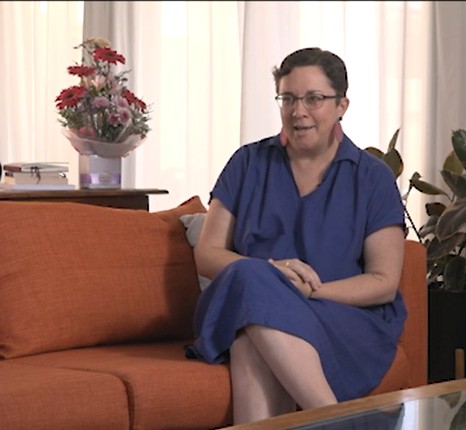 "Interview with Kate Larsen" Kate Larsen (she/her) is a writer, consultant, leader and advocate with Australian and international experience in the arts and disability sector. Interview Summary Kate Larsen (she/her) is a recognised arts and disability advocate who emphasises the importance and inherent politics of self-expression and access in the arts. A non-disabled ally, Kate was influenced to pursue a career in the sector by the profound impact of learning about the social model of disability, which sparked a commitment to creating opportunities for and by disabled individuals. Larsen's work has involved fostering leadership among disabled artists and arts workers, advocating for disability-led organisations, and driving systemic change within Australia’s arts and cultural sector. She hopes to see continued progress towards equity and representation in the arts, with the NDIS playing a crucial role, and an increased presence of disabled artists, arts workers and leaders in mainstream organisations.
-
"Bree Hadley (2022) A ‘Universal Design’ for audiences with disabilities? In Reason, Matthew, Connor, Lynne, Johanson, Katia, & Walmsley, Ben (Eds.) Routledge Companion to Audiences and the Performing Arts. Routledge, Abingdon, Oxon, pp. 177-189.” “Understanding of how to create inclusive performance experiences for spectators with disabilities remains nascent in research, policy, and practice. In this chapter, I survey the state of knowledge in this field – or, as it turns out, fields, given that specialist knowledge of sign language interpretation for d/Deaf spectators, audio description for blind spectators, and relaxed performance for neurodiverse spectators, has developed separately, without intersection. I then investigate recent efforts to create inclusive aesthetics that incorporate accessibility features into performance work, as an integral part of the aesthetic, rather than as interpretations, captions, or descriptions alongside the work. I examine why this ‘Universal Design’ approach has been embraced with enthusiasm, both by disabled producers and spectators, and by non-disabled producers and spectators.”
-
"Amanda Cachia (2022) Curating Access: Disability Art Activism and Creative Accommodation. London: Routledge" Reads, in part "This book is an interdisciplinary collection of twenty-four essays which critically examine contemporary exhibitions and artistic practices that focus on conceptual and creative aspects of access."
-
"Una Rey (2022) Art and sensoria: Whose disability? ArtLink, 42(2), pp.8–11." "SENSORIA: Access & Agency is ArtLink’s effort to affect this swell by providing a platform for divergent perspectives and nuanced articulations of being an artist. Whatever the prevailing conditions. It also invites a discussion within contemporary art discourse that is not driven by fear (of getting it wrong, of ‘the other’, of adding injury to trauma). Art is our place of intersectionality: if you’re reading ArtLink, you’re already on the margins, and quite possibly on the spectrum."
- Australian Film Commission (AFC)
-
 "Arts Project Australia - Artist Videos, captured 2022" Arts Project Australia - Artist videos - reads, in part "Featuring behind the scenes footage of Arts Project Australia artists in conversation with some of Australia's leading artists and arts professionals."
-
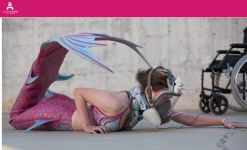 "Accessible Arts - Resources, captured 2022" Accessible Arts - Resources - includes Accessible Arts Event Series Video Resources, Top 10 Tips For Running Accessible Online Events, Access Checklists, Universal Access Symbols, Service Providers, National Disability Insurance Scheme (NDIS), Arts Access Organisations in Australia, and toolkits
- Autism Australia