
Items
Search full-text
“The Australian Government announced a National Autism Strategy in 2022”
-
“Lesley Hall leads a protest of the Miss Victoria Quest beauty contest” In 1981, Lesley Hall and a group of disability activists protested at the Miss Victoria Beauty Quest (a beauty pagent that was a fundraiser for the Spastic Society in Victoria). The focus on physical perfections was seen “as the norm all must attain if they are to be fully accepted into society”. The protests raised much media attention and marked the beginning of a shift in thinking about the place in Australian society of people with disabilities.
-
“Inaugural High Beam festival in 1998” High Beam was a biennial community-based disability arts festival. It was a joint initiative of SPARC Disability Foundation and Arts In Action (through the direction of Tony Doyle). (Arts in Action later became Arts Access SA.) The 10-day event was the first of its kind in the Southern hemisphere, attracting around 20,000 people at each festival. The festival showcased theatre, dance, comedy, and music. Some celebrity artists included Adam Hills and David Helfgott. The inaugural festival (1998) invited Swedish Disability Theatre Company Mooms Teatern to perform; the company also conducted workshops with a disability-led Australian theatre company, No Strings Attached. This first festival was also the site of Tutti's first public performance as a choir.
-
"The first ACT DisAbility Arts Festival is held" In 2004, the first ever ACT DisAbility Arts Festival was held as part of International Day of DisAbility celebration.
-
“Studio A established in 2000” Studio A (NSW) was established in 2000 to create access and opportunities for visual artists with intellectual disabilities; their in-house artists’ “practices range from painting and drawing to sculpture, textiles and digital media”. In their own words, “At Studio A, we are dedicated to professionally empower artists with disability and have their voices heard within contemporary Australian culture.”
-
“80 wheelchair users and allies halt Melbourne trams, demanding better access to public transportation” In a 2000 demonstration organised by the Catch a Tram group, 80 wheelchair users and their allies halted city trams in Melbourne during lunch hours, demanding better access to public transportation.
-
“Essay collection ‘Growing Up Disabled in Australia’ is published in 2021” In 2021, Carly Findlay edited a book ‘Growing Up Disabled in Australia,’ a collection of more than 40 Australian writers with disabilities sharing their lived experiences.
-
“Deaf activist and artist Asphyxia creates a music course and accessible music app for D/deaf people” Asphyxia, a profoundly Deaf Australian activist, artist, author and composer created a music course (2020) for people who are D/deaf and Hard of Hearing to write their own music. In 2023, Asphyxia also created an app called Amplio to make music more accessible to D/deaf people.
-
“Bus Stop Films begins operation in 2009” Bus Stop Films began operations in 2009. In their own words, they “educate, create and advocate.” Their primary focus is teaching filmmaking to disabled adults, but they also offer workshops to others of marginalised identities. Bus Stop “makes films with, for and about people from diverse backgrounds and abilities.” Their website lists support workers in every Australian state and territory.
-
”Bree Hadley, Janice Rieger, Sarah Barron, Sarah Boulton, Catherine Parker (2023) Codesigning Access: A New Approach to Cultures of Inclusion in Museums and Galleries. In Cachia, Amanda (Ed.) Curating Access: Disability Art Activism and Creative Accommodation. Routledge, Abingdon, Oxon, pp. 183-195.” "In museums and galleries, access is often designed and implemented by staff and informed by regulations and guidelines. Codesign approaches have the potential to shift this understanding away from designing access “for” visitors and toward access as a creative process developed “with” visitors. This chapter focuses on the exhibition and practice-led research project Vis-ability: Artworks from the QUT Art Collection, which was presented at the Queensland University of Technology (QUT) Art Museum in Australia in 2019. Vis-ability represented the culmination of five years of international research into access in museums and galleries for visitors who are blind or have low vision."
-
"Bree Hadley (2021) Ex/centric Fixations Project (theatrical play). In Sefel, John Michael, Slamcik Lassetter, Amanda, & Summerville, Jill (Eds.) At the Intersection of Disability and Drama: A Critical Anthology of New Plays. McFarland Publishers, Jefferson, USA, pp. 317-344.” "The Ex/Centric Fixations Project is a postdramatic performance work which renders the feeling of otherness visceral for spectators, without anchoring it any specific singlular experience of otherness, with the text unfolding with the musical flow and rhythm of a fugue state."
-
"Bree Hadley, Janice Rieger (2021) Co-designing choice: objectivity, aesthetics and agency in audio-description. Museum Management and Curatorship, 36(2), pp. 189-203.” "The ‘Vis-ability’ exhibition, presented at the QUT Art Museum in 2019 was an exhibition curated with clear social inclusion goals from the outset. Through it, the museum sought to develop innovative, cost effective, and readily replicable techniques to allow blind and low vision visitors and artists to engage with the institution and its collections. The results affirm the benefits of offering blind and low vision visitors a spectrum of engagement choices, and also affirm that blind and low vision artists and visitors have capacity to make a critical contribution in co-designing that spectrum of choices. This exhibition and its use of multisensorial elements offers a useful prompt to museums to engage this community more fully in co-designing inclusion in the future."
-
"Carriageworks (2015) NSW Arts and Disability Partnership Launched at Carriageworks Including $100,000 Support for Two Major New Works. Carriageworks, 30 January 2015" Reads, in part "Sydney, Australia: The NSW Minister for Disability Services, Minister John Ajaka MLC, today launched an extension of the NSW Arts & Disability Partnership, announcing funding of $475,000 for 2015 to support four programs that promote social inclusion through the arts and disability sector. The Partnership includes $100,000 support for Carriageworks to commission two major new works developed by artists with disability in collaboration with NSW arts companies and artists."
-
"Bree Hadley (2019) Disability arts in an age of austerity. In Hadley, B & McDonald, D (Eds.) The Routledge handbook of disability arts, culture, and media. Routledge, United Kingdom, pp. 347-361." "Is the current “age of austerity” (Summers 2009) impacting on art, culture, and media practices by and about people with disabilities, and, in particular, on art-based protest practices by people with disabilities? In recent years, much has been written about austerity as neo-liberal economic, political, social, and ideological agenda (Harvey 2005; Barnett 2010; Seymour 2014). Much has been written about the way groups effected by local and global governmental shifts towards austerity are protesting, presenting themselves, and being represented by others (Fritsch 2013; Goodley, Lawthom, & Runswick-Cole 2014; Runswick- Cole & Goodley 2015; della Porta 2015; Kokoli & Winter 2015; Beresford 2016; Dodd 2016; Giugni & Grasso 2016; Berry 2017). The question of whether disabled artists are adapting their practices to address these changing cultural circumstances has received less attention (Hadley 2017) and is thus the topic I focus on in this chapter."
-
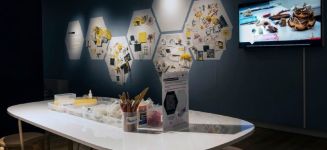 "Janice Rieger, Jasmien Herssens, Megan Strickfaden, Marianella Chamorro-Koc, Bree Hadley (2019) Vis-ability Exhibition." "The United Nations Convention on the Rights of Persons with Disabilities (UNCRPD, 2016) foregrounds the importance of cultural participation to realise human rights for people with disabilities. The creative industries play a critical role in supporting and shaping these social attitudes towards inclusion. Through the theoretical foundation of Design for All (EIDD Stockholm Declaration, 2004) new engagement processes involving a transdisciplinary team from Australia and around the world converged at QUT to co-design more equitable and collaborative forms of knowledge and practice around inclusion. International universities, the EU Commission and the European Institute for Design & Disability collaborated and presented Design for All for the first time in Australia, positioning QUT leadership in this field and as the first non-European member of EIDD-DfA. Co-design methods were employed through, Vis-ability workshops, Making Visible workshops, tactile artefacts and audio description work in the VisAbility Exhibition. Innovative practice was through the Inclusive Film Screening and Wondrous Googles technologies. An innovative model of engagement was created through the DfA Week program and events across sectors. Knowledge was disseminated through academic articles."
-
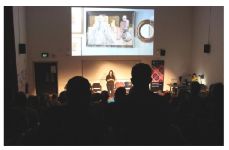 "Janice Rieger, Jasmien Herssens, Megan Strickfaden, Bree Hadley (2019) International Inclusive Film Screening, DfA Week (with films from Finland, Canada, China and Australia)." "The inclusive international film screening included films from Australia, Finland, Canada and China that represent different kinds of abilities, disabilities, inclusion and exclusion through material culture, architecture, urban spaces, landscapes and design. This screening was about access, inclusion and community outreach and included live audio descriptions and Auslan interpretation. The Film screening was separated into two parts with a total of 9 films screened: Part 1: ‘Seeing’ things from a Different Perspective, which included the films: Bakala, Australia (Aboriginal); Eske, (Finland); Musical Notes (Canada); Visitability #1 (Canada) Part 2: Part 2: Temporal and Embodied Encounters: Design, Disability and Slowing Down, which included the films: Smoke Time (Canada & China); Visitability #2 (Canada); Heel of a Time, Canada; Visitability #3 (Canada) ; Wandering on the Braille Trail (Australia)."
-
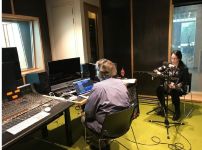 "Bree Hadley, Katherine Dionysius, Sarah Boulton (2019) Vis-Ability: Audio descriptions. In Vis-ability: Artworks from the QUT Art Collection. QUT Art Museum, Brisbane, Qld, pp. 45-53." "Bringing together a selection of recent acquisitions from the QUT Art Collection ,Vis-ability has been conceived as a project to broaden understanding of the lived experiences of people who are blind and people with low vision. Drawing on research in QUT's Creative Industries Faculty, Vis-ability proposes alternative ways of engaging with the collection, considering how technologies can deepen our understanding of vision and challenging our sight-driven experience of art. In this essay, QUT artist scholar and audio description author Associate Professor Bree Hadley, curator Katherine Dionysius, and blind artist and exhibition guide Sarah Boulton examine the principles, processes, and challenges of producing audio descriptions and associated engagement strategies to enable creative new forms of audio encounter with visual art works."
-
"Janice Rieger, Bree Hadley, Katherine Dionysius, Michael Whelan (2019) VIS-ABILITY: Audio Description of Brown, Green and Cattapan's 'War and peace #7: Empire' (2011)." "This is an audio description of Lyndell Brown, Charles Green and Jon Cattapan's artwork 'War and peace #7: Empire', narrated by Dr Bree Hadley and recorded by Michael Whelan. This recording was produced in partnership with QUT Creative Industries Faculty for the exhibition, 'Vis-ability' at QUT Art Museum, from 11 May to 4 August 2019."
-
"Janice Rieger, Bree Hadley, Katherine Dionysius, Michael Whelan (2019) VIS-ABILITY: Audio Description of Denise Green's 'Saar elegy: Opposites' 2014." "This is an audio description of Denise Green’s artwork, ‘Saar elegy: opposites’ (2014) narrated by Dr Bree Hadley. This recording was produced in partnership with QUT Creative Industries Faculty for the exhibition, 'Vis-ability' at QUT Art Museum, from 11 May to 4 August 2019."
-
"Janice Rieger, Bree Hadley, Katherine Dionysius, Michael Whelan, Megan Strickfaden(2019) VIS-ABILITY: Audio Description of Karla Dicken's artworks, 'Bottom feeder I-IV' (2018)." "This is an audio description of Karla Dickens' artworks, 'Bottom feeder I-IV' (2018), narrated by Dr Bree Hadley and recorded by Michael Whelan. This recording was produced in partnership with QUT Creative Industries Faculty for the exhibition, 'Vis-ability' at QUT Art Museum, from 11 May to 4 August 2019."
-
"Janice Rieger, Bree Hadley, Katherine Dionysius, Michael Whelan (2019) VIS-ABILITY: Audio Description of Karla Marchesis' artwork, 'Trashout' (2010)." "This is an audio description of Karla Marchesi's painting, 'Trashout' (2010), narrated by Dr Bree Hadley and recorded by Michael Whelan. This recording was produced in partnership with QUT Creative Industries Faculty for the exhibition, 'Vis-ability' at QUT Art Museum, from 11 May to 4 August 2019."
-
"Bree Hadley (2018) Disability, disabled dance audiences and the dilemma of neuroaesthetic approaches to perception and interpretation. In Wood, K, Brown, A, Waelde, C, Harmon, S, Blades, H, & Whatley, S (Eds.) Dance, disability and law: Invisible difference. Intellect Ltd, United Kingdom, pp. 293-315.” "In this chapter, I want to consider one emerging approach to spectatorship – the neuroaesthetic approach – through the lens of disability spectatorship. In the twenty-first century, neuroaesthetics is gaining traction amongst scholars looking to provide accounts of spectatorship in less story-based performing arts such as classical and contemporary dance, as well as in more story-based practices in drama, theatre and performance. ‘It would be fair to say that neuroaesthetics has become a hot field’, as Alva Noë puts it (2011). To date, though, the assumptions that underpin neuroaesthetic approaches to spectatorship have not been brought together with the assumptions that underpin the equally emergent field of disability spectatorship studies. As Carrie Sandahl (2002: 18) has noted, different cognitive, sensory and corporeal abilities result in a range of different phenomenologies, perceptual processes and perceptual preferences that can in turn produce different styles of engagement with experiences, events and objects. These differences impact on how people with disabilities produce and perceive aesthetic performances – somatically, syntactically, symbolically and socially, as disabled people hear with their eyes, see with their fingers, or perceive phenomena vicariously via the intervention of technologies or translators. Accordingly, disability spectatorship, and more detailed attention to the presence of distinctive cognitive, sensory and corporeal processes amongst disabled spectators, has the potential to complicate, extend and challenge assumptions embedded in emerging neuroaesthetic approaches to spectating."
-
"Sarah Austin, Chris Brophy, Lachlan MacDowell, Edward Paterson, and Winsome Roberts (2015) Beyond Access: The Creative Case for Inclusive Arts. Melbourne: Arts Victoria." Reads, in part "Beyond Access sought to create an evidence base for the creative case for inclusive arts practice to support greater recognition for artists with a disability by transforming and extending notions of what art is and who produces it."
-
"Helena Grehan, Peter Eckersall (2013) ‘We’re People Who Do Shows’: Back to Back Theatre – Performance Politics Visibility. Wales: Performance Research Books." Reads, in part "This book gathers key perspectives on Back to Back Theatre including interviews, documentation and scripts selected by the company and here made available to the reader for the first time."
-
"Hickey Moody, Anna. 2009. Unimaginable Bodies: Intellectual Disability, Performance and Becomings. Rotterdam: Sense." Reads, in part "Unimaginable Bodies radically resituates academic discussions of intellectual disability. Through building relationships between philosophy, cultural studies and communities of integrated dance theatre practice, Anna Hickey-Moody argues that dance theatre devised with and performed by young people with and without intellectual disability, can reframe the ways in which bodies with intellectual disability are known."
-
"Bree Hadley (2015) Participation, politics and provocations: People with disabilities as non-conciliatory audiences. Participations: journal of audience and reception studies, 12(1), pp. 154-174.” "Disability has always had a prominent place on the theatrical stage. Throughout the C19th, C20th and C21st to date, disabled characters have been used to signify corruption, innocence or suffering, and, of course, as salutary examples of how to overcome such suffering. In the past three decades, the work of disability scholars, activists and artists has also provided opportunities for people with disabilities to produce their own plays, performances or installations challenging these stereotypes. Interestingly, though both the body of literature on theatre makers with disabilities and the body of literature on theatre audiences has grown apace over the past decade, there is still surprisingly little written on people with disabilities as theatre audiences. In this article, I draw on observations made during five years of practical, empirical and theoretical research into disability theatre to discuss how people with disabilities work as a distinctive sub-group of spectators, with distinctive spectatorial processes, modalities and preferences, within contemporary theatre audiences. I begin with the factors that make attending theatre difficult for people with disabilities. I note that people with disabilities respond to the challenges they face in attempting to become active audiences of contemporary theatre in three common ways. I then unpack what these spectatorial modalities teach us about people with disabilities as audiences, other marginalised groups as audiences, as well as about audiences, audiencing and the part audiences play in theatre practice more generally."