
Items
Search full-text
“The 1985 New Directions Report is released”
-
“House Gang debuts on SBS” In 1996, a comedy television series debuted on SBS called ‘House Gang’ featuring three actors with intellectual disabilities.
-
“Commonwealth Disability Strategy launched in December 1994” The Commonwealth Disability Strategy was launched in December 1994. The strategy was meant to ensure compliance by Commonwealth Departments with the Disability Discrimination Act (DDA) (passed in 1992). The Museum of Australian Democracy at Old Parliament House reports that “Results have been uneven, especially in employment, but the Act has made some breakthroughs on education and disability access in new buildings.”
-
“The first Focus on Ability film festival held in 2009” In 2009, the first Focus on Ability film festival was started by the CEO of NOVA Employment, Martin Wren. (NOVA is a Sydney-based disability employment service.) FOA holds events in Australia’s major cities and welcomes entries in open categories as well as a schools category and international section.
-
“The Art of Difference Disability and Deaf Arts Festival takes place in 2009” The Art of Difference Disability and Deaf Arts Festival in 2009 featured visual, performing, literary and new media artists as a two-week international arts festival.
-
“Access Arts Achievement Award inaugurated in 2014” Access Arts announced a $10,000 Achievement Award in 2013 and first awarded the grant in 2014 to actor Doug Robins. Other recipients since then have included writers, musicians, visual artists, theatre makers, and multi-disciplinary artists. The funding goes to a Queensland artist with disability to “create, develop, present, produce, exhibit and/or tour their work.” Access Arts describe it as “a game-changing opportunity for Queensland artists, arts workers and producers to extend the life of an existing work or create a new one!”
-
“Studio A established in 2000” Studio A (NSW) was established in 2000 to create access and opportunities for visual artists with intellectual disabilities; their in-house artists’ “practices range from painting and drawing to sculpture, textiles and digital media”. In their own words, “At Studio A, we are dedicated to professionally empower artists with disability and have their voices heard within contemporary Australian culture.”
-
“Captioned films launched in Australia” In 2001, captioned films were launched in Australia with a speech by then Disability Discrimination Commissioner Dr Sev Ozdowski OAM. The process with a series of submissions from both the film industry and the Deaf and hard of hearing community. These submissions led to the establishment of a Forum comprised of representatives from the film distribution and exhibition sector, the Deaf and hearing impaired communities and the Australian Caption Centre. After a trial run in Sydney and Melbourne, three major cinema exhibiters (Greater Union, Hoyts, and Village) agreed to show open captioned films at selected venues throughout the country.
-
“The paralympic arts festival, Invincible Summer, is held in conjunction with the 2000 Paralympic games” In 2000, Sydney held the Paralympic games. The paralympic arts festival, Invincible Summer, featured comedy, dance, film, art, music, theatre, and street performance, featuring collaborations between artists with and without disabilities.
-
“Protesters gather in Lismore (NSW) to oppose proposed cuts to services” In 2004, 300 disabled persons, along with their relatives and carers, gathered in Lismore to protest proposed cuts to adult, training, learning, and support programs, among other services. These were a part of a series of demonstrations against the state government that included hundreds of demonstrators in Newcastle and resulted in the state government reversing its position on modifications to the Post-Schools Options Disability Program.
-
“Sit Down Shutup and Watch, a screen festival for people with learning disabilities, is launched in 2014” In 2014, Tutti Arts launched Sit Down Shutup and Watch (SDSW). SDSW is a collective led by people with learning disabilities; They present a biennial international screen festival which features the work of disabled creators. The committee also hosts workshops and online resources.
-
“The documentary series ‘You Can't Ask That’ premieres in 2016” The ABC started a documentary series in 2016 called ‘You Can't Ask That,’ which asks "outrageous, uncomfortable and shocking questions to uncover the truth behind some of the most marginalised and misunderstood Australians." The series has featured episodes focused on people with short stature, Downs syndrome, schizophrenia, and autism, Deaf people, blind people, and wheelchair users.
-
“Research project ‘Disability and the Performing Arts in Australia: The Last Avant Garde’ investigates the creative and aesthetic strategies of the Australian disability arts sector” A research project beginning in 2016, ‘Disability and the Performing Arts in Australia: The Last Avant Garde,’ investigated the creative and aesthetic strategies of the Australian disability arts sector. The project sought to map “disability arts practice across the nation” by examining “the role of artistic experimentation,” “co-design[ing] accessible strategies,” and raising “critical recognition, employment and funding opportunities for artists.” The project team describes themselves as a collective “of deaf and disabled and non-disabled researcher artists, performers, writers, arts managers and theatre makers.” The work was the result of a collaboration between Arts Access Victoria, University of Melbourne, and University of Sydney. The Australia Research Council provided funding for the research.
-
“Auslan features intermittently on Australian television throughout the 1990s, 2000s, and 2010s” Auslan appeared intermittently on Australian television throughout the 1990s, 2000s, and 2010s. Ana Maria Belo has curated a video compilation of scenes featuring Auslan. Belo calls it “a very brief history lesson on Deaf Actors on Australian Television before Social Media.” As she explains, “this is not a complete list of performances, but a nod to the actors who blazed a mighty trail for those of us who attempt to follow.”
-
“Disabled actor and writer Heather Rose stars in ‘Dance Me to My Song’ (1998)” The 1998 film ‘Dance Me to My Song’ stars Heather Rose, who also co-wrote the film. It is about a woman with cerebral palsy, whose carer resents the job. The dramatic tension rises when the two women both take an interest in the same man. The Rolf de Heer-directed film is significant for casting a disabled actor at a time when authentic disability representation was rare, not to mention Rose’s contribution to the screenplay. ‘Dance Me to My Song’ was selected to feature in the Cannes International Film Festival in May 1998. The documentary ‘Heather Rose Goes to Cannes’ (1998, Christopher Corin) follows Rose’s journey from Adelaide to Cannes.
-
“Screen producer, editor, and accessibility consultant Stephanie Dower is interviewed for Screen Queensland On Air, in an episode called How They See Us: Disability in the Screen Industry” Stephanie Dower was interviewed in 2020 for Screen Queensland On Air, in an episode called How They See Us: Disability in the Screen Industry. Dower is an editor, producer, and writer for screen. She has also worked with Get Skilled Access and as an accessibility consultant for Queenslanders with Disability Network.
-
“Production company A2K Media founded in 2007, as a 'a Disabled-led production company, creating connections that entertain, educate, and empower'” A2K Media is “a Disabled-led production company, creating connections that entertain, educate, and empower.” In 2024, A2K launched their Disability Justice Lens course, which teaches screen professionals how to bring disabled people onto their productions and make their workplaces more accessible and empowering.
-
”Hadley, Bree, Paterson, Eddie, & Little, Madeleine (2022) Quick Trust and Slow Time: Relational Innovations in Disability Performing Arts Practice. International Journal of Disability and Social Justice, 2(1), pp. 74-94.” "Despite a range of policies, plans, protocols and funding programmes to support disabled artists and collaborations between mainstream producers and disabled artists, the statistics – at least in our context in Australia – suggest most disability art still occurs outside and alongside an industry that struggles to include these artists. In this article, we draw upon findings from a series of workshops with disabled artists around Australia, conducted as part of the ARC funded Disability in the Performing Arts in Australia: Beyond The Social Model project – known colloquially to its collaborators and participants as ‘The Last Avant Garde’ project (https://lastavantgarde.com.au) – to propose a new approach. We find that while provision of logistical access (ramps, hearing loops, interpreters) and ideological access (stories, characters, discourse and language) is critical, so is methodological access, which embodies disability culture in training, rehearsal and production processes. Disabled artists use crip culture, along with relational space and time to negotiate what happens in disability arts and culture production practices and work through desire, fear, vulnerability and reciprocity to rapidly establish trusting collaborations."
-
"Bree Hadley (2019) Advocacy, allies, and 'allies of convenience' in performance and performative protest. In Grehan, H (Ed.) The Routledge companion to theatre and politics (Routledge Theatre and Performance Companions). Routledge, United Kingdom, pp. 85-88.” "Though allies have always played a role in the production of political performance, analysis of the work of disabled artists, women artists, queer artists, and artists of colour has yet to be combined with analysis of the work of allies addressing the same issues. In this chapter, I consider the practice of allies in a specific context, social media performance, as a newly emerging platform for political activism. After tracing the way allies are typically involved in political performance about, with, and by marginalised people and communities, I point to complexities arising when activists, campaigners, entertainers, and pranksters use new online platforms in performance that purport to support the same cause.
-
"Bree Hadley, Donna McDonnald (2019) Introduction: disability arts, culture, and media studies - mapping a maturing field. In Hadley, B & McDonald, D (Eds.) The Routledge handbook of disability arts, culture, and media. Routledge, United Kingdom, pp. 1-18.” Reads, in part "In this book, an internationally recognised collection of established and emerging scholars, artists, and activists from across the US, UK, Europe, Asia, and Australasia come together to trace the development of disability arts, culture, and media studies in recent decades, flag current interests, and forecast future concerns."
-
"Bree Hadley, Gerard Goggin, Petra Kuppers, Colette Conroy, Meagan Shand, Donna McDonald, Martin Paten, Norm Horton, Sarah Moynigan, Veronica Pardo, Caroline Bowditch, Morwenna Collett, Kerry Comerford, David Doyle, Pat Swell, Clark Crystal, Peter Stuart (2019) The NDIS and disability arts in Australia: Opportunities and challenges. Australasian Drama Studies, 74, pp. 9-38." "In Australia, disabled people’s participation in the arts has historically been afforded by means of direct-to-organisation grants that arts, community services or disability services arms of government award to arts organisations, charities or disability service organisations, who then deliver programmes. The introduction of the National Disability Insurance Scheme (NDIS) is creating wide-reaching changes for disability arts practice in Australia. We undertake a first step in addressing the need for research into how the NDIS will alter the landscape of disability arts practice in Australia. We highlight a set of questions that all performing and creative arts industry stakeholders will need to respond to, in order to ensure that the excellent work done in disability arts in Australia to date can continue in the new climate that the NDIS brings."
-
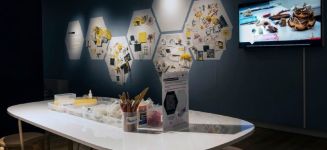 "Janice Rieger, Jasmien Herssens, Megan Strickfaden, Marianella Chamorro-Koc, Bree Hadley (2019) Vis-ability Exhibition." "The United Nations Convention on the Rights of Persons with Disabilities (UNCRPD, 2016) foregrounds the importance of cultural participation to realise human rights for people with disabilities. The creative industries play a critical role in supporting and shaping these social attitudes towards inclusion. Through the theoretical foundation of Design for All (EIDD Stockholm Declaration, 2004) new engagement processes involving a transdisciplinary team from Australia and around the world converged at QUT to co-design more equitable and collaborative forms of knowledge and practice around inclusion. International universities, the EU Commission and the European Institute for Design & Disability collaborated and presented Design for All for the first time in Australia, positioning QUT leadership in this field and as the first non-European member of EIDD-DfA. Co-design methods were employed through, Vis-ability workshops, Making Visible workshops, tactile artefacts and audio description work in the VisAbility Exhibition. Innovative practice was through the Inclusive Film Screening and Wondrous Googles technologies. An innovative model of engagement was created through the DfA Week program and events across sectors. Knowledge was disseminated through academic articles."
-
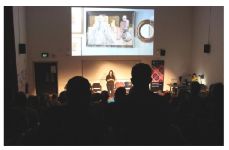 "Janice Rieger, Jasmien Herssens, Megan Strickfaden, Bree Hadley (2019) International Inclusive Film Screening, DfA Week (with films from Finland, Canada, China and Australia)." "The inclusive international film screening included films from Australia, Finland, Canada and China that represent different kinds of abilities, disabilities, inclusion and exclusion through material culture, architecture, urban spaces, landscapes and design. This screening was about access, inclusion and community outreach and included live audio descriptions and Auslan interpretation. The Film screening was separated into two parts with a total of 9 films screened: Part 1: ‘Seeing’ things from a Different Perspective, which included the films: Bakala, Australia (Aboriginal); Eske, (Finland); Musical Notes (Canada); Visitability #1 (Canada) Part 2: Part 2: Temporal and Embodied Encounters: Design, Disability and Slowing Down, which included the films: Smoke Time (Canada & China); Visitability #2 (Canada); Heel of a Time, Canada; Visitability #3 (Canada) ; Wandering on the Braille Trail (Australia)."
-
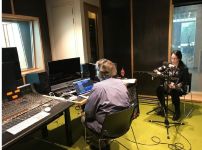 "Bree Hadley, Katherine Dionysius, Sarah Boulton (2019) Vis-Ability: Audio descriptions. In Vis-ability: Artworks from the QUT Art Collection. QUT Art Museum, Brisbane, Qld, pp. 45-53." "Bringing together a selection of recent acquisitions from the QUT Art Collection ,Vis-ability has been conceived as a project to broaden understanding of the lived experiences of people who are blind and people with low vision. Drawing on research in QUT's Creative Industries Faculty, Vis-ability proposes alternative ways of engaging with the collection, considering how technologies can deepen our understanding of vision and challenging our sight-driven experience of art. In this essay, QUT artist scholar and audio description author Associate Professor Bree Hadley, curator Katherine Dionysius, and blind artist and exhibition guide Sarah Boulton examine the principles, processes, and challenges of producing audio descriptions and associated engagement strategies to enable creative new forms of audio encounter with visual art works."
-
"Australia Council for the Arts (2014) A Million Dollar Commitment to Artists with Disability. Australia Council for the Arts. 28 October 2014" Reads, in part "Australia Council Chief Executive Officer Tony Grybowski made the announcement today at the Arts Activated Conference in Chatswood, Sydney. Mr Grybowski said the decision to extend the dedicated arts and disability funding was made after a successful pilot was run earlier this year."
-
"Bree Hadley (2014) Disability, Public Space Performance, and Spectatorship: Unconscious Performers. London: Palgrave Macmillan." "Why would disabled people want to re-engage, re-enact and re-envisage the everyday encounters in public spaces and places that cast them as ugly, strange, stare-worthy? In Disability, Public Space Performance and Spectatorship: Unconscious Performers, Bree Hadley examines the performance practices of disabled artists in the US, UK, Europe and Australasia who do exactly this. Operating in a live or performance art paradigm, artists like James Cunningham (Australia), Noemi Lakmaier (UK/Austria), Alison Jones (UK), Aaron Williamson (UK), Katherine Araniello (UK), Bill Shannon (US), Back to Back Theatre (Australia), Rita Marcalo (UK), Liz Crow (UK) and Mat Fraser (UK) all use installation and public space performance practices to re-stage their disabled identities in risky, guerilla-style works that remind passersby of their own complicity in the daily social drama of disability. In doing so, they draw spectators' attention to their own role in constructing Western concepts of disability. This book investigates the way each of us can become unconscious performers in a daily social drama that positions disability people as figures of tragedy, stigma or pity, and the aesthetics, politics and ethics of performance practices that intervene very directly in this drama. It constructs a framework for understanding the way spectators are positioned in these practices, and how they contribute to public sphere debates about disability today."