
Items
Search full-text
“The 1985 New Directions Report is released”
- Carriageworks
- Disability and Arts Disadvantage and the Arts Australia (DADAA)
- DADAA Network
- DADAA National Network
-
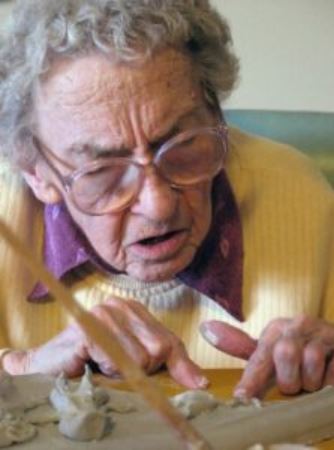 “Arts Access Victoria – A New Millennium (early – mid 2000s)” Arts Access Victoria – A New Millennium (early – mid 2000s)– online artist’s register, “Artability” festival, Deaf Arts Network started in 2001, new programs including regional areas, audio description of first TV production, AAV hosted Inclusion International World Congress, The Other Film Festival started,
-
 "Australia Council - Arts and disability a priority as Australia Council commits significant new funding" Australia Council - Arts and disability a priority as Australia Council commits significant new funding - reads, in part "The Australia Council has committed $750k over three years to support sustainable careers and to recognise the artistic excellence of artists with disability."
- Helen Connor
- Lisa Havilah
- Arts Access Australia
-
 "Incite Arts Annual Report 2019" Incite Arts Annual Report 2019 - About Incite Arts, Board’s Report, Highlights, Project (stArts with D’ Performance Ensemble, Move Masters new creative development for stArts with D’ Performance Ensemble, Sounds Good to Me Music Program, Southern Ngalia Dancers, Create Communities, Unbroken Land, Acacia Hill School Workshop Program, NT Arts Access Awars), Partners
-
 "Incite Arts Annual Report 2020" Incite Arts Annual Report 2020 - About Incite Arts, Board’s Report, Highlights, Project (Move Masters new creative development for stArts with D’ Performance Ensemble, Olive Pink Opera Collaboration, Create Communities, Unbroken Land, Acacia Hill School Workshop Program, NT Arts Access Awars), Partners
-
 "Accessible Arts - Annual Report 1994" Accessible Arts - Annual Report 1994 - Mission, Purpose, Aims, Background, Chairperson’s Report, Executive Officer’s Report, Secretary’s Report, Treasurer’s Report, Financials, New Resources
- Gaelle Mellis
- Helen Connors
-
 "Accessible Arts - Annual Report 1999-2000" Accessible Arts - Annual Report 1999-2000 - Chairpersons' Report, Treasurer’s Report, Executive Officer (Acting) & Project Officer Report, Consultancy, Regional Networks, Partnerships, Resources, Training, Financials
-
 "Accessible Arts - Annual Report 2006" Accessible Arts - Annual Report 2006 - About Accessible Arts, Chair’s report, Chief Executive Officer’s report, Accessible Arts’ people, Strategic Outcomes, Service, Arts programs, Training, Audience Development, Information and Public Relations
-
“Genni Batterham stages a protest at the opening of Bondi Junction railway station 1979, makes film in 1980” When Bondi Junction railway station opened in 1979, Genni Batterham staged a protest about the lack of accessible transportation options for individuals with disabilities. After receiving a multiple sclerosis diagnosis in 1978, Genni became severely disabled very quickly. She did everything in her power to stop the disease's progression and was furious at being "consigned to the world of the disabled." The 1979 Bondi Junction protest was an important moment in the history of the Disability Rights Movement in New South Wales. The Premier, Neville Wran, later said that the experience led him to developing the Disability Taxi Service, the first public transport system designed for people with disability to be launched in Australia. Batterham then made the film ‘Pins and Needles’ (1980) with her husband Kim. Under the direction of Barbara Chobocky and with funding from the Australian Film Commission's Women's Film Fund, the film was screened in five different countries, took home first place at the 1980 Canadian Film Festival, and took home second place at the 1980 New York Film Festival. Genni and Kim would then collaborate on three further films about the phases of her life: Where's the Give and Take? (1981), Artreach (1982), and Riding the Gale (1987).
-
"Bree Hadley (2020) Allyship in disability arts: Roles, relationships, and practices. Research in Drama Education, 25(2), pp. 178-194.” "In this article, I propose that investigation of allies, ally skills, and allyship in disability arts is overdue. I articulate some of ways in which non-arts approaches to allyship need to be adapted to meet the needs of disabled artists, given the aesthetic as well as professional and social dimensions of allyship distinctive to disability arts. In doing so, I highlight the need for new theory, terminology, and frameworks to define the different approaches to allyship, developed by different artsworkers, operating in different roles, across the different domains of disability arts and/or arts and disability practice."
-
”Bree Hadley, Donna McDonnald (Eds.) (2019) The Routledge Handbook of Disability Arts, Culture, and Media. Routledge International Handbooks. Routledge, London; New York.” “In the last 30 years, a distinctive intersection between disability studies – including disability rights advocacy, disability rights activism, and disability law – and disability arts, culture, and media studies has developed. The two fields have worked in tandem to offer critique of representations of disability in dominant cultural systems, institutions, discourses, and architecture, and develop provocative new representations of what it means to be disabled. Divided into 5 sections:- Disability, Identity, and Representation; Inclusion, Wellbeing, and Whole-of-life Experience; Access, Artistry, and Audiences; Practices, Politics and the Public Sphere; Activism, Adaptation, and Alternative Futures - this handbook brings disability arts, disability culture, and disability media studies – traditionally treated separately in publications in the field to date – together for the first time.”
-
"Sarah Austin, Kath Duncan, Gerard Goggin, Lachlan MacDowall, Veronica Pardo, Eddie Paterson, Jax Jacki Brown, Morwenna Collett, Fiona Cook, Bree Hadley, Jess Kapuscinski-Evans, Donna McDonald, Julie McNamara, Gayle Mellis, Kate Sulan (2019). The last avant garde? In B. Hadley, D. McDonald ed. The Routledge Handbook of Disability Art, Culture, and Media. London & New York: Routledge, 251-262." "“The Australian Research Council project Disability and the Performing Arts in Australia: Beyond the Social Model – known to collaborators as the last avant garde – is mapping disability performing arts in Australia. We open up this chapter, and our ongoing research project, with the words of the late Tobin Siebers. In researching disability and performance here in Australia, we also acknowledge that since Siebers’ 2010 text, we have seen new experiments and emerging companies pushing the bounds of how bodies feel – in a sector which embraces differences in bodies, but also in thinking, in neurodiversities, in being, in articulating, in appearing, in sensing, in intersectionalities, and in the experiences for audiences. As such, this chapter aims to explore ‘disability aesthetics’ not as a set of specific techniques, themes, or politics, but in order to position disability at the centre of ‘future conceptions of what art is’ and what it can be.”
- Urban Theatre Projects
- Force Majeure
- Danielle Micich
- Gerard Goggin
- Katie Ellis