Items
Search full-text
ACT DisAbility Arts Festival
- Alex Crombie-Van Ewyk
- Alex Crombie
-
 "Tutti Ensemble Newsletter Term 1 2004" Tutti Ensemble Newsletter Term 4 2004 - reads, in part "The Tutti Ensemble is very pleased to announce that Scott Hicks, director of Shine and Snow Falling on Cedars, has agreed to be our Patron."
 -
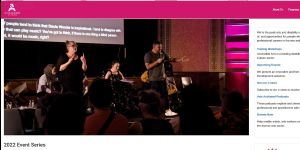 "Accessible Arts - Events - 2022" Accessible Arts - Events 2022 - reads, in part "We’re presenting an innovative and free event series in 2022 in response to rapidly changing environments and increasing sector demand. Due to Covid-19, all events will take place online until further notice. These events are free to attend, accessible and encourage discussion and participation through a Q&A platform."
 -
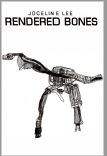 "Arts Access Victoria - Rendered Bones Exhibition Program"
 -
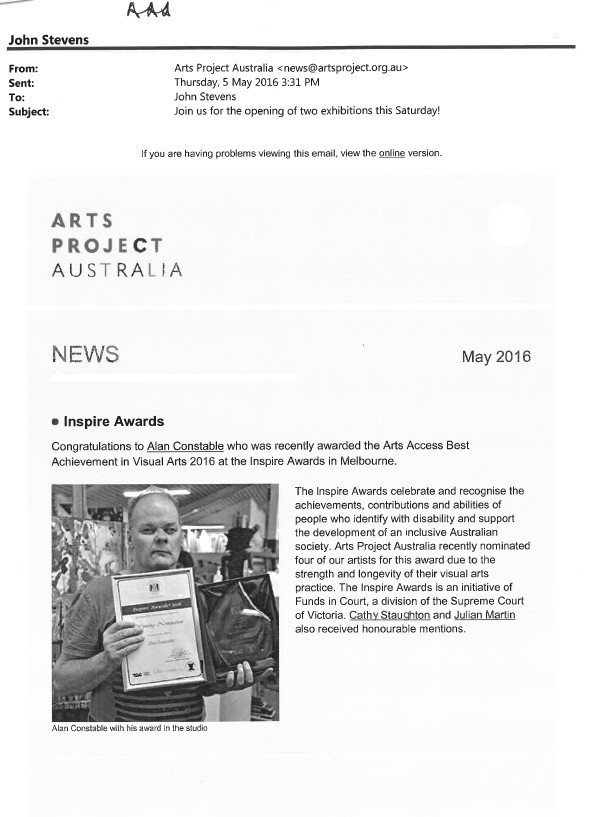 "Arts Project Australia - ENews - 20160505" Arts Project Australia - ENews - 20160505
 -
 "Accessible Arts - Annual Report 1996" Accessible Arts - Annual Report 1996 - Aims, Objectives, Brief History, Chairperson’s Report, Treasurer’s Report, Executive Officer’s Report, Project Officer’s Report
 -
 "Accessible Arts - Annual Report 2017" Accessible Arts - Annual Report 2017 - Corporate Information, Directors' Report, Statement of Financial Position
 -
 "DADAA Annual Report 2019-2020" DADAA Annual Report 2019-2020 – Chair’s and Executive Director’s Reports, People, Partners, Art Services, New Gallery, Projects including ‘No Fixed Address’, NDIS, Covid19 and digital transitions, Financials
 -
"Weave Movement Theatre formed" Weave Movement Theatre was formed in 1997 following a series of workshops (organised by Arts Access) led by Adam Benjamin, director of CandoCo, a world-renowned inclusive dance company. Janice Florence was asked to facilitate classes prior to the workshops.
-
“Australia Council praises NSW Theatre of the Deaf and provides some funding to the Deaf theatres throughout the 1970s” The 1976/77 Australia Council annual report stated: "The NSW Theatre of the Deaf is a significant achievement. The only funded organisation in Australia working in nonverbal theatre, its production of King Lear received widespread praise. This company is now accepted as operating in a legitimate area of theatre rather than performing mime works for the deaf. This offers wide scope for innovation." The Council’s 1977/78 annual report recorded that it granted funding to the NSW Theatre of the Deaf “towards salaries of artistic director, deaf director, and tutors’ fees in 1978” for $25,000; the “presentation of theatre pieces (mime, clowning, puppetry) in public performance” for $2,500, and “towards costs of a production in 1978” for $4,000. It also awarded $1,980 to Queensland Theatre of the Deaf “towards the cost of transporting company to Sydney for seminar with NSW Theatre of the Deaf”. Drama Resource Centre (Victoria) received $2,840 “to develop student theatre at Victoria School for Deaf Children” and $630 went to Children’s Activities Time Society (Western Australia) for the “cost of deaf mime artist, Rae Gibson, to undertake four week visit to Melbourne and Sydney to work with deaf artists”. The following annual report for 1978/79 recorded that the Council granted $25,000 to the NSW Theatre of the Deaf “towards salaries of artistic director, administrator and tutors” in 1979. The Council also awarded $1,800 to the Queensland Theatre of the Deaf towards a salary for Geoffrey Rush to work with the company in 1979. The 1979/1980 Australia Council annual report mentions funding “provided for a playwright-in-residence at the NSW Theatre of the Deaf.”
- Caroline Ellison
-
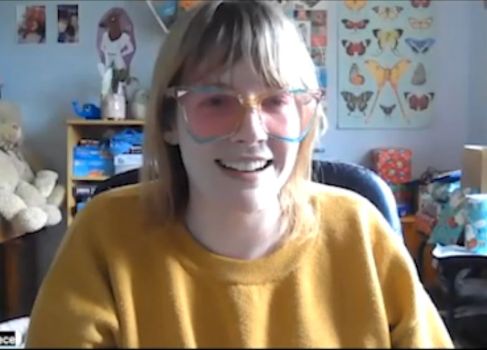 "Interview with Alex Creece" Alex Creece is writer, poet, editor, collage artist, and average kook living on Wadawurrung land. Interview Summary Alex Creece, focused on her experiences and journey as a disabled artist and writer in Australia. Alex discussed the importance of building a community and the challenges of balancing personal identity with maintaining professionalism in art. Alex expressed a desire for increased accessibility and recognition in the industry, highlighting the need for continued support of disabled artists. Throughout the conversation, the complexity of disability arts' visibility, identity politics, and the definition of creative success were explored, with Alex providing insight into her own work as well as broader industry trends and challenges.
 -
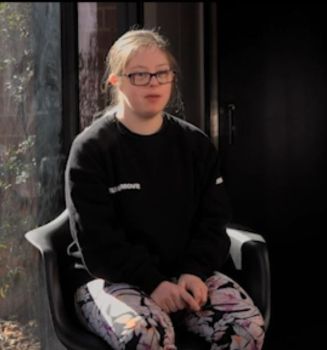 "Interview with Darcy Carpenter" Darcy Carpenter is a professional dancer and has performed with Restless Dance Theatre since 2014. Interview Summary: Darcy is a professional dancer with a family history in dance, who works with Restless Dance Theatre and has worked with the Riverland Youth Theatre. Darcy expressed her passion for dance and acting, mentioning her desire to share emotional experiences with her audience and her personal growth as an artist through the support of Restless Dance Theatre organisation. Throughout the interview, Darcy’s pride as a third-generation dancer shone through, along with her aspirations to continue developing her artistry.
 -
 "Australia Council - Annual Report 2017-18" Australia Council Annual Report 2017-2018 – discusses Rawcus and Julia Hales as examples of highquality work - reads, in part "Through our Disability Action Plan we continued to build the capability of our staff, including Easy English and the continuity of our audio description group. "
 -
 "DADAA Annual Report 2011-2012" DADAA Annual Report 2011-2012 - information about Vision, Mission and Goals, Chairperson and Executive Director’s Reports, Staff list, Participation, Programs including the Lost Generation Project, Sculptures by the Sea Tactile Tours, StARTSpeak, Art Link Children and Young People’s programs, Aging & Disability, Fourth International Arts And Health Conference, WA Disability Arts Grants Program, Regional Development and Consultancy, Partners, and Financials
 -
 "Dot2Dot - Working in the arts with young people with and without disability"
 -
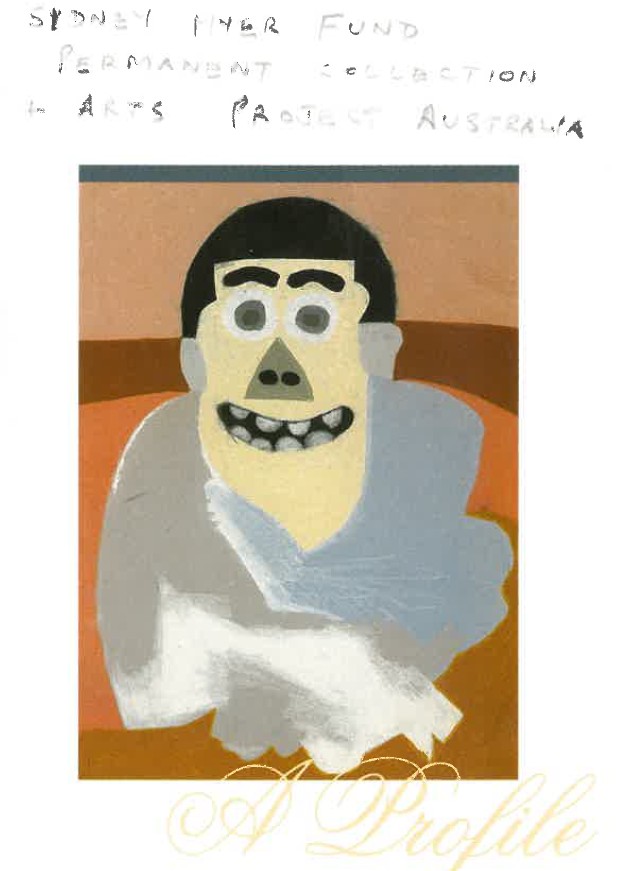 "Arts Project Australia - Sidney Myer Fund Permanent Collection Exhibition 1999 - Program" Arts Project Australia - Sidney Myer Fund Permanent Collection Exhibition 1999 - Program - reads, in part "The Sidney Myer Fund Permanent Collection is one of the only collections of artwork by people with intellectual disability in Australia."
 -
 "Tutti Ensemble - Holdfast Bay Community Choir Newsletter - Newsletter One - 1999" Tutti Ensemble, Holdfast Bay Communitty Choir, first newsletter distributed by Tutti Ensemble and Minda Inc disability service organisation in 1999 - reads, in part "Welcome to our first newsletter. We hope this is the first of many to come. We intend to put out a newsletter every two months to keep people informed on what is happening in the choir. Articles or information from choir members are welcome."
 -
 "Arts Disability Technology Library Workshop" Internet demonstration; imaging and photography; creative adventures with computer technology; music (includes performance and demonstration by Chris Finnen)
 -
 "Australia Council - Annual Report 1980-81" Australia Council Annual Report 1980-81 - discusses members of council, standing committees and board reports as well as financial statements, grants lists, publications and programs particularly focused on the 1981 International Year of the Disabled Person (IYDP) including accessibility, integration and raising awareness of barriers of disability in arts, with funding for research, art exhibitions, theatre, film (“Stepping Out”), dance (“Life, Images and Reflections”), craft, and literature; conference, seminar celebrating IYDP.
 -
"Bree Hadley (2022) Disability and the Arts, Creative, and Cultural Industries in Australia. Australian Academy of Humanities" "This week saw the release of Ensuring Occupations are Responsive to People with Disabilities, a landmark report by the Australian Council of Learned Academies (ACOLA) commissioned by the Australian Government Department of Social Services. As part of the Academy of Humanities’ support for the project, Professor Bree Hadley provided a study of disability in the arts, creative, and cultural industries for the project, and Professor Gerard Goggin was a member of the Expert Reference Group. In this week’s Five-Minute Friday Read, they explain why disability training needs fundamental reform now."
-
"International Year of the Disabled Person (IYDP)" In 1976, the General Assembly proclaimed 1981 would be the Year of the Disabled Person. The 1981 International Year of the Disabled Person inspired an increase in awareness and disability arts. While UN theme was “full participation and equality” the theme in Australia was “Break down the Barriers”, raising the prole and issues of people with disabilities. The international year of the disabled persons was a catalyst for connecting Australian disability activists to each other and the international disability rights movement (Royal Commission, 2021, p. 6). Australia saw an increase in disability-themed theatre from 1981 to 1984; however, these performances were largely staged with non-disabled casts. Records of these productions can be found on the AusStage database.
-
“2023 Screen industry report ‘Disability and Screen Work in Australia’ finds disabled people fulfil a range of roles in the screen industry, despite facing prejudice and exclusion, and should be treated as experts of their access requirements” ‘Disability and Screen Work in Australia: Report for Industry’ (2023) was compiled by researchers Radha O’Meara, Laura Dunstan, Anna Debinski and Catherine Ryan. The study was supported by Melbourne Disability Institute and A2K Media. The authors summarise that disabled people fulfil a range of roles in the screen industry, despite facing prejudice and exclusion, and should be treated as experts of their access requirements. They find that “Disabled people experience a more precarious, lower paid, and less powerful position in the screen industry than their non-disabled counterparts.” O’Meara and her colleagues call for widespread change in the industry to expand access.
-
“Activism leads to a Disability Royal Commission” Decades of activism led to a 2019 Senate motion calling for a Disability Royal Commission. The first public hearing of the Royal Commission took place on 16th September, 2019 at Brisbane’s Convention and Exhibition Centre. The Commission resulted in a report in 12 volumes. Several volumes include Volume 3: Nature and extent of violence, abuse, neglect and exploitation, Volume 6: Enabling autonomy and access, Volume 7: Inclusive education, employment and housing, Volume 9: First Nations people with disability, and Volume 10: Disability services. Overall, the Commission presented “222 recommendations on how to improve laws, policies, structures and practices to ensure a more inclusive and just society that supports the independence of people with disability and their right to live free from violence, abuse, neglect and exploitation.” In 2023, the final report of the Royal Commission into Violence, Abuse, Neglect and Exploitation of People with Disability was published with 220 recommendations for a more inclusive nation to reduce exploitation, violence, abuse and neglect of people with disabilities.