Items
Search full-text
ACT DisAbility Arts Festival
-
“Australian Caption Centre opened in 1982” The Australian Caption Centre was opened 13 September, 1982. A tour took place at the Australian Caption Centre in Sydney in the 1990s; the video (now available on YouTube) explains how the Centre worked. In 2005, the Centre sold its commercial operations including the captioning services to Red Bee Media and formed Media Access Australia.
-
"Back to Back Theatre established" The theatre company Back to Back was established in 1987. They are a drama group comprising artists with intellectual disabilities who have since toured both nationally and internationally in mainstream Australian theatre.
-
"Australian Film Commission created" In 1975, the Australian Film Commission was created, providing grants for film and television projects.
-
“Salubrious Productions (QLD) established in 1999” Salubrious Productions (Queensland) was established in 1999. Salubrious is an agency for disabled artists, representing musicians, writers and composers, theatre performers and actors, visual artists, and technicians in the creative industries. The agency continues operation today. Their website describes them as follows: “Salubrious Productions is a Brisbane-based entertainment and production agency. We represent a core of more than 200 diverse acts and artists and draw further from a large network of professional artists throughout Queensland and Australia.”
-
“Essay collection ‘Growing Up Disabled in Australia’ is published in 2021” In 2021, Carly Findlay edited a book ‘Growing Up Disabled in Australia,’ a collection of more than 40 Australian writers with disabilities sharing their lived experiences.
-
“Bus Stop Films begins operation in 2009” Bus Stop Films began operations in 2009. In their own words, they “educate, create and advocate.” Their primary focus is teaching filmmaking to disabled adults, but they also offer workshops to others of marginalised identities. Bus Stop “makes films with, for and about people from diverse backgrounds and abilities.” Their website lists support workers in every Australian state and territory.
-
“The Cunningham Dax Collection of artworks opens” In 1952, an English psychiatrist Dr Eric Cunningham Dax was appointed as the Chairman of the Mental Hygiene Authority in Melbourne. In the UK, Dr Dax had introduced art therapy in programs for patients in psychiatric care and introduced art programs to Victorian Hospitals. In 1959, Dr Dax organised the first art exhibition of psychiatric patients held at Gallery A, Flinders Lane. The Cunningham Dax Collection of artworks grew, and an official opening occurred in Faraday Street Gallery in the 1980s. “Two distinct eras are represented in the Cunningham Dax Collection; artworks produced within psychiatric hospitals from 1940s into 1970s and artworks donated to the Collection by artists and community groups from 1980s until the present.” Dr Dax had introduced art therapy in programs for patients in psychiatric care and introduced art programs to Victorian Hospitals. In 1981, the National Gallery of Australia received 68 paintings from the Dax Collection - these were returned in 1994.
- Multicultural Disability Advocacy Association (MDAA)
- Multicultural Disability and Advocacy Service
- Sunnyhaven Disability Services
- Emiko Artemis
- Jeremy Hawkes
- NuunaRon formerly with First Peoples Disability Network
-
"Screen Australia (2023) Seeing Ourselves 2: Diversity, equity and inclusion in Australian TV drama. Screen Australia" Reads, in part "Screen Australia has released new research into diversity on Australian screens, titled Seeing Ourselves 2: Diversity, Equity and Inclusion in Australian TV Drama. A follow up to the landmark 2016 study, Seeing Ourselves 2 examines the diversity of main characters in 361 scripted Australian TV and online dramas broadcast between 2016 and 2021, how this compares to the Australian population, and what has changed since the previous Seeing Ourselves report."
-
"Screen Australia (2016) Seeing ourselves: Reflections on diversity in Australian TV drama. Screen Australia" Reads, in part "Whose stories are our TV dramas exploring? Screen Australia has benchmarked current levels of diversity in Australian TV drama and explore the challenges and opportunities involved in making TV drama more broadly representative of Australian society."
-
"Bree Hadley (2022) A ‘Universal Design’ for audiences with disabilities? In Reason, Matthew, Connor, Lynne, Johanson, Katia, & Walmsley, Ben (Eds.) Routledge Companion to Audiences and the Performing Arts. Routledge, Abingdon, Oxon, pp. 177-189.” “Understanding of how to create inclusive performance experiences for spectators with disabilities remains nascent in research, policy, and practice. In this chapter, I survey the state of knowledge in this field – or, as it turns out, fields, given that specialist knowledge of sign language interpretation for d/Deaf spectators, audio description for blind spectators, and relaxed performance for neurodiverse spectators, has developed separately, without intersection. I then investigate recent efforts to create inclusive aesthetics that incorporate accessibility features into performance work, as an integral part of the aesthetic, rather than as interpretations, captions, or descriptions alongside the work. I examine why this ‘Universal Design’ approach has been embraced with enthusiasm, both by disabled producers and spectators, and by non-disabled producers and spectators.”
-
 "From Dust to Dust - Prologue" Reads, in Part, "A hybrid artist-curatorial project, inviting experimentation and conversations amongst Benjamin Hancock, Bryan Phillips, Jen Bervin, Shelley Lasica, Katie West, Simon Charles, Pippa Samaya, Gabriel Curtin, Adam Leslie, Zeno d'Evie, Anna Seymour, Ravi Vasavan, and in absentia, Aaron McPeake, Andy Slater, Jennifer Justice, and Lucreccia Quintanilla. Welcome to Country by Uncle Rick Nelson and Aunty Paulette Nelson.Afternoon tea by Murnong Mammas."
 -
"Fayden D'Evie (2022) From Dust to Dust: Hallucinating the Absent Exhibition, in Amanda Cachia ed. Curating Access: Disability Art Activism and Creative Accommodation. London: Routledge, 87-98" Reads, in part "Over several months in 2018, I developed a hybrid artist-curatorial project for the Old Castlemaine Gaol, with the working title From Dust to Dust , which sought to invert the site’s association with the sensorial policing of bodies."
-
"The Commonwealth Rehabilitation Service (CRS) established in 1941." Following the first and second world wars, there was better recognition of veteran disability and the Commonwealth Rehabilitation Service (CRS) was established.
-
“1993 welfare report includes people with disability as one of four foci” ‘Australia's Welfare 1993: Services and Assistance’ was the first biennial report to include information on Australian Institute of Health and Welfare. Statistics on people with disability was one of four main areas. https://www.aihw.gov.au/getmedia/aa045df7-78e3-465e-b4b5-079b6ae6ace8/aw93.pdf?v=20230605150811&inline=true
-
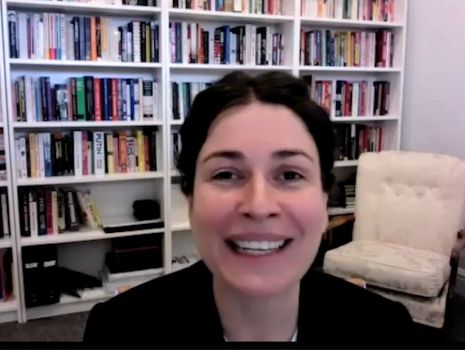 "Interview with Astrid Edwards" Astrid Edwards is a writer, publisher, lecturer, podcast host and disability advocate. Interview Summary Astrid Edwards, a former teacher and policy consultant, discusses in the interview how she pivoted her career towards writing and literature after being diagnosed with multiple sclerosis at 32, inspiring her to focus on work she loves. Astrid talks about writing at RMIT University, working with a diverse cohort of students, (many of whom have disabilities or are writing about trauma), which she finds rewarding. Though her work includes advocacy roles and a focus on disability, she does not wish to be defined solely by her illness, emphasizing the importance of allowing disabled individuals the freedom to explore and create beyond their disabilities. Currently, Astrid says she is a judge for the Stella Prize and discusses exploring a potential PhD about publishing and climate fiction, expressing a passion for addressing climate change within her work.
 -
"Bree Hadley (2016) Cheats, charity cases and inspirations: disrupting the circulation of disability-based memes online. Disability and Society, 31(5), pp. 676-692." "With the increasing part online self-performance plays in day-to-day life in the twenty-first century, it is not surprising that critiques of the way the daily social drama of disability plays out in online spaces and places have begun to gain prominence. In this article, I consider memes as a highly specific style or strategy for representing disability via social media sites. I identify three commonly circulating categories of meme – the charity case, inspiration and cheat memes – all of which offer representations that people with disabilities find highly problematic. I then investigate the ways in which disabled people have begun to resist the representation and circulation of these commonly circulating categories of memes, via the production of counter or parodic memes. I focus, in particular, on the subversive potential of these counter memes, within disability communities online and within broader communities online."
-
"Bree Hadley (2018) Disability, disabled dance audiences and the dilemma of neuroaesthetic approaches to perception and interpretation. In Wood, K, Brown, A, Waelde, C, Harmon, S, Blades, H, & Whatley, S (Eds.) Dance, disability and law: Invisible difference. Intellect Ltd, United Kingdom, pp. 293-315.” "In this chapter, I want to consider one emerging approach to spectatorship – the neuroaesthetic approach – through the lens of disability spectatorship. In the twenty-first century, neuroaesthetics is gaining traction amongst scholars looking to provide accounts of spectatorship in less story-based performing arts such as classical and contemporary dance, as well as in more story-based practices in drama, theatre and performance. ‘It would be fair to say that neuroaesthetics has become a hot field’, as Alva Noë puts it (2011). To date, though, the assumptions that underpin neuroaesthetic approaches to spectatorship have not been brought together with the assumptions that underpin the equally emergent field of disability spectatorship studies. As Carrie Sandahl (2002: 18) has noted, different cognitive, sensory and corporeal abilities result in a range of different phenomenologies, perceptual processes and perceptual preferences that can in turn produce different styles of engagement with experiences, events and objects. These differences impact on how people with disabilities produce and perceive aesthetic performances – somatically, syntactically, symbolically and socially, as disabled people hear with their eyes, see with their fingers, or perceive phenomena vicariously via the intervention of technologies or translators. Accordingly, disability spectatorship, and more detailed attention to the presence of distinctive cognitive, sensory and corporeal processes amongst disabled spectators, has the potential to complicate, extend and challenge assumptions embedded in emerging neuroaesthetic approaches to spectating."
-
"Radha O'Meara, Laura Dunstan, Anna Debinski, Catherine Ryan (2023). Disability and Screen Work in Australia: Report for Industry 2023. In Disability and Screen Work in Australia: Report for Industry. Melbourne Disability Institute, University of Melbourne." Disability is a key vector of inequality in Australian society. The screen industry has the potential to create meaningful change, in our workplaces and working practices, for our colleagues and our audiences. We need to pay more attention to disability and take more action to include disabled people in our industry. Disability equity, inclusion and accessibility training tailored to the screen industry can make a significant impact. Consultation, innovation and funding can transform industrial structures to create a more inclusive and sustainable industry for all screen workers. We must normalise talking about and providing access requirements to support disabled workers. The findings of this research reflect the need to build greater understanding, transparency and accountability in order to fully include disabled workers in the Australian screen industry.
- Victoria Singh-Thompson