
Items
Search full-text
Accessible Arts - Arts and Disability Expo
-
 "Access Arts Annual Report 2007" Access Arts Annual Report 2007 - Indigenous Projects, Brisbane Outsider Artists (BOA), Sound Circles, Wataboshi Festival, Conferences, Events & Celebrations, Workshops, Partnerships
-
 "Access Arts Annual Report 2009" Access Arts Annual Report 2009 - Indigenous Projects, Visual Arts, SoundCircles, Creative Recovery Project, Professional Development
-
“The 1985 New Directions Report is released” People with disabilities and their families participated in the review for the first time as part of a comprehensive consultation process. The resulting report ‘New directions: report of the Handicapped Programs Review’ was released in 1985. It indicated the need for change in disability policy culture of how people with a disability rights and capacities to realise their individual capacities for development.
-
“Protesters gather in Lismore (NSW) to oppose proposed cuts to services” In 2004, 300 disabled persons, along with their relatives and carers, gathered in Lismore to protest proposed cuts to adult, training, learning, and support programs, among other services. These were a part of a series of demonstrations against the state government that included hundreds of demonstrators in Newcastle and resulted in the state government reversing its position on modifications to the Post-Schools Options Disability Program.
-
 "Accessible Arts - Annual Report 1997"
-
 "Accessible Arts - Gazing Out Exhibition - Catalogue/Program - Cover - 2002" Accessible Arts - Gazing Out Exhibition - Catalogue/Program - Cover - 2002
-
 "Accessible Arts - The Suitcase Show - Promotional Poster" Accessible Arts - The Suitcase Show - Promotional Poster
-
 "Access Arts Annual Report 2005" Access Arts Annual Report 2005 - Indigenous Projects Report, Workshops, Sound Circles Project Report
-
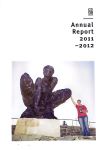 "DADAA Annual Report 2011-2012" DADAA Annual Report 2011-2012 - information about Vision, Mission and Goals, Chairperson and Executive Director’s Reports, Staff list, Participation, Programs including the Lost Generation Project, Sculptures by the Sea Tactile Tours, StARTSpeak, Art Link Children and Young People’s programs, Aging & Disability, Fourth International Arts And Health Conference, WA Disability Arts Grants Program, Regional Development and Consultancy, Partners, and Financials
-
 "Accessible Arts - Annual Report 1988" Accessible Arts - Annual Report 1988 - includes Part 1 Artistic Report (Summary of year's activities and evaluation); Part 2 Report on Riverina Project; Part 3 Report on RBS Project; Part 4 Report on Restructuring of Project; Part 5 Report on Melbourne Trip
-
"David Throsby, Katya Petetskaya (2024) Artists as Workers: An Economic Study of Professional Artists in Australia, Creative Australia, 2024." "Artists as Workers: An Economic Study of Professional Artists in Australia, by David Throsby and Katya Petetskaya, is the seventh in a landmark study, carried out independently over the last four decades by Professor Throsby and colleagues at Macquarie University, with support from Creative Australia (previously the Australia Council for the Arts). Conducted at roughly six–year intervals, the series tracks the working conditions of artists, providing information about their artistic practice, income, career development and pathways, and their broader working lives. The latest survey was in the field late 2022 and early 2023 and examines activity in the 2021-22 financial year. This edition therefore captures the conditions for artists in the wake of COVID-19 and coincides with the Australian Government’s January 2023 announcement of its five-year national cultural policy Revive: A place for every story, a story for every place."
- Kate Sulan
-
"David Throsby and Virginia Hollister (2003) Don't give up your day job: an economic study of professional artists in Australia, Australia Council" Australia Council- Don’t give up your day job: An Economic Study of Professional Artists in Australia' (Throsby and Hollister 2003) based on 2002 Survey - The website reads “The 2002 Australia Council artists survey, Don't give up your day job collected information relating to practising professional artists in Australia…..According to Don't give up your day job, about 10 per cent of practising professional artists live with a disability.”
- Amanda Cachia
-
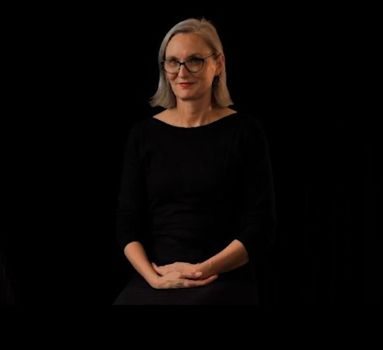 "Interview with Roz Hervey" Roz Hervey is a Creative Producer with Restless Dance Theatre and is also a director, dance theatre performer and lecturer. Interview Summary: Roz Hervey, the creative producer of Restless Dance in Adelaide, previously worked as a dancer and dance theatre artist in Australia and the UK. Her approach with Restless Dance involves creating personal and reflective dance theatre by giving dancers specific tasks. Roz does not view the performers as disabled but as exceptional artists telling unique stories, and she aspires to change societal attitudes and encourage diversity in art. Despite progressing towards inclusive perceptions, she still encounters patronizing attitudes and misconceptions about artists with disabilities.
-
"Soprano Marjorie Lawrence performs in her wheelchair in the 1940s" In the 1940s, Australian soprano Marjorie Lawrence contracted polio and performed in her wheelchair, both nationally and internationally, showing veterans life after disability was possible. Platforms were modied for her wheelchair so she could perform.
- Jen ‘Wart’ Waterhouse
-
 "Tutti Arts - Annual Report 2014" Tutti Arts Annual Report 2014 - Values, President’s, Artistic Director’s and Disability & Quality Manager’s Reports, Programs, Productions and Exhibitions, including Sisters of Invention, Company @, and Sit Down, Shutup & Watch Film Festival, Board, Staff, and Artists, Financials
-
 "Australia Council - Access and audience development in Australia" Australia Council - 'Access and audience development in Australia' reports - reads, in part "These reports were commissioned in 2004 to assess what is currently being done, and what needs to be done, to increase access to the performing arts and museums & galleries in Australia for people with a disability."
- Jodee Mundy Collaborations
- Tannia Vassallo
-
"Bree Hadley (2022) A ‘Universal Design’ for audiences with disabilities? In Reason, Matthew, Connor, Lynne, Johanson, Katia, & Walmsley, Ben (Eds.) Routledge Companion to Audiences and the Performing Arts. Routledge, Abingdon, Oxon, pp. 177-189.” “Understanding of how to create inclusive performance experiences for spectators with disabilities remains nascent in research, policy, and practice. In this chapter, I survey the state of knowledge in this field – or, as it turns out, fields, given that specialist knowledge of sign language interpretation for d/Deaf spectators, audio description for blind spectators, and relaxed performance for neurodiverse spectators, has developed separately, without intersection. I then investigate recent efforts to create inclusive aesthetics that incorporate accessibility features into performance work, as an integral part of the aesthetic, rather than as interpretations, captions, or descriptions alongside the work. I examine why this ‘Universal Design’ approach has been embraced with enthusiasm, both by disabled producers and spectators, and by non-disabled producers and spectators.”
- Luis Vidal
-
"The report Shut Out: The Experience of People with Disabilities and their Families in Australia is published in 2009" In 2009, Shut Out: The Experience of People with Disabilities and their Families in Australia was published. This report was commissioned by the Australian Government as part of the National Disability Strategy. It was prepared by the National People with Disabilities and Carer Council.
-
"1963 and 1967 sees the introduction of the Disabled Persons Accommodation Act and Sheltered Employment (Assistance) Act, respectively." With increasing pressure to provide more services to people with disabilities, the 1960s was a decade of Commonwealth Government initiatives to support organisations providing work and accommodation to people with a disability, including the Disabled Persons Accommodation Act and Sheltered Employment (Assistance) Act.