
Items
Search full-text
Accessible Arts - Arts and Disability Expo
-
“Creative Australia releases reports on arts participation, including d/Deaf, Disabled and Neurodivergent artists and audiences” A series of reports about arts and disability in Australia published in the mid-to-late-2010s are summarised on the Creative Australia website. Sources for the summary include Connecting Australians: Results of the National Arts Participation Survey (June 2017), Making Art Work: An Economic Study of Professional Artists in Australia (2017), Creating Pathways: Insights on support for artists with disability (2018), and Arts and Disability in Australia: Meeting of Cultural Ministers (2018). The overview of this research series demonstrates that disabled Australians’ participation in the arts had increased as access had grown, though equity for disabled artists, especially those with intersecting marginalised identities, continued to face barriers. It reports that work by disabled artists is innovative and transformative.
-
 "Accessible Arts - Annual Report 2006" Accessible Arts - Annual Report 2006 - About Accessible Arts, Chair’s report, Chief Executive Officer’s report, Accessible Arts’ people, Strategic Outcomes, Service, Arts programs, Training, Audience Development, Information and Public Relations
-
 "Interview with Morwenna Collett" Morwenna is a leader, consultant and facilitator in the arts, government, not-for-profit and university sectors and is passionate about helping arts and cultural organisations to include everyone in their work. Interview Summary Morwenna Collett is a consultant in diversity, access and inclusion and during the interview discusses her vast experience in the disability arts sector including time in the Australia Council where she played a key role in creating the first targeted funding program for artists with disabilities. Morwenna notes that while disability arts is gaining some awareness with mainstream audiences, there are still issues regarding how people think about the quality of art created by artists with disabilities. Morwenna highlights the NDIS as a significant milestone for disability arts in Australia, though she believes that there is much more potential for arts organizations to engage with it. Morwenna also emphasizes that the decision for artists to identify with their disability is a personal choice and it is becoming increasingly safe to disclose this identity, demonstrating progress toward inclusion in the arts.
- Alice Springs Youth Arts Group (ASYAG)
-
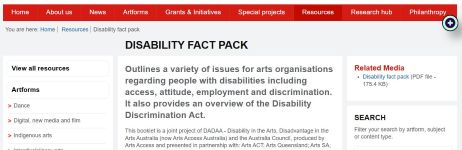 "Australia Council - Disability Fact Pack 1998" The website reads “Outlines a variety of issues for arts organisations regarding people with disabilities including access, attitude, employment and discrimination” - Noelene Gration
- Incite Arts
-
"Bree Hadley, Eddie Paterson, Madeleine Little, Kath Duncan (2024) How Disability Performance Travels in Australia: The Reality Under the Rhetoric. In Czymoch, Christiane, Maguire Rossier, Kate, & Schmidt, Yvonne (Eds.) How Does Disability Performance Travel?: Access, Art, and Internationalization. Routledge, Abingdon, Oxon, pp. 62-76.” "The last three decades has witnessed the development of a distinct narrative about how disability performance has become a much celebrated component of the Australian theatre landscape. A central aspect of this narrative is the critical importance of festivals, events, and other industry initiatives that allow disabled performers to travel - both conceptually and corporeally - to meet and be mentored by other artists, and to present their work to new and more mainstream audiences, in new spaces and places, around the country, and around the world. In this chapter, we draw on historical data, collected as part of an AusStage ARC LIEF project designed to database information about disability drama, theatre, performance, and dance over the past 100 years, as well as the Last Avant Garde ARC Linkage project on disability performance in Australia, to unpack areas where the reality seems to challenge some of the dominant rhetoric."
-
“In 2014, the Australia Council introduces its first grant specifically for artists with disabilities” In 2014, the Australia Council introduces its first grant specifically for artists with disabilities. Then Australia Council CEO Tony Grybowski announced “the Artists with Disability Pilot Program; the Council’s Disability Action Plan for 2014-2016; and additional funding for Arts Access Australia to increase career development and employment opportunities for artists with disability.” The pilot program granted $300,000 to disabled artists to develop and present their work. Following this, the program was extended for another three years. The “million dollar investment” would “provide development grants of up to $25,000 and project grants of up to $50,000 for individuals and groups.” That same year, the Australia Council received its first ever grant application in Australian Sign Language (Auslan). However, in 2019, Australia Council ended its dedicated funding program for disabled artists and replaced it with the National Arts and Disability Awards.
-
 "Interview with Sofya Gollan" Sofya Gollan is a distinguished artist, screenwriter, filmmaker and cultural leader in advocating for the Deaf and disabled communities. Interview Summary Sofya Gollan is a versatile and experienced artist with a background in acting, writing, directing, and producing, known for her work in theatre, film, and television, and for navigating the industry as a deaf individual. Her journey into the arts began with her involvement in the Australian Theatre of the Deaf and further developed as she trained at prestigious institutions like NIDA and AFTRS, where she expanded her skills in filmmaking. Despite facing challenges and ableism within the industry, Gollan has made significant contributions to disability representation on screen, and highlights the need for ongoing support and funding for disabled artists to promote equity and access to opportunities. Returning as creative practitioner to the industry after an executive role, Gollan continues to advocate for inclusivity and representation, while aiming to create and share content that authentically reflects the deaf experience.
-
“‘Arts and Disability: A Research Report’ published in 1995” In 1995, ‘Arts and Disability: A Research Report’ was published. Des Walsh and Juliet London were commissioned by the Australia Council to prepare the report. However, they found little information that was relevant to the theme of the report. In addition to a review of existing literature, they met with people involved in arts organisations, disability organisations and organisations dedicated to both, as well as funding bodies. Walsh and London outlined the different ways that disabled people interact with the arts: as artists, consumers, and through art therapy. They also recognised the “negative or unduly limiting notions attached to arts in relation to disability” (12). Overall, they found “no conclusive evidence […of a] widely shared, articulated concept of a ‘disability arts’ movement in Australia” at that time. The report was intended to inform meaningful policy going forward. They made recommendations related to buildings and physical barriers, leadership, education and training and action plans.
-
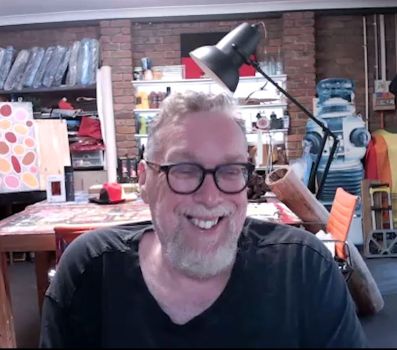 "Interview with Paul Constable Calcott" Uncle Paul Constable Calcott is a proud Wiradjuri man and artist living with a disability on Gubbi Gubbi country….. Uncle Paul uses his art to share stories of his journey as an aboriginal gay man living with a disability in urban Australia. Interview Summary Uncle Paul Calcott is a proud Wiradjuri elder and disability advocate who contracted polio as a child. During the interview, Uncle Paul discusses becoming an artist later in life through the encouragement of his husband and influenced by the storytelling of his culture. He embraces his identity as an Aboriginal, gay man living with disability. He talks about his artwork aiming to celebrate the achievements and contributions of people with disabilities, using traditional symbols to tell new stories, particularly about disability within Indigenous communities. Although there has been increased visibility and acknowledgment of disability arts in Australia, Paul notes that there's still a long way to go in terms of policy, funding, and public recognition. Uncle Paul says art can reflect political and social issues, and he proudly identifies as an artist with a disability and believes in the significance of diverse stories being told through the arts.
-
 "REWIND - Strategies for _Integration - A training seminar presented by Accessible Arts Inc - 1992" REWIND - Strategies for _Integration - A training seminar presented by Accessible Arts Inc - 1992 - reads, in part "Accessible Ans Inc. is an organisation which encourages and promotes the development of opponunities for people with disabilities to have access to and participation in all creative artforms. Accessible Arts began, in 1985, as an arts project for people with disabilities at Community Activities Network. In 1989 Accessible Arts became an independent, non-profit organisation incorporated as an Association. During 1990 Accessible Arts was financially supported by the State and Federal Governments to establish a statewide service for people with disabilities. The change from activities project to a statewide service has been significant. The organisation has compiled a state profile on what art facilities are available to people with disabilities in New South Wales; provides a consultancy service for artists, people with disabilities, disability services and arts organisations; assists the general community to initiate their own art programs and projects through the establishment of regional networks; provides training programs in the area of art and disability; produces publications; and, acts as an advocacy/educational body for the promotion of access and equity in the arts. The Rewind Seminar was initiated after expressions of interest and concern were directed to Accessible Arts about the need for strategies to effectively involve people with disabilities in arts practice."
- High Beam Festival
- Access Arts
-
”Hadley, Bree, Paterson, Eddie, & Little, Madeleine (2022) Quick Trust and Slow Time: Relational Innovations in Disability Performing Arts Practice. International Journal of Disability and Social Justice, 2(1), pp. 74-94.” "Despite a range of policies, plans, protocols and funding programmes to support disabled artists and collaborations between mainstream producers and disabled artists, the statistics – at least in our context in Australia – suggest most disability art still occurs outside and alongside an industry that struggles to include these artists. In this article, we draw upon findings from a series of workshops with disabled artists around Australia, conducted as part of the ARC funded Disability in the Performing Arts in Australia: Beyond The Social Model project – known colloquially to its collaborators and participants as ‘The Last Avant Garde’ project (https://lastavantgarde.com.au) – to propose a new approach. We find that while provision of logistical access (ramps, hearing loops, interpreters) and ideological access (stories, characters, discourse and language) is critical, so is methodological access, which embodies disability culture in training, rehearsal and production processes. Disabled artists use crip culture, along with relational space and time to negotiate what happens in disability arts and culture production practices and work through desire, fear, vulnerability and reciprocity to rapidly establish trusting collaborations."
-
“Activism leads to a Disability Royal Commission” Decades of activism led to a 2019 Senate motion calling for a Disability Royal Commission. The first public hearing of the Royal Commission took place on 16th September, 2019 at Brisbane’s Convention and Exhibition Centre. The Commission resulted in a report in 12 volumes. Several volumes include Volume 3: Nature and extent of violence, abuse, neglect and exploitation, Volume 6: Enabling autonomy and access, Volume 7: Inclusive education, employment and housing, Volume 9: First Nations people with disability, and Volume 10: Disability services. Overall, the Commission presented “222 recommendations on how to improve laws, policies, structures and practices to ensure a more inclusive and just society that supports the independence of people with disability and their right to live free from violence, abuse, neglect and exploitation.” In 2023, the final report of the Royal Commission into Violence, Abuse, Neglect and Exploitation of People with Disability was published with 220 recommendations for a more inclusive nation to reduce exploitation, violence, abuse and neglect of people with disabilities.
- Gerard Goggin
-
"Bree Hadley (2020) Allyship in disability arts: Roles, relationships, and practices. Research in Drama Education, 25(2), pp. 178-194.” "In this article, I propose that investigation of allies, ally skills, and allyship in disability arts is overdue. I articulate some of ways in which non-arts approaches to allyship need to be adapted to meet the needs of disabled artists, given the aesthetic as well as professional and social dimensions of allyship distinctive to disability arts. In doing so, I highlight the need for new theory, terminology, and frameworks to define the different approaches to allyship, developed by different artsworkers, operating in different roles, across the different domains of disability arts and/or arts and disability practice."
- Sharman Pretty
- Professor Sharman Pretty
-
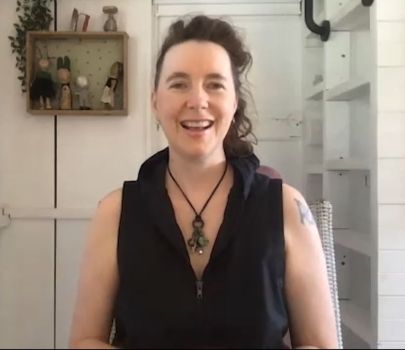 "Interview with Asphyxia" Asphyxia is an artist, author, activist and performer who has founded Amplio, a music app for Deaf and hard of hearing people. She also provides free online Auslan lessons and online art courses. Interview Summary Asphyxia is a Deaf artist whose journey into the arts started with a deep love for ballet, but after facing discrimination due to her Deafness, she pivoted to a successful career in circus performance and later puppetry, which embraced her Deafness and signing skills. Her work in performance art led her to write and illustrate the Awards-winning art-journal book, Future Girl, which explores Deaf identity and environmental issues. She has now moved into music, creating an app that makes music accessible and writing music designed with Deaf and hard of hearing audiences in mind. Although not sure about the major milestones in disability arts history in Australia, she considers her art to be both political and personal, often tackling issues related to her identity as a Deaf person and the aesthetics of disability equipment. While Asphyxia identifies as a Deaf artist, above all, she sees herself as an artist whose work appeals to the mainstream while celebrating Deafness and diversity.
-
 "Australia Council - Annual Report 2001-02" Australia Council Annual Report 2001-2002 - discusses letter from chair of council, corporate overview, year in review, financial statements, analysis of funding and grants for projects, initiatives, new work, programs, presentation and promotions including funding for implementing the Commonwealth Disability Strategy by evaluating current and changing needs of people with disabilities in the arts sector and reflecting this in funding and policies, arts marketing and audience development and triennial grants to disability arts organisations in NSW, South Australia and Victoria as well as an image from Crossroad Arts for the exhibition “Shades of White” and the publication “Making the Journey”
-
"Bree Hadley (2014) Disability, Public Space Performance, and Spectatorship: Unconscious Performers. London: Palgrave Macmillan." "Why would disabled people want to re-engage, re-enact and re-envisage the everyday encounters in public spaces and places that cast them as ugly, strange, stare-worthy? In Disability, Public Space Performance and Spectatorship: Unconscious Performers, Bree Hadley examines the performance practices of disabled artists in the US, UK, Europe and Australasia who do exactly this. Operating in a live or performance art paradigm, artists like James Cunningham (Australia), Noemi Lakmaier (UK/Austria), Alison Jones (UK), Aaron Williamson (UK), Katherine Araniello (UK), Bill Shannon (US), Back to Back Theatre (Australia), Rita Marcalo (UK), Liz Crow (UK) and Mat Fraser (UK) all use installation and public space performance practices to re-stage their disabled identities in risky, guerilla-style works that remind passersby of their own complicity in the daily social drama of disability. In doing so, they draw spectators' attention to their own role in constructing Western concepts of disability. This book investigates the way each of us can become unconscious performers in a daily social drama that positions disability people as figures of tragedy, stigma or pity, and the aesthetics, politics and ethics of performance practices that intervene very directly in this drama. It constructs a framework for understanding the way spectators are positioned in these practices, and how they contribute to public sphere debates about disability today."
-
"Queensland Government releases Arts & Disability Plan 2024-2026" Reads, in part "The Queensland Government acknowledges the rights of people with disability to participate equally in the state’s cultural life and to have the opportunity to develop and use their creative, artistic and intellectual potential, as recognised in the United Nations Convention on the Rights of Persons with Disability."
-
 "Accessible Arts - Annual Report 2007" Accessible Arts - Annual Report 2007 - Vision, Chair’s Report, Chief Executive Officer’s Report, Accessible Arts’ People, Strategic Outcomes, Service, Arts Programs, Training, Western Sydney Project, Audience Development, Information and Public Relations, Cultural Partners