Items
Search full-text
Accessible Arts - Arts and Disability Expo
-
“The Deaf Film Society creates the documentary ‘Our World’.” In 1970, the Deaf Film Society created a documentary called ‘Our World’ on the lived experience of people who were d/Deaf. The Adult Deaf Society assisted with the project.
-
“Les Murray's poetry is influenced by his autism” In 1974, Les Murray wrote a poem about autism, ‘Portrait of the Autist as a New World Driver’. Over the decades since, autism has continued to be a theme, as recognised by Amanda Tink.
-
“The inaugural National Braille Music Camp takes place” In 1986, Ian Cooper was one of the creators of the first National Braille Music Camp, which continues annually.
- Jeff Usher
-
 "Access Arts Annual Report 1992" Access Arts Annual Report 1992 - Director’s Report, Project Officer’s Report, Program Manager’s Report, exhibitions, workshops, regional arts, touring, (DADAA) at ARTAbility Conference at the Queensland Cultural Centre 1992
 -
 "Tutti Arts - Sit Down Shut Up & Watch - Awards - Press Release 2014" Tutti Arts - 'Sit Down Shut Up & Watch' Awards 2014 Press Release - reads, in part, "Best Animation Award Cafe Chat - North Melbourne Institute of Technology (NMIT), Victoria; SA Film Corporation Most Original Film Award Our Story - William Gregory, South Australia; The Hive Award Wild@Heart Community Arts, Victoria; Funniest Film Award Next Factor - Caleb Rixon, Victoria; Best Special Effects Award- Eye TV - James Kurtze, South Australia; Arts Access Australia Best New Media/ Video Art Award- Dexter Aliens - James Kurtze, South Australia; People's Choice Award- Our Story- William Gregory, South Australia.”
 -
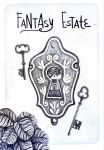 "Tutti Arts - Carrick Hill Fantasy Estate - Program" Tutti Arts - Carrick Hill Fantasy Estate' Exhibition 2022 Program - reads, in part "This exhibition takes you on a fantastical adventure with real and imagined characters of Adelaide's historic 1 Carrick Hill estate. High if1 the Attic's Wall Gallery, artists William Gregory and Mawarini illuminate its curious past through installation, drawings and augmented reality."
 -
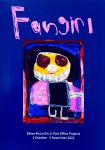 "Tutti Arts - Ellese McLinden - FanGirl Exhibition - Program" Tutti Arts - Ellese McLinden 'FanGirl' Exhibition 2022 Program - reads, in part "Ellese Mclindin, of Tutti Arts, is an emerging visual artist who creates semi-abstract works using paint, ink and sculptural forms made from recycled boxes and objects. Within her works, the brushstrokes and line work are very prominent, giving her art a textural feel."
 -
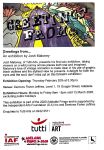 "Tutti Arts - Josh Moloney - Greetings from Exhibition - Promotional Flyer" Tutti Arts - Josh Moloney 'Greetings From' Exhibition Promotional Flyer - reads, in part "Josh Maloney, of Tutti Arts, presents his first solo exhibition, taking viewers on a wild journey across places both real and imagined. Maloney's love of vintage animation is made clear in his use of graphic black outlines and the stylised view he presents. A delight for both the eyes and the soul, don't miss out on this fantastic exhibition!"
 -
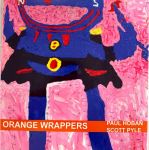 "Tutti Arts - Paul Hoban & Scott Pyle - Orange Wrappers - Program" Tutti Arts 'Paul Hoban & Scott Pyle - Orange Wrappers' 2013 Program - reads, in part "Orange Wrappers is an experiment in co-production between so-called outsider art and so-called avant-garde practice. It comprises collaborative works produced by Scott Pyle and me as practicing South Australian artists. Our exhibition entertains the idea that collaboration fruitfully avoids individual authority and object autonomy as ideals for art making"
 -
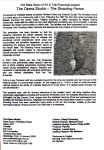 “Tutti Arts - The Shouting Fence – Promotional Flyer" Tutti Arts and State Opera of South Australia ‘The Shouting Fence’ 2009 Promotional Flyer - reads, in part "The production has been devised so that the audience becomes the barrier between the two communities, thus allowing them to witness the emotional turmoil experienced when close-knit communities are forcefully separated, as well as reinforcing the divisive and destructive nature of the 'fence' itself. The Shouting Fence importantly highlights the human needs of communication, mutual love, and the frustrations of not being able to physically connect."
 -
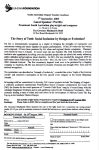 "Tutti Arts - Talk by Pat Rix for Dunstan Foundation - The Story of Tutti: Social Inclusion by Design or Evolution? - Promotional Flyer" Tutti Arts - Talk by Pat Rix for Dunstan Foundation 'The Story of Tutti: Social Inclusion by Design or Evolution?' 2003 Promotional Flyer
 - Aldo Gennaro
- Aldo Gennarro
-
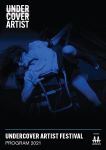 "Undercover Artist Festival Program 2021"
 -
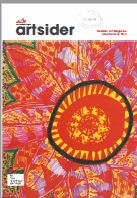 “Arts Access Arts Access Artsider May 2014” Arts Access Arts Access Artsider May 2014 – “This issue of Artsider sources visual arts from the Supported Residential Services (SRS) Studios program” and “Much of the written material in this issue was sourced through Write-ability a partnership program between Arts Access Victoria and Writers Victoria” – discussion of outsider art being “in”, description of Arts Access Victoria, showcasing visual art and creative writing from 17 artists - Bruno Conci, Colin Ferris, David Smyth, Deb Lissek, Diane Chen, Dimitrios Jim Mouhtsis, Felicity Mimigiannis, Gavin Jackson, Giovanni Dimase, Jalal Merhi, Marco Sirolli, Maribel Steel, Pauline Matton, Peter Piwko, Robbie Weir, Sandy Jeffs, Theo Psathas
 -
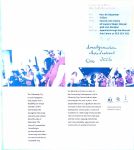 "Tutti Arts - Amalgumation Arts Festival - Promotional Flyer" Tutti Arts - 'Amalgumation Arts Festival' 2006 Promotional Flyer - reads, in part "The program starts with the screening of a short comical film entitled 'Wheel Love' by Emma Butler from Launceston. Then follows 12 personal digital stories,Telling Tales, produced by Arts Access Victoria and the Australia Centre for the Moving Image The final film features Bronwyn Hayward from New Zealand, who wants to become a dancer but is told that she cannot because of her disability. The story tells her journey to become a dancer."
 -
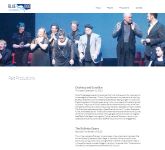 "Blue Roo Theatre Company - Productions" Blue Roo Theatre Company Productions 2009-2017, including Orpheus and Eurydice with Opera Queensland (2016), The Bulimba Opera with Opera Queensland (2015), a new touring Commedia dell’Arte production Hotel Pantelone (2015), a street theatre ensemble A Waddle of Ducks (2015), Song Circle with Opera Queensland (2014), parody, satire and music performance Darcy O and the Browbeat Factory (2013), small scale touring Commedia dell’Arte group production Capitano Pretends Again (2013), Flood Country (2012), The Last Night at the Grand (2011), Sugar Cane Ball (2010), and Lily Pilly Letters (2009)
 -
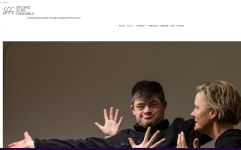 "Second Echo Ensemble - About, captured 2024" Second Echo website 'About' page, captured 2024 reads, in part, "At the heart of Second Echo Ensemble are the artists who make and perform the work. Some live with disabilities, and some do not. Our work is not simply about access or equality. We are about new ways of thinking and creating."
 -
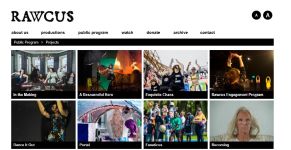 "Rawcus Public Projects, captured 2024" Links to information about Rawcus Public Projects, from 2006 forward, captured 2024 - including In the Making, A Resourceful Hero, Exquisite Chaos, Rawcus Engagement Program, Dance It Out, Portal, Fanaticus, Becoming, Symphonic Sites, Encounters, In Our Shoes, Now You See Me, Portraits, Singular, By You, Me and the Light, Cross my heart ( and hope), (it’s no) drama 2016, I AM, Beyond the Room, Shadow Tales, Imagine me there, Emporium of Treasures, Flashmob, Cherish, Sticky, RAWCUS at Artplay
 -
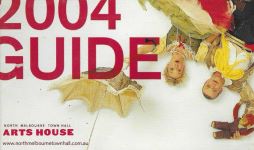 "Rawcus - Sideshow - Program" Information about Rawcus work ‘Sideshow, at Art House, reads, in part “Be taken to a world of wheelchair trapeze, of a half bird/half woman and altered realities in Sideshow, a production of intriguing physical theatre by Rawcus, the award-winning company of performers with and without disabilities.”
 -
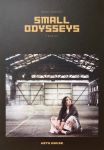 "Rawcus - Small Odysseys" Information about Rawcus work 'Small Odysseys, reads, in part "Small Odysseys is a work of grit and tenderness. It tells stories both intimate and vast."
 -
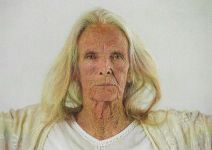 "Rawcus - Becoming (1)" Promotional postcard for Rawcus work about aging and ageism 'Becoming'
 -
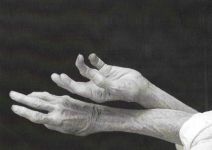 "Rawcus - Becoming (2)" Promotional postcard for Rawcus work about aging and ageism 'Becoming'
 -
 "Rawcus - Catalogue - Program" Program for premiere of Rawcus work 'Catalogue' presented at Dance Massive, reads, in part " Catalogue explores portraiture and multiplicity and began as a series of simultaneous solos."