
Items
Search full-text
Accessible Arts - Arts and Disability Expo
-
 "Accessible Arts - Second Skin 2012 - Program" Accessible Arts - Second Skin 2012 - Program - reads, in part "Choreographers Sue Healey, Dean Walsh and Philip Channells worked with more than 20 dancers to devise three short dance works traversing duets between camera and dancer, sub-aquatic space and states of dress and undress. The end result is Second Skin, a studio showing at Bangarra Theatre, where dancers will shed their layers and expose what's underneath their skin."
-
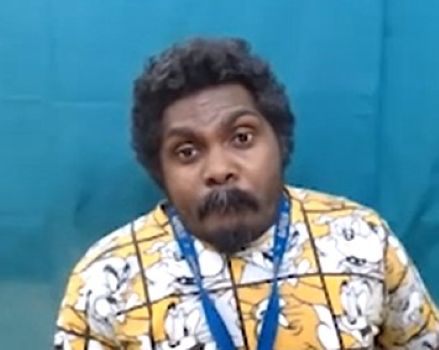 "Interview with Graham Wilfred Junior" Graham Wilfred Junior is a Yolngu man and artist with Incite Arts where he works with different mediums including filmmaking, writing, performing and music. Interview Summary Graham, an emerging artist with spina bifida whose father inspired his passion for art, has pursued various art forms including painting, music, and digital art, now calls Mparntwe/Alice Springs home, and is venturing into theatre and filmmaking. His digital artwork, through the creation of the indigemoji app, helps teach the Arrernte, the language of the First Nations people of Mparntwe/Alice Springs. He now seeks to expand his impact through acting and creating films. Graham's motivation is to both celebrate and inspire people with disability, aiming for recognition as an artist rather than focusing solely on his disability. Graham shares his journey with Incite Arts, highlighting his involvement in music workshops, acting classes and script development, emphasizing the importance of representation and empowerment for individuals with disability. Ultimately, he aims to document his experiences and create impactful performances that leave a legacy to encourage others to pick up where he leaves off, ensuring the continuity of artistic expression within his community.
- No Strings Attached Theatre of Disability
-
"Commonwealth of Australia (2017) “National Arts Disability Strategy Evaluation Report 2013–2015.” Canberra: Meeting of Cultural Ministers." Reads, in part "The second Evaluation Report was endorsed by cultural ministers in September 2017. It concludes that progress continues to be made against the Strategy. It also identifies that there have been significant changes to the arts and disability sector since the release of the Strategy in 2009 such as the introduction of the National Disability Insurance Scheme."
- Noelene Gration
-
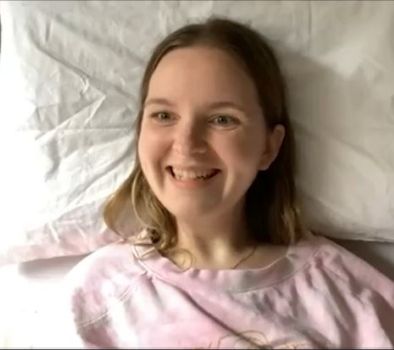 "Interview with Jess Cochran" Jess Cochran (they/them) is an actor, model, writer and disability advocate. Interview Summary: Jess Cochran is a queer, non-binary, neurodivergent, performing artist, advocate, writer, and consumer consultant with a background in both physical and psychosocial disabilities. Their journey into the performing arts began accidentally with a role in the Awards winning Melbourne Fringe Festival production, Qualia, which opened doors to more local and international Awards-winning work in film and stage. Jess identifies proudly with their disabilities and considers their art both a personal expression and a political act aimed at highlighting the issues faced by the disability community. Jess’s work spans across writing, modelling, and various performance arts, and they wish to see an increase of disability arts representation in mainstream media with authentic casting, opportunities and improved accessibility for disabled performers. Jess is also passionate about highlighting intersectionality in disability arts.
-
"Sarah Austin, Kath Duncan, Gerard Goggin, Lachlan MacDowall, Veronica Pardo, Eddie Paterson, Jax Jacki Brown, Morwenna Collett, Fiona Cook, Bree Hadley, Jess Kapuscinski-Evans, Donna McDonald, Julie McNamara, Gayle Mellis, Kate Sulan (2019). The last avant garde? In B. Hadley, D. McDonald ed. The Routledge Handbook of Disability Art, Culture, and Media. London & New York: Routledge, 251-262." "“The Australian Research Council project Disability and the Performing Arts in Australia: Beyond the Social Model – known to collaborators as the last avant garde – is mapping disability performing arts in Australia. We open up this chapter, and our ongoing research project, with the words of the late Tobin Siebers. In researching disability and performance here in Australia, we also acknowledge that since Siebers’ 2010 text, we have seen new experiments and emerging companies pushing the bounds of how bodies feel – in a sector which embraces differences in bodies, but also in thinking, in neurodiversities, in being, in articulating, in appearing, in sensing, in intersectionalities, and in the experiences for audiences. As such, this chapter aims to explore ‘disability aesthetics’ not as a set of specific techniques, themes, or politics, but in order to position disability at the centre of ‘future conceptions of what art is’ and what it can be.”
-
"Catherine Grant (2013). Participating in arts- and cultural-sector governance in Australia: Experiences and views of people with disability. Arts & Health, 6(1), 75–89. https://doi.org/10.1080/17533015.2013.826259" Reads, in part "This study sought the perceptions and experiences of people with disability relating to their potential or current involvement in the governance of arts and cultural organisations in Australia. Methods: A total of 32 people participated in an online survey, and results were analysed qualitatively and quantitatively. Results: The findings revealed that those participants who had been involved in governance benefited from it in terms of self-esteem, participation in society and well-being." Contains tables with survey data.
-
"Maree Roche, Ben Whitburn (2019) Mate, You’re Crippin’ Us Out: Biopolitics of the Arts Curriculum in Australia and the Swinging Identities of Dis/abilities. Journal of Literary & Cultural Disability Studies.13(3). https://doi.org/10.3828/jlcds.2019.25" Reads, in part "The article explores arts curriculum in Australia as developed in the contexts of schooling, community organizations, and higher education for people with disabilities and mental health concerns. Motivated to explore whether or not students provided access to modified arts curriculum are engaging in education or receiving therapy, the aim is to address a dichotomy that is seemingly present in educational institutions, but extends well beyond the school gate and informs organizational responses to arts in the lives of people with disabilities. Resourced with the theoretical contributions of dis/ability studies for its concern for the biopolitics of disability, the authors weave personal experiences through the discussion of participation in arts throughout their lives. The article concludes with a theoretical discussion of how arts provision in the Australian context might develop the social and political value of art in the lives of people with dis/abilities and for all, on the basis that its educative value is emphasized over its therapeutic one."
-
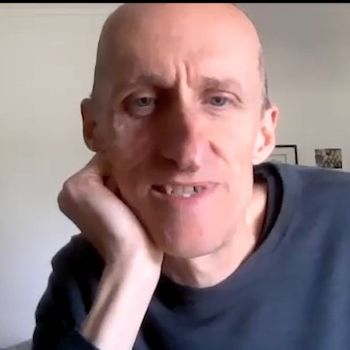 "Interview with Andy Jackson" Andy Jackson is a published poet focusing on disability and difference, has completed a PhD and is a lecturer of poetry and creative writing. INTERVIEW SUMMARY This is an oral history interview with poet Andy Jackson. Andy, who has Marfan syndrome, discusses how disability and visible difference have shaped his writing and poetry, explaining that he often writes about the meaning of the body within society. He emphasizes the importance of Disability Arts, noting a growing community of disabled writers and expressing the need for both disability-specific literary spaces and mainstream recognition. Andy also highlights the transformative role of online communities in creating networks for disabled individuals and the emergence of disability-focused literary journals, anticipating an anthology from a collaborative writing project he is involved with.
-
"Bree Hadley, Gerard Goggin, Petra Kuppers, Colette Conroy, Meagan Shand, Donna McDonald, Martin Paten, Norm Horton, Sarah Moynigan, Veronica Pardo, Caroline Bowditch, Morwenna Collett, Kerry Comerford, David Doyle, Pat Swell, Clark Crystal, Peter Stuart (2019) The NDIS and disability arts in Australia: Opportunities and challenges. Australasian Drama Studies, 74, pp. 9-38." "In Australia, disabled people’s participation in the arts has historically been afforded by means of direct-to-organisation grants that arts, community services or disability services arms of government award to arts organisations, charities or disability service organisations, who then deliver programmes. The introduction of the National Disability Insurance Scheme (NDIS) is creating wide-reaching changes for disability arts practice in Australia. We undertake a first step in addressing the need for research into how the NDIS will alter the landscape of disability arts practice in Australia. We highlight a set of questions that all performing and creative arts industry stakeholders will need to respond to, in order to ensure that the excellent work done in disability arts in Australia to date can continue in the new climate that the NDIS brings."
- Film Australia
-
"Arts Access Victoria established in 1973 and provides valuable resources and conferences throughout the decades" In 1973, Judy Morton successfully applied for funding to start a 6-month pilot program and Arts Access Victoria was established the following year. However, due to lack of government funding and despite public appeal, programs were suspended in 1977. Fortunately, operation resumed in 1979 and AAV was formally constituted with a small School Commission fund as Arts Access Society Inc. Arts Access Victoria had both organisational and financial growth in the mid to late 1980s. This led to a diversification of arts projects and the beginning of long-term artistic programs which remain as the core programs of AAV. Arts workshops also began in regional Victoria during this time. In 1988, Arts Access was approached to run a national conference focusing on the arts and disability. Two years later, they convened P-art-ICIPATE '90 and subsequently published ‘P-art-ICIPATE '90: a conference report’. They also published ‘Inner Words Outer Spaces’, edited by Bev Roberts (1995), ‘Arts Alive: An Information Leaflet about the Ways the Arts Can Work for Older People’ (1995), ‘Accessible Theatresports’ (1996), and Bev Roberts's ‘Work Guide: How to Establish an Artist in Community Project’ (1996). In 1998, Arts Access (Victoria) assumed responsibility for its own financial management and administration. In 1999, Arts Access Victoria presented Verve!, a national symposium on arts and disability.
-
"Rachel Carling-Jenkins, Mark Serry (2014) Disability and social movements: learning from Australian experiences. Burlington : Ashgate Publishing Company" Reads, in part "This book provides the reader with a ground-breaking understanding of disability and social movements. By describing how disability is philosophically, historically, and theoretically positioned, Carling-Jenkins is able to then examine disability relationally through an evaluation of the contributions of groups engaged in similar human rights struggles. The book locates disability rights as a new social movement and provides an explanation for why disability has been divided rather than united in Australia.."
-
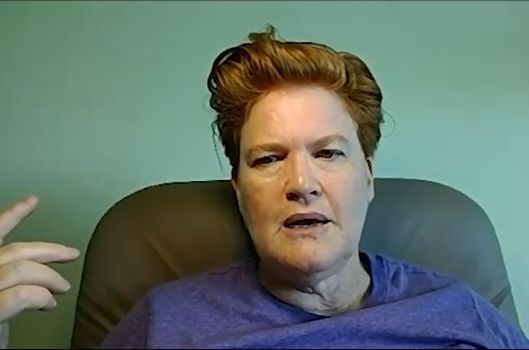 "Interview with Michèle Saint-Yves" Michèle Saint-Yves is a playwright, filmmaker, poet, and director. Interview Summary Michèle Saint-Yves’ background includes a colonial upbringing in Pacific territories, a Scottish boarding school education, and a complex personal journey of confronting her own inherent racism and colonial legacy, particularly through her writing. Her work as an artist with disability is deeply informed by her sense of otherness and focuses on creating inclusive performance-based work that challenges mainstream audiences and systems, aiming for transformative experiences that impact disability justice and community. Michèle actively embraced the social model of disability, which shifted her understanding of herself and her art, and has received recognition for her pioneering work with the prize-winning show "Clock for No Time." However, recognising the social model’s limitations, her current creative endeavours are concerned with 'access intimacy' and evaluating the lasting impact of her performances, in collaboration with other artists and through research grants.
-
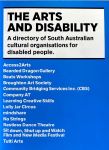 "The Arts and Disability No Date #2" Except as permitted by copyright law, you may not reproduce or communicate any of the content on this website, including files downloadable from this website, without the permission of the copyright owner. The Australian Copyright Act allows certain uses of content from the internet without the copyright owner’s permission. This includes uses by educational institutions and by Commonwealth and State governments, provided fair compensation is paid to the copyright owner. For more information, see www.copyright.com.au and www.copyright.org.au.
- David Doyle
- Sunnyhaven Disability Services
-
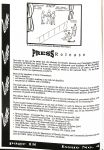 "Accessible Arts - ACE Arts Creativity Expression - Pru Jobling - Press Release: Appointments to Disability Services Advisory Committee (DSAC) in all states, and to the Advisory Council of Australia (DACA) - Iss4, Pg18-19" Accessible Arts - ACE Arts Creativity Expression - Pru Jobling - Press Release: Appointments to Disability Services Advisory Committee (DSAC) in all states, and to the Advisory Council of Australia (DACA) - Iss4, Pg18-19 - reads, in part "You may or may not be aware that the Minister for Health, Housing and Community Services (formerly DCS&H) Mr Brian Howe, has recently appointed new members of the disability community to the Disability Services Advisory Committee (DSAC) in all states, and to the Advisory Council of Australia (DACA) which is the national body."
-
"Margaret Cooper (1999) The Australian Disability Rights Movement Lives. Disability & Society, 14(2), 217–226. https://doi.org/10.1080/09687599926280" Reads, in part "The Australian Disability Rights Movement is surviving despite funding threats to advocacy programmes. The integral relationship of advocacy funding to the Australian Disability Rights Movement is outlined. A brief history of the Australian Disability Rights' Movement is given, and whether this is a new social movement, or not, is discussed. The role of Women With Disabilities Australia is outlined."
-
“Choose Art, the Australian accessible arts directory, is launched” The Australian accessible arts directory Choose Art was launched in 2019. It is an initiative of Arts Access Victoria, designed for and by Deaf and disabled people. Choose Art is a Commonwealth project supported by the Cultural Ministers of each State and Territory through Arts ACT; Arts Tasmania; Create NSW; Creative Victoria; Culture and Arts WA; Arts South Australia; Arts Queensland; Department of Tourism and Culture, NT and the Federal Minister through the Department of Communications and the Arts. Arts Access Victoria has created Choose Art in partnership with Arts Access Australia, Access2Arts, Access Arts, Accessible Arts, Arts Access Darwin, Belconnen Arts Centre, DADAA and Incite Arts.
-
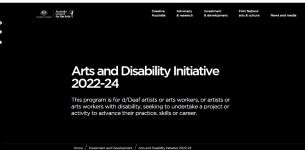 "Australia Council Arts and Disability Initiative 2022-24" Australia Council Arts and Disability Initiative 2022-24 - reads, in part "This program is for d/Deaf artists or arts workers, or artists or arts workers with disability, seeking to undertake a project or activity to advance their practice, skills or career."
-
"Janice Rieger and Megan Strickfaden(2019) “Dis/ordered assemblages of disability in museums.” In The Routledge Handbook of Disability Art, Culture, and Media, edited by Bree Hadley and Donna McDonald, 48–61. London & New York: Routledge." "Museums are spaces of power and care. They are institutions that present assemblages (Deleuze & Guattari 2002), which are reconstructions and representations of history and societal values, and thus are partial realities that curate human existence. These assemblages cannot ever represent the totality of human existence because it is never possible to do so, and yet these assemblages are embedded with power because choices are made about what ought or ought not be represented within museums (Ott 2013; Bennet 2017). The nature of partial realities is that, at their centre, these are still representations that tell stories of what one would imagine to be the most significant events related to a place (nation, city), with a particular focus on a societal event or issue (war, art, sports, nature, human rights, etc.) and peoples (e.g. immigrants, migrants, First Nations or Indigenous peoples, etc.). Persons attending museums rely on the expertise of historians, curators, archivists, conservators, and exhibition designers to present materials within the museum that focus upon and represent societal values. Most museum visitors are not aware of the power that museums hold, although more and more museum visitors push against narratives which they do not feel to be adequate representations of the places, events, issues, and peoples of society (Hooper-Greenhill 1992, 2000; Anderson 2004; Janes 2009, 2010). Where there is power, there is also care. Historians, curators, archivists, conservators, and exhibition designers take great care in how they assemble materials within museums."
- Alison Richardson
-
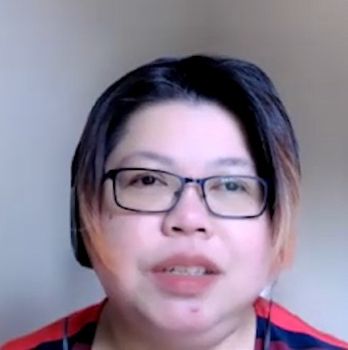 "Interview with CB Mako" CB Mako is a non-fiction, fiction and fanfiction writer and disability advocate. Interview Summary cubbie||CB Mako is a creative practitioner and disability advocate who emphasizes the importance of accessibility in the arts, advocating for digital inclusivity and the elimination of ableist practices. cubbie pushes for systemic change so that future generations, like their disabled child, don't have to fight for access to art and literature. Success for cubbie is defined by the progress made when institutions include disability in their funding, competitions, and programming. Using the pen name CB Mako and going by pronouns cubbie/they/them, urges non-disabled artists, particularly from communities of colour, to proactively incorporate access in their work.