Items
Search full-text
Accessible Arts - Arts and Disability Expo
-
 "Accessible Arts - Annual Report 1992" Accessible Arts - Annual Report 1992 - Staff, Management Committee, and contents including BACKGROUND INFORMATION REGARDING ACCESSIBLE ARTS, ACCESSIBLE ARTS' AIMS, CHAIRPERSON'S REPORT, SECRETARY'S REPORT, CO-ORDINATOR'S REPORT, TREASURER'S REPORT & AUDITOR’S REPORT, A.C.E. MAGAZINE, establishment of a national body - DISABILITY IN THE ARTS, DISADVANTAGED IN THE ARTS, AUSTRALIA (DADAA)
-
 "Incite Arts Disability Engagement Policy and Action Plan 2020-25" InCite Arts Disability Engagement Policy & Action Plan, reads, in part "People with disability are a key focus of InCite Arts. When we say we work with people with disability, we mean anyone with sensory or physical impairments, hidden impairments, intellectual or neurological impairments or mental health issues. We welcome and value the participation of people with disability in all areas of our work, and we aim to make sure that people with disability have full access to our program, organisation and venues."
-
 “Arts Access Victoria - Arts Access Society Inc. - Access Newsletter December 1992” Arts Access Arts Access Society Access Newsletter December 1992 – P-art-ICIPATE Expo'92, Cultural Exchange Program with China, Executive Director message, national DADAA conference, Arts Access studio – able to be hired, updates – resource centre, projects, Publication – “Rewind - Strategies for Integration in the Arts”, EASE staffing changes, membership.
- Janice Rieger
-
 "Accessible Arts - Resources, captured 2022" Accessible Arts - Resources - includes Accessible Arts Event Series Video Resources, Top 10 Tips For Running Accessible Online Events, Access Checklists, Universal Access Symbols, Service Providers, National Disability Insurance Scheme (NDIS), Arts Access Organisations in Australia, and toolkits
-
"Australia Council for the Arts (2022) Australia Council releases Towards Equity: a research overview of diversity in Australian arts." Reads, in part "The Australia Council for the Arts have released their critical new report Towards Equity: A research overview of diversity in Australia’s arts and cultural sector. This overview gathers published and unpublished data and research on representation within the arts and cultural sector in Australia."
-
 "Queensland Theatre of the Deaf - Kenneth J Donnell - Actor, Director, and Foundation Committee Member - CV" CV of Kenneth J Donnell, Foundation Committee Member, Actor, Director, and Artistic Director Queensland Theatre of the Deaf from 1980, dated 1998 - training (including as first profoundly Deaf Australian to be awarded a Churchill Fellowship), awards, shows as actor (An Evening with the Theatre of the Deaf, Snow White & Company, Ondine, The Crane, Jack the Simpleton & his master, Dick Woodington-Lord Mayor of Where?, Treasure Map, Seasons, Christmas Carol, Only an Orphan Girl, The Man from Snowy river, A Stranger at the Inn, Gotze, Wolf Boy), as director (Medieval Mime, Mime Skits for Expo'88', Spring Mime Madness), and as director/author (Follow That Sign, Robert the Bruce, Anonymous Addict, Nara's Journey, Our Eyes are Your Ears, Assimilation, The Devious Black Marble, Fate of The Rose)
-
“Arts Access Australia releases the report Making the Journey: Arts & Disability in Australia” In 2005, Arts Access Australia commissioned a survey of the disability arts sector nationally. This survey resulted in the report, Making the Journey: Arts & Disability in Australia. The report was written by Mary Hutchison. It details 12 case study disability arts organisations.
-
"Australia Council for the Arts (2018) Arts and Disability a Priority as Australia Council Commits
Significant New Funding. 24 September 2018." Reads, in part "The Australia Council has committed $750k over three years to support sustainable careers and to recognise the artistic excellence of artists with disability."
-
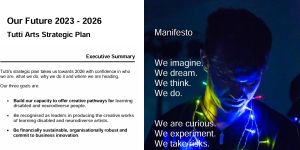 "Tutti Arts - Website - Strategic Plan 2023-2026 captured 2023" Tutti Arts Annual Reports 2023-2026, captured 2023 - reads, in part "Established in 1997, Tutti Arts is South Australia’s only multi-arts organisation where learning disabled, and neurodiverse artists create visual art, theatre, music, screen, dance and experiment with art and technology. Tutti Arts has grown, changed, rearranged, and developed over time. Tutti now works with more than 200 learning disabled and neurodiverse artists, with over 340 artist engagements every week across 3 Creative Hubs (Brighton, Port Adelaide, and the Barossa), and online. Tutti is the home for renowned disability-led collectives The Sisters of Invention, Company AT and Sit Down Shutup and Watch Film & Media Festival and has supported the career paths of many disabled artists. The Tutti Arts Centre was opened in Brighton 2020. In 2022 Tutti opened a new Regional Hub in Nuriootpa."
-
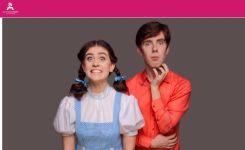 "Accessible Arts - Creative Initiatives, captured 2022" Accessible Arts - Creative Initiatives - reads, in part "The unique perspectives and experiences of artists with disability – as well as the intersection of cultural identities across all types of disability – present exciting avenues for new artistic possibilities right across the spectrum of visual, performing, literary, screen and digital arts. We’re here to work with arts and cultural organisations, government agencies and other funding partners to deliver creative initiatives focused on providing development and production opportunities for all kinds of artists with disability or who are d/Deaf."
-
“Creative Australia’s National Arts and Disability Awards are awarded to their inaugural recipients in 2019” Creative Australia’s National Arts and Disability Awards were first awarded to their inaugural recipients in 2019. The three awards go to an emerging or early career artist, and established artist, and someone who’s proven themselves as a leader in disability arts. From 2019 to 2023, the recipients span across artforms and the country.
-
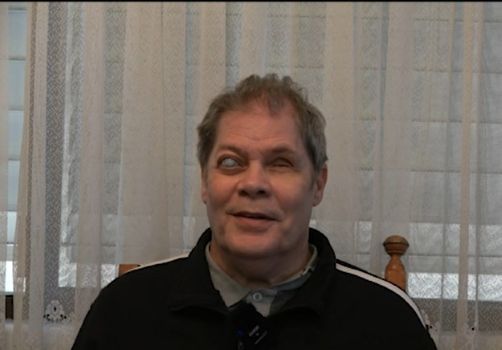 "Interview with Jeff Usher" Jeff Usher is a jazz and blues composer, arranger, pianist, vocalist, teacher, lecturer, and music consultant. Interview Summary Jeff Usher is a visually impaired Australian jazz musician with a rich history of playing music since childhood, influenced by a significant early encounter with the Jazz Action Society and key individuals like his high school music teacher Kathleen Kerr and his supportive family. Throughout his career, he has worked with a diverse range of musicians across many genres, including country, rock, and church music, and has expanded his repertoire to include political and spiritual themes, often infused with his synaesthetic experience of colour. Despite a broad professional experience, his engagement with the disability arts space developed over time, particularly through collaboration with other disabled artists, and he values working with good artists regardless of their backgrounds or disabilities. He is deeply committed to his craft, finding a balance between the aesthetic quality of his work and the joy it brings, both to himself and his audiences.
- Marianne Ireland
- Maryanne Ireland
-
“Accessible Arts (NSW) established” Accessible Arts (NSW) was established in 1986. "the peak arts and disability organisation in New South Wales. We advance the rights of, and opportunities for, people with disability or who are d/Deaf to develop and sustain professional careers in the arts and have equitable access to arts and culture across NSW".
- Richard Bell
- Sarah-Jane Rennie
-
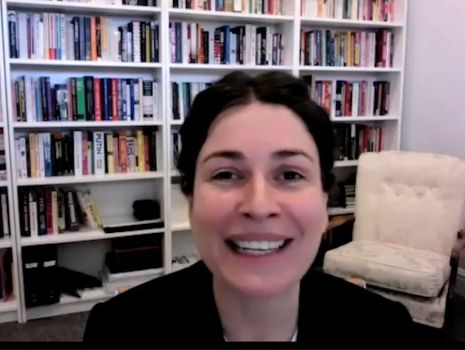 "Interview with Astrid Edwards" Astrid Edwards is a writer, publisher, lecturer, podcast host and disability advocate. Interview Summary Astrid Edwards, a former teacher and policy consultant, discusses in the interview how she pivoted her career towards writing and literature after being diagnosed with multiple sclerosis at 32, inspiring her to focus on work she loves. Astrid talks about writing at RMIT University, working with a diverse cohort of students, (many of whom have disabilities or are writing about trauma), which she finds rewarding. Though her work includes advocacy roles and a focus on disability, she does not wish to be defined solely by her illness, emphasizing the importance of allowing disabled individuals the freedom to explore and create beyond their disabilities. Currently, Astrid says she is a judge for the Stella Prize and discusses exploring a potential PhD about publishing and climate fiction, expressing a passion for addressing climate change within her work.
- Pat Rix
-
"Bree Hadley, Clark Crystal (2017) Style, stage presence, and the poetic subversion of stereotypes: A case study of Blue Roo Theatre Company. Social Alternatives, 36(4), pp. 15-21." "In this article, we consider the work of Blue Roo Theatre Company (http://www.bluerootheatre.org.au/), a Brisbane-based theatre company which “creates contemporary performances lead by the artistry, experiences and imaginations of an ensemble of artists with diverse ability and impairment” (http://www.bluerootheatre.org.au/). Writing from a dual insider-outsider perspective – as a scholar of disability theatre and a creator of disability theatre in conversation – we discuss the work done in the training and rehearsal room in the lead up to Blue Roo Theatre Company’s performances, such as the company’s recent sell-out performance of Orpheus and Eurydice in collaboration with Opera Queensland at the Judith Wright Centre for Contemporary Arts, and the way it creates a distinctive performance style, poetics, stage presence, pleasure for the spectators who come along to witness the results of the work, and sense of community. We document moments in which facilitators, collaborators, co-creating artists, audiences and the media alike feel the physical, psychological, and aesthetic focus and force of voice, movement and character work by people with disabilities. We identify ways in which this stage presence can subvert dominant depictions of people with disabilities as innocent, childlike, or inspirational as significantly as the content of a show. In doing so, we provide insights into Blue Roo Theatre Company’s processes, and the aesthetic results it produces, and contribute to a growing body of commentary around disability theatre and performance, which – though increasingly well understood by those working in the form – clearly can still provide surprises for audiences and commentators anticipating conventional representations of people with disabilities onstage."
-
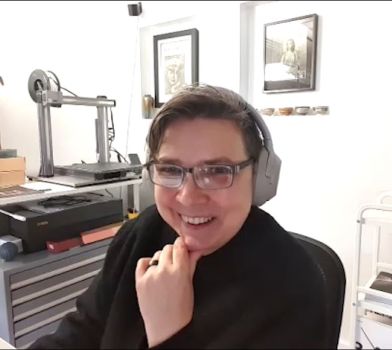 "Interview with Alison Bennett" Dr Alison Bennett is a senior lecturer in photography at RMIT School of Art specialising in expanded photography, webXR, queer and feminist creative practices. Interview Summary Alison Bennett, an artist and academic, spoke about her work in expanded photography, their experiences with autism, and the intersection of disability discourse with queer activism in their life and work. Their current project, vegetal/digital, arose from their experiences during the pandemic and connects audiences with plant sentience through interactive digital art. Alison also discussed the political nature of their work, aiming to shift ontological frameworks and exploring new modes of engagement through art. They reflected on the significant cultural changes regarding neurodiversity in the last few decades, highlighting the growing self-advocacy among autistic artists and their increasing impact in the arts.
-
"Bree Hadley, Janice Rieger, Eddie Paterson (2024) Reinhabiting, Reimagining, and Recreating Ableist Spaces: Embodied Criticality In Art. In Ellis, Katie, Kent, Mike, & Cousins, Kim (Eds.) The Routledge International Handbook of Critical Disability Studies. Routledge, pp. 48-58." "In this chapter we bring critical disability studies into dialogue with disability artworks that resituate critiques of inaccessibility and exclusion as complicated encounters with space, lived experience and embodiment. Drawing on Irit Rogoff’s (2003, 2006) notions of embodied criticality, and the pioneering work of performance studies scholar Petra Kuppers (2003, 2014), we argue for an embodied, embedded and creative form of critical disability studies – enacted through art. We examine two recent performance and installation works in hotels: Welcome Inn (2019) by British artist Christopher Samuel, and Intimate Space (2017) by Australian performance company Restless Dance Theatre."
-
 "Accessible Arts - Annual Report 2012" Accessible Arts - Annual Report 2012 - Introduction, Mission, Overview, Sector Development, Education and Training, Leadership, Connections, Organisational Development, Board and Staff
-
"Australia Council: Australian Arts Snapshots - Disability & the Arts (2002)" Reads, in part "Australians who have a disability are recognised as being creators of innovative, thought provoking, high quality, and often very irreverent artistic product. They are active across all artforms in mainstream and community arts contexts"