Items
Search full-text
An/Other Film Festival
-
 “Restless Dance – Exposed Promotion Card” Restless Dance 'Exposed' Promotion Card - reads, in part "Exposed. directed by Michelle Ryan is a new work exploring vulnerability, uncertainty and risk. Be taken on a journey where the breath is a metaphor for feeling threatened or safe, agitated or calm, and the sonic possibilities of breath are entwined into the mesmerising score."
-
 "Restless Dance - Program 2022" Restless Dance Theatre Program 2022 – information about works Seeing Through Darkness, Ecoute Pour Voir (Listen To See), Exposed, and Home, and promotion of tour ready works Guttered and Intimate Space
-
 “Studio A – Lisa Scott – Two Love Birds 2024 - Promotional Card” Information about Studio A artist Lisa Scott who works in media including painting, screen printing, quilting and installation, and has shown her work at Underbelly Arts Festival, Beams Festival, and a sole exhibition at the Australia Design Centre in 2019.
-
 "Tutti Arts - A Frame Exhibition - Program- 2006" Except as permitted by copyright law, you may not reproduce or communicate any of the content on this website, including files downloadable from this website, without the permission of the copyright owner. The Australian Copyright Act allows certain uses of content from the internet without the copyright owner’s permission. This includes uses by educational institutions and by Commonwealth and State governments, provided fair compensation is paid to the copyright owner. For more information, see www.copyright.com.au and www.copyright.org.au.
-
 "Tutti Arts - A Frame Exhibition - Promotional Card - 2006" Except as permitted by copyright law, you may not reproduce or communicate any of the content on this website, including files downloadable from this website, without the permission of the copyright owner. The Australian Copyright Act allows certain uses of content from the internet without the copyright owner’s permission. This includes uses by educational institutions and by Commonwealth and State governments, provided fair compensation is paid to the copyright owner. For more information, see www.copyright.com.au and www.copyright.org.au.
-
 "Tutti Arts - Beastly Exhibition - Program" Tutti Arts and Stepping Stone 'Beastly Exhibition' Program - reads, in part "BEASTLY is the first fruit of a growing relationship between learning disabled artists and their supporters in Australia, Malaysia and Indonesia. This collaboration seeks to democratise art further through including work driven by learning disabled artists in international festivals"
-
 "Tutti Arts - Blind Date - Program" Tutti Arts ‘Blind Date’ 2008 Program - reads, in part “'An eye-opening cabaret performance by five VIPs' (Vision Impaired Persons)”
-
 “Tutti Arts - Blind Date - Promotional Flyer” Tutti Arts ‘Blind Date’ 2008 Promotional Flyer - reads, in part “'An eye-opening cabaret performance by five VIPs' (Vision Impaired Persons)”
-
 "Tutti Ensemble Newsletter Term 1 2004" Tutti Ensemble Newsletter Term 4 2004 - reads, in part "The Tutti Ensemble is very pleased to announce that Scott Hicks, director of Shine and Snow Falling on Cedars, has agreed to be our Patron."
-
 "Tutti Arts - The Story Behind Shedding Light Exhibition - Program" Tutti Visual Arts Studios (Adelaide) and Perspektif (Yogyakarta) 'Shedding Light' Exhibition 2015 Program - reads, in part "The Story Behind Shedding Light is an exhibition of works that have been produced through a wonderful new collaboration between Adelaide's Tutti artists and a group of children and young people with disabilities in Yogyakarta. This collaboration has resulted in Shedding Light the performances and installations that are part of this year's OzAsia Festival."
-
“Documentary ‘Stepping Out’ follows first group of intellectually disabled people to perform at the Sydney Opera House” In preparation for the International Year of Disabled Persons, a documentary was made called ‘Stepping Out’ directed by Chris Noonan and narrated by Romayne Grace, a resident at the Lorna Hodgkinson Sunshine Home. The documentary follows a group of residents as they prepare for their big debut at the Sydney Opera House. The movie was shown during the International Year of the Disabled's UN closing ceremony. The 1979/1980 Australia Council report had the following statement "A production staged at the Sydney Opera House by residents of the Lorna Hodgkinson Sunshine Home for the intellectually handicapped impressed the Theatre Board as both innovative arts-based therapy and worthwhile theatre in its own right." The 1980/81 report further stated "It was the first time anywhere in the world that a group of mentally handicapped people had performed publicly in the cultural centre of their city."
-
“House Gang debuts on SBS” In 1996, a comedy television series debuted on SBS called ‘House Gang’ featuring three actors with intellectual disabilities.
-
“Australian Caption Centre opened in 1982” The Australian Caption Centre was opened 13 September, 1982. A tour took place at the Australian Caption Centre in Sydney in the 1990s; the video (now available on YouTube) explains how the Centre worked. In 2005, the Centre sold its commercial operations including the captioning services to Red Bee Media and formed Media Access Australia.
-
“Screen Australia commissions the reports ‘Seeing Ourselves’ (2016) and ‘Seeing Ourselves 2’ (2023)” In 2016, Screen Australia commissioned a report "Seeing ourselves: Reflections on diversity in Australian TV drama". The report highlighted the lack of characters on TV with a disability. When characters with a disability were part of the story they were played by actors without a disability and were portrayed as either unemployed or retired. Screen Australia commissioned a follow-up report in 2023 called "Seeing Ourselves 2 - Diversity, equity and inclusion in Australian TV drama". This report shows that, while diversity is a global conversation and there is an increase of disability representation, it remained significantly lower than the actual disabled population.
-
“The documentary series ‘You Can't Ask That’ premieres in 2016” The ABC started a documentary series in 2016 called ‘You Can't Ask That,’ which asks "outrageous, uncomfortable and shocking questions to uncover the truth behind some of the most marginalised and misunderstood Australians." The series has featured episodes focused on people with short stature, Downs syndrome, schizophrenia, and autism, Deaf people, blind people, and wheelchair users.
-
“Arts Access Australia launches its ‘Don’t Play Us, Pay Us’ campaign in response to 'cripping up'” In 2012, Arts Access Australia launched its ‘Don’t Play Us, Pay Us’ campaign in response to 'cripping up,' where non-disabled performers play disabled characters on stage or screen.
-
“Auslan features intermittently on Australian television throughout the 1990s, 2000s, and 2010s” Auslan appeared intermittently on Australian television throughout the 1990s, 2000s, and 2010s. Ana Maria Belo has curated a video compilation of scenes featuring Auslan. Belo calls it “a very brief history lesson on Deaf Actors on Australian Television before Social Media.” As she explains, “this is not a complete list of performances, but a nod to the actors who blazed a mighty trail for those of us who attempt to follow.”
-
“Screen producer, editor, and accessibility consultant Stephanie Dower is interviewed for Screen Queensland On Air, in an episode called How They See Us: Disability in the Screen Industry” Stephanie Dower was interviewed in 2020 for Screen Queensland On Air, in an episode called How They See Us: Disability in the Screen Industry. Dower is an editor, producer, and writer for screen. She has also worked with Get Skilled Access and as an accessibility consultant for Queenslanders with Disability Network.
-
“2023 Screen industry report ‘Disability and Screen Work in Australia’ finds disabled people fulfil a range of roles in the screen industry, despite facing prejudice and exclusion, and should be treated as experts of their access requirements” ‘Disability and Screen Work in Australia: Report for Industry’ (2023) was compiled by researchers Radha O’Meara, Laura Dunstan, Anna Debinski and Catherine Ryan. The study was supported by Melbourne Disability Institute and A2K Media. The authors summarise that disabled people fulfil a range of roles in the screen industry, despite facing prejudice and exclusion, and should be treated as experts of their access requirements. They find that “Disabled people experience a more precarious, lower paid, and less powerful position in the screen industry than their non-disabled counterparts.” O’Meara and her colleagues call for widespread change in the industry to expand access.
-
“Bus Stop Films begins operation in 2009” Bus Stop Films began operations in 2009. In their own words, they “educate, create and advocate.” Their primary focus is teaching filmmaking to disabled adults, but they also offer workshops to others of marginalised identities. Bus Stop “makes films with, for and about people from diverse backgrounds and abilities.” Their website lists support workers in every Australian state and territory.
-
“Production company A2K Media founded in 2007, as a 'a Disabled-led production company, creating connections that entertain, educate, and empower'” A2K Media is “a Disabled-led production company, creating connections that entertain, educate, and empower.” In 2024, A2K launched their Disability Justice Lens course, which teaches screen professionals how to bring disabled people onto their productions and make their workplaces more accessible and empowering.
-
”Bree Hadley, Donna McDonnald (Eds.) (2019) The Routledge Handbook of Disability Arts, Culture, and Media. Routledge International Handbooks. Routledge, London; New York.” “In the last 30 years, a distinctive intersection between disability studies – including disability rights advocacy, disability rights activism, and disability law – and disability arts, culture, and media studies has developed. The two fields have worked in tandem to offer critique of representations of disability in dominant cultural systems, institutions, discourses, and architecture, and develop provocative new representations of what it means to be disabled. Divided into 5 sections:- Disability, Identity, and Representation; Inclusion, Wellbeing, and Whole-of-life Experience; Access, Artistry, and Audiences; Practices, Politics and the Public Sphere; Activism, Adaptation, and Alternative Futures - this handbook brings disability arts, disability culture, and disability media studies – traditionally treated separately in publications in the field to date – together for the first time.”
-
"Bree Hadley, Donna McDonnald (2019) Introduction: disability arts, culture, and media studies - mapping a maturing field. In Hadley, B & McDonald, D (Eds.) The Routledge handbook of disability arts, culture, and media. Routledge, United Kingdom, pp. 1-18.” Reads, in part "In this book, an internationally recognised collection of established and emerging scholars, artists, and activists from across the US, UK, Europe, Asia, and Australasia come together to trace the development of disability arts, culture, and media studies in recent decades, flag current interests, and forecast future concerns."
-
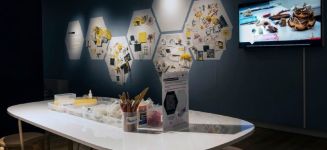 "Janice Rieger, Jasmien Herssens, Megan Strickfaden, Marianella Chamorro-Koc, Bree Hadley (2019) Vis-ability Exhibition." "The United Nations Convention on the Rights of Persons with Disabilities (UNCRPD, 2016) foregrounds the importance of cultural participation to realise human rights for people with disabilities. The creative industries play a critical role in supporting and shaping these social attitudes towards inclusion. Through the theoretical foundation of Design for All (EIDD Stockholm Declaration, 2004) new engagement processes involving a transdisciplinary team from Australia and around the world converged at QUT to co-design more equitable and collaborative forms of knowledge and practice around inclusion. International universities, the EU Commission and the European Institute for Design & Disability collaborated and presented Design for All for the first time in Australia, positioning QUT leadership in this field and as the first non-European member of EIDD-DfA. Co-design methods were employed through, Vis-ability workshops, Making Visible workshops, tactile artefacts and audio description work in the VisAbility Exhibition. Innovative practice was through the Inclusive Film Screening and Wondrous Googles technologies. An innovative model of engagement was created through the DfA Week program and events across sectors. Knowledge was disseminated through academic articles."
-
"Bree Hadley (2014) Disability, Public Space Performance, and Spectatorship: Unconscious Performers. London: Palgrave Macmillan." "Why would disabled people want to re-engage, re-enact and re-envisage the everyday encounters in public spaces and places that cast them as ugly, strange, stare-worthy? In Disability, Public Space Performance and Spectatorship: Unconscious Performers, Bree Hadley examines the performance practices of disabled artists in the US, UK, Europe and Australasia who do exactly this. Operating in a live or performance art paradigm, artists like James Cunningham (Australia), Noemi Lakmaier (UK/Austria), Alison Jones (UK), Aaron Williamson (UK), Katherine Araniello (UK), Bill Shannon (US), Back to Back Theatre (Australia), Rita Marcalo (UK), Liz Crow (UK) and Mat Fraser (UK) all use installation and public space performance practices to re-stage their disabled identities in risky, guerilla-style works that remind passersby of their own complicity in the daily social drama of disability. In doing so, they draw spectators' attention to their own role in constructing Western concepts of disability. This book investigates the way each of us can become unconscious performers in a daily social drama that positions disability people as figures of tragedy, stigma or pity, and the aesthetics, politics and ethics of performance practices that intervene very directly in this drama. It constructs a framework for understanding the way spectators are positioned in these practices, and how they contribute to public sphere debates about disability today."