
Items
Search full-text
Art Therapy
Class
CreativeWork
-
 "The Arts and Disability"
-
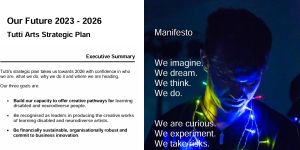 "Tutti Arts - Website - Strategic Plan 2023-2026 captured 2023" Tutti Arts Annual Reports 2023-2026, captured 2023 - reads, in part "Established in 1997, Tutti Arts is South Australia’s only multi-arts organisation where learning disabled, and neurodiverse artists create visual art, theatre, music, screen, dance and experiment with art and technology. Tutti Arts has grown, changed, rearranged, and developed over time. Tutti now works with more than 200 learning disabled and neurodiverse artists, with over 340 artist engagements every week across 3 Creative Hubs (Brighton, Port Adelaide, and the Barossa), and online. Tutti is the home for renowned disability-led collectives The Sisters of Invention, Company AT and Sit Down Shutup and Watch Film & Media Festival and has supported the career paths of many disabled artists. The Tutti Arts Centre was opened in Brighton 2020. In 2022 Tutti opened a new Regional Hub in Nuriootpa."
-
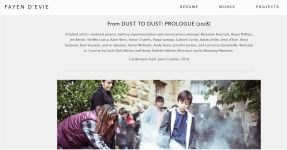 "From Dust to Dust - Prologue" Reads, in Part, "A hybrid artist-curatorial project, inviting experimentation and conversations amongst Benjamin Hancock, Bryan Phillips, Jen Bervin, Shelley Lasica, Katie West, Simon Charles, Pippa Samaya, Gabriel Curtin, Adam Leslie, Zeno d'Evie, Anna Seymour, Ravi Vasavan, and in absentia, Aaron McPeake, Andy Slater, Jennifer Justice, and Lucreccia Quintanilla. Welcome to Country by Uncle Rick Nelson and Aunty Paulette Nelson.Afternoon tea by Murnong Mammas."
-
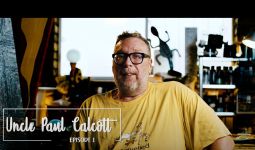 "Hot Pink Goanna Studios - Deadly With Disabilities - Walu Win Series by Uncle Paul Constable Calcott, Episode 1" Walu Win Series by Uncle Paul Constable Calcott, episode 1 - reads, in part "A mini-series exploring the benefits of art and how it is halping as a tool in the healing process. This episode is about Uncle Paul Calcott, a Wiradjuri man who is now living on Gubbi Gubbi country."
-
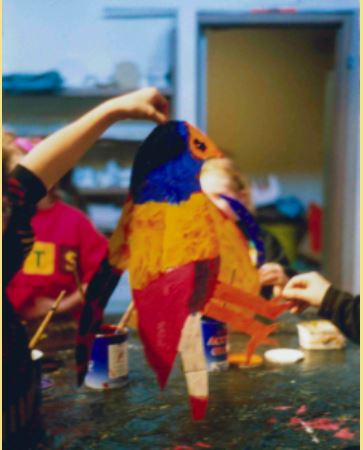 “Arts Access Victoria – Sharing knowledge (early – mid 1990s)” In 1990 AAV hosted the Participate conference. From this the DADAA (Disability in the Arts, Disadvantage in the Arts, Renamed Arts Access Australia in 2003) network was born. AAV created a guidebook on creating art projects in hospitals while programs and exhibitions “Stormy Weather”, “FEELEN BOORDUP” were gaining recognition with location and purchase of artwork.
-
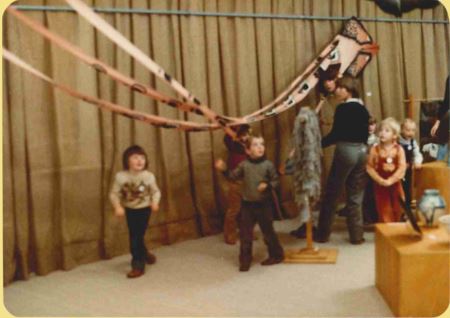 “Arts Access Victoria – How it all began! (1974-1979)” Arts Access Victoria – How it all began! (1974-1979) started in Melbourne in 1974 by Judy Morton with funding from the Australia Council for the Arts with art and theatre workshops in institutions but intermittent funding meant AAV stopped at times but state government funding in 1979 allowed long term planning.
-
 "Australia Council - Making the Journey: Arts and Disability in Australia" Reads, in part "A collection of inspiring examples of how to include people with disabilities in the arts, as participants, creators and organisers"
-
 "Rawcus Website, captured 2014" Rawcus website, captured 2014, reads, in part, "Rawcus is an ensemble of performers with and without disabilities. Collaborating with a core creative team led by Artistic Director Kate Sulan, Rawcus aims to devise new work that expresses the imaginative world of the ensemble. Drawing on dance, theatre and visual art disciplines, the work is crafted with a precision that supports the performers but allows space for their inherent sense of anarchy. A series of moving pictures, Rawcus’ work is sculptural, unexpected, beautiful, funny and tender."
-
 "Igneous - Mirage" Reads, in part "A movement-based performance installation with video art, sound art and a series of mirror-booths. Taking phantom-limb sensation as a “body-mirage”, and inspired by the work of neurologist V. Ramachandran, Mirage plays on perceptual illusion, the construction of hybrid forms, and the real and virtual fusing and separating. It is an interactive labyrinth of perceptual illusion with the performer in a reflective pool amongst multi-dimensional projections. Mirage was created in the context of a fellowship awarded by The Australian Choreographic Centre to James Cunningham and Suzon Fuks."
-
 "Arts and Disability: A research summary" Australia Council - Arts and Disability: A research summary, 2018 - reads, in part "The great art created by artists with disability, and participation of people with disability in the arts, are integral to the artistic and cultural life of Australia. This summary brings together findings from Australia Council research publications and a research overview compiled by the Meeting of Cultural Ministers to build the evidence base about disability and the arts."
-
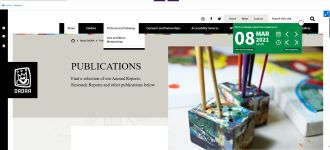 "DADAA Publications Webpage, captured 2021" DADAA Publications Webpage, captured 2021 - Annual Reports 2014-2019, Newsletters 2016-2019, and research reports, including Art Works: Employment in the Arts for People with Disability (2012), and Same Drum CACD Project With Young People from Migrant and Refugee Backgrounds (2018), Oddysea project with Sensorium Theatre (2014), the Lost Generation project (2011)
-
 "Arts Project Australia - Collections, captured 2022" Arts Project Australia - Collections - reads, in part "Arts Project Australia has developed five distinct and strongly related collections, including our: Online Shop Art Collection, Stockroom Art Collection, Sidney Myer Fund Permanent Collection (SMF), Arts Project Australia Permanent Collection and the Arts Project Australia Archival Collection."
-
 "Crossroad Arts - Community Development, captured 2024" Crossroad Arts - Community Development, captured 2024 - reads, in part “Community is our driving force. Everything we do as a company is underpinned by the belief that creating artistic works that challenge assumptions through inclusive collaboration ultimately builds stronger communities.” – information about Performance in the Gallery, Stretchy Pants, Wearable Art, ROAR, Art Party Afternoons, Street View Gallery, Window Gallery, C.R.U.S.H 2024, LOOSE ENDS 2024
-
 "Arts Access Victoria - Creating change, captured 2024" Arts Access Victoria - Creating change, captured 2024 - Information about AAV programs, training, consultation, resources
-
 "Access Arts - Through art, Access Arts transforms lives" Website reads "We create career pathways to paid work, and advocate at every opportunity for our artists to chase their artistic dream," with links to Performing Arts, Visual Arts, Arts Exhibitions, Grants and Awards, and Blog with information about artists and recent events.
-
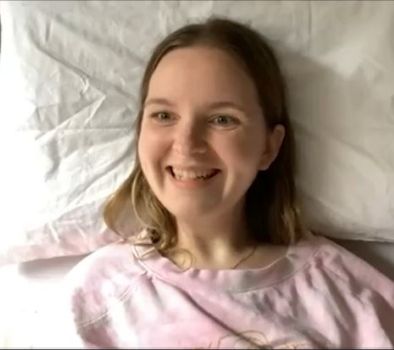 "Interview with Jess Cochran" Jess Cochran (they/them) is an actor, model, writer and disability advocate. Interview Summary: Jess Cochran is a queer, non-binary, neurodivergent, performing artist, advocate, writer, and consumer consultant with a background in both physical and psychosocial disabilities. Their journey into the performing arts began accidentally with a role in the Awards winning Melbourne Fringe Festival production, Qualia, which opened doors to more local and international Awards-winning work in film and stage. Jess identifies proudly with their disabilities and considers their art both a personal expression and a political act aimed at highlighting the issues faced by the disability community. Jess’s work spans across writing, modelling, and various performance arts, and they wish to see an increase of disability arts representation in mainstream media with authentic casting, opportunities and improved accessibility for disabled performers. Jess is also passionate about highlighting intersectionality in disability arts.
-
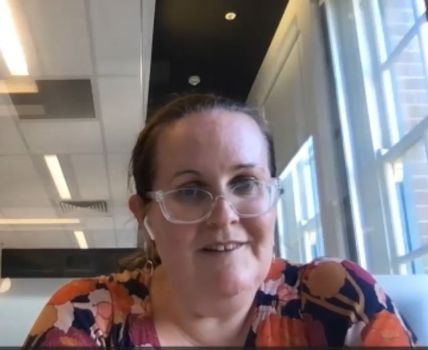 "Interview with Morwenna Collett" Morwenna is a leader, consultant and facilitator in the arts, government, not-for-profit and university sectors and is passionate about helping arts and cultural organisations to include everyone in their work. Interview Summary Morwenna Collett is a consultant in diversity, access and inclusion and during the interview discusses her vast experience in the disability arts sector including time in the Australia Council where she played a key role in creating the first targeted funding program for artists with disabilities. Morwenna notes that while disability arts is gaining some awareness with mainstream audiences, there are still issues regarding how people think about the quality of art created by artists with disabilities. Morwenna highlights the NDIS as a significant milestone for disability arts in Australia, though she believes that there is much more potential for arts organizations to engage with it. Morwenna also emphasizes that the decision for artists to identify with their disability is a personal choice and it is becoming increasingly safe to disclose this identity, demonstrating progress toward inclusion in the arts.
-
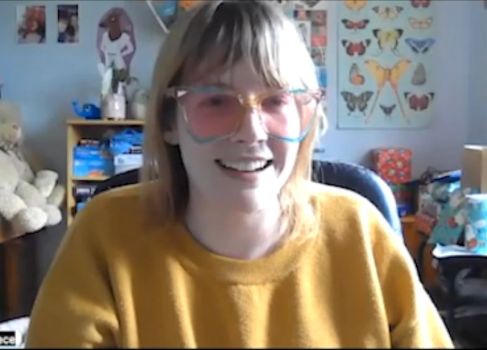 "Interview with Alex Creece" Alex Creece is writer, poet, editor, collage artist, and average kook living on Wadawurrung land. Interview Summary Alex Creece, focused on her experiences and journey as a disabled artist and writer in Australia. Alex discussed the importance of building a community and the challenges of balancing personal identity with maintaining professionalism in art. Alex expressed a desire for increased accessibility and recognition in the industry, highlighting the need for continued support of disabled artists. Throughout the conversation, the complexity of disability arts' visibility, identity politics, and the definition of creative success were explored, with Alex providing insight into her own work as well as broader industry trends and challenges.
-
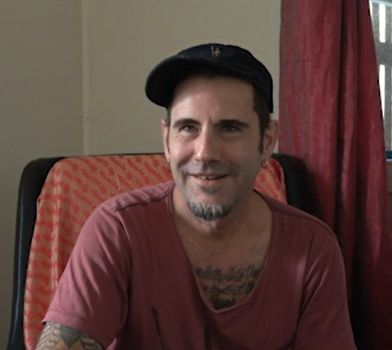 "Interview with Jeremy Hawkes" Jeremy Hawkes is a multidisciplinary artist working in sculpture, drawing, painting and photography as well as being a writer, educator and disability arts leader. Interview Summary Jeremy Hawkes, a visual artist, opened up about his life and identity during his interview. After a debilitating workplace accident, he had to reimagine his sculptural practice due to his acquired disability and ventured into drawing, which helped him cope with multiple operations and diagnoses. Jeremy's art explores themes of identity and the interconnectedness between the macro and the micro, drawing inspiration from neurobiology and medical imagery. Despite his struggles, Jeremy commits to his studio daily, aims for success without fear, and advocates for greater visibility and opportunities for artists with disabilities.
-
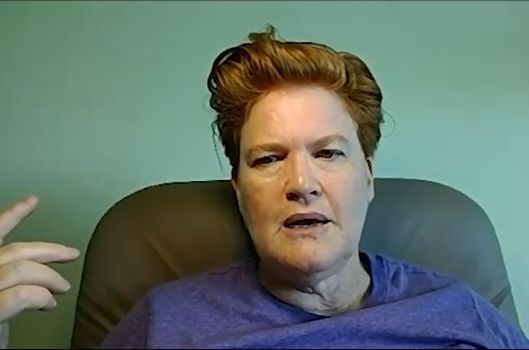 "Interview with Michèle Saint-Yves" Michèle Saint-Yves is a playwright, filmmaker, poet, and director. Interview Summary Michèle Saint-Yves’ background includes a colonial upbringing in Pacific territories, a Scottish boarding school education, and a complex personal journey of confronting her own inherent racism and colonial legacy, particularly through her writing. Her work as an artist with disability is deeply informed by her sense of otherness and focuses on creating inclusive performance-based work that challenges mainstream audiences and systems, aiming for transformative experiences that impact disability justice and community. Michèle actively embraced the social model of disability, which shifted her understanding of herself and her art, and has received recognition for her pioneering work with the prize-winning show "Clock for No Time." However, recognising the social model’s limitations, her current creative endeavours are concerned with 'access intimacy' and evaluating the lasting impact of her performances, in collaboration with other artists and through research grants.
-
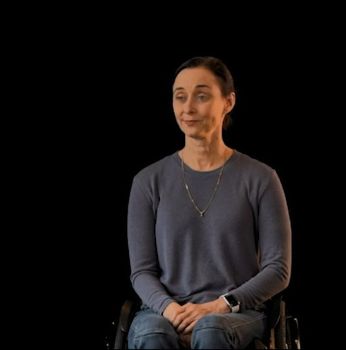 "Interview with Michelle Ryan" Michelle Ryan is the artistic director of Restless Dance Theatre and has extensive experience as a dancer and performer. Interview Summary Michelle Ryan, the artistic director of Restless Dance Theatre, shares her journey from being a successful dancer diagnosed with multiple sclerosis at 30 to becoming an advocate for artists with disabilities. Despite her initial hesitations to perform with her disability, a positive experience dancing with a European company reignited her passion and led her to Restless Dance Theatre, where she aims to change perceptions of who can create art. Michelle emphasizes the importance of providing professional opportunities and proper compensation for disabled artists, challenging the notion that disability work is charity or hobbyist. She advocates for representation that is genuine and not tokenistic, ensuring the inclusion of people with disabilities is meaningful and respectful.
-
 "Interview with Michael Noble" Michael Noble is a professional dancer and performer and has been with Restless Dance Theatre since 2015. Interview Summary Michael Noble is an ex-foster kid turned contemporary dancer at Restless Dance Theatre, who started in arts as an outlet for expression. His dance style has evolved from literal interpretations to more abstract movements, as Restless has supported his growth and mental health needs. Being in a company that accommodates artists with disabilities has led Michael to explore his own neurodivergence, specifically relating to being on the autism spectrum. He believes art, including the political, is less about the message itself and more about being the messenger for another's vision or interpreting and sharing one's own perspectives.
-
 "Interview with Luke Cambpell and Kelly Drummond Cawthon" Luke Campbell is a theatre performer, writer and director and has been with Second Echo since 2015. Interview Summary In the interview Luke Campbell and Kelly Drummond Cawthon from Second Echo Ensemble share insights into their creative processes and the significance of their work. Luke, a core artist for the ensemble, emphasizes the role of deep listening and communication in his art, comparing his work to a meditative exploration of sound and connection, akin to the themes in the movie "Avatar." Kelly, as the ensemble's creative director, highlights the importance of presenting their work across diverse platforms to reach broader audiences and foster inclusive discussions. Throughout the conversation, they express views on the challenges and perceptions surrounding disability arts, advocating for recognition of diverse voices and stories in the arts community.
-
 "Interview with Veronica Pardo" Veronica Pardo is a disability arts ally and has been a disability advocate with previous leadership positions in organisations such as Arts Access Victoria and Multicultural Arts Victoria, Interview Summary Veronica Pardo, former Executive Director of Arts Access Victoria, discussed the evolution and impact of Disability Arts in Australia, detailing the political dimensions of the field and the importance of genuine representation and intersectionality. Pardo highlighted the importance of leadership transitions in arts organizations informed by a spirit of solidarity and mutual support, particularly citing Caroline Bowditch's role as significant in the sector. She emphasized a need for systems-level change within the arts to reflect true diversity, beyond tokenism, advocating for dismantling exclusive structures and creating new ones informed by those marginalized. Finally, Pardo stressed the importance of acknowledging the work of predecessors in Disability Arts to honour their legacy and inform current artistic and cultural practices.
-
 "A Frame Exhibition" Promotion Card for Arts Access SA A Frame “Exhibition Opening, Artwork Auction and Inaugural High Beam Visual Art Awards”