Items
Search full-text
Art of Difference
- Restless Dance Company
- Restless Dance Theatre
- Paul Calcott
- Uncle Paul Constable Calcott
- Paul Constable Calcott
- Sarah Barron
- Patrick Francis
- Michael Whelan
- Kimberly Sellars
- Kimberly Sellers
- Katherine Dionysius
-
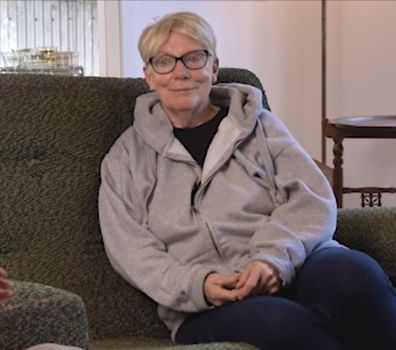 "Interview with Pat Rix" Pat Rix is a Disability Ally and Social Change advocate, and the recently retired Founder and CEO of TUTTI ARTS Incorporated. Interview Summary Pat Rix is an Artistic Director who has made extraordinary and sustained contributions to Australia’s cultural life through her artistic practice and leadership. A significant arts contributor since 1985, Pat made her early mark through plays and music-theatre productions which drew attention to social injustice and championed social inclusion. Her journey in disability arts began in 1997 with the formation of an inclusive choir at Minda Inc. which in 2001 incorporated to become the independent multi arts organisation known as ‘Tutti’ - embodying the inclusive Italian term meaning ‘everyone’. At a time when there were no vocational pathways for learning disabled and neuro divergent people, Tutti became a national trailblazer in creating a work environment where learning disabled and neuro diverse artists could create visual art, theatre, music, film and experimental art in a way that authentically nurtured their professional growth and recognition. Pat stresses the importance of disabled artists having control over their work. She believes that art is inherently political, and that it is finding your voice, being heard and being taken seriously that contributes to any artist's success. Pat looks forward to the future evolution of disability arts and the role of technology in enabling disabled artists to develop local and global partnerships which continue to provide exciting opportunities for artistic development.
 -
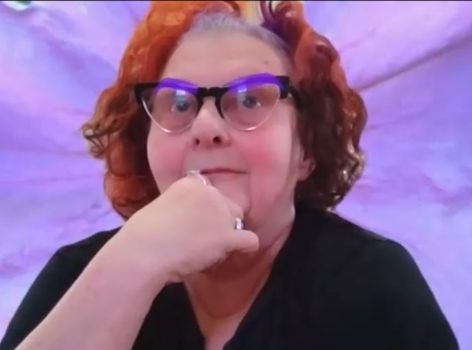 "Interview with Kath Duncan" Kath Duncan is a writer, a director, a provocateur, a visual artist, a comedian, a producer, a journalist, a radio broadcaster and disability advocate. Interview Summary Kath Duncan is an experienced and prominent figure in the disability arts community with a passion for experimental performance arts, having witnessed the beginnings of the disability arts movement in Australia and participated in its evolution. Her art is inherently political, shaped by her unique perspective as a congenital amputee. Kath firmly believes in the inherent creative revolutions and endless inspiration within all impairments. Kath highlights the ongoing struggles within the disability arts sector, including high unemployment rates for disabled individuals, systemic barriers, and the need for disabled leadership in arts organizations. While cherishing the milestones and transformative experiences she's had, Kath calls for significant systemic changes, emphasizing the importance of team playing and collective work to support and grow the disabled artist community.
 -
 "Interview with Joanne Braddy" Joanne Braddy is a disability Advocate with lived experience and creates honest and insightful work about her experiences of anxiety and depression, as a way of breaking down stigmas that stand in the way of healing through painting, drawing, and ceramics to create emotive self-portraits. Interview Summary Joanne is an Australian visual artist with a 15-year career. She began creating art as an outlet for her mental health struggles and her work, which encompasses drawings, paintings, sculptures, and poetry, helps others by bringing awareness to mental health issues. Joanne finds a lack of accessibility with literacy and industry understanding but she remains motivated to exhibit her work and reduce mental health stigma, expressing the need for a supportive gallery to represent her. Despite these challenges, she aspires to have her substantial body of work seen more broadly and possibly go on tour, with the help of a mentor to guide her through the complexity of the art industry.
 -
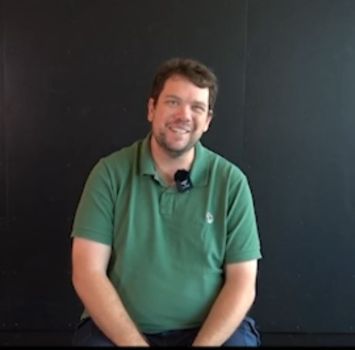 "Interview with Martin Edge" Martin Edge is a visual artist whose colourful paintings depict everyday life Interview Summary Martin Edge, an artist and ambassador for Autism Queensland, has experienced a significant journey in disability arts, culminating in representation by prominent galleries and inclusion in major collections. Since starting his painting career accidentally in a TAFE course, Martin's technique has evolved from using primary colours to creating a unique palette with mixed hues, resulting in more detailed and refined works. People have responded positively to his vibrant and hopeful art, which he enjoys sharing to bring joy to others. Martin looks up to artist Ken Done, admiring Done's vivid use of colour and his contributions to Australian art even into his 80s.
 - Grace McQuilten
- Eddie Paterson
- Catherine Parker
- Anna Parlane
-
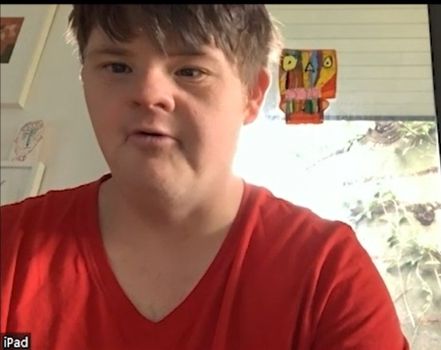 "Interview with Digby Webster" Digby Webster is a visual artist working with the mediums of oil pastels and acrylics and is also a performer, designer and co-founding member of past performance ensemble Ruckus Ensemble. Interview Summary Digby Webster is an artist with a wide range of creative talents, including theater, dance, animation, and mural painting. He has worked on various projects, including an animated short film called "Blockhead and Sparkles," and has had his artwork displayed in places like the Sydney Olympic Park and Vivid Sydney. Digby does not define himself by his disability and takes pride in the various creative endeavors he's involved in, aiming to have his art reach people in meaningful ways outside traditional galleries. In the future, he is interested in exploring fashion, designing artwork for clothing, and he hopes to see more people wearing his art.
 -
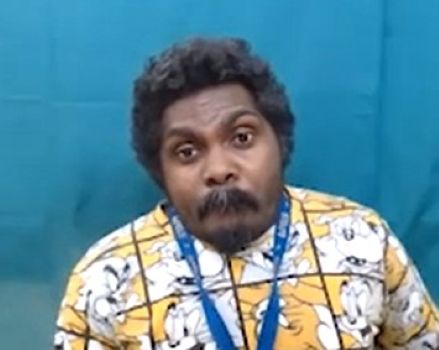 "Interview with Graham Wilfred Junior" Graham Wilfred Junior is a Yolngu man and artist with Incite Arts where he works with different mediums including filmmaking, writing, performing and music. Interview Summary Graham, an emerging artist with spina bifida whose father inspired his passion for art, has pursued various art forms including painting, music, and digital art, now calls Mparntwe/Alice Springs home, and is venturing into theatre and filmmaking. His digital artwork, through the creation of the indigemoji app, helps teach the Arrernte, the language of the First Nations people of Mparntwe/Alice Springs. He now seeks to expand his impact through acting and creating films. Graham's motivation is to both celebrate and inspire people with disability, aiming for recognition as an artist rather than focusing solely on his disability. Graham shares his journey with Incite Arts, highlighting his involvement in music workshops, acting classes and script development, emphasizing the importance of representation and empowerment for individuals with disability. Ultimately, he aims to document his experiences and create impactful performances that leave a legacy to encourage others to pick up where he leaves off, ensuring the continuity of artistic expression within his community.
 -
"SENSORIA: Access & Agency. ArtLink Magazine Issue 42.2, Spring 2022." Reads, in part "This issue platforms a range of contemporary art practices and debates written by and with artists who identify as part of the disabled, d/Deaf, vision impaired or neurodiverse communities. The commissioned essays, profiles and conversations offer diverse perspectives of lived experience and (in)visibility in the art worlds of Australia, Aotearoa/New Zealand and the UK."
-
"Amanda Cachia (2013) ‘Disabling’ the museum: Curator as infrastructural activist. J. 12.3. pp. 257–289" Reads, in part "This article will explore how I attempt to ‘disable’ the museum through my infrastructural curatorial practice, which is the basis for my scholarly research and writing. By infusing my curatorial projects with critical reflection and theoretical development, I hope to begin this process of building a new vocabulary and methodology around curating disability and access."
-
"Bree Hadley (2017) Disability, Sustainability, Austerity: The Bolshy Divas Arts-Based Protests Against Policy Paradoxes. Centre for Sustainable Practice in the Arts Journal 18 Spring. http://www.sustainablepractice.org." "In this short article, I want consider some of the ways theatrical artists, activists and advocates in Australia are tackling the paradoxical relationship between sustainability and austerity discourses, and, as a result, some changes this may be starting to produce in disabled people’s aesthetic prerogatives. For the last 30 years, artists, activists and scholars in Australia and beyond have avoided casting disability in terms of trauma, crisis, catastrophe and disaster. Accounts of the way disability theatre challenges stereotypes , as well as analysis of disability signifiers in screen, stage, and social performance , have expressed concern about deploying disability as a metaphor for disaster, or defining disabled people as monstrous, tragic, stoic, or inspirational, the way the medical model of disability traditionally defines us. Instead, modern disabled artists and the scholars who analyse them have advocated for work that deploys live art, performance art, and performative intervention in public space to challenge stereotypes, oppressive institutional systems, and other factors the social model of disability sees as the cause of disability oppression .In the last few years, though, there has been an increase in work that does associate disability with trauma, tragedy and disaster, in what seems to be a response to austerity, accountability and economic sustainability agendas that call for cuts to disability services spending to make our societies more sustainable going forward."
-
"Bree Hadley (2019) Disability arts in an age of austerity. In Hadley, B & McDonald, D (Eds.) The Routledge handbook of disability arts, culture, and media. Routledge, United Kingdom, pp. 347-361." "Is the current “age of austerity” (Summers 2009) impacting on art, culture, and media practices by and about people with disabilities, and, in particular, on art-based protest practices by people with disabilities? In recent years, much has been written about austerity as neo-liberal economic, political, social, and ideological agenda (Harvey 2005; Barnett 2010; Seymour 2014). Much has been written about the way groups effected by local and global governmental shifts towards austerity are protesting, presenting themselves, and being represented by others (Fritsch 2013; Goodley, Lawthom, & Runswick-Cole 2014; Runswick- Cole & Goodley 2015; della Porta 2015; Kokoli & Winter 2015; Beresford 2016; Dodd 2016; Giugni & Grasso 2016; Berry 2017). The question of whether disabled artists are adapting their practices to address these changing cultural circumstances has received less attention (Hadley 2017) and is thus the topic I focus on in this chapter."