
Items
Search full-text
Create Ability: A Conference on Creativity and Disability
-
"Australia Council for the Arts (2018) Arts and Disability a Priority as Australia Council Commits
Significant New Funding. 24 September 2018." Reads, in part "The Australia Council has committed $750k over three years to support sustainable careers and to recognise the artistic excellence of artists with disability."
- "Bree Hadley (2017) Disability theatre in Australia: a survey and a sector ecology. Research in Drama Education, 22(3), pp. 305-324.”
-
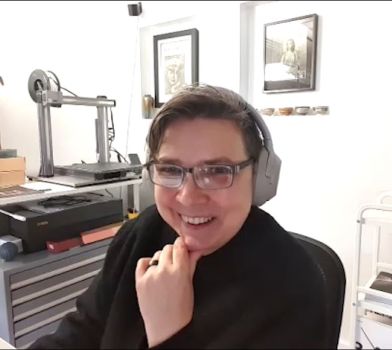 "Interview with Alison Bennett" Dr Alison Bennett is a senior lecturer in photography at RMIT School of Art specialising in expanded photography, webXR, queer and feminist creative practices. Interview Summary Alison Bennett, an artist and academic, spoke about her work in expanded photography, their experiences with autism, and the intersection of disability discourse with queer activism in their life and work. Their current project, vegetal/digital, arose from their experiences during the pandemic and connects audiences with plant sentience through interactive digital art. Alison also discussed the political nature of their work, aiming to shift ontological frameworks and exploring new modes of engagement through art. They reflected on the significant cultural changes regarding neurodiversity in the last few decades, highlighting the growing self-advocacy among autistic artists and their increasing impact in the arts.
-
 "Accessible Arts - ACE Arts Creativity Expression - Pru Jobling - Article: Art And Disabilities -1993 - Iss8, Pg10" Accessible Arts - ACE Arts Creativity Expression - Pru Jobling - Review: Art And Disabilities -1993 - Iss8, Pg10
-
"Access2Arts (SA) established in 2009" Access2Arts (SA) was established in 2009. In their own words, “following on from many years of work by the Community Arts Network SA (CANSA), a project was created within Arts SA called the Disability Arts Transition Team. This led to our establishment as an independent body to represent, advocate and respond to the needs of the arts and disability sectors.” The organisation became incorporated in 2013. They are the body for arts and disability in South Australia.
-
“The 2010s sees numerous new disability performing arts companies established” The 2010s saw the establishment of several new disability performing arts companies and collectives, both professional and community-based, across the country: Beyond the Square (NSW, 2011), ‘stArts with a D’ Performance Ensemble (NT, 2011), Theatre on Wheels (VIC, 2011), Can You See Me? Theatre (NSW, 2012), Company AT (SA, 2012), Sprung!! Integrated Dance Theatre (NSW, 2013), Screech Arts (QLD, 2014), IndelibilityArts (QLD, 2015), AHA Ensemble (QLD, 2015), Murmuration (NSW, 2015), Raspberry Ripple (VIC, 2015), Deafferent Theatre (VIC, 2016).
- Morwenna Collett
-
"Katie Ellis, Tama Leaver, Mike Kent, M, eds. (2023). Gaming Disability: Disability Perspectives on Contemporary Video Games. London and New York: Routledge." This book explores the opportunities and challenges people with disabilities experience in the context of digital games from the perspective of three related areas: representation, access and inclusion, and community. Drawing on key concerns in disability media studies, the book brings together scholars from disability studies and game studies, alongside game developers, educators, and disability rights activists, to reflect upon the increasing visibility of disabled characters in digital games.
-
"Bree Hadley (2015) Participation, politics and provocations: People with disabilities as non-conciliatory audiences. Participations: journal of audience and reception studies, 12(1), pp. 154-174.” "Disability has always had a prominent place on the theatrical stage. Throughout the C19th, C20th and C21st to date, disabled characters have been used to signify corruption, innocence or suffering, and, of course, as salutary examples of how to overcome such suffering. In the past three decades, the work of disability scholars, activists and artists has also provided opportunities for people with disabilities to produce their own plays, performances or installations challenging these stereotypes. Interestingly, though both the body of literature on theatre makers with disabilities and the body of literature on theatre audiences has grown apace over the past decade, there is still surprisingly little written on people with disabilities as theatre audiences. In this article, I draw on observations made during five years of practical, empirical and theoretical research into disability theatre to discuss how people with disabilities work as a distinctive sub-group of spectators, with distinctive spectatorial processes, modalities and preferences, within contemporary theatre audiences. I begin with the factors that make attending theatre difficult for people with disabilities. I note that people with disabilities respond to the challenges they face in attempting to become active audiences of contemporary theatre in three common ways. I then unpack what these spectatorial modalities teach us about people with disabilities as audiences, other marginalised groups as audiences, as well as about audiences, audiencing and the part audiences play in theatre practice more generally."
-
“Accessible Arts (NSW) established” Accessible Arts (NSW) was established in 1986. "the peak arts and disability organisation in New South Wales. We advance the rights of, and opportunities for, people with disability or who are d/Deaf to develop and sustain professional careers in the arts and have equitable access to arts and culture across NSW".
-
“Arts Access Australia launches Meeting Place” Arts Access Australia launched Meeting Place in 2012, an annual forum where artists and industry leaders meet to discuss arts and disability and to network. The forum includes keynotes, panels, and workshops.
-
 "Writers Victoria profile postcards of Write-ability Fellows - Sarah Widdup"
-
“Salubrious Productions (QLD) established in 1999” Salubrious Productions (Queensland) was established in 1999. Salubrious is an agency for disabled artists, representing musicians, writers and composers, theatre performers and actors, visual artists, and technicians in the creative industries. The agency continues operation today. Their website describes them as follows: “Salubrious Productions is a Brisbane-based entertainment and production agency. We represent a core of more than 200 diverse acts and artists and draw further from a large network of professional artists throughout Queensland and Australia.”
-
“The Australian Government announced a National Autism Strategy in 2022” In 2022, a National Autism Strategy was announced by the Australian Government. The Department of Social Services note that the strategy developed out of a “comprehensive co-design process.” Its objectives relate to social inclusion; economic inclusion; diagnosis, services and supports; and health and mental health. The strategy puts forth a “vision for a safe and inclusive society for all Autistic people. One where we support and empower Autistic people to thrive, in all aspects of life.”
-
 "Australia Council - Annual Report 2000-01" Australia Council Annual Report 2000-2001 - discusses letter from chair of council, corporate overview, year in review, financial statements, analysis of funding and grants for projects, initiatives, new work, programs, presentation and promotions including funding for music development, implementing the Commonwealth Disability Strategy by evaluating current and changing needs of people with disabilities in the arts sector and reflecting this in funding and policies, arts marketing and audience development and triennial grants to disability arts organisations in NSW, South Australia and Victoria
-
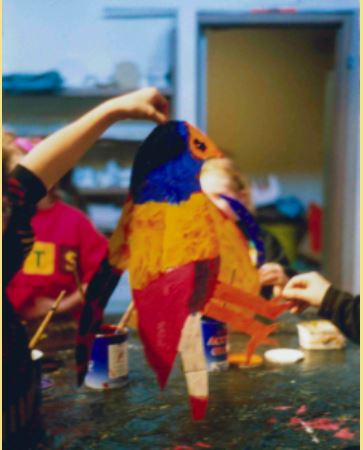 “Arts Access Victoria – Sharing knowledge (early – mid 1990s)” In 1990 AAV hosted the Participate conference. From this the DADAA (Disability in the Arts, Disadvantage in the Arts, Renamed Arts Access Australia in 2003) network was born. AAV created a guidebook on creating art projects in hospitals while programs and exhibitions “Stormy Weather”, “FEELEN BOORDUP” were gaining recognition with location and purchase of artwork.
-
 "Accessible Arts - ACE Arts Creativity Expression - Grants And Competitions- List - 2001 Mar. Pg18-20" Accessible Arts - ACE Arts Creativity Expression - Grants And Competitions- List - 2001 Mar. Pg18-20
-
 "Accessible Arts - ACE Arts Creativity Expression -Grants And Competitions- List - Iss19, Pg13" Accessible Arts - ACE Arts Creativity Expression - Grants And Competitions- List - Iss19, Pg13
-
 "Accessible Arts - ACE Arts Creativity Expression - Grants And Competitions- List - Iss21, Pg24" Accessible Arts - ACE Arts Creativity Expression - Grants And Competitions- List - Iss21, Pg24
-
 "Accessible Arts - ACE Arts Creativity Expression - Grants And Funding- List - 2002 Jul, Pg24-29" Accessible Arts - ACE Arts Creativity Expression - Grants And Funding - List - 2002 Jul, Pg24-29
-
 "Accessible Arts - ACE Arts Creativity Expression -Grants And Training -List - 2002 Nov, Pg54-67" Accessible Arts - ACE Arts Creativity Expression - Grants And Funding - List - 2002 Nov, Pg54-67
-
“Disabled actor and writer Heather Rose stars in ‘Dance Me to My Song’ (1998)” The 1998 film ‘Dance Me to My Song’ stars Heather Rose, who also co-wrote the film. It is about a woman with cerebral palsy, whose carer resents the job. The dramatic tension rises when the two women both take an interest in the same man. The Rolf de Heer-directed film is significant for casting a disabled actor at a time when authentic disability representation was rare, not to mention Rose’s contribution to the screenplay. ‘Dance Me to My Song’ was selected to feature in the Cannes International Film Festival in May 1998. The documentary ‘Heather Rose Goes to Cannes’ (1998, Christopher Corin) follows Rose’s journey from Adelaide to Cannes.
-
 "Access Arts Annual Report 1992" Access Arts Annual Report 1992 - Director’s Report, Project Officer’s Report, Program Manager’s Report, exhibitions, workshops, regional arts, touring, (DADAA) at ARTAbility Conference at the Queensland Cultural Centre 1992
-
“Handicapped Persons Assistance Act 1974” Compared to earlier decades, the mid-1970s saw an increase in political activity pertaining to individuals with disabilities. The Handicapped Persons Assistance Act (HPAA) of 1974 is one such example, which replaced several policies and funded non-government organisations that provided care and housing. In 1983, the Hawke Labour Government instigated an evaluation of the initiatives created under the HPAA. The HPAA was replaced in 1986 by the Commonwealth Disability Services Act of 1986.
-
“Captioned films launched in Australia” In 2001, captioned films were launched in Australia with a speech by then Disability Discrimination Commissioner Dr Sev Ozdowski OAM. The process with a series of submissions from both the film industry and the Deaf and hard of hearing community. These submissions led to the establishment of a Forum comprised of representatives from the film distribution and exhibition sector, the Deaf and hearing impaired communities and the Australian Caption Centre. After a trial run in Sydney and Melbourne, three major cinema exhibiters (Greater Union, Hoyts, and Village) agreed to show open captioned films at selected venues throughout the country.