Items
Search full-text
Create Ability: A Conference on Creativity and Disability
-
“80 wheelchair users and allies halt Melbourne trams, demanding better access to public transportation” In a 2000 demonstration organised by the Catch a Tram group, 80 wheelchair users and their allies halted city trams in Melbourne during lunch hours, demanding better access to public transportation.
-
“Arts Access Australia launches its ‘Don’t Play Us, Pay Us’ campaign in response to 'cripping up'” In 2012, Arts Access Australia launched its ‘Don’t Play Us, Pay Us’ campaign in response to 'cripping up,' where non-disabled performers play disabled characters on stage or screen.
-
“Production company A2K Media founded in 2007, as a 'a Disabled-led production company, creating connections that entertain, educate, and empower'” A2K Media is “a Disabled-led production company, creating connections that entertain, educate, and empower.” In 2024, A2K launched their Disability Justice Lens course, which teaches screen professionals how to bring disabled people onto their productions and make their workplaces more accessible and empowering.
-
"Juliette Peers (2022) The ArtLink Archive Project: Inside the 'Outsider' Issue, 42(2)" "In 1992–93 ArtLink published Naïve & Outsider Art centring on themes linked by their shared invisibility in mainstream discussions. While the title obviously references art historian Roger Cardinal’s 1972 book Outsider Art, (after Jean Dubuffet’s ‘Art Brut’ or ‘raw art’), this outlying status was described by ArtLink’s founding editor Stephanie Britton in 2022 as ‘…the context changes, but at the time the concept [of various practices lying beyond the mainstream] functioned as a catch up on things that had been under the radar for decades already... [we were] collating a wide range of ideas'[1], a group of practices that existed but were hardly recognised in published texts. Looking back across ArtLink’s history, Naïve & Outsider Art offers much to think through about the magazine’s own platform, intentions and the trajectories of those practices foregrounded thirty years ago under what are now troubling rubrics."
-
"Sally Northfield (2014) Canvassing the Emotions: Women, Creativity and Mental Health in Context" PhD Thesis Victoria University, Melbourne, https://vuir.vu.edu.au/29985/, Australia, https://vuir.vu.edu.au/29985/1/NORTHFIELD%20Sally-thesis_nosignature.pdf " Reads, in part, "A multimedia movement-theatre show, incorporating dance, video- and slide- projections, a life-sized puppet and an original soundtrack. A diary come to life, portraying the true story of an Australian dancer who – after paralysing one of his arms in a motorcycle accident – journeys through the worlds of medicine, rehabilitation and disability, in recovery of self-expression. He finds new angles on perceiving the body, and new ways to move. "Body image" and concepts of "normality" are questioned."
- Rawcus
- Lachlan MacDowall
-
 "Accessible Arts - Activated Arts Podcasts" Accessible Arts - Activated Arts Podcasts - reads, in part "Get turned on to a different kind of creativity! The Activated Arts podcasts, produced in association with Accessible Arts and 2RPH Radio, explore and showcase the unconventional talent and distinctive work of professional arts practitioners with disability."
-
"Cultural Ministers Council (2009) National Arts & Disability Strategy." Reads, in part "On 9 October 2009, the Cultural Ministers Council agreed to the National Arts and Disability Strategy, which sets out a vision for improving access and participation in the artistic and cultural activities for people with disabilities. The Strategy provides a framework within which jurisdictions can assess and improve existing activities. It also identifies new priority projects that could be progressed as national initiatives or by individual jurisdictions."
-
"Mary Hutchison (2005) Making the Journey: Arts & Disability in Australia. Sydney: Arts Access Australia." Reads, in part "A collection of inspiring examples of how to include people with disabilities in the arts, as participants, creators and organisers"
-
"Katie Ellis (2019) Disability and Digital Television Cultures Representation, Access, and Reception. London & New York: Routledge." Reads, in part "Disability and Digital Television Cultures offers an important addition to scholarly studies at the intersection of disability and media, examining disability in the context of digital television access, representation and reception."
-
"Ted Evans, Michelle Bellon, Brian Matthews (2017). Leisure as a human right: An exploration of people with disabilities’ perceptions of leisure, arts and recreation participation through Australian community access services. Annals of Leisure Research, 20(3), 331–348." Reads, in part "Community Access Services (CAS) are defined as ‘Services designed to provide opportunities for people with disability to gain and use their abilities to enjoy their full potential for social independence’ [Australian Institute of Health and Welfare. 2015. Disability Services National Minimum Data Set Collection: Data Transmission and Technical Guide. Canberra: AIHW]. A notable absence of international research regarding leisure, arts and recreation through CAS exists. This study explores perceptions of people with disabilities on their participation in leisure, arts and recreation through Australian CAS."
-
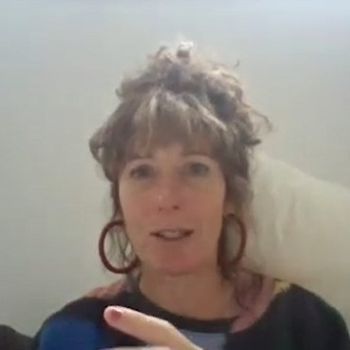 "Interview with Jodee Mundy OAM" Jodee Mundy OAM is a Disabled creative director, performer, writer, activist, creative producer, executive producer, commissioner, interpreter, film, festival maker and cultural leader. Interview Summary Jodee Mundy OAM, is an artist and festival director who identifies as Coda (child of Deaf adults) and lives with chronic illness reflects on the historical and ongoing challenges faced by Deaf and Disabled artists in Australia. Her work is deeply political, aiming to tell untold stories and bring visibility to marginalized communities. Despite significant achievements, Jodee stresses the need for structural support and inclusivity within the industry, especially given the limitations of hybrid access models post-pandemic. Jodee's personal journey, including her recent incurable cancer diagnosis, shapes her advocacy for a culture of care and well-being in the arts. Jodee leads Alter State, Australia’s Disability- led arts festival presented by Arts Centre Melbourne and Arts Access Victoria.
-
“Alan Marshall writes ‘I Can Jump Puddles’ in 1955” Alan Marshall wrote 'I Can Jump Puddles' in 1955., the first in a series of works about growing up with a disability. The subsquent books were 'This Is the Grass' (1962), 'In Mine Own Heart' (1963), and 'Hammers Over the Anvil' (1975). Marshall contracted polio at age six and became physically disabled.
-
"Kevin Byrne AM leads protest outside Parliament House" The activist Kevin Byrne AM led a protest outside Parliament House. This coupled with the release of the Richmond Report led to the Hawke Government’s Handicapped Programs Review, which in turn led ‘New Directions: Report of the Handicapped Programs Review’.
-
“Advocates fight for accessible public transport” In 1994, Maurice Corcoran (a wheelchair user) lodged a complaint about the South Australian government ordering 50 new buses that were not accessible. The Australian Human Rights Commission successfully negotiated for all new buses to be fitted with ramps. Then, in 1999, a protest about the lack of public transport options for people with disability saw Citizens for Accessible Public Transport block traffic in Sydney’s city centre.
-
“The arts sector is forced to adapt in the face of COVID-19 lockdowns” Government-enforced lockdowns in response to the COVID-19 pandemic saw arts events cancelled and disability arts organisations temporarily close physical premises as social distancing rules came into play. While Coronavirus 19 restricted social contact, there were some benefits that arose such as increased digital access for social connection, online ordering accessible via screen readers and home delivery, virtual tours of art galleries, online choirs, and telehealth appointments.
- Morwena Collett
-
“Deaf activist and artist Asphyxia creates a music course and accessible music app for D/deaf people” Asphyxia, a profoundly Deaf Australian activist, artist, author and composer created a music course (2020) for people who are D/deaf and Hard of Hearing to write their own music. In 2023, Asphyxia also created an app called Amplio to make music more accessible to D/deaf people.
-
 "High Beam Festival Program 2004" High Beam Festival Program 2004 reads "Welcome to evolve High Beam 2004 – A stimulating and inspiring seven-day cultural experience for people with a disability, families, friends and support workers, artists with a disability, professionals working in the disability sector, art workers and others."
-
 "The Arts and Disability"
- "Bree Hadley (2021) What's in a name? The politics of labeling in disability performance. In Rai, Shirin, Gluhovic, Milija, Jestrovic, Silvija, & Saward, Michael (Eds.) The Oxford Handbook of Politics and Performance. Oxford University Press, New York, NY, pp. 531-543.”
-
"Australia Government (2019) My Art Goals: NDIS and the Arts. Canberra: Department of Communication and Arts." Reads, in part "My art goals shows some of the ways National Disability Insurance Scheme (NDIS) participants who have creative or cultural jobs, or who want to participate recreationally in the arts, can reach their goals. My art goals provides information about how the NDIS might support participants with arts goals, or about what supports or services might be available outside the NDIS."
-
"Una Rey (2022) Art and sensoria: Whose disability? ArtLink, 42(2), pp.8–11." "SENSORIA: Access & Agency is ArtLink’s effort to affect this swell by providing a platform for divergent perspectives and nuanced articulations of being an artist. Whatever the prevailing conditions. It also invites a discussion within contemporary art discourse that is not driven by fear (of getting it wrong, of ‘the other’, of adding injury to trauma). Art is our place of intersectionality: if you’re reading ArtLink, you’re already on the margins, and quite possibly on the spectrum."
-
 "Interview with Mike Moshos" Mike Moshos is a creative director, writer, actor and disability advocate. Interview Summary Mike Moshos is an arts worker and creator living with achondroplasia who provides support to young adult artists with disabilities and engages in community theatre and interactive performances for children with special needs. His personal experiences and growing political awareness have led him to advocate for the rights of disabled individuals and strive for equity in the arts. Mike has a deep passion for storytelling and is currently writing a science fiction novel while enjoying his role as Bing in an interactive children's show. He believes that all art is inherently political and that every piece of work, whether overtly or subtly, expresses a stance on societal issues.