Items
Search full-text
Create Ability: A Conference on Creativity and Disability
-
 "Focus on Ability, Short Film Festival winners list 2019" Focus on Ability Short Film Festival, captured 2025 - webpage listing 2019 award winners - Includes Open Entrant Winners (Winner - Victoria Thompson – Cinderella; Dane Jaeger - Game Day; Bridie McKim – Cinderella; Jack & Louise W - Jack Outside the Box; Blaise Borrer - The Adventures of Aspie Boy; Stanley Joseph – Limbitless; Jake Taylor - Pub Talk) School Entrant Winners (BLENNZ - Have you seen my lunch?; The Woden School - Labels Don't Define Us; Kogarah High School - Peter Pan - The Kogarah Re-enactment; Bailey Richards - Teen Builds A Real Lightsaber)
-
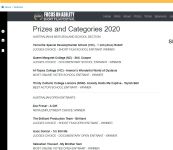 "Focus on Ability, Short Film Festival winners list 2020" Focus on Ability Short Film Festival, captured 2025 - webpage listing 2020 award winners - includes IAUSTRALIAN & NEW ZEALAND SCHOOL SECTION (Yarraville Special Developmental School (VIC) - ' I Am (Also) Robot'; Al-Taqwa College (VIC) - Ammar's Wonderful World of Dyslexia; Anxiety Holds Me Captive - Taylah Bell), AUSTRALIAN OPEN ENTRANTS (Zoe Fraser - A Gift; The Brilliant Production Team – Brilliant; Isaac Doman - I'm Still Me; Sebastian Youssef - My Brother Sam; Vanessa Star - One Size Fits All; Zoe Fraser - A Gift; Jared Hargreaves - The Girl; Sally Newman - Heart Strings)
-
 "Focus on Ability, Short Film Festival winners list 2021" Focus on Ability Short Film Festival, captured 2025 - webpage listing 2021 award winners - Includes AUSTRALIAN & NEW ZEALAND SCHOOL SECTION (St Matthews Catholic School (NSW) - The Monsters of the Mind; Al-Taqwa College (VIC) - Optism: A Tale of Unbreakable Friendship) AUSTRALIAN OPEN ENTRANTS (The Sunshine Troupe (QLD) – Luminosity; Alex Sideratos (NSW) - More to Me; Clay Antonio (VIC) - Life Without Mum; Tina A.Wake (NSW) - I'm Super; Ian Heydon in What's in a Name; Michael Wilkop - The Robot; Nathan Mewett & Chris Taylor - Yulubidyu - Until the End)
-
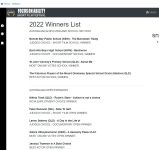 "Focus on Ability, Short Film Festival winners list 2022" Focus on Ability Short Film Festival, captured 2025 - webpage listing 2022 award winners - includes AUSTRALIAN & NEW ZEALAND SCHOOL SECTION (Bonnet Bay Public School (NSW) - The Marrakesh Treaty; East Hills Boys High School (NSW) – Resilience; St John Vianney's Primary School (QLD) - About Me; The Fabulous Players of the Mount Ommaney Special School Drama Elective (QLD)), AUSTRALIAN OPEN ENTRANTS (Nikhia Trask (QLD) - Rylan's Story - Autism is not a choice; Peter Renzullo (WA) - Note To Self; Lenny Seberry (QLD) - A Day in the Life of; Satara Uthayakumaran (NSW) - A Heavenly Piece of Art; Jessica Trueman in A Bold Choice; Ashleigh Smart - Not Your Average Joe; The Rogues Den Studios – Filmception; Emma Barry - Wait, What?)
-
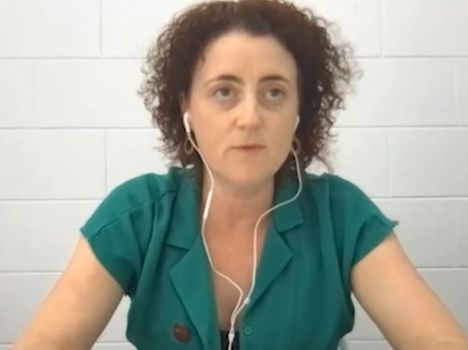 "Interview with Alison Richardson" Alison Richardson is an ally and advocate for people with disability with experience as an inclusive arts organisation artistic director and access and inclusion officer. Interview Summary Alison Richardson, artistic director and CEO of Crossroad Arts at the time of the interview, has had a 25-year journey through the fields of drama, theatre, and inclusive arts, starting in Sydney and leading to her role in Mackay, Queensland. Her work began by engaging with diverse young people and evolved into a focus on disability arts, recognising a gap in services and opportunities for people with disabilities in artistic expression. Throughout her career, she has witnessed and contributed to the gradual increase in visibility and opportunities for artists with disabilities, acknowledging the fluctuating support and funding in the sector. Despite challenges, Alison has observed progress in how disability arts are valued and the emergence of conversations around identity and representation within this community.
-
"Arts Access Victoria established in 1973 and provides valuable resources and conferences throughout the decades" In 1973, Judy Morton successfully applied for funding to start a 6-month pilot program and Arts Access Victoria was established the following year. However, due to lack of government funding and despite public appeal, programs were suspended in 1977. Fortunately, operation resumed in 1979 and AAV was formally constituted with a small School Commission fund as Arts Access Society Inc. Arts Access Victoria had both organisational and financial growth in the mid to late 1980s. This led to a diversification of arts projects and the beginning of long-term artistic programs which remain as the core programs of AAV. Arts workshops also began in regional Victoria during this time. In 1988, Arts Access was approached to run a national conference focusing on the arts and disability. Two years later, they convened P-art-ICIPATE '90 and subsequently published ‘P-art-ICIPATE '90: a conference report’. They also published ‘Inner Words Outer Spaces’, edited by Bev Roberts (1995), ‘Arts Alive: An Information Leaflet about the Ways the Arts Can Work for Older People’ (1995), ‘Accessible Theatresports’ (1996), and Bev Roberts's ‘Work Guide: How to Establish an Artist in Community Project’ (1996). In 1998, Arts Access (Victoria) assumed responsibility for its own financial management and administration. In 1999, Arts Access Victoria presented Verve!, a national symposium on arts and disability.
-
“Creative Australia releases reports on arts participation, including d/Deaf, Disabled and Neurodivergent artists and audiences” A series of reports about arts and disability in Australia published in the mid-to-late-2010s are summarised on the Creative Australia website. Sources for the summary include Connecting Australians: Results of the National Arts Participation Survey (June 2017), Making Art Work: An Economic Study of Professional Artists in Australia (2017), Creating Pathways: Insights on support for artists with disability (2018), and Arts and Disability in Australia: Meeting of Cultural Ministers (2018). The overview of this research series demonstrates that disabled Australians’ participation in the arts had increased as access had grown, though equity for disabled artists, especially those with intersecting marginalised identities, continued to face barriers. It reports that work by disabled artists is innovative and transformative.
-
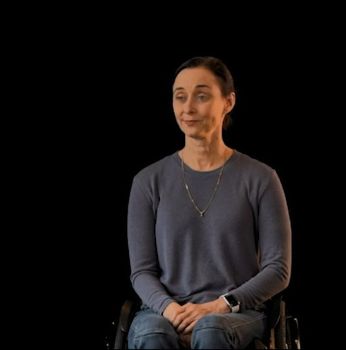 "Interview with Michelle Ryan" Michelle Ryan is the artistic director of Restless Dance Theatre and has extensive experience as a dancer and performer. Interview Summary Michelle Ryan, the artistic director of Restless Dance Theatre, shares her journey from being a successful dancer diagnosed with multiple sclerosis at 30 to becoming an advocate for artists with disabilities. Despite her initial hesitations to perform with her disability, a positive experience dancing with a European company reignited her passion and led her to Restless Dance Theatre, where she aims to change perceptions of who can create art. Michelle emphasizes the importance of providing professional opportunities and proper compensation for disabled artists, challenging the notion that disability work is charity or hobbyist. She advocates for representation that is genuine and not tokenistic, ensuring the inclusion of people with disabilities is meaningful and respectful.
-
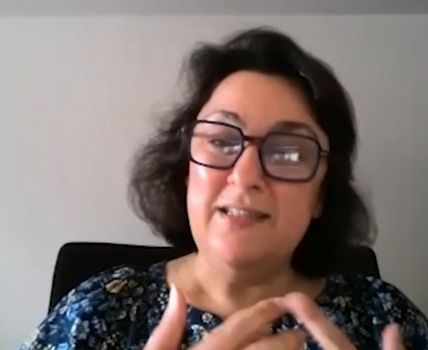 "Interview with Veronica Pardo" Veronica Pardo is a disability arts ally and has been a disability advocate with previous leadership positions in organisations such as Arts Access Victoria and Multicultural Arts Victoria, Interview Summary Veronica Pardo, former Executive Director of Arts Access Victoria, discussed the evolution and impact of Disability Arts in Australia, detailing the political dimensions of the field and the importance of genuine representation and intersectionality. Pardo highlighted the importance of leadership transitions in arts organizations informed by a spirit of solidarity and mutual support, particularly citing Caroline Bowditch's role as significant in the sector. She emphasized a need for systems-level change within the arts to reflect true diversity, beyond tokenism, advocating for dismantling exclusive structures and creating new ones informed by those marginalized. Finally, Pardo stressed the importance of acknowledging the work of predecessors in Disability Arts to honour their legacy and inform current artistic and cultural practices.
- DADAA Network
- Helen Connors
-
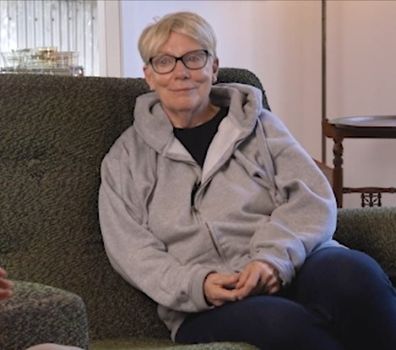 "Interview with Pat Rix" Pat Rix is a Disability Ally and Social Change advocate, and the recently retired Founder and CEO of TUTTI ARTS Incorporated. Interview Summary Pat Rix is an Artistic Director who has made extraordinary and sustained contributions to Australia’s cultural life through her artistic practice and leadership. A significant arts contributor since 1985, Pat made her early mark through plays and music-theatre productions which drew attention to social injustice and championed social inclusion. Her journey in disability arts began in 1997 with the formation of an inclusive choir at Minda Inc. which in 2001 incorporated to become the independent multi arts organisation known as ‘Tutti’ - embodying the inclusive Italian term meaning ‘everyone’. At a time when there were no vocational pathways for learning disabled and neuro divergent people, Tutti became a national trailblazer in creating a work environment where learning disabled and neuro diverse artists could create visual art, theatre, music, film and experimental art in a way that authentically nurtured their professional growth and recognition. Pat stresses the importance of disabled artists having control over their work. She believes that art is inherently political, and that it is finding your voice, being heard and being taken seriously that contributes to any artist's success. Pat looks forward to the future evolution of disability arts and the role of technology in enabling disabled artists to develop local and global partnerships which continue to provide exciting opportunities for artistic development.
-
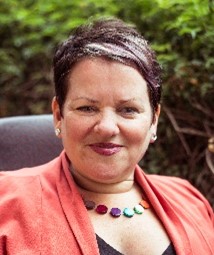 "Interview with Caroline Bowditch" Caroline Bowditch is an Australian artistic director, leader, performer, presenter, instructor, disability advocate and was the CEO of Arts Access Victoria. Interview Summary Caroline Bowditch, the CEO and Artistic Director of Arts Access Victoria, shared her journey as a performance artist and her experiences working within the Disability Arts community, highlighting her creative process and the challenges faced by disabled artists in Australia. Despite significant support and successful projects in the UK, she expressed concern over the limited progression and exposure of Disability Arts in Australia, noting a lack of ambition and opportunity deterring artists from aiming for larger, mainstream stages. Bowditch emphasized the importance of integrating access as a core component of artistic work and changing the aesthetic by including diverse bodies and perspectives. She also discussed tackling intersectionality within Disability Arts, reflecting on her own experiences as a visibly disabled and queer woman, and contemplating the future of Disability Arts, the desire for cultural equity, and the impact of potential shifts in societal barriers.
-
“Activism leads to a Disability Royal Commission” Decades of activism led to a 2019 Senate motion calling for a Disability Royal Commission. The first public hearing of the Royal Commission took place on 16th September, 2019 at Brisbane’s Convention and Exhibition Centre. The Commission resulted in a report in 12 volumes. Several volumes include Volume 3: Nature and extent of violence, abuse, neglect and exploitation, Volume 6: Enabling autonomy and access, Volume 7: Inclusive education, employment and housing, Volume 9: First Nations people with disability, and Volume 10: Disability services. Overall, the Commission presented “222 recommendations on how to improve laws, policies, structures and practices to ensure a more inclusive and just society that supports the independence of people with disability and their right to live free from violence, abuse, neglect and exploitation.” In 2023, the final report of the Royal Commission into Violence, Abuse, Neglect and Exploitation of People with Disability was published with 220 recommendations for a more inclusive nation to reduce exploitation, violence, abuse and neglect of people with disabilities.
-
 "Interview with Sofya Gollan" Sofya Gollan is a distinguished artist, screenwriter, filmmaker and cultural leader in advocating for the Deaf and disabled communities. Interview Summary Sofya Gollan is a versatile and experienced artist with a background in acting, writing, directing, and producing, known for her work in theatre, film, and television, and for navigating the industry as a deaf individual. Her journey into the arts began with her involvement in the Australian Theatre of the Deaf and further developed as she trained at prestigious institutions like NIDA and AFTRS, where she expanded her skills in filmmaking. Despite facing challenges and ableism within the industry, Gollan has made significant contributions to disability representation on screen, and highlights the need for ongoing support and funding for disabled artists to promote equity and access to opportunities. Returning as creative practitioner to the industry after an executive role, Gollan continues to advocate for inclusivity and representation, while aiming to create and share content that authentically reflects the deaf experience.
-
“In 2014, the Australia Council introduces its first grant specifically for artists with disabilities” In 2014, the Australia Council introduces its first grant specifically for artists with disabilities. Then Australia Council CEO Tony Grybowski announced “the Artists with Disability Pilot Program; the Council’s Disability Action Plan for 2014-2016; and additional funding for Arts Access Australia to increase career development and employment opportunities for artists with disability.” The pilot program granted $300,000 to disabled artists to develop and present their work. Following this, the program was extended for another three years. The “million dollar investment” would “provide development grants of up to $25,000 and project grants of up to $50,000 for individuals and groups.” That same year, the Australia Council received its first ever grant application in Australian Sign Language (Auslan). However, in 2019, Australia Council ended its dedicated funding program for disabled artists and replaced it with the National Arts and Disability Awards.
- Helen Connor
-
"Queensland Government releases Arts & Disability Plan 2024-2026" Reads, in part "The Queensland Government acknowledges the rights of people with disability to participate equally in the state’s cultural life and to have the opportunity to develop and use their creative, artistic and intellectual potential, as recognised in the United Nations Convention on the Rights of Persons with Disability."
- Kath Duncan
- Maria Guppy
- Michael Champion
- Vivienne Binns
-
“The National Disability Strategy 2010–2020 is launched and, later, Australia’s Disability Strategy 2021-2031” The Australian Government launched the National Disability Strategy 2010–2020 in 2011. All levels of government were involved in a united national approach to improving life for people with disabilities, their families and carers. The National Disability Insurance Scheme (NDIS) was an outcome of this process. In 2021, the Disability Strategy Advisory Council was established and the most recent iteration of the strategy, Australia’s Disability Strategy 2021-2031, outlines a vision for a more inclusive and accessible Australian society where all people with disability can fulfil their potential as equal members of the community.
-
“‘Arts and Disability: A Research Report’ published in 1995” In 1995, ‘Arts and Disability: A Research Report’ was published. Des Walsh and Juliet London were commissioned by the Australia Council to prepare the report. However, they found little information that was relevant to the theme of the report. In addition to a review of existing literature, they met with people involved in arts organisations, disability organisations and organisations dedicated to both, as well as funding bodies. Walsh and London outlined the different ways that disabled people interact with the arts: as artists, consumers, and through art therapy. They also recognised the “negative or unduly limiting notions attached to arts in relation to disability” (12). Overall, they found “no conclusive evidence […of a] widely shared, articulated concept of a ‘disability arts’ movement in Australia” at that time. The report was intended to inform meaningful policy going forward. They made recommendations related to buildings and physical barriers, leadership, education and training and action plans.
-
"DADAA Inc and Arts Access Australia (2012) public Art Works: Employment in the Arts for People with Disability. http://www.dadaa.org.au/wp-content/uploads/2017/01/Art-Works-Full-Report-Web.pdf" Reads, in part "This document provides a short overview of the full Art Works report, which captures the results from national research into employment levels, barriers and strategies around employment in the arts for people with disability. The report was produced in response to one of the key focus areas of the National Arts and Disability Strategy, released in 2009."