Items
Search full-text
Create Ability: A Conference on Creativity and Disability
-
 “Arts Access Victoria – Arts Access Society Annual Report 1991”
 -
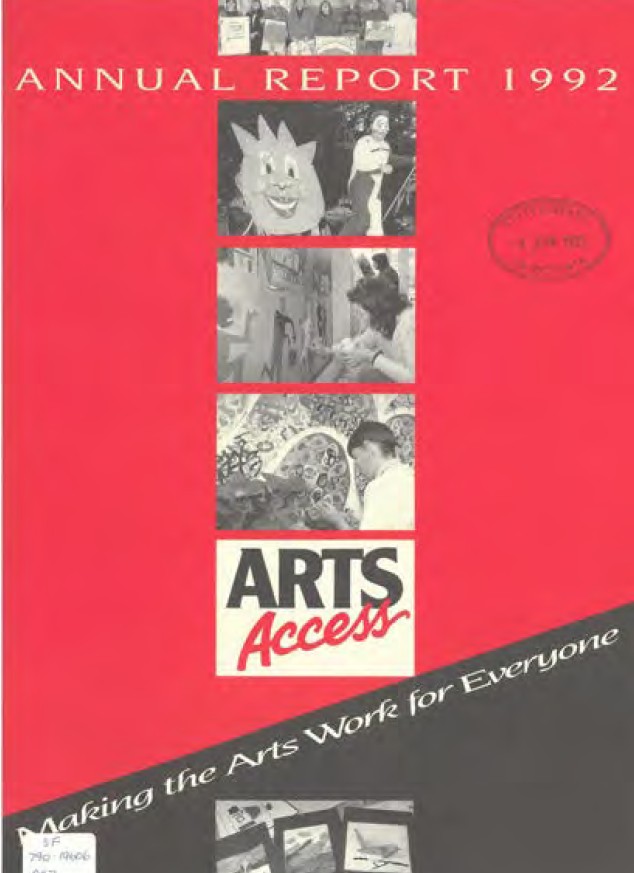 “Arts Access Victoria – Arts Access Society Annual Report 1992”
 -
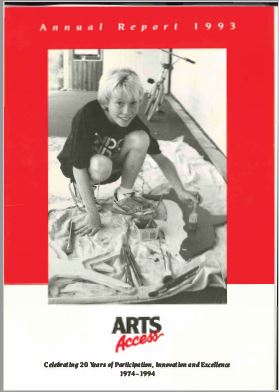 “Arts Access Victoria – Annual Report 1993”
 -
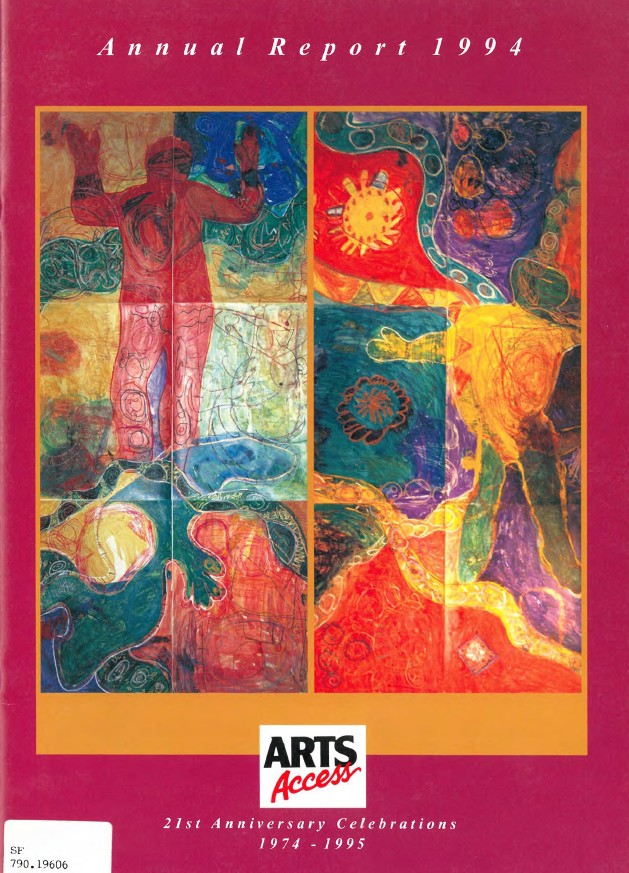 “Arts Access Victoria – Annual Report 1994”
 -
 “Arts Access Victoria – Annual Report 1995”
 -
 “Arts Access Victoria – Annual Report 1996”
 -
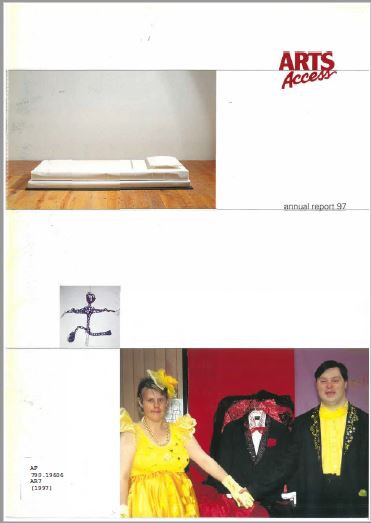 “Arts Access Victoria – Annual Report 1997”
 -
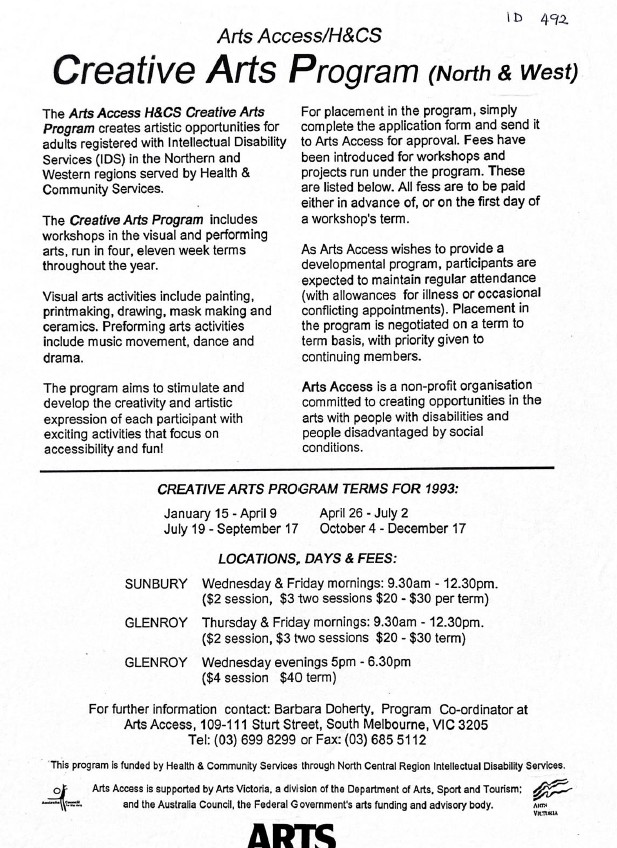 “Arts Access Victoria - Creative Arts Program North and West 1993 - Promotional Flyer" Arts Access Victoria - Creative Arts Program North and West 1993 - Promotional Flyer - Information about Creative Arts Program (North & West) providing arts opportunities, via workshops in visual and performing arts, including painting, printmaking, drawing, mask making, ceramics, music, movement, dance, and drama, for adults with Intellectual Disability
 -
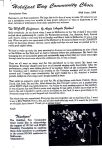 "Tutti Ensemble - Holdfast Bay Community Choir Newsletter - Newsletter One - 1999" Tutti Ensemble, Holdfast Bay Communitty Choir, first newsletter distributed by Tutti Ensemble and Minda Inc disability service organisation in 1999 - reads, in part "Welcome to our first newsletter. We hope this is the first of many to come. We intend to put out a newsletter every two months to keep people informed on what is happening in the choir. Articles or information from choir members are welcome."
 -
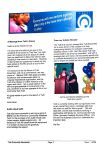 "Tutti Ensemble Newsletter Term 1 2006" Tutti Ensemble Newsletter Term 1 2006 - reads, in part "The Tutti Arts Launch showed that Tutti Ensemble Inc is a key driver in the creation of a truly enterprising direction for inclusive community disability culture in SA. From the outset, Tutti has proved itself to be driven by innovation, and with a strategic plan and vision, we have every opportunity to continue showcasing our work internationally and also to export the model we have created."
 -
 "Tutti Arts - Sit Down Shut Up & Watch - Filmmaking Workshop 2016 - Press Release" Tutti Arts - 'Sit Down Shut Up & Watch Filmmaking Workshop' 2016 Press Release - reads, in part “ On October 21 the second Sit Down Shutup and Watch [SDSW] Film New Media Festival will happen in the Angaston Town Hall. The festival is the brainchild of seven talented young film makers with learning disability form Regional South Australia and Adelaide. Their first festival, held in October 2014 was a fabulous success with over 40 films screened from all over the world and nearly 500 people attending. In the lead up to our second Festival, we are delivering a series of 4-day film-making workshops for people with learning disabilities across regional areas of South Australia to ensure we have plenty of South Australian films in the mix. The first of these is the Renmark / Riverland workshop to be held from Tuesday 8th March - Friday 11th March, at the McCormick Centre, Rau Rau Ave, Renmark.”
 -
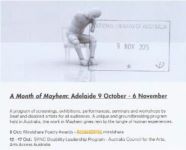 "A Month Of Mayhem" RealTime article on A Month of Mayhem, "A program of screenings, exhibitions, performances, seminars, and workshops by Deaf and colourblind artists for all audiences," presented by Access2Arts, in partnership with Adelaide Film Festival, Australian Network for Art and Technology (ANAT), Arts Access Australia, Unlimited UK, Tutti Arts, Sit Down Shut Up and Watch Film Festival
 -
 "Access2Arts Access Resources Audio Description" Access2Arts Access Resources Audio Description - includes video example of audio described performance, and information about services and training - reads, in part "Access2Arts has a pool of highly trained and experienced Audio Describers. Our service operates on a fee-for-service basis. We are happy to provide custom quotes for any job, large or small, in any medium and artform. Information about audio describer training can be found on our training page."
 -
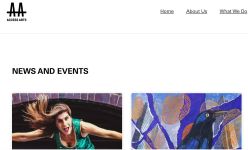 "Access Arts - News and Events" Access Arts News and Events, captured March 2022, including Access Arts Achievement Award Winner, Access Arts Achievement Awards 2021 Applications Open, Visitors and Earth Footprints Exhibitions, Undercover Artist Festival Program, and SYNC Leadership Program.
 -
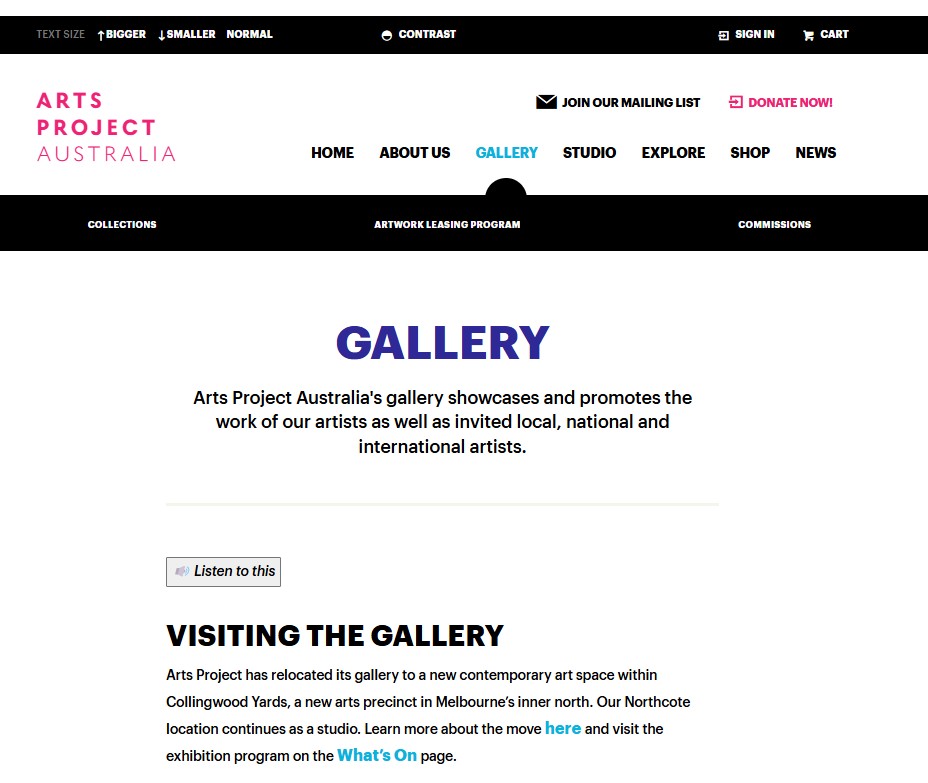 "Arts Project Australia - Gallery, captured 2022" Arts Project Australia - Gallery - website captured 2022 - reads, in part "HOW APA REPRESENTS AND SUPPORTS ITS ARTISTS Arts Project Australia advocates, supports and promotes studio artists within the broader contemporary arts sector nationally and internationally. The gallery promotes the work of its diverse group of emerging, mid-career and established Australian artists who work in the studio through the Collingwood gallery and national and international exhibitions, art prizes, and awards."
 -
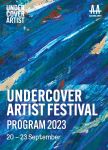 "Undercover Artist Festival Program 2023" Undercover Artist Festival Program 2023 – Curated by Festival Director Madeleine Little - ‘Breathe In: Multilingual Storytelling in Performance’ by Crossroad Arts, ‘Sleep and the City’ by Emma-June Curik, ‘Sheltered’ by Kathryn Hall, ‘Betsy and I’ by Alexandra Ellen, ‘type-a-poet’ by Andi Snelling, ‘Are You Pulling My Leg?’ with Accessible Arts and Crips & Creeps, ‘The Jingo Brothers’ with Jolly Jingo and Steady Eddy, ‘Otherwise’ by Access Arts, ‘Celebrate All’ by Donna Dyson, ‘Blind in the Rabbit Hole’ by Screech Arts, Embrace’ by lnsideOutside Dance, Club Undercover with Deaf Indigenous Dance Group and Goddess Naavikaran, and WunderSounds with Aspy Jones and Eliza Hull.
 -
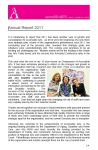 "Accessible Arts - Annual Report - Executive Summary - 2011" Accessible Arts - Annual Report - Executive Summary - 2011
 -
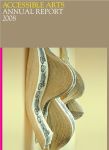 "Accessible Arts - Annual Report 2008" Accessible Arts - Annual Report 2008 - Overview, Rewarding Excellence, Skills Development, Strengthening the Sector, Consulting to the Sector, Providing a Service
 -
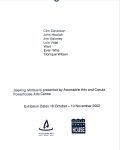 "Accessible Arts and Casula Powerhouse - Seeking Nimbus Exhibition - Program" Accessible Arts and Casula Powerhouse - Seeking Nimbus Exhibition 2015- Program - reads, in part “This personal exploration varies in form and the paths we select to journey diverse. Our search is often conducted in solitude and even secret. Like clutching at vapour or clouds, the prize often eludes us. It drives an artist, whether the world This search and our need for creative expression is something that defines our humanity. It unites us all - both people with and without disabilities.”
 -
 "InCite Arts - NT Arts Access Awards and Certificates of Commendation 2012" InCite Arts, Arts Access Central Australia, and Arts Access Darwin announcement of NT Arts Access Awards and Certificates of Commendation 2012
 -
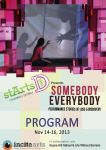 "Incite Arts - Somebody Everybody - Program" Program for InCite Arts ‘Somebody Everybody’, reads, in part, “'Somebody Everybody” began as an exploration of ‘home’ in response to the artists missing their families and homes while living away during school time. This theme inspired us to explore personal stories of loss and grief, particularly in relation to family members and loved ones who have passed on. The work then expanded on the theme of ‘loss’ to explore all sorts of lost things including loved ones, pets and memories and the sorts of things we all lose at some point in our lives; hair, money, patience, the-way-home.”
 -
 "Indelability Arts - Business Plan 2020-22" Indelability Arts Business Plan 2020-2022 provides information about Indelability Arts Mission “To provide creative, innovative opportunities for Queensland artists,” Board, Artistic Directors, Company Development, Program, and Marketing Staff, Associate Artists and Ensemble, Performance and Workshop programs, Funding, Goals, and Point of Difference – stated as “indelabilityarts pushes boundaries and expectations with its artists and audiences to think outside the box of what is attainable”
 -
 "Rawcus - Productions and Awards" Rawcus promotional document, with information on award and commendations, including Melbourne Fringe Festival ‘Best Performance’ Award for ‘The Heart of Another is a Dark Forrest’ (2008), Green Room Nominations for ‘Hunger’ (2007), Most Outstanding Production for ‘Not Dead Yet’ (2005), and a Department of Human Services Art and Culture Inclusion Award
 -
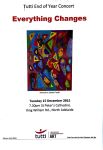 "Tutti Arts - End of Year Concert: Everything Changes - Program" Tutti Arts 'End of Year Concert- Everything Changes' 2015 Program - reads, in part "’Everythlng changes, seasons will come and go Life rearranges all that we think we know’ from The Six Swans, by Jehane Markham and Richard Chew Welcome to the 2015 Tutti Christmas Concert! The above words taken from the finale of The Six Swans, a one act opera Tutti performed with UniSA students in June this year means a great deal to Tutti as we work for social change. They also remind us of the deep meaning in the story of the birth of Jesus and the themes of redemption, hope, salvation and love associated with Christmas. Let's make Christmas 2015 a time of caring, a celebration of true emancipation of the earth from racial and ethnic hatred. Regardless of our religious ties or other belief systems, this Christmas let's all take time to envision what kind of world we want to live in, and do what we can in our own lives to restore peace, love and goodwill to Australia and the world.”
 -
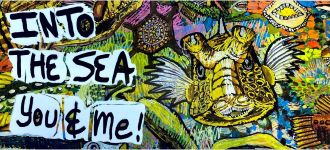 "Tutti Arts - Kurt Bosecke - Into The Sea You And Me Exhibition- Promotional Card" Tutti Arts - Kurt Bosecke 'Into The Sea You And Me' Exhibition 2019 Promotional Card - reads, in part "Dive into the watery depths of award-winning Tutti Artist Kurt Bosecke's imaginings and discover a bold and quirky world of intricately rendered sea creatures in the form of paintings and sculptures. These works will float in the serene surroundings of Folklore Cafe inviting you to linger in the blue."