Items
Search full-text
Create Ability: A Conference on Creativity and Disability
-
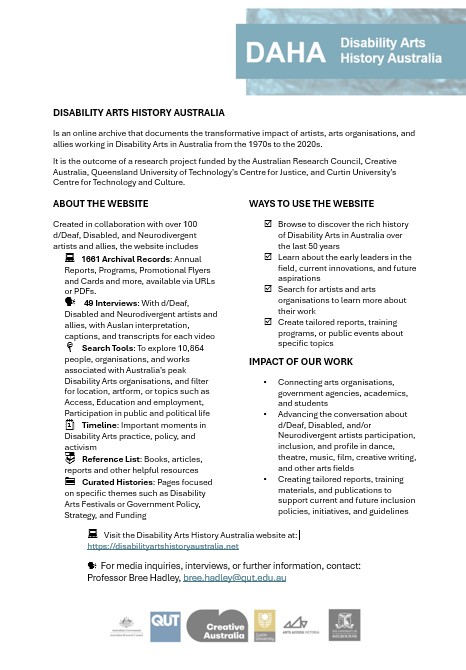 Disability Arts History Australia Launch 2025 - 1 Page Information Sheet
 - "Kevin Cho (1980) 1981 International Year of Disabled Persons. Melbourne, Australia: Royal Melbourne Institute of Technology."
-
"Parkinson's Queensland (2015) Research Study finds Dance has positive benefits for people with Parkinson’s, 4 March 2015, https://webarchive.nla.gov.au/awa/20150311153726/http://parkinsons-qld.org.au/danceforpd/" Parkinson's Queensland -Research Study finds Dance has positive benefits for people with Parkinson’s (2015) - reads, in part "Now, in exciting research findings, Parkinson’s Queensland, in conjunction with Queensland Ballet and research undertaken by QUT and The University of Queensland (UQ) demonstrate that Queensland Ballet’s Dance for Parkinson’s program had positive physical, social, cognitive and emotional benefits for participants affected by Parkinson’s."
-
 "Accessible Arts - What's On - Program" Accessible Arts - What's On 1992 - Program
 -
 “Arts Access Victoria - Arts Access Society Inc. - Access Newsletter June 1991” Arts Access Arts Access Society Access Newsletter June 1991 –Integration through the Arts for adults with Intellectual Disabilities, Community Health Centre singing, Acting Executive Director Message, Special Accommodation Project update, National Gallery of Victoria – meeting to develop art programs for older adults, Host Artist Scheme, Regional Development Program, staff development skills, Special Accommodation music program, Art Discussion project, Visual Arts exhibition participation invitation, Eaglemont Private Nursing Home textile mural, Peak disability arts organisations to form national body, AIDS awareness session for artists working in community projects, September workshops, membership
 -
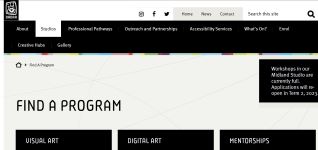 "DADAA Find A Program Webpage, captured 2023" DADAA Find A Program Webpage, captured 2023 – includes information about Visual Art, Digital Art, Dance and Performance, Music, Children and Young Adult, and Mentorship programs
 -
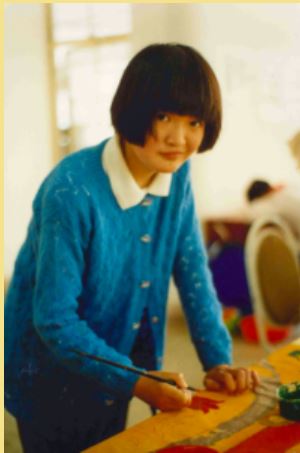 “Arts Access Victoria – On Tour (mid – late 1990s)” Arts Access Victoria – Sharing knowledge (early – mid 1990s) – growth in programs, training, consultancy and developed the first AAV website. Weave Movement Theatre and Club Wild (Wild at Heart) emerged and toured exhibition of “BodySuits” created new artist commissions and opportunities.
 -
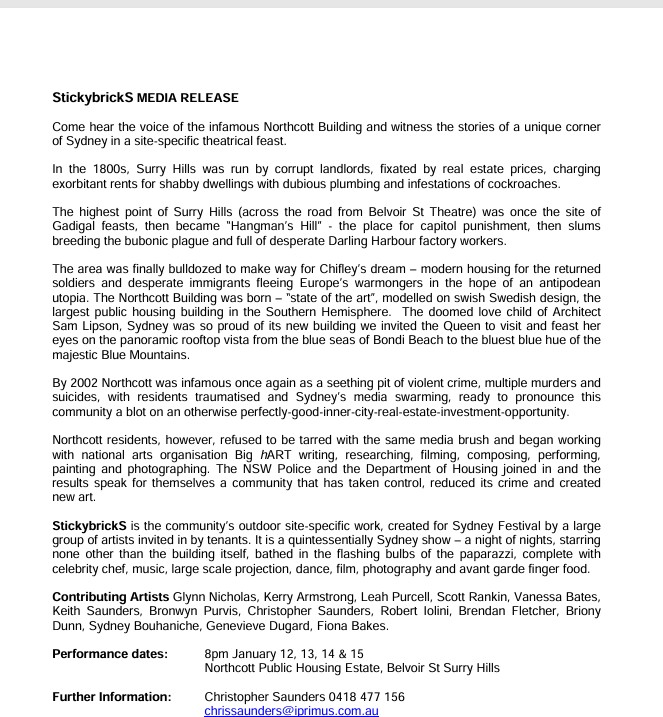 "Sydney Festival - StickybrickS MEDIA RELEASE - 2006" Sydney Festival - StickybrickS 2006 MEDIA RELEASE - Reads, in part "By 2002 Northcott was infamous once again as a seething pit of violent crime, multiple murders and suicides, with residents traumatised and Sydney’s media swarming, ready to pronounce this community a blot on an otherwise perfectly-good-inner-city-real-estate-investment-opportunity. Northcott residents, however, refused to be tarred with the same media brush and began working with national arts organisation Big hART writing, researching, filming, composing, performing, painting and photographing."
 -
 "Rawcus Reviews and Articles, captured 2024" Rawcus Reviews and Articles, captured 2024 - links to reviews and articles about Rawcus's work
 -
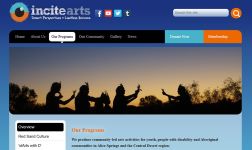 "InCite Arts - Programs, and 2012, 2013, 2014 Annual Reports" InCite Arts programs, and 2012, 2013, 2014 Annual Reports, captured 2018 - ‘Red Sand Culture’ youth focused music and dance mentoring program, ‘SPRUNG Youth Dance’, ‘Southern Ngalia’ intergenerational Warlpiri Women’s song and dance program, ‘stArts with D’ Performance Ensemble
 -
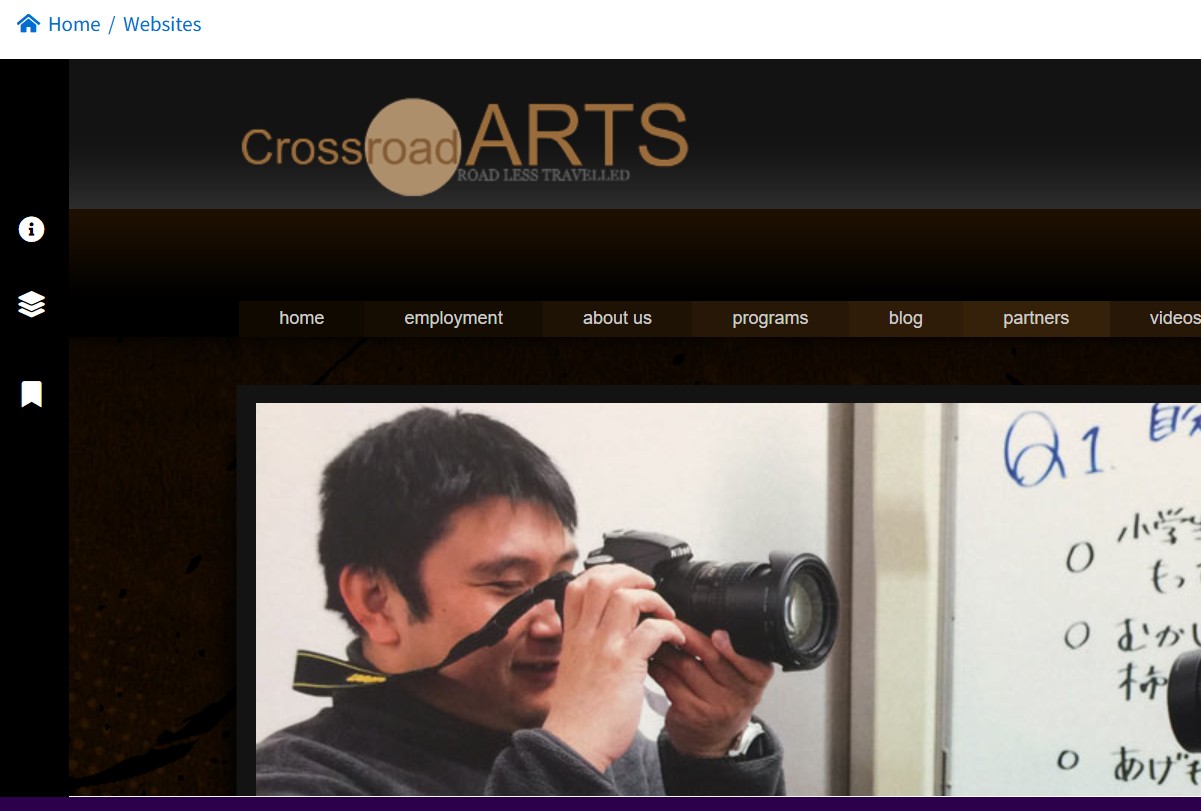 "Crossroad Arts Website 2021" Crossroad Arts Website, captured 2021. Includes home, employment, about us, programs, blog, partners, videos, outreach, contact us, and support us links, and information about “what we do,” “how we do it,” who we work with,” and “why we do it,” with the latter stating “We want to challenge the traditional spaces where art making takes place; and to challenge the notion of who participates in that process and how they participate.”
 -
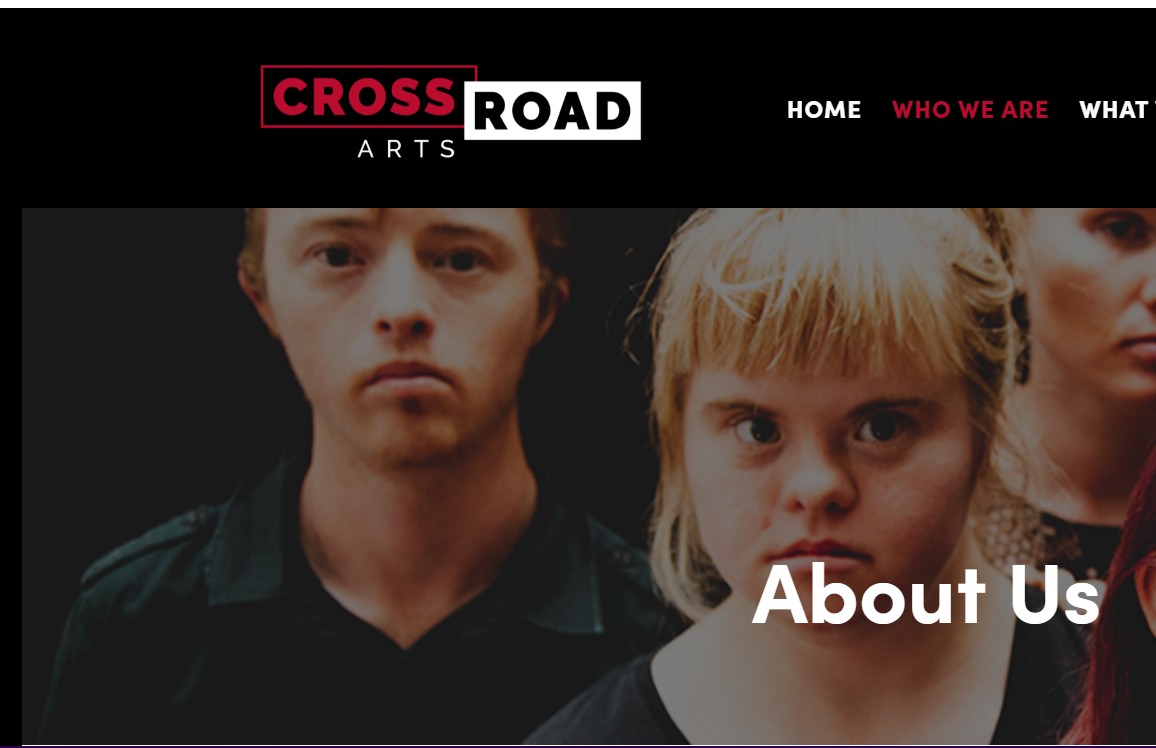 "Crossroad Arts About 2021" Crossroad Arts About page, Crossroads Arts website, captured 2021. Includes information about Crossroad Arts Vision, Mission, and Values, across “Artistic Development,” “Community Development,” and “Outreach” pillars, and an Auslan Described and Captioned “Community Voices” video about the company’s work (Crossroad Arts Vimeo available here https://vimeo.com/crossroadarts?msockid=07261a89129e61112e290e3e137360f5 as at 2024). Includes link to information about past projects 2015-2020, and images of past projects 1996-2020.
 -
 "The Other Film Festival Program 2018" The Other Film Festival Program 2018 – Australian words screened include The Milky Pop Kid 2016 | 7min Johanna Garvin; Paul 2017 | 5min Kasimir Burgess; GEN(d)ERATION: ROMANY AND SASCHA 2018 | 3min Akasha Temple; Yulubidyi Until The End 2017 | 12min Nathan Mewett and Curtis Taylor; ODDLANDS 2017 | 28min Bruce Gladwin; re-cal-i-brate 2016 | 6min Brendan O’Connell; Halloween 2018 | 2min Thomas Iacono; A Royal Star 2014 | 17min Nicola Byrnes and Neil Triffett; Stim Your Heart Out 2018 | 4min Akasha Temple; Lipstick Fights 2017 | 3min Jon Mitchell; I see, You say... 2018 | 10min Ramas McRae; Jaspar 2018 | 7min Zoe Glen-Norman; All of You TV Show 2015 | 11min Artlife and Lindsay Cox; CAE Workshop films 2018 | 20min David Baker, Stacey Christie, Shea MacDonough, Shanah Robison, Philippa Nichol, Imogen Newhouse, Jonathon Goodfellow, Justin O’Brien; Love You Till I Die 2017 | 2min Rudely Interrupted; Gaslit 2018 | 9min Naomi Chainey; Defiant Lives 2016 | 1hour 24min Sarah Barton; Life is Short, Time is 2016 | 4min Constant aka LISTIC and Vanna Seang; Jeremy the Dud 2017 | 21min Ryan Chamley; The Holden Family 2014 | 4min Alex Skaftouros and Lindsay Cox; RADIAL - No Limits 2017 | 4min Festival & Theater Thikwa, Tamara Searle and Rhian Hinkley
 -
 "DADAA Annual Report 2015-2016" DADAA Annual Report 2015-2016 - Chairperson and Executive Director’s Reports, New premises, NDIS, Workshops, Exhibitions, Performances, Screenings, Freight and Focus Galleries, Online Gallery, Online Broadcasts, stARTSpeak, Art Link Programs for Children and Young People, Awesome Festival, Nexus Arts Grants, Professional Mentorships, Financials
 -
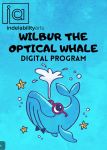 "Indelability Arts - Wilbur The Optical Whale - Digital Program" Digital Program for Indelability Arts show by Karen Lee Roberts, Wilbur the Optical Whale - reads, in part, “Wilbur the Optical Whale" is a 'tale' about friendship, acceptance and celebrating difference. Wilbur and Cecil are BFF's. They are inseparable...or are they? One day while playing hide and seaweed, they are set upon by the Starfish Meanie Gang! How do they get out of this one? Join Wilbur and Cecil and help them in their quest.”
 -
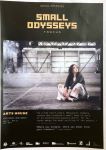 "Rawcus - Small Odysseys - Program" Program for Rawcus work 'Small Odysseys, reads, in part, "Small Odysseys grew out of an interest in working with scale and how our sense of our own size, significance and power can shift sometimes very quickly. We have been inspired by the sculptural work of artists Ron Mueck and Slinkachu (Little People in the City) , both of whom employ scale to reveal the emotional world of their subjects and inform our relationship to them."
 -
 “Restless Dance – Annual Report 1997" Restless Dance Theatre Annual Report 1997 - reads, in part "The Company's activities were evenly distributed between high profile performance and community based workshops. Restless hos consolidated itself os on independent leader in youth performing arts in Australia. It is well managed and well skilled using local, interstate and overseas artistic talent to blend the skills of the Company members. Highlights include Sex Juggling, the tour of northern South Australia and the Northern Territory and Kin" - includes Financials and News Clippings
 -
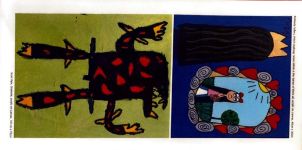 "Tutti Arts - Kimberley Sellers and Scott Pyle - Monsters and Fairytales Exhibition - Invitation - Promotional Card" Tutti Arts - Kimberley Sellers and Scott Pyle 'Monsters and Fairytales' Exhibition 2012 Invitation / Promotional Card
 - Ian Potter Museum of Art
- Adam Rozsa
- Alex Varley
- Amy Laybutt
- Annee Turnbull
- Anneke Barnes
- Anne Kwasner