
Items
Search full-text
Create Ability: A Conference on Creativity and Disability
-
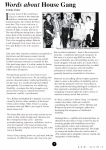 "Accessible Arts - ACE Arts Creativity Expression Accessible Arts - ACE Arts Creativity Expression - Antony Jones - Review: Words About House Gang - Iss15, Pg7" Accessible Arts - ACE Arts Creativity Expression - Antony Jones - Review: Words About House Gang- Iss15, Pg7 - reads, in part, "In every sense of the word House Gang is a sitcom in the American traditon. melodrama and simplecharacterisation, but without the blowwave hair. This is not a criticism, it could simply be no other way for 30 minutes of light, comedy television. The only difference being that in House Gang, three of the characters are played by people with intellectual disabilities: Trev is the struggling athlete; Belinda is self-obsessed, love-struck and out of love; and Robert is the soft, sensitive type."
-
 "Juliet London and Des Walsh (1995) Arts & Disability: Report Australia Council: Surry Hills." Juliet London and Des Walsh - Arts & Disability, Australia Council 1995 - Reads, in part "The Australian Bureau of Statistics estimates that 18 per cent of the Australian population has a disability. There is a basic lack of data on participation in the arts by artists with a disability. No figures were available on the number of people with disabilities applying for grants from the Australia Council or from State or Territory arts agencies. The current dearth of statistical information needs to be overcome by systematic and sustained research."
- High Beam Festival
-
"Creative Australia (2024) releases 'Equity: Arts and Disability Associated Plan" Reads, in part "The Australia Council for the Arts have released their critical new report Towards Equity: A research overview of diversity in Australia’s arts and cultural sector. This overview gathers published and unpublished data and research on representation within the arts and cultural sector in Australia."
-
"Jung Yoon (2021) Cultural strategy for people with disability in Australia. International Journal of Cultural Policy, 28(2), 187–203. https://doi.org/10.1080/10286632.2021.1916003" Reads, in part "This paper analyses the first cultural strategy introduced in Australia for people with disability and its evaluation reports. For an in-depth understanding of the cultural strategy, it reviews the literature on disability in historical and socio-political contexts, and on human rights for people with disability. It also discusses three key recommendations identified from the evaluations of the cultural strategy: first, to develop an information hub for the arts and disability sector; second, to facilitate collaboration between Australian governments, including arts agencies and national disability support agencies; and third, to revisit and renew the existing cultural strategy"
-
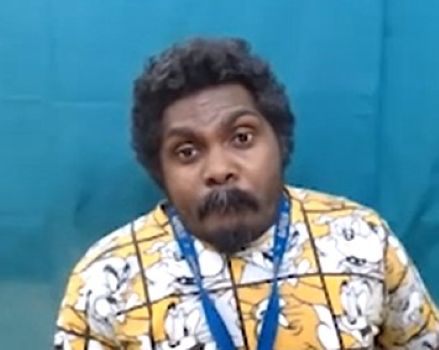 "Interview with Graham Wilfred Junior" Graham Wilfred Junior is a Yolngu man and artist with Incite Arts where he works with different mediums including filmmaking, writing, performing and music. Interview Summary Graham, an emerging artist with spina bifida whose father inspired his passion for art, has pursued various art forms including painting, music, and digital art, now calls Mparntwe/Alice Springs home, and is venturing into theatre and filmmaking. His digital artwork, through the creation of the indigemoji app, helps teach the Arrernte, the language of the First Nations people of Mparntwe/Alice Springs. He now seeks to expand his impact through acting and creating films. Graham's motivation is to both celebrate and inspire people with disability, aiming for recognition as an artist rather than focusing solely on his disability. Graham shares his journey with Incite Arts, highlighting his involvement in music workshops, acting classes and script development, emphasizing the importance of representation and empowerment for individuals with disability. Ultimately, he aims to document his experiences and create impactful performances that leave a legacy to encourage others to pick up where he leaves off, ensuring the continuity of artistic expression within his community.
-
"Commonwealth of Australia (2019) Key Results of the 2018 Public Consultation: National Arts and Disability Strategy. Canberra: An initiative of the Meeting of Cultural Ministers" Reads, in part "Between 24 September and 3 December 2018, people shared their stories and ideas about arts and disability in Australia. The Meeting of Cultural Ministers asked to hear these ideas and stories. The Meeting of Cultural Ministers is made up of the Cultural Ministers from the Australian Government and state and territory governments. The statistics in the report all come from the online survey. These ideas and stories will help Ministers to make a new National Arts and Disability Strategy.
-
“Disability in the Arts, Disadvantage in the Arts, Australia (DADAA), based in Western Australia, is established in 1994” The National Participate Conference, hosted by Arts Access Victoria in 1990, set the scene for the emergence of the DADAA network. This came after several years of conversations among Western Australian artists about starting an organisation; the organisation was officially established in 1994. “In 1986, a small group of artists with disability met to discuss starting their own WA-based arts organisation. It is from this meeting that DADAA slowly grew, from a pilot project it became an organisation in its own right in 1994: taking the name Disability in the Arts, Disadvantage in the Arts, Australia – DADAA.”
- Arts Project Australia
-
"Kath Duncan, Gerard Goggin, Christopher Newell (2005) ‘Don’t Talk about Me... Like I’m Not Here': Disability in Australian National Cinema. Metro Magazine: Media & Education Magazine.146/147, pp. 152-159. https://search.informit.org/doi/10.3316/informit.043842788583710" Reads, in part "Disability is a central cultural identity and category in Australia, but this is not often realized. We seek to make a contribution to conversations and critical analyses of disability in Australian culture through an exploration of a privileged national cultural form, namely film. The trope of disability looms large in late twentieth century Australian cinema, and yet cultural comment on these ‘disabled’ scripts and performances has not yet considered a disabilities studies perspective. Accordingly, in this article we combine our different perspectives on disability and film into an account of how specific films use disability. In particular, we analyse key films from the 1990s as examples of powerful displays of bodies and personhood." References a range of films, including Proof (Jocelyn Moorhouse, 1991), Romper Stomper (Geoffrey Wright, 1992), Bad Boy Bubby (Rolf de Heer, 1993), Muriel's Wedding (PJ Hogan, 1994), Shine (Scott Hicks, 1996), Moulin Rouge! (Baz Luhrmann, 2001), My One Legged Dream Lover (writer Kath Duncan with dir. Penny Fowler-Smith, Christine Oslen 1998), Pins and Needles (writer Genni Batterham with dir. Barbara Chobocky, 1979), Riding the Gale (Genni Batterham with dir, Hugh Piper, 1987), Dance Me to My Song (writer Heather Rose with dir. Rolf De Heer, 1998), Heather Rose Goes to Cannes (Chris Corin, 1999), Myself When Fourteen, (Ivor, Arthur and Corinne Cantrill 1989),Film of Circles, Squares, Triangles, Lines and Dots (Arthur and Corinne Cantrill 1981), Rainbow Diary (Arthur and Corinne Cantrill 1984), House Gang (Mandy smith, 1997), Quentin Crashes Big Brother (Quentin Kenihan, 2002), Quentin, World at My Wheels (Quentin Kenihan, 2000), Ability Trek (Jacob Baldwin 1998)
-
 "Australia Council - Annual Report 1995-96" Australia Council Annual Report 1995-96- discusses functions, organisation chart, arts funding, audience development and advocacy with collaboration with various government departments to focus on advocacy for minority groups including people with disabilities, strategy and policy with Arts and Disability report, describing the barriers to intellectual and physical access to the arts experienced by people with a disability and the implications for arts organisations of the Disability Discrimination Act 1992, main activities of Council and its Boards, and includes financial statements and lists of grants made including grants for programs, projects, information and advocacy.
-
“Access Arts Achievement Award inaugurated in 2014” Access Arts announced a $10,000 Achievement Award in 2013 and first awarded the grant in 2014 to actor Doug Robins. Other recipients since then have included writers, musicians, visual artists, theatre makers, and multi-disciplinary artists. The funding goes to a Queensland artist with disability to “create, develop, present, produce, exhibit and/or tour their work.” Access Arts describe it as “a game-changing opportunity for Queensland artists, arts workers and producers to extend the life of an existing work or create a new one!”
-
 "Arts and Disability: A research summary" Australia Council - Arts and Disability: A research summary, 2018 - reads, in part "The great art created by artists with disability, and participation of people with disability in the arts, are integral to the artistic and cultural life of Australia. This summary brings together findings from Australia Council research publications and a research overview compiled by the Meeting of Cultural Ministers to build the evidence base about disability and the arts."
-
"Queensland Government (2024) Arts and Disability Plan. 25 September 2024. https://www.arts.qld.gov.au/projects-and-initiatives/arts-and-disability-plan-web" Reads, in part "The Queensland Government acknowledges the rights of people with disability to participate equally in the state’s cultural life and to have the opportunity to develop and use their creative, artistic and intellectual potential, as recognised in the United Nations Convention on the Rights of Persons with Disability."
-
 "Accessible Arts - ACE Arts Creativity Expression - Pru Jobling - Press Release: Appointments to Disability Services Advisory Committee (DSAC) in all states, and to the Advisory Council of Australia (DACA) - Iss4, Pg18-19" Accessible Arts - ACE Arts Creativity Expression - Pru Jobling - Press Release: Appointments to Disability Services Advisory Committee (DSAC) in all states, and to the Advisory Council of Australia (DACA) - Iss4, Pg18-19 - reads, in part "You may or may not be aware that the Minister for Health, Housing and Community Services (formerly DCS&H) Mr Brian Howe, has recently appointed new members of the disability community to the Disability Services Advisory Committee (DSAC) in all states, and to the Advisory Council of Australia (DACA) which is the national body."
- Annie Harvey
- Barbara McEvoy
- Bill Watson
- Gay Hawkins
- Jan Spencer
- Jeffrey St. John
- Judy Finlason
- Tim Sussman
- Victoria Keighery
-
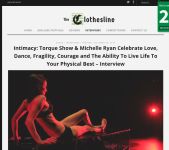 "The Clothesline - Intimacy: Torque Show & Michelle Ryan Celebrate Love, Dance, Fragility, Courage and The Ability To Live Life To Your Physical Best – Interview" The Clothesline (2015) 'Intimacy: Torque Show & Michelle Ryan Celebrate Love, Dance, Fragility, Courage and The Ability To Live Life To Your Physical Best – Interview'